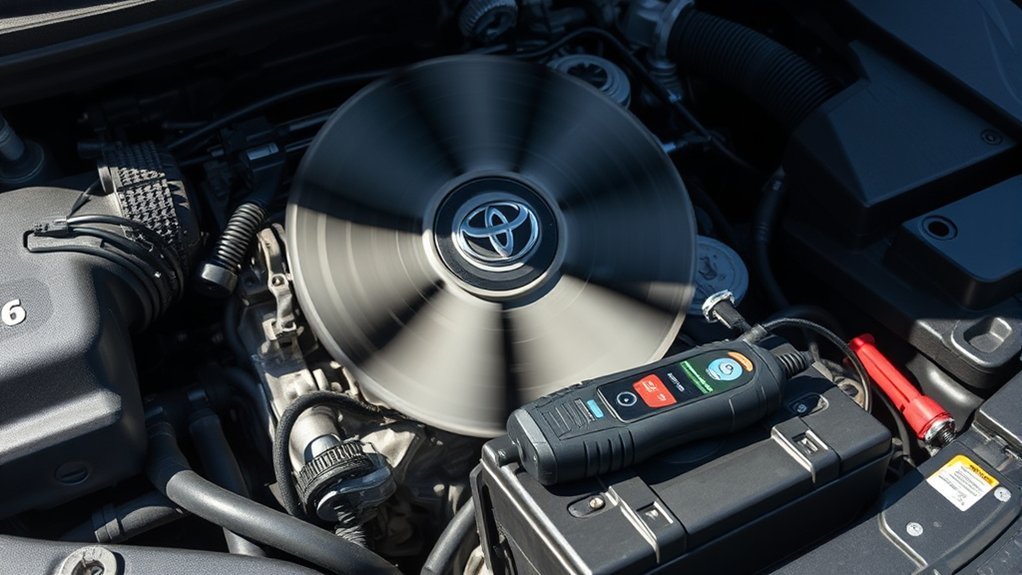
If your Camry’s engine fan runs constantly, it’s likely due to a malfunctioning coolant temperature sensor or a faulty radiator switch. Wiring issues or corroded connectors can disrupt communication between components. Inspect for coolant leaks and verify proper coolant levels. Checking relays and performing continuity tests can help diagnose electrical faults. Regular maintenance and monitoring engine temperature are essential to prevent overheating. For further insights on troubleshooting and fixes, continue exploring related maintenance tips.
Common Reasons Your Camry Engine Fan Runs Constantly
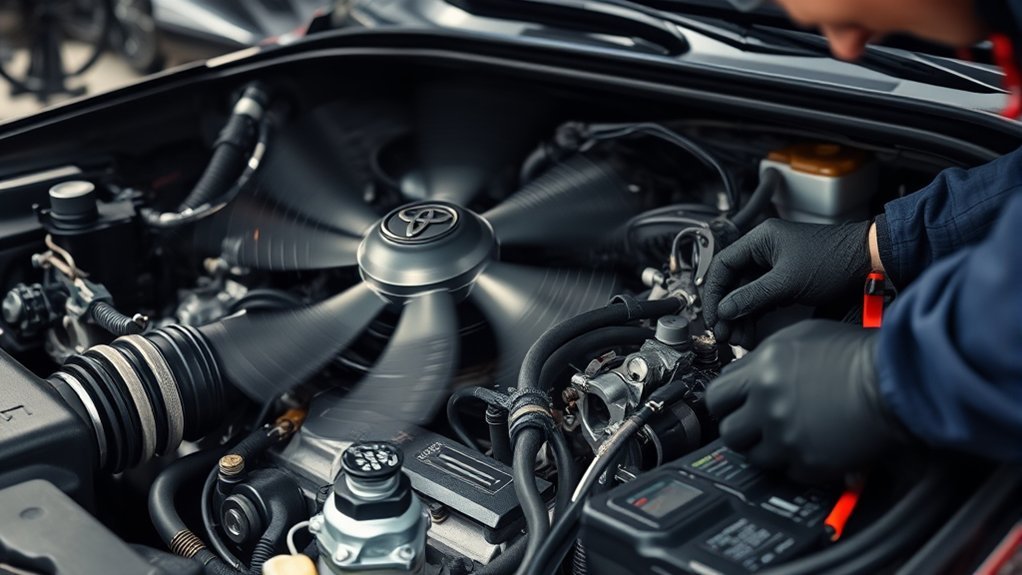
If your 2020 Toyota Camry’s engine fan runs constantly, it’s vital to pinpoint the cause quickly. One common culprit is a malfunctioning engine coolant temperature (ECT) switch. If this switch fails, it may not signal the fan operation correctly, causing the fans to run non-stop as a safety measure against overheating. Additionally, a faulty radiator switch can keep the fans active regardless of engine temperature or AC settings.
Wiring issues can also create problems. Corrosion or damage can disrupt communication between the ECT switch and the fan motor types, leading to constant operation. It’s important to inspect connections and verify relays function properly. By addressing these potential issues, you not only enhance engine cooling but also restore your Camry’s performance and efficiency. Understanding these factors empowers you to maintain your vehicle effectively.
How to Diagnose Wiring Issues Affecting Fan Operation
To effectively diagnose wiring issues affecting your Camry’s fan operation, start by thoroughly inspecting the wiring harness for any signs of damage, corrosion, or animal interference. These factors can disrupt communication between the engine control module (ECM) and the cooling fan relays. Follow these steps for a thorough wiring inspection:
- Check connector integrity: Verify terminals aren’t spread too far apart to maintain good electrical contact.
- Look for coolant residue: This may indicate leaks affecting the cooling system’s performance.
- Perform a continuity test: Check wiring to the coolant temperature sensor and fan relays for any open circuits that could cause the fan to run constantly.
- Utilize an infrared temperature sensor: Verify accurate engine temperatures by measuring the lower coolant hose.
Document your findings to pinpoint any electrical continuity issues that could impact fan operation.
How the Coolant Temperature Sensor Affects Fan Operation
The coolant temperature sensor (CTS) plays an essential role in regulating your engine’s cooling system by monitoring coolant temperature and relaying this information to the Engine Control Module (ECM). If the CTS fails, you might notice symptoms like erratic fan behavior or constant running, which can negatively impact engine performance. Keeping the CTS and its connections in good condition is vital for ideal fan operation and overall cooling efficiency.
Role Of ECT Sensor
Understanding the role of the Engine Coolant Temperature (ECT) sensor is vital for maintaining your Camry’s cooling system. The ECT sensor directly impacts fan operation through the following:
- Temperature Measurement: It measures coolant temperature and sends data to the Engine Control Module (ECM).
- Activation Control: The ECM uses this data to determine when to activate the cooling fans.
- Malfunction Consequences: A failing ECT sensor can lead to constant fan operation, even without overheating.
- Calibration Importance: Proper ECT sensor calibration guarantees accurate temperature readings, typically around 190°F for fan activation.
Regular inspection of ECT sensor types and their connections is essential for peak performance and preventing unnecessary cooling fan operation.
Impact On Cooling System
While you might not think about it often, the coolant temperature sensor (CTS) plays an important role in your Camry’s cooling system. It monitors engine temperature and sends critical data to the engine control module (ECM), regulating fan operation based on cooling needs. If the CTS fails or disconnects, the ECM can’t accurately gauge the engine’s temperature, causing the fans to run continuously. This not only diminishes cooling efficiency but can also lead to increased wear on the fan system, shortening its lifespan. Regularly checking the CTS and its connections can prevent prolonged fan operation, ensuring your cooling system runs smoothly and efficiently. Keeping the fan’s activity in check is essential for peak performance and longevity.
Symptoms Of Failure
A malfunctioning coolant temperature sensor (CTS) can lead to several noticeable symptoms that affect your Camry’s fan operation. When the CTS is out of calibration or faulty, it disrupts fan efficiency, resulting in constant fan activation. Here are key symptoms to watch for:
- Constant Fan Operation: The fan runs continuously, even when the engine isn’t overheating.
- Inaccurate Temperature Readings: You notice fluctuating or incorrect temperature gauges on the dashboard.
- Increased Fuel Consumption: The engine may work harder, leading to reduced fuel efficiency.
- Overheating: Despite constant fan operation, the engine may still overheat due to poor sensor feedback.
Addressing these symptoms promptly can restore proper fan function and prevent further engine damage.
Troubleshooting Your Radiator Switch and Relays
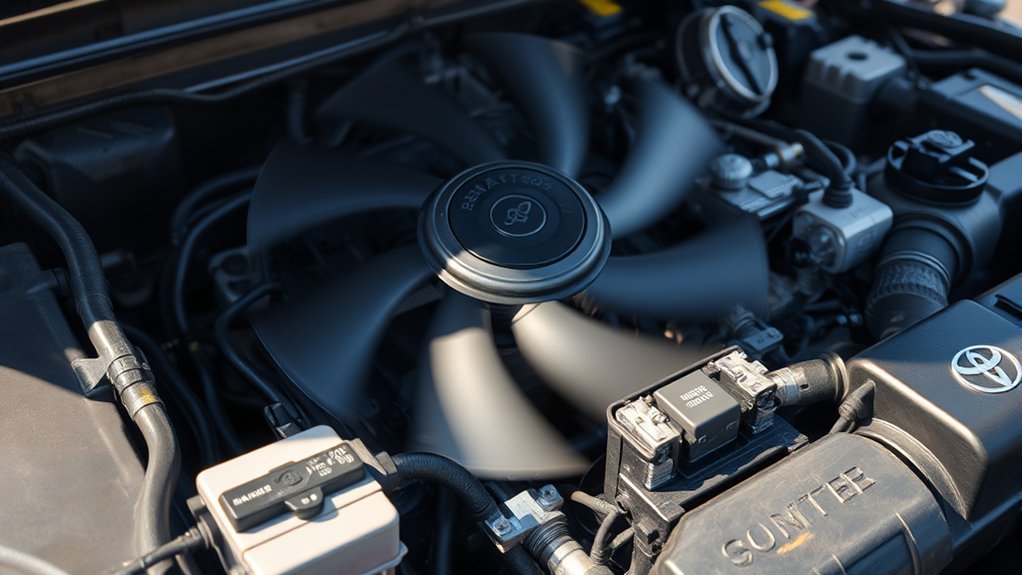
When troubleshooting your radiator switch and relays, you’ll want to check for common relay issues that could affect fan operation. Diagnosing any wiring damage is essential, as damaged wires can disrupt communication between the switch and the ECM. Start by inspecting connections and testing relays to guarantee everything functions correctly.
Common Relay Issues
Understanding common relay issues is vital for troubleshooting your radiator switch and relays, as these components play an important role in your engine’s cooling system. Here are key points to take into account:
- Relay Failure: Electrical shorts or internal damage can cause the radiator fan relays to fail, leading to constant fan operation.
- Swapping Relays: Tapping relays may not help; try swapping with identical relay types from the fuse panel to check functionality.
- Coolant Sensor Issues: A disconnected or faulty coolant temperature sensor can trigger the fans as a fail-safe.
- Wiring Corrosion: Corrosion or terminal spread in connectors can disrupt communication between the ECT and the engine control module, impacting fan operation.
Regular relay maintenance is essential for peak performance.
Diagnosing Wiring Damage
Relay issues often stem from underlying wiring damage, which can severely impact the performance of your radiator switch and relays. Start with wiring inspection techniques; check the harness for signs of damage or corrosion. Terminal spread can lead to communication failures, so pay attention to the dark gray connector at the top of the radiator. An unplugged connection may cause the fans to run continuously. Use a multimeter to test continuity between the ECT switch and the fan relays, ensuring there are no open circuits. If needed, swap the fan relays with identical ones from the fuse panel. Finally, monitor coolant temperature with an infrared sensor, verifying it reaches around 190°F to confirm the cooling fan system’s functionality.
How to Test and Replace Your Fan Relays
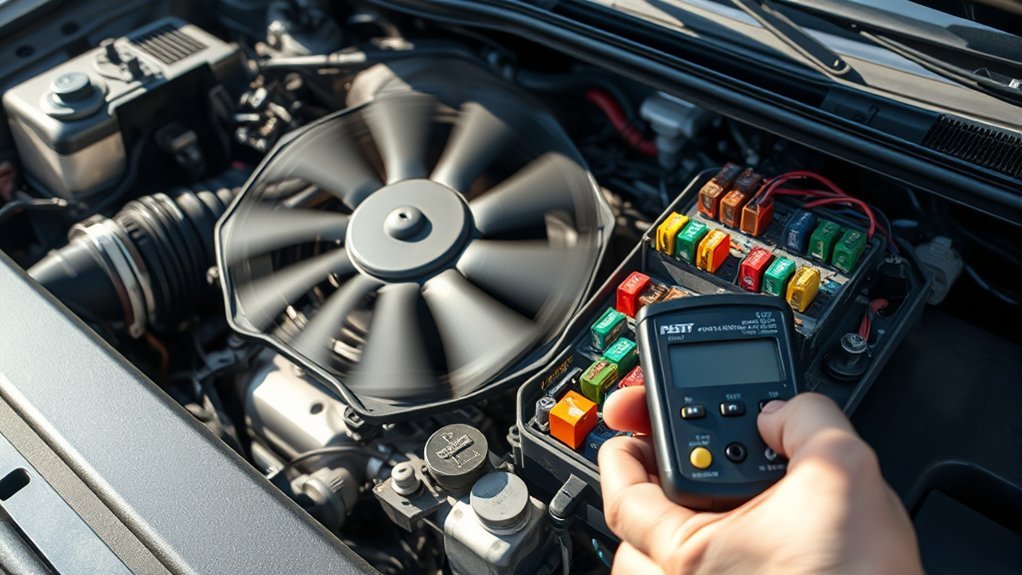
Testing and replacing your fan relays can resolve persistent engine fan issues in your Camry. Here’s how to effectively perform relay testing and replacement:
Testing and replacing fan relays can effectively address ongoing engine fan issues in your Camry.
- Swap the Relay: Exchange the suspect relay with a similar one from the fuse panel to see if the fan behavior changes.
- Use a Multimeter: Check for continuity across the relay terminals when the fan should be off. If it’s stuck closed, that’s your culprit.
- Inspect for Damage: Look for signs of damage or corrosion on the relay. Physical wear can cause constant fan operation.
- Ensure Compatibility: When replacing a relay, make sure the new one matches the specifications of the original, including pin configuration and amp rating.
After relay replacement, document any changes in fan behavior. This consistent monitoring will help you determine if the issue is resolved or if further diagnostics are needed.
Addressing Coolant Leaks
If you notice coolant leaks in your Camry, addressing them promptly is vital to prevent overheating and potential engine damage. Start by inspecting for pink residue around connectors and components; this can indicate a leak that may disrupt electrical connections and sensor functionality. Regular leak detection is important—check your coolant levels and look for puddles or wet spots under your vehicle.
Coolant types vary, so make certain you’re using the correct one for your model. A damaged or corroded radiator or hose can lead to leaks, compromising your cooling system’s efficiency. If you identify any issues, schedule repairs immediately to maintain proper engine cooling and prevent your cooling fans from running continuously. Ignoring these leaks can result in extensive engine damage down the line, so keep vigilance and act swiftly to guarantee your Camry runs smoothly.
How to Keep an Eye on Your Engine Temperature
Keeping an eye on your engine temperature is essential for maintaining your Camry’s performance and longevity. Here are some effective monitoring techniques to help you stay on top of it:
- Gauge Monitoring: Regularly check the engine temperature gauge while driving. It should stay around 190°F.
- Infrared Sensor: Use an infrared temperature sensor on the lower coolant hose after idling for 15-20 minutes for precise readings.
- Coolant Levels: Frequently inspect the coolant level to prevent overheating and guarantee the cooling system functions properly.
- Air Pockets: Be aware that air pockets in the radiator can distort temperature readings—bleed them from the system as needed.
If your engine temperature exceeds normal levels, inspect the coolant temperature sensor and related wiring for potential issues. Keeping these practices in mind can help you avoid engine problems and maintain your Camry’s reliability.
Preventative Maintenance Tips for Your Toyota Camry
Monitoring your engine temperature is just one aspect of maintaining your Toyota Camry. To guarantee peak performance, prioritize coolant maintenance. Regularly check coolant levels and inspect for leaks, as low coolant can lead to overheating and affect fan operation. Schedule routine engine temperature assessments using an infrared thermometer to confirm accurate readings.
Don’t overlook electrical components; inspect and clean connectors and wiring to prevent corrosion. This is especially vital for the coolant temperature sensor and fan relays. Replace the engine coolant temperature (ECT) sensor every few years or according to your owner’s manual to maintain efficient fan control.
Additionally, keep your vehicle’s air conditioning system well-serviced. This prevents excessive strain on the cooling fans, making sure they function properly when needed. By following these preventative maintenance tips, you’ll enhance your Camry’s reliability and longevity.
Frequently Asked Questions
How Much Does It Cost to Fix an Engine Fan?
Fixing an engine fan typically costs between $100 and $400. Fan replacement costs vary based on issues, so guarantee regular cooling system maintenance to prevent further expenses. Always consult a professional for accurate diagnostics and repairs.
What Causes the Fan to Keep Running When the Car Is Off?
If your car’s fan keeps running, it might be due to a faulty ECT sensor, a relay issue, or active A/C. Proper cooling system function is essential; continuous fan operation can lead to battery drain.
What Are Signs of a Bad Cooling Fan Relay?
You’ll notice cooling fan symptoms like constant operation or erratic behavior. Relay failure indicators include a clicking sound or failure to function properly. Testing the relay with a multimeter can confirm its status.
Conclusion
In conclusion, if your Camry’s engine fan runs constantly, diagnosing the issue is key to preventing overheating, much like catching a leak before it floods your home. By checking wiring, the coolant temperature sensor, and relays, you can pinpoint the problem and make necessary repairs. Regular maintenance will keep your engine in top shape and help you avoid future headaches. Stay proactive, and your Camry will run smoothly for years to come.