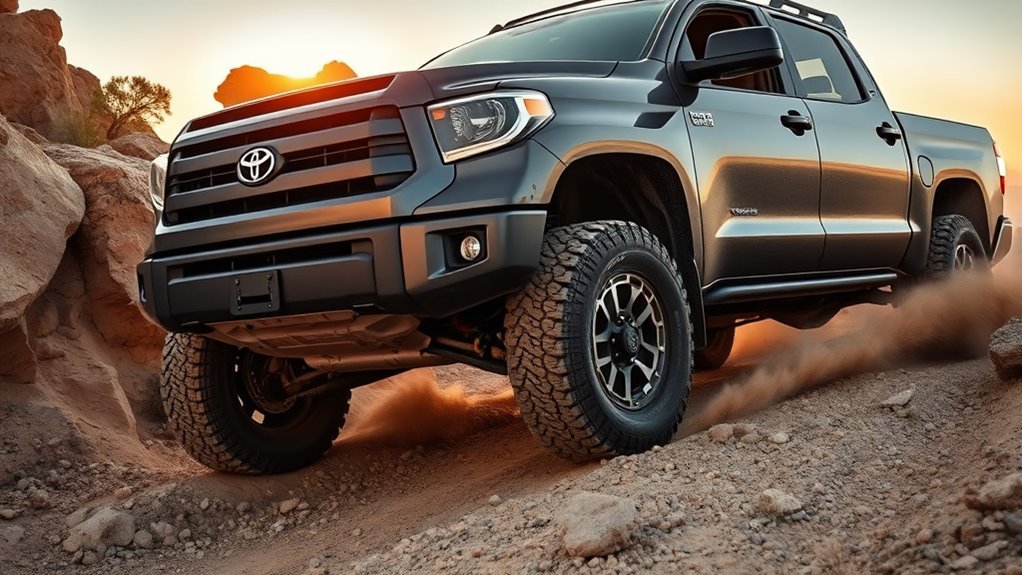
You’ll get the best results from a 2025 Toyota Tundra’s 4WD system when you match the transfer mode to the surface: 2H for normal dry pavement, 4H for loose or slippery surfaces where tire slip can occur, and 4L for slow, steep, or technical off-road driving. The important part is not just choosing the right mode, but shifting into it the way Toyota specifies for the truck.
Quick Answer
Use 2H on normal dry roads, 4H on loose gravel, snow, mud, sand, or other surfaces that allow tire slip, and 4L for slow crawling, steep hills, deep mud, deep snow, or hard pulling. Shift 2H to 4H below 62 mph; shift 4H to 4L only after stopping, braking, and selecting Neutral.
Key Takeaways
- 2H is the default for dry, hard-surfaced roads because it gives the quietest ride, best economy, and least drivetrain wear.
- 4H is for higher-speed low-traction driving, such as snow, icy roads, loose gravel, sand, mud, or trail roads.
- 4L is for low-speed control and maximum torque on steep climbs, descents, rocks, ruts, deep mud, or deep snow.
- Do not use 4H or 4L on dry, high-grip pavement; part-time 4WD needs some tire slip to avoid drivetrain binding.
- After deep sand, mud, or water, inspect key drivetrain and brake components before your next drive.
At a Glance
| Time Required | A few seconds for 2H/4H; about 30–60 seconds for 4H/4L when stopped |
| Difficulty | Easy, as long as you follow the shift sequence |
| Tools Needed | None for shifting; tire gauge and compressor if airing down off-road |
| Cost | No cost to use; maintenance costs depend on trail use and service schedule |
Quick Steps: Engage 4H on a 2025 Tundra
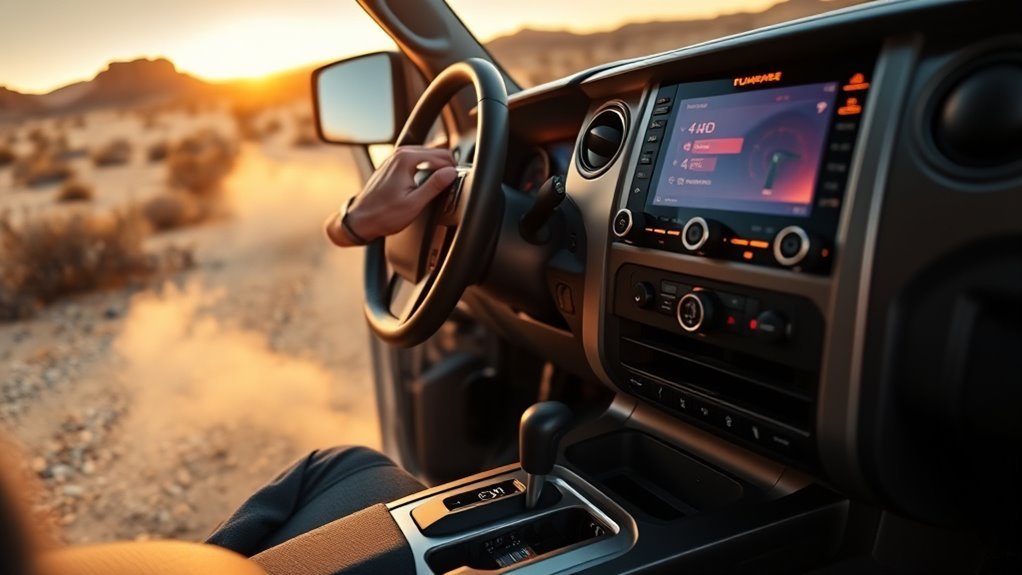
Use 4H when the surface is loose or slippery enough for tire slip: snow, ice, gravel, dirt, sand, mud, or an uneven trail. According to the 2025 Toyota Tundra Owner’s Manual, shifting from 2H to 4H requires reducing vehicle speed to less than 62 mph (100 km/h), then pushing and shifting the front-wheel drive control switch to 4H.
- Confirm the road or trail surface is slippery or loose enough for 4WD use.
- Reduce speed to less than 62 mph.
- Keep the truck moving straight and avoid hard throttle or sharp steering.
- Push and shift the 4WD control switch to 4H.
- Wait for the 4H indicator to come on before driving aggressively.
Warning: Do not use 4H as a permanent setting on dry pavement. The Tundra’s part-time 4WD system is meant for surfaces where the tires can slip slightly. On high-grip pavement, driveline binding, tire scrub, noise, and extra wear can occur.
If the indicator flashes longer than expected, stay calm. Drive straight at low speed and avoid sudden throttle. If it still does not settle, slow down, return to a safe spot, and repeat the correct procedure. Do not force the system with aggressive acceleration.
[Products Worth Considering]

These TPE door anti‑kick pads provide durable, water‑resistant protection for Toyota Tundra doors from 2022 to 2026. They fit precisely, are easy to install with double‑sided tape, and can be cleaned simply with water. The pads guard against scuffs and impacts while preserving the door's appearance and smooth operation.

The Pigenius windshield sunshade protects your Tundra's interior from heat and UV damage while keeping the cabin cool. Its accordion design folds easily for storage and quick setup, and the triple‑laminate construction provides durable, reflective protection. Ideal for long trips and daily commutes, it guards dashboards, seats, and steering wheels from sun‑related wear.

Upgrade your Toyota's interior with this ultra-thin, perforated leather steering wheel cover that offers a glove‑like fit and full protection while preserving heating functionality. Installation is quick and tool‑free, snapping into place in under a minute. The cover enhances aesthetic appeal and provides a comfortable, authentic feel for daily driving.
Quick Steps: Engage and Exit 4L Safely
Use 4L when you need maximum power and control at low speed. This is the mode for steep climbs, controlled descents, rock crawling, deep ruts, deep mud, deep snow, and hard pulling in sand or mud. It is not for fast trail driving, pavement, or casual bad-weather commuting.
To shift from 4H to 4L, follow the Toyota sequence exactly:
- Bring the Tundra to a complete stop.
- Keep the brake pedal depressed.
- Shift the transmission to N.
- Push and shift the front-wheel drive control switch to 4L.
- Wait for the 4L indicator to come on.
- Shift back to Drive or the gear you need, then proceed slowly.
To exit 4L, stop again, keep the brake pedal depressed, shift to N, then push and shift the control switch back to 4H. Wait for the 4L indicator to go off before continuing. If you are returning to normal road driving, shift from 4H back to 2H once you are on a suitable surface and below the required speed.
Note: If your truck is a hybrid or has optional off-road features, the same basic 2H/4H/4L rules still apply. Always follow the specific instructions in your owner’s manual for your trim and equipment.
[Products Worth Considering]

The SCUARI Wiper Arm Removal Tool offers a durable carbon steel construction and an adjustable knob for flexible height control, making it easy to detach wiper arms on cars, SUVs, and trucks. Its rotating handle and secure locking screw ensure safe, damage‑free removal, while the compact collar fits most standard wiper arm sizes. Ideal for both DIY owners and professional mechanics seeking quick, reliable service.

The Purthog titanium‑silver sun shade umbrella quickly blocks heat and glare, keeping your car interior cool on hot days. Its ten‑rib frame stays sturdy without sagging, and the foldable design with a storage bag makes it easy to keep under a seat or in a glove compartment. Simple installation with a nylon strap and rear‑view mirror ensures a secure fit for most sedans and SUVs.
When to Use 2H, 4H, or 4L Off-Road
The easiest way to choose the right mode is to ask two questions: Do I need extra traction? and Do I need low-speed torque? If the answer to both is no, stay in 2H. If you need traction but still want normal driving speed, use 4H. If you need slow control and torque, use 4L.
| Mode | Best Use | Avoid |
|---|---|---|
| 2H | Dry pavement, highway driving, commuting, normal hard-surfaced roads | Deep mud, loose climbs, icy grades, soft sand |
| 4H | Snow, ice, loose gravel, dirt roads, sand, mud, moderate trails | Dry pavement, tight turns on high-grip surfaces, slow technical crawling |
| 4L | Steep climbs, controlled descents, rocks, deep ruts, deep mud, deep snow, recovery situations | High speeds, normal roads, casual bad-weather driving |
[Products Worth Considering]
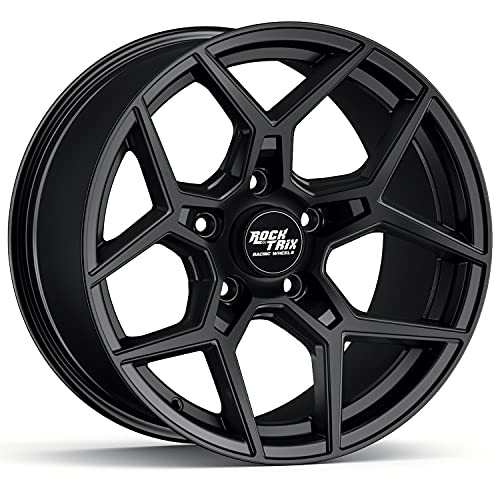
Aggressive Stance and Tire Clearance: These 18x9 wheels feature a -12mm offset that provides up to 2 inches of additional inner clearance for Toyota Tundra or Sequoia, allowing for the installation of larger 33-35 inch tires for superior off-road performance.

Genuine Toyota Wheel part# PT946-34220-2F ** Red TRD Center Cap part# PT280-89210-F2 Included

Aggressive Stance and Tire Clearance: These 18x9 wheels feature a +12mm offset that provides up to 1 inch of additional inner clearance for Toyota Tundra or Sequoia, allowing for the installation of larger 33-35 inch tires for superior off-road performance.
When To Use 2H
Use 2H for normal driving on dry, hard-surfaced roads. This is the best mode for fuel economy, quietness, and reduced wear. It also gives the steering and handling feel you expect during daily driving.
Do not feel like you need 4WD just because you own a 4WD truck. If the tires have plenty of grip and the surface is paved, 2H is usually the correct choice.
When To Use 4H
Use 4H when you need extra traction while still moving at normal trail or road speeds. Good examples include packed snow, icy roads, muddy ranch roads, loose gravel, sandy access roads, and moderate off-road trails.
4H is also useful when you need momentum. In sand or shallow mud, stopping can make the truck sink or dig in. Select 4H before the difficult section, keep steering smooth, and use steady throttle instead of sudden bursts.
When To Use 4L
Use 4L when control matters more than speed. Low range multiplies torque and makes throttle response easier to manage at crawling speed. This helps when climbing a rocky shelf, easing down a steep grade, crossing deep ruts, or pulling through thick mud.
In 4L, drive slowly and deliberately. Pick your line before the obstacle, keep both hands on the wheel, and avoid spinning the tires. Wheelspin can dig holes, damage trails, and shock-load drivetrain parts.
Troubleshoot 4WD Engagement on Your Tundra
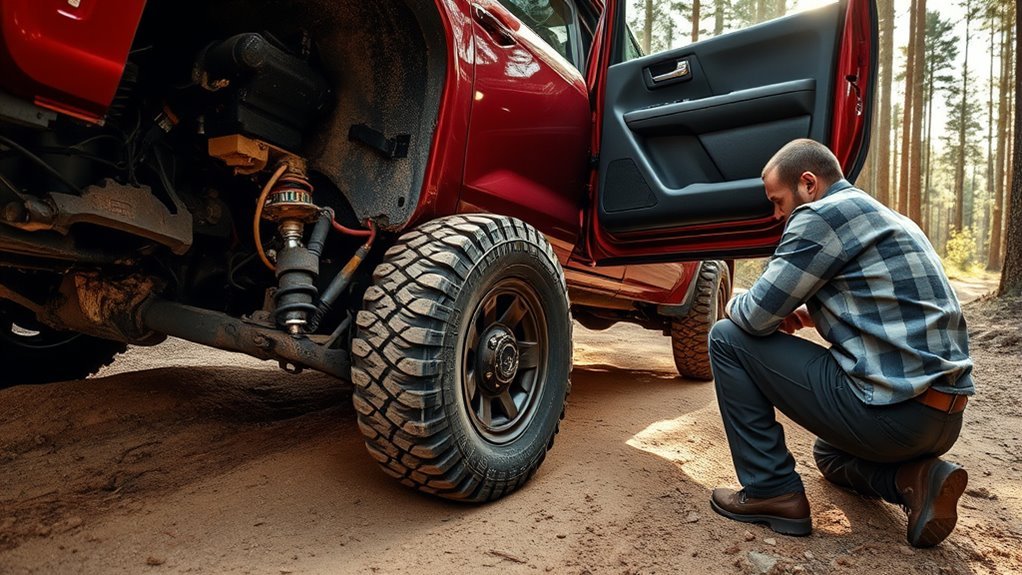
Most 4WD engagement problems come from rushing the shift, using the wrong vehicle speed, or trying to shift 4L without stopping and selecting Neutral. Start by checking the simple items first.
4WD Indicator Troubleshooting
- 4H indicator does not come on: Make sure you are below 62 mph, driving straight, and have pushed and shifted the control switch fully to 4H.
- 4L indicator does not come on: Stop completely, keep the brake pedal pressed, shift to N, then push and shift the switch to 4L.
- Indicator flashes longer than expected: Roll straight slowly on a loose surface if safe. Do not force the shift with hard throttle.
- Truck feels bound up: You may be on a high-grip surface in 4WD. Move slowly to a loose surface if safe, straighten the wheels, and shift back to the correct mode.
- Grinding, clunking, or repeated failure: Stop using the system aggressively and have the truck inspected.
Shift Lever Engagement Steps
The 2025 Tundra procedure is switch-based, not a manual “pull-back” transfer lever process. For 2H to 4H, slow below 62 mph and shift the switch to 4H. For 4H to 4L, stop completely, keep the brake applied, shift to N, and then shift the switch to 4L.
Pro Tip: Select 4H before you enter the slippery section, not after you are already stuck. Select 4L before a steep climb or descent, not halfway through it.
How 4WD Affects Handling and MPG
4WD improves traction, but it also adds drivetrain load. In 4H, the front and rear driveline are working together, which can reduce fuel economy compared with 2H. In 4L, the gearing is much lower, so speed drops and fuel use rises quickly if you leave it engaged longer than needed.
Handling also changes. In 4H or 4L, the truck may resist tight turns on high-grip surfaces. That is one reason Toyota reserves 4H for surfaces that allow tire slip. On the right terrain, that extra traction is helpful. On the wrong terrain, it creates stress.
The goal is simple: use the least aggressive mode that gives you enough traction and control. That keeps the truck moving while reducing wear.
Real Off-Road Scenarios and Gear Choices
Every trail changes, so reassess often. A road that starts as dry gravel can turn into slick clay, loose sand, or a rutted climb after one corner. Use these starting points, then adjust based on traction, slope, and wheelspin.
- Dry pavement: Use 2H.
- Loose gravel road: Use 4H if the rear tires are slipping or the road is washboarded and loose.
- Snow or ice: Use 4H, drive smoothly, and leave extra braking distance.
- Shallow mud: Use 4H and keep steady momentum.
- Deep mud or deep snow: Use 4L if you need slow torque instead of speed.
- Sand: Use 4H for momentum in open sand; use 4L if the truck is struggling at low speed. Airing down may help, but reinflate before highway driving.
- Steep rocky climb: Use 4L, pick a line, and use gentle throttle.
- Steep descent: Use 4L for engine braking and low-speed control.
- Rock crawling: Use 4L and avoid sudden throttle inputs.
- Recovery or hard pulling: Use 4L only with rated recovery points, proper gear, and a safe plan.
Using Tundra Off-Road Features If Equipped
Some 2025 Tundra trims and packages add off-road tools such as an electronically controlled locking rear differential, Multi-Terrain Select, Crawl Control, cameras, skid plates, and upgraded shocks. These features can help, but they do not replace good mode selection.
- Rear differential lock: Use it only when extra rear-wheel traction is needed at low speed. Turn it off when traction improves.
- Multi-Terrain Select: Match the mode to the surface, such as mud, sand, rock, or mogul, if your truck is equipped.
- Crawl Control: Use it for slow, controlled movement over difficult terrain, especially when steady throttle control is hard.
- Trail cameras: Use them as an aid, not a replacement for spotting and checking obstacles outside the truck.
Note: Off-road features vary by trim and package. Check your window sticker, owner’s manual, and Toyota’s official feature information before relying on a feature in the field.
Practical Maintenance for the Tundra 4WD System
Off-road driving adds heat, water, dust, and impact loads. Toyota’s 2025 Tundra Warranty & Maintenance Guide says that after driving off-road through deep sand, mud, or water, you should perform daily checks that include brake components, differential oil, drive shaft boots, steering linkage and boots, transmission fluid or oil, and transfer case oil on 4WD models.
After a trail day, inspect these items before the next long drive:
- Look under the truck for leaks, hanging plastic, bent brackets, or damaged skid plates.
- Check tires for cuts, missing chunks, sidewall bubbles, nails, and uneven pressure.
- Inspect brake areas for packed mud, stones, or abnormal noise.
- Check differential and transfer case areas for fresh fluid seepage.
- Listen for new clunks, grinding, humming, or vibration.
- Wash mud and sand from the underbody, wheels, brakes, and radiator/intercooler areas.
- Keep records of service, fluid inspections, and any parts replaced.
If you drive off-road often, tow, haul heavy loads, or cross water, follow Toyota’s special operating condition maintenance schedule rather than assuming normal commuting intervals are enough.
Responsible Trail Use
A capable truck still needs a responsible driver. Before heading out, check land-use rules, trail closures, weather, fire restrictions, and recovery options. Tread Lightly’s T.R.E.A.D. Principles recommend traveling responsibly, respecting other users, educating yourself before a trip, avoiding sensitive areas, and doing your part to protect access.
Stay on designated roads and trails, avoid widening muddy tracks, cross streams only where permitted, pack out trash, and yield appropriately to other trail users. Driving around obstacles can damage vegetation and widen trails, so choose the correct line or turn around when conditions are beyond your truck, tires, or experience.
Frequently Asked Questions
What are the basic 4×4 off-road skills?
The basics are choosing the right 2H/4H/4L mode, keeping steady throttle, braking smoothly, picking a safe line, knowing when to air down and reinflate tires, using recovery gear safely, and stopping before a section that looks beyond your experience.
When should I use 4H and 4L on a Tundra?
Use 4H for loose or slippery terrain when you still need normal driving speed, such as snow, gravel, sand, or moderate mud. Use 4L when you need low-speed torque and control, such as steep climbs, descents, rocks, deep ruts, or deep mud.
Can I shift from 2H to 4H while driving?
Yes, on the 2025 Tundra, Toyota says to reduce speed to less than 62 mph, then push and shift the front-wheel drive control switch to 4H. Use this only on surfaces where 4WD is appropriate.
Can I shift into 4L while moving?
No. To shift from 4H to 4L, stop completely, keep the brake pedal pressed, shift the transmission to N, and then push and shift the control switch to 4L. Use the same stopped-and-Neutral process to return from 4L to 4H.
Is 4H safe on dry pavement?
No, dry pavement is normally a 2H surface. 4H is for surfaces that allow tire slip, such as off-road terrain, snow, ice, mud, sand, or loose gravel. Using 4H on high-grip pavement can cause driveline binding and extra wear.
What should I inspect after off-roading a Tundra?
After deep sand, mud, or water, inspect brake components, tires, differential areas, drive shaft boots, steering linkage, underbody parts, and transfer case oil on 4WD models. Wash away mud and listen for new noises before the next trip.
Conclusion
You’ll get the most from a 2025 Toyota Tundra off-road by using the right mode at the right time. Stay in 2H for normal dry pavement, choose 4H for loose or slippery surfaces where tire slip can occur, and shift into 4L only when slow torque and precise control matter more than speed. Follow Toyota’s shift sequence, avoid dry-pavement 4WD use, and inspect the truck after rough trail days.
Sources
- Toyota Owners: 2025 Tundra Four-Wheel Drive System — backs up 2H, 4H, 4L use cases and shift procedures.
- Toyota 2025 Tundra Warranty & Maintenance Guide — backs up scheduled maintenance and off-road daily inspection items.
- Toyota Owners: 2025 Tundra Off-Road Precautions — backs up post-off-road inspection guidance.
- Toyota 2025 Tundra eBrochure — backs up available off-road features such as the locking rear differential and terrain systems.
- Tread Lightly: T.R.E.A.D. Principles — backs up responsible trail-use guidance.