You’ll find tire size and load data on the driver’s door jamb and each tire’s sidewall; read a code like P275/65R18 for width (275 mm), aspect ratio (65% of width), radial construction (R) and rim diameter (18 in). Note the numeric load index and lettered load range (C/D/E); convert the index via a chart to pounds and verify each tire’s capacity meets or exceeds GVWR divided by four. Keep going to get step‑by‑step conversion and fitment checks.
Locate Tire Specs on Your Tundra: Sidewall vs. Door Jamb
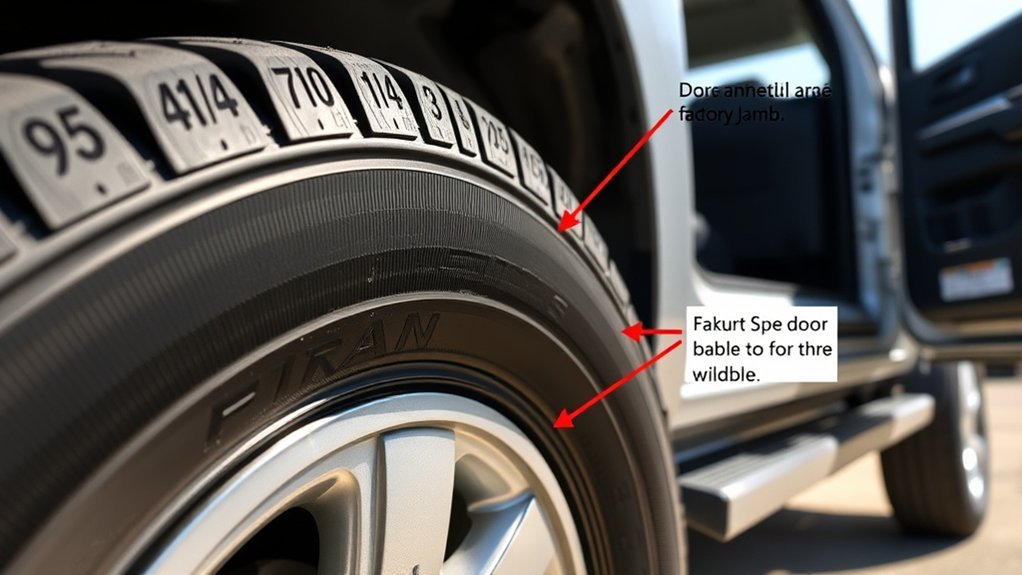
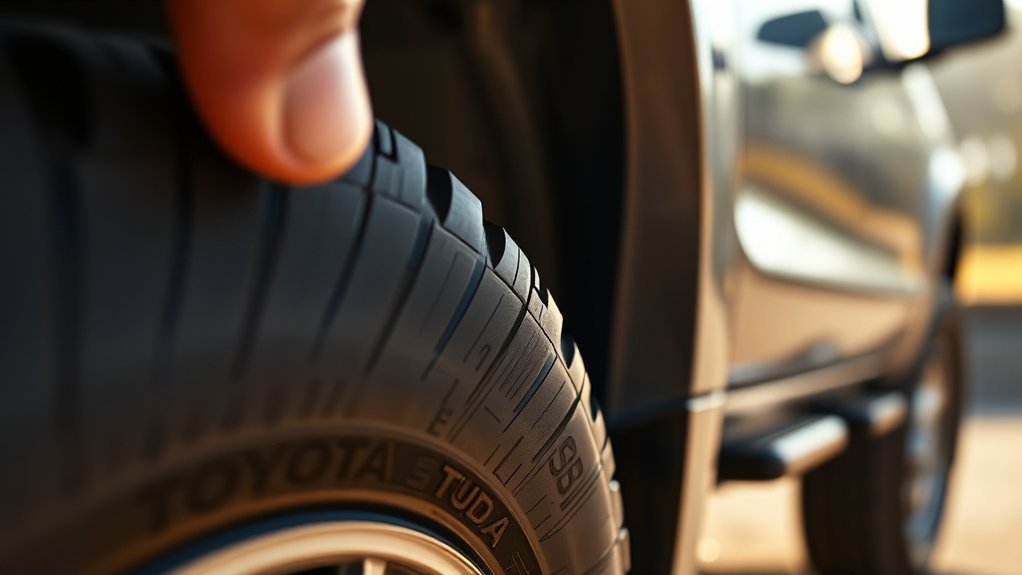
Start by checking two places: the driver’s side door jamb sticker for Toyota-recommended tire size and load ratings, and the tire sidewall for the actual tire code (e.g., 275/65R18), load index, and DOT manufacturing/date code. You’ll confirm the manufacturer’s specification on the jamb — recommended width, aspect ratio, rim diameter, and required load ratings tied to GVWR. Then inspect the sidewall: read the numeric/alphanumeric code for width/aspect/rim, note the load index to verify per-tire capacity meets or exceeds the vehicle requirement, and record the DOT code for manufacture date and regulatory compliance. Use these dual references during tire maintenance to match replacements and avoid underspec tires. Perform routine safety checks comparing door-sticker data with sidewall markings before purchase or installation. That discipline preserves vehicle capability, minimizes risk, and empowers you to choose tires that respect your freedom to drive safely and confidently.
Quick Check: Read Your Tire Size at a Glance (Example P275/65R18)
Think of the code P275/65R18 as a compact specification: You’ll spot width (275 mm), aspect ratio (65% of width), radial construction (R), and rim diameter (18 inches). Read it at a glance to verify fitment against your Tundra’s door-jamb data and manual. Check the tire’s load index and speed rating nearby to guarantee each wheel meets or exceeds the vehicle’s required capacity; a common load index like 113 supports roughly 2,535 lbs per tire.
When you verify size, also confirm recommended tire pressure stamped on the door jamb, not the tire — inflation affects load carrying, handling, and fuel use. Account for seasonal changes: cold air lowers PSI, heat raises it, so adjust pressure when temperatures swing. Use a calibrated gauge before long trips or towing. This quick check keeps you compliant, safe, and free from avoidable restrictions imposed by incorrect tires or improper inflation.
Decode Tire Size: What P, 275, 65, R, 18 Mean
Although the full code looks compact, each element conveys a specific spec you need to match to your Tundra: P275/65R18. The initial “P” tells you these are passenger tires, not “LT” light-truck units, so you’ll choose the tire construction suited to intended use and regulatory labeling. The 275 is the width measurement in millimeters across the tread; it determines contact patch, clearance in the wheel well, and steering response. The 65 is the aspect ratio: sidewall height expressed as a percentage of the width, so a 275mm width with a 65 aspect ratio yields the actual sidewall height, affecting ride compliance and handling. The “R” designates radial construction, where cord plies run radially for predictable flex and durability. The final 18 is the wheel diameter in inches, ensuring the tire fits the rim. Read these elements together to preserve safety, intended load capability, and the liberated control you want from your Tundra.
Read Load Index & Load Range: Convert Index to Lbs and E/C/D Explained
Tire load information tells you two different things: the numeric load index specifies the maximum weight each tire can carry (check a load index chart to convert the index—e.g., 121—into pounds), while the lettered load range (C, D, E) indicates the tire’s construction, allowable inflation pressure, and overall strength.
You’ll convert a load index to lbs via a chart—121 ≈ 3,200 lbs per tire—so you can verify total weight capacity against your needs. Load range C, D, E conveys tire strength and recommended inflation: E supports higher loads and towing capacity but may reduce ride quality; C/D balance comfort and tire durability. Use these tire specifications to choose liberating capability without compromise.
- Check load index → convert to lbs for per-tire weight capacity and total weight capacity.
- Read load range (C/D/E) → assess construction, max inflation, and tire durability.
- Match load index + load range to intended towing capacity and desired ride quality.
Compare Tire Capacity to Your Tundra’s GVWR and Payload; Next Steps
When you compare your tires’ load ratings to your Tundra’s GVWR and payload, calculate the required per-tire capacity by dividing the GVWR by the number of tires in contact with the road (typically four) and verify each tire’s load index meets or exceeds that value. Do this math, then check tire compatibility against the load index on the sidewall. For a 7,000 lb GVWR you’ll need ≥1,750 lb per tire; select a load index that converts to that or higher.
| Item | Action |
|---|---|
| GVWR check | Confirm GVWR from placard/manual |
| Per-tire requirement | GVWR ÷ 4 = required lbs |
| Load index match | Convert index → lbs; verify ≥ required |
| Final step | Inspect weight distribution and specs |
Next steps: confirm OEM tire size and load range, account for uneven weight distribution when towing or loading, and choose tires with margin above required capacity. Regularly recheck specs to maintain safety and reclaim control over vehicle performance.
Frequently Asked Questions
How to Read Tire and Loading Information?
Read the tire placard and sidewall: you’ll see tire specifications (width/aspect ratio/rim diameter), sidewall height via aspect ratio, load capacity and tire pressure; use load capacity to match needs and maintain rated tire pressure.
What Does 235 50R18 97W Mean?
235 50R18 97W means you’ve got a 235mm width, 50% aspect ratio radial for 18-inch rims; load ratings (97) support 1,433 lbs per tire and W speed rating permits up to 168 mph—read tire specifications precisely.
Will 285 65R20 Fit Stock Tundra?
Think of your Tundra like a caged hawk—you’ll need room. You probably won’t fit 285/65R20s on stock suspension without rubbing; check tire clearance, consider a level or lift, and confirm load index and alignment.
Conclusion
You’ve now got the tools to read every number on your Tundra’s tires—sidewall or door jamb—so you’ll never guess load capacity again. Read P275/65R18 like a pro, convert load index to pounds, and match the E/C/D load range to real-world payload. Compare that capacity to your GVWR and payload, and make the right tire choice. Don’t risk overload—measure, convert, and pick tires that actually carry what you haul.