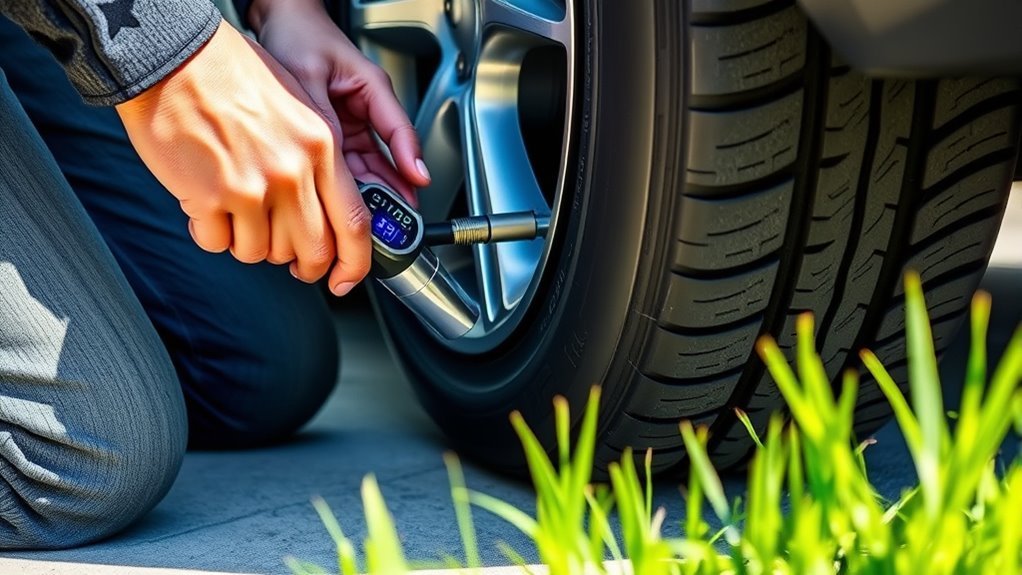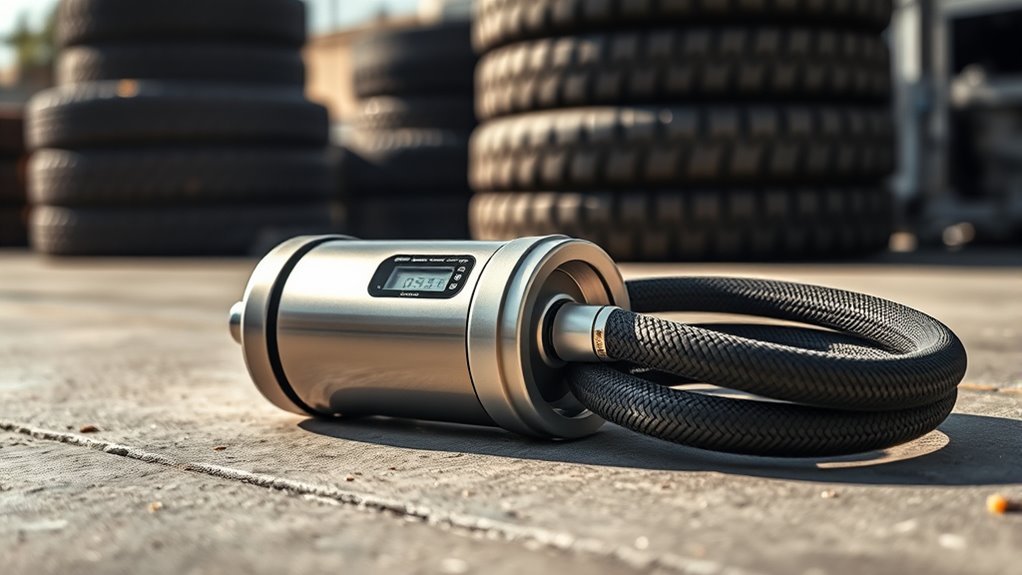
A tire inflator typically runs continuously for 10 to 30 minutes, depending on its size and usage. Passenger car models usually last 10 to 15 minutes, while larger vehicles or heavy-duty inflators may run for up to an hour. The duty cycle ratings show how long you can use the inflator before needing a cooldown. Understanding these factors helps you choose the right inflator for your needs, and there’s more you should know for peak performance.
What Is Continuous Runtime and Why Does It Matter?
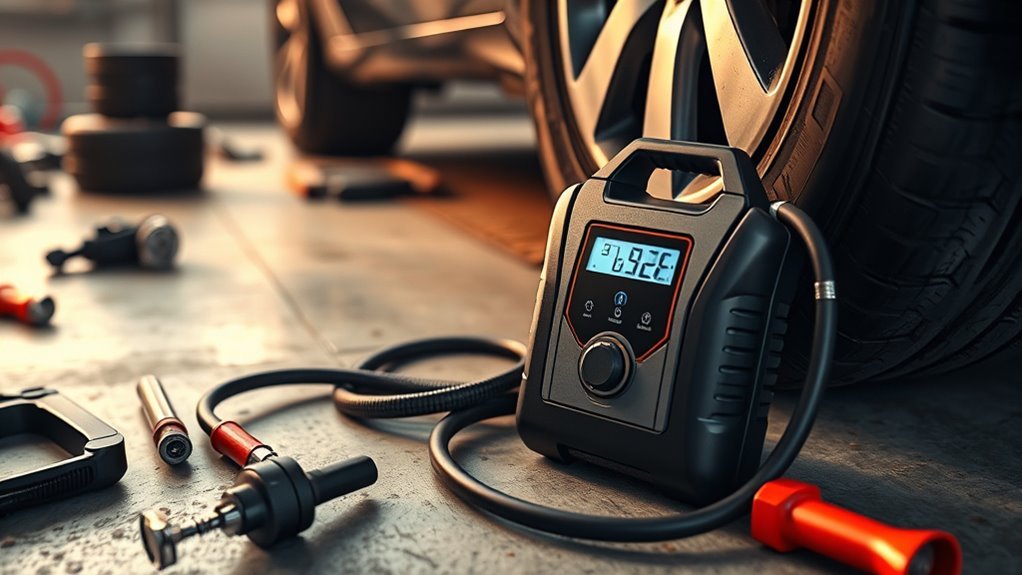
When you’re in a pinch and need to inflate a tire, understanding continuous runtime is crucial. Continuous runtime refers to how long your portable tire inflator can work before it needs a cooldown. This duration affects its performance and longevity, especially when you’re aiming for ideal tire pressure. A typical inflator for passenger cars might run for 10 to 15 minutes, while heavy-duty models can last up to an hour. Knowing your inflator’s duty cycle means you can gauge its capabilities—like a 33% duty cycle, which indicates 20 minutes of operation followed by 40 minutes of rest. Matching the continuous runtime to your vehicle ensures efficient inflation, empowering you to tackle emergencies and maintenance with confidence.
Factors Influencing Continuous Runtime in Tire Inflators
Although several factors come into play, the continuous runtime of a tire inflator primarily hinges on its motor power and design. A robust motor typically allows for longer operation without overheating, enhancing your ability to inflate tires efficiently. The duty cycle is essential, too; for instance, a 33% duty cycle means you’ll need to let the inflator rest after 20 minutes of use. Tire size matters, as larger tires demand more air, extending inflation time. Additionally, effective cooling mechanisms are critical in preventing overheating during prolonged use, especially in demanding tasks. Finally, the type of power source—whether 12V DC or battery-operated—can greatly influence the inflator’s continuous runtime capabilities and performance. Choose wisely for ideal results!
How Long Should You Expect Your Tire Inflator to Run?
Understanding the expected runtime of your tire inflator is essential for efficient tire maintenance. Typically, most inflators offer a duty cycle of 3.5 to 10 minutes of continuous use, followed by a necessary cool-down period. For passenger cars, you can expect about 10 to 15 minutes of operation for inflating two tires, while larger vehicles like SUVs may need 20 to 30 minutes. Heavy-duty inflators, designed for rugged applications, can run up to an hour with advanced cooling systems to manage heat. Always adhere to manufacturer guidelines regarding runtime and cooling to maintain ideal pressure and prolong your inflator’s life. Remember, respecting these limits is key for effective tire care and overall performance.
What You Need to Know About Duty Cycle Ratings

Knowing the duty cycle ratings of your tire inflator is essential for maximizing its efficiency and lifespan. The duty cycle indicates how long your inflator can run continuously before needing a break. Typically, a duty cycle of 33% means you can run your inflator for 20 minutes, followed by a 40-minute cooldown. Understanding these ratings helps you choose the right inflator for your needs, especially for heavy-duty applications.
| Duty Cycle (%) | Run Time (minutes) | Rest Time (minutes) |
|---|---|---|
| 33% | 20 | 40 |
| 50% | 30 | 30 |
| 100% | Continuous | None |
Check product specifications for exact duty cycles and avoid overheating your inflator!
How Do Different Tire Inflators Compare in Runtime?
When it comes to tire inflators, their runtime can vary dramatically based on the type and intended use. Understanding these differences can empower you to choose the right model for your needs, especially in emergencies.
- Passenger Car Models: Typically allow for 10 to 15 minutes of continuous runtime, ideal for quick inflation tasks.
- Heavy-Duty Models: Can run for 30 minutes to an hour without overheating, perfect for prolonged tasks.
- Motorcycle and Bicycle Inflators: Require only 5 to 10 minutes, making them efficient for smaller tires.
Always consider the duty cycle; some models need rest time to prevent damage. Knowing these factors helps guarantee safe and efficient operation, maximizing your inflator’s potential in critical situations.
Tips to Extend Your Tire Inflator’s Runtime
To maximize your tire inflator’s runtime and guarantee it functions efficiently when you need it most, follow a few key practices. Adhering to the manufacturer’s duty cycle is vital; typically, run your inflator for 5 to 10 minutes and then let it cool for an equal time. Also, make sure you’re using your inflator in suitable conditions, avoiding extreme temperatures or humidity. Regular maintenance, like cleaning air filters and checking hoses, greatly enhances performance. Finally, verify that your power source can handle prolonged use without overheating.
| Practice | Duration | Benefits |
|---|---|---|
| Follow Duty Cycle | 5-10 minutes | Prevent overheating |
| Let It Cool | Equal cooldown | Maintain peak performance |
| Use in Suitable Conditions | N/A | Prevent motor stress |
| Regular Maintenance | N/A | Enhance longevity |
| Check Power Source | N/A | Confirm reliability |
How to Tell If Your Tire Inflator Is Overheating and What to Do About It?

You can tell if your tire inflator is overheating by feeling the housing for excessive heat and noticing slower inflation times. To prevent this, make sure you follow the manufacturer’s duty cycle and allow for adequate cooling periods between uses. If it does overheat, wait for it to cool down before using it again to protect the motor.
Signs of Overheating
Overheating can be a serious issue for tire inflators, and recognizing the signs early can save you from potential damage and guarantee efficient operation. Here are three key indicators to watch for:
- Hot Exterior: If your inflator feels excessively hot to the touch, it’s time to turn it off.
- Performance Drop: Notice a sudden decrease in inflation speed or an inability to reach the correct pressure? This could signal overheating.
- Unusual Noises: Grinding or rattling sounds may indicate that the motor is struggling and overheating, possibly damaging internal components.
If you notice any of these signs during continuous use, remember that your inflator’s automatic shut-off feature is there to help protect it.
Recommended Cooling Practices
While using a tire inflator, recognizing when it’s overheating is essential to maintaining its performance and longevity. Adhering to the manufacturer’s duty cycle is crucial—typically, you should allow for a cooling period equal to your inflation time, like 5 minutes of use followed by 5 minutes of cooling. Watch for signs of overheating, such as a drop in performance, strange motor noises, or excessive heat. If your inflator overheats, turn it off immediately and let it cool in a well-ventilated area. Regular maintenance, including cleaning the air intake and checking hoses, can prevent overheating by ensuring efficient operation. Some inflators even have automatic shut-off features for added protection against overheating.
Frequently Asked Questions
Can a Tire Inflator Drain a Car Battery?
Yes, a tire inflator can drain your car battery, especially with high power consumption. Different tire inflator types have varying impacts, so monitor battery capacity and follow maintenance tips to avoid unexpected drain during use.
Do Tire Air Pumps Turn off Automatically?
Most tire inflators come equipped with automatic shutoff features, ensuring safety and user convenience. These mechanisms prevent over-inflation, allowing you to relax while your inflator does the work efficiently. Isn’t that liberating?
Can I Run My Car While Using a Tire Inflator?
Yes, you can run your car while using a tire inflator. Keeping the car engine running enhances inflator performance, prevents battery drain, and guarantees safety. Just follow inflator safety tips for maximum tire inflator usage.
How Long Does a Tire Inflator Last?
A tire inflator lasts longer with proper maintenance and following usage recommendations. Generally, expect around 10 to 15 minutes of effective operation. Consistent care enhances your tire inflator lifespan, ensuring reliable performance whenever you need it.
Conclusion
In the world of tire inflators, understanding continuous runtime is like deciphering a treasure map. By grasping duty cycles and runtime expectations, you can guarantee your inflator operates smoothly, avoiding the pitfalls of overheating. Just as a diligent sailor checks the weather before setting sail, you should monitor your inflator’s performance. By following these tips, you’ll not only extend its lifespan but also keep your journeys safe and worry-free, ready to conquer the open road ahead.