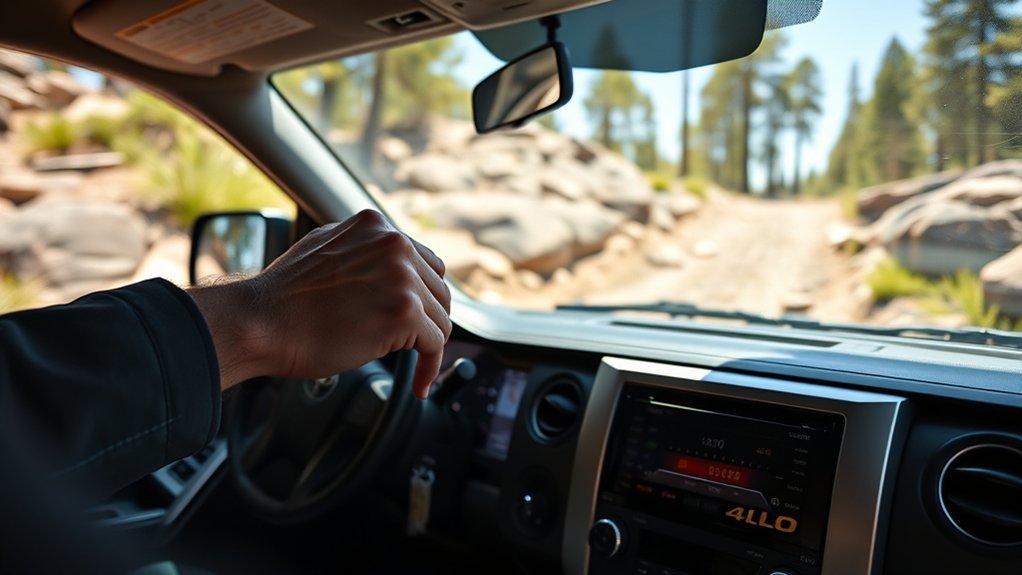
Engaging 4LO on a Toyota Tundra is simple, but the order matters. Toyota labels the low-range setting as 4L, and it is meant for slow, high-torque driving, not normal road speed. Use it for steep off-road climbs or descents, deep mud, sand, or deep snow where crawl control and torque matter more than speed.
Quick Answer
To engage 4LO/4L on a 2022 Toyota Tundra, shift into 4H first if needed, stop completely, keep the brake pedal depressed, shift the transmission to Neutral, then push and shift the 4WD control switch to 4L. Wait for the 4L indicator to stay solid before driving.
Key Takeaways
- Use 4H for higher-speed traction on loose, icy, snowy, or off-road surfaces; use 4L/4LO only for low-speed, high-torque situations.
- For 4L, the truck must be stopped, the brake pedal must stay depressed, and the transmission must be in Neutral.
- A solid 4L indicator means low range is engaged. A flashing indicator, buzzer, or shift warning means the shift did not complete.
- Do not use 4L on dry hard-surfaced roads. Return to 2H for normal dry-road driving.
At a Glance
| Time Required | Less than 1 minute when conditions are correct |
| Difficulty | Easy, but sequence-sensitive |
| Tools Needed | None |
| Cost | $0 unless diagnosis or repair is needed |
Engage 4LO: Quick Steps for the 2022 Tundra
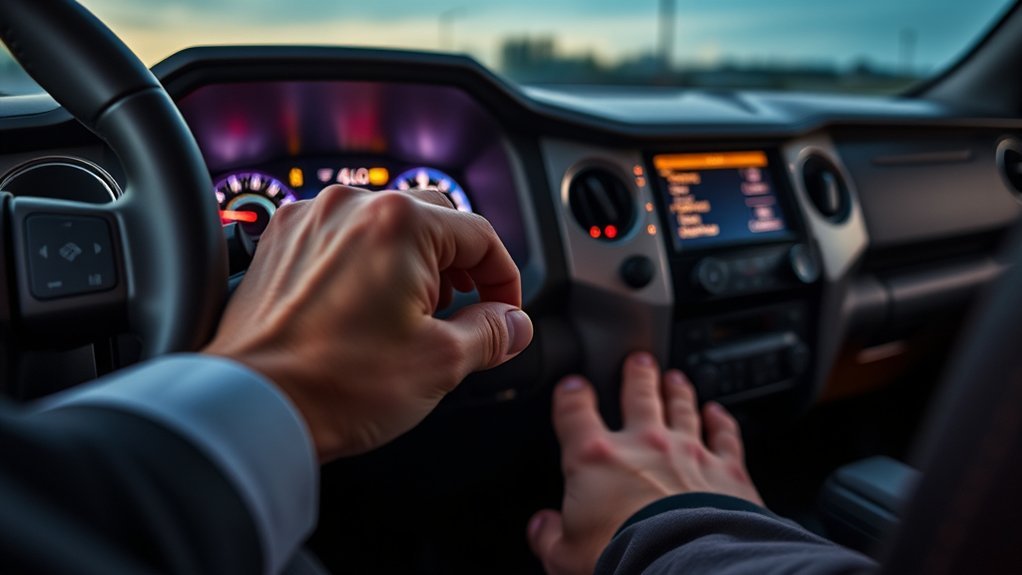
The safe 4LO sequence on a 2022 Toyota Tundra is based on Toyota’s 2022 Tundra Quick Reference Guide. The guide describes low range as a shift between 4H and 4L, so do not skip directly from normal 2H driving into 4L without confirming the truck is in the correct 4WD state.
- Choose the right surface. Use 4L only where tire slip is expected or low-speed torque is needed, such as steep off-road terrain, deep mud, sand, or deep snow.
- If you are in 2H, shift to 4H first. Reduce speed to less than 62 mph, push and shift the 4WD control switch to 4H, and wait for the 4H indicator.
- Stop completely. Bring the Tundra to a full stop before selecting 4L.
- Keep the brake pedal depressed. Do not release the brake during the shift.
- Shift the transmission to Neutral. A true Neutral position is required for the transfer case to complete the low-range shift.
- Push and shift the 4WD control switch to 4L. Use a deliberate input and do not force the switch.
- Wait for the 4L indicator. Drive only after the indicator confirms engagement and is no longer flashing.
- Drive slowly. 4L is for controlled crawling, not road speed.
Warning: Do not use 4L on dry hard-surfaced roads. Low range can cause driveline binding on high-traction surfaces and is intended for low-speed conditions where extra torque and traction are needed.
[Products Worth Considering]

【Compatibility】Transmission Actuator Assembly Fits for Toyota Tundra 2007-2014

[Get Your 4WD Back on the Road] Is your truck stuck in 2WD or is the 4x4 light flashing on your dash? This transfer case shift motor is the direct fix to restore your vehicle's 4-wheel drive system. Precision-engineered to handle the switching between high and low ranges, it ensures you’re never left stranded when the pavement ends or the snow starts falling.

Vehicle Fitment:Transfer Case Shift Motor Actuator Compatible with Toyota Tacoma 2002 2.4L L4/2.7L L4/3.4L V6,2005-2010 2.7L L4, 2011-2015 2.7L L4/4.0L V6,2016 3.5L V6 ; For Toyota 4Runner 2004-2009 4.0L V6,2014-2019 4.0L V6; For Toyota Tundra 2000-2001 2003-2006 4.7L V8.For more details, please refer to the information on the relevant page.Note:Before purchasing,please check the Amazon Confirmation of installation and description details page to verify the compatibility of this item with your vehicle.
How to Shift Back Out of 4L
To leave 4L, stop completely, keep your foot on the brake, shift the transmission to Neutral, then push and shift the 4WD control switch back to 4H. Wait for the 4L indicator to go off. If you are returning to normal dry-road driving, shift from 4H back to 2H when conditions are safe and follow the manual’s speed guidance.
Pro Tip: Practice the 4H-to-4L and 4L-to-4H sequence on level ground before you need it on a trail. The steps feel much easier when you already know what the indicators should do.
4LO vs 4H: When to Use Each on Real Roads
The simplest way to choose the right mode is to match the mode to speed and terrain. Toyota describes 2H as the normal dry-road setting, 4H as high-speed 4WD for roads that permit tire slip, and 4L as low-speed 4WD for maximum power and traction.
| Mode | Best Use | Avoid |
|---|---|---|
| 2H | Normal driving on dry hard-surfaced roads | Deep mud, deep snow, steep off-road sections, or recovery situations |
| 4H | Loose, icy, snow-covered, gravel, or off-road surfaces where you still need higher-speed movement | Dry pavement and situations that require crawl-speed torque |
| 4L / 4LO | Slow technical driving, steep climbs or descents, deep mud, sand, or deep snow | Normal roads, highway speed, sharp turns on high-traction surfaces |
[Products Worth Considering]

Vehicle Fit:The Car Gear Shift Panel Trim Cover is compatible with Tundra / Sequoia 2022-2025 2026. Simply remove the double-sided adhesive and stick it on, will not affect the use of the gear shift or button.

Toyota Tundra Off-Road design. Officially Licensed Toyota Apparel for Women - Men - Boys - Girls - Toddler; Toyota Motor T-Shirts; Toyota Trucks T-Shirts; Cars; Adventure; Racing; Off-Road; Outdoor; Logo; Tundra;

🚙Applicable Models: Car center console gear shift panel trim cover is compatible with Toyota Tundra 2022 2023 2024 2025 2026+ and Toyota Sequoia 2023 2024 2025 2026+. Please confirm your car model before purchasing.(Matte Black, with 4WD)
Traction vs Speed
4H gives extra traction while keeping the truck usable at higher speeds on slippery or loose surfaces. 4L changes the gearing for low-speed torque. That torque helps the truck crawl, climb, descend, or pull through heavy resistance, but it also limits practical speed and increases drivetrain load.
Terrain Suitability Guide
Use 4H for snow-covered roads, icy roads, gravel, or mild trails where you still need momentum. Use 4L only when momentum is less important than controlled torque: steep grades, rockier trail sections, deep sand, deep mud, or deep snow.
Fuel Economy Impact
4L is not an economy setting. Because it uses low gearing, the engine can run at higher rpm for a given road speed and the truck should be driven slowly. For best fuel economy and normal performance on dry hard-surfaced roads, keep the truck in 2H.
Vehicle State & Dash Indicators Required for 4LO
Before selecting 4L, confirm four things: the truck is stopped, the brake pedal is depressed, the transmission is in Neutral, and the 4WD switch is being moved from 4H to 4L. Then watch the instrument cluster instead of guessing.
- Solid 4L indicator: Low range is engaged.
- Flashing 4L indicator: The shift may still be in progress or the required conditions were not met.
- Buzzer or shift warning: Stop, keep the brake depressed, confirm Neutral, and try the correct sequence again.
- VSC OFF indicator: This can be normal when 4L is engaged. It does not automatically mean the 4WD system failed.
Note: Driver-assist systems have limits, especially off-road. Toyota’s Pre-Collision System information says the driver remains responsible for safe driving and lists off-road driving among situations where the system may not operate properly.
Center-Console 4WD Switch: Steps, Common Mistakes, and Warnings
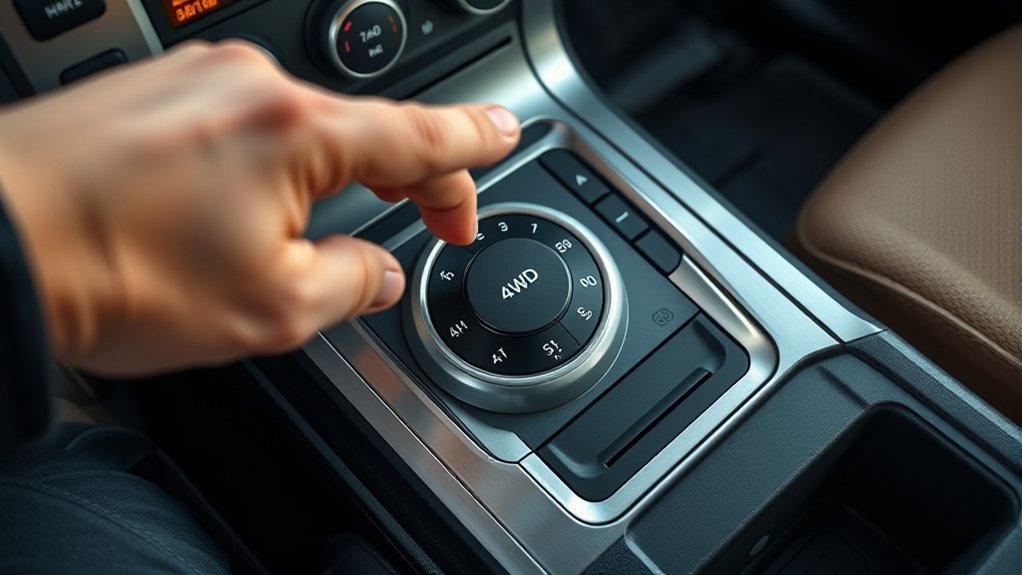
The center-console switch is easy to use, but the truck will block or delay the shift if the state is wrong. Do not jab the switch repeatedly. Use one deliberate input, wait for the indicator, and let the system finish the transfer-case shift.
Center-Console Switch Operation
For 4L, stop the Tundra completely, keep your foot on the brake, shift the transmission to Neutral, then push and shift the 4WD control switch to 4L. The cluster should confirm 4L when the shift is complete. After that, select Drive or the appropriate manual range and move slowly.
Common Shifting Warnings
The most common mistakes are trying to select 4L while moving, trying it from Park or Drive, releasing the brake, or not being fully in Neutral. If the indicator flashes or the truck shows a warning, reset the sequence rather than forcing the switch.
Warning: If the transfer shift has not completed, do not assume Park will hold the truck on a grade. Keep your foot on the brake, confirm the indicator state, and use the parking brake when stopped.
VSC Off, Flashing 4L, or Shift Blocked: Immediate Steps and Safety Notes
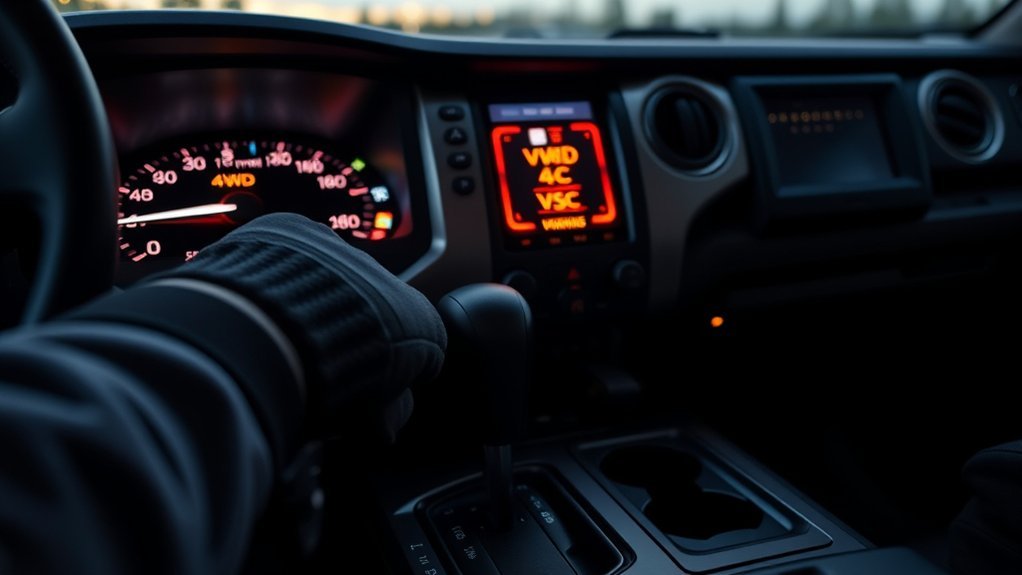
If the dash shows VSC OFF after 4L engages, that can be expected. If the 4L indicator keeps flashing, the switch feels unresponsive, or the truck warns that the shift is blocked, slow down and work through the sequence calmly.
- Stop in a safe, level place if possible. Avoid stopping where the truck could roll or slide.
- Keep the brake pedal firmly depressed. Do not let the truck creep during the transfer-case shift.
- Shift to Neutral. Move the shifter deliberately and confirm the cluster shows N.
- Select 4L once and wait. Let the system complete the shift before moving the transmission back into Drive.
- If the indicator still flashes, return the switch to the previous mode and retry once. Repeated switch cycling can make diagnosis harder.
- If warnings persist, stop using 4L and schedule service. A continuing warning may point to an actuator, switch, sensor, calibration, wiring, or transfer-case issue.
Troubleshooting Alerts, Stuck Toggles, and Dealer Fixes
Many 4L engagement issues are caused by sequence errors, not broken parts. Start with the simple checks first, then move to service diagnosis if the truck still will not confirm the shift.
| Symptom | Likely Cause | What to Do |
|---|---|---|
| 4L indicator will not come on | Truck not stopped, not in Neutral, or brake not held | Stop, hold brake, shift to N, select 4L again |
| 4L indicator flashes | Shift is incomplete or conditions are not met | Wait briefly, confirm N and brake, retry once |
| VSC OFF appears with solid 4L | Expected low-range behavior | Proceed slowly and do not rely on stability aids the same way you would on-road |
| Switch feels stuck | Physical obstruction, spilled debris, or switch fault | Check for visible obstruction; do not pry or force it |
| Warning returns every time | Possible 4WD system fault | Have a Toyota dealer or qualified technician diagnose it |
Dealer-level diagnosis can include scanning 4WD control modules, checking switch inputs, inspecting actuator operation, verifying software updates, and testing wiring. That is the right path if the truck follows the correct sequence but still refuses to engage or disengage 4L.
Towing, Tires, and Other 4LO Limits
4L can help at very low speed when extra torque is needed, but it is not a substitute for correct towing setup, tire condition, or driver judgment. Before using 4L with a trailer or heavy load, check the Tundra owner’s manual for towing limits, trailer brake setup, and terrain-specific warnings.
Tires also matter. Mismatched tire sizes, heavy tread differences, incorrect pressure, or non-recommended tire sizes can affect traction, handling, and 4WD behavior. NHTSA’s tire safety guidance recommends using the same tire size as the original tires or another size recommended by the manufacturer.
4L is about controlled torque, not speed. If you need momentum on a slick road, 4H is usually the better match. If you need crawl control through resistance, 4L is the right tool.
[Products Worth Considering]

Aggressive Stance and Tire Clearance: These 18x9 wheels feature a +12mm offset that provides up to 1 inch of additional inner clearance for Toyota Tundra or Sequoia, allowing for the installation of larger 33-35 inch tires for superior off-road performance.

Aggressive Stance and Tire Clearance: These 18x9 wheels feature a +12mm offset that provides up to 1 inch of additional inner clearance for Toyota Tundra or Sequoia, allowing for the installation of larger 33-35 inch tires for superior off-road performance.

Aggressive Stance and Tire Clearance: These 18x9 wheels feature a +12mm offset that provides up to 1 inch of additional inner clearance for Toyota Tundra or Sequoia, allowing for the installation of larger 33-35 inch tires for superior off-road performance.
Frequently Asked Questions
Can 4LO be engaged while towing a trailer?
Use 4LO with a trailer only for very low-speed situations where you need extra torque, such as controlled movement on loose or steep terrain. Do not shift into 4L while rolling at road speed. Stop completely, keep the brake depressed, shift to Neutral, and follow the same 4H-to-4L sequence. Always stay within Toyota’s towing limits and use the correct trailer brake setup.
Will tire size differences affect 4LO performance?
Yes. Different tire sizes, uneven wear, or incorrect tire pressure can affect handling, traction, and 4WD operation. Use tire sizes recommended on the vehicle placard or in the owner’s manual, and keep pressures matched to Toyota’s specifications.
Does engaging 4LO reduce fuel economy significantly?
4LO is not designed for fuel economy. It uses low gearing for torque and should be driven slowly, so fuel use can rise quickly compared with normal 2H driving. For normal dry-road driving, use 2H.
Can 4LO be used on icy pavement for safer handling?
For normal icy or snow-covered roads, use 4H rather than 4LO. 4LO is for very low-speed torque, such as deep snow recovery or steep off-road terrain. It is not a general safer-handling mode for road-speed icy pavement.
Why does VSC OFF appear when 4LO is engaged?
VSC OFF can appear as part of low-range operation. Treat it as a reminder that the truck’s stability-control behavior is different in 4L. Drive slowly, avoid sudden steering or throttle inputs, and do not rely on driver-assist systems to overcome poor judgment or unsafe terrain.
Is 4LO engagement covered under warranty?
It may be covered if the problem is caused by a defect in materials or workmanship and the vehicle is still within applicable coverage. Toyota’s basic coverage is commonly 36 months/36,000 miles, and powertrain coverage is commonly 60 months/60,000 miles, subject to exclusions, mileage, time, and dealer diagnosis.
Conclusion
To engage 4LO on a Toyota Tundra, think sequence first: shift to 4H if needed, stop completely, hold the brake, shift to Neutral, select 4L, and wait for a solid indicator. Use 4L only where slow torque is needed, and shift back out before returning to normal driving. If the indicator flashes, the switch sticks, or the warning returns after the correct sequence, stop forcing the system and get the truck inspected.
Sources
- Toyota 2022 Tundra Quick Reference Guide — 2H, 4H, and 4L mode descriptions and shifting steps.
- Toyota 2022 Tundra Owner’s Manual: Four-Wheel Drive System — official 4WD system reference.
- Toyota Support: On-Demand 4 Wheel Drive Operation — 4LO and VSC OFF indicator behavior.
- Toyota 2022 Tundra Owner’s Manual: Pre-Collision System — driver-assist limitations and off-road cautions.
- NHTSA Tire Safety Brochure — tire size and tire safety guidance.
- Toyota Support: Warranty Coverage — basic and powertrain warranty coverage overview.