Start by isolating whether it’s a single door actuator or the central locking system (relay/module, fuses, wiring, or key fob). Check related fuses and listen for the relay click while operating locks; test key fob battery and verify voltage at the actuator with a multimeter. A lone silent or weakly clicking door usually means the actuator; multiple doors point to a relay or module/wiring fault. Continue for step‑by‑step tests, replacement steps, and cost guidance.
Quick Answer: Actuator or Central System?
1 clear test will tell you whether the issue is a single actuator or the central locking system: if only one door fails and you hear a faint buzzing from the actuator when you lock/unlock, the actuator is likely at fault; if multiple doors fail simultaneously, suspect the central lock controller or a relay and check wiring and connections. You’ll start by isolating the fault: operate each lock type independently and note which doors respond. When a single actuator is noisy or sluggish, replace it—compare actuator brands for compatibility and quality; aftermarket options are widely available and affordable. If several doors are dead, trace power to the central module and inspect connectors for corrosion or loose pins. You’ll document symptoms, swap actuators if practical, and consult wiring diagrams to avoid guesswork. This methodical approach frees you from unnecessary shop visits, lets you choose parts by brand confidence, and restores reliable control to your Tundra.
Test Fuses, Relay, Key Fob, and Wiring
Before you replace an actuator, check the electrical basics: inspect the related fuses and the central locking relay, verify the key fob battery, and visually examine the wiring harness for damage or corrosion. You’ll want to confirm power and signal integrity before assuming mechanical failure.
Before swapping an actuator, check fuses, relay, key fob battery, and wiring for power and signal issues.
Use a multimeter and follow these steps precisely:
- Fuse testing: locate door-lock fuses, remove and test continuity or voltage under load; replace any blown fuse with the specified rating.
- Relay inspection: bench-test or swap the central locking relay with a known-good relay; listen for click and measure coil continuity and switched output.
- Key fob and wiring: replace the fob battery if low; visually trace the harness for chafing, corrosion, or loose pins and probe actuator pins for proper voltage when operating locks.
These checks free you from guesswork, isolate electrical faults, and keep you in control of the repair process.
Diagnose Single-Door Actuator Failures
If one door won’t lock or open while the others work, listen for sluggish clicking or silence at the problem door to confirm a faulty actuator. Next, check electrical signals by unplugging the actuator and using a multimeter on the actuator pins while operating the lock switch to verify voltage. If the motor shows no power or fails, follow the actuator removal steps, inspect wiring and corrosion, and replace with the correct OEM unit priced around $68–$113.
Symptoms And Sounds
When one door’s lock won’t respond while the others work, you’re likely dealing with a single actuator failure; listen for sluggish clicking or buzzing when you press the lock to confirm the motor is trying to engage but failing. That sound pattern signals the actuator motor is struggling, and manual lock movement remaining functional narrows the fault to the actuator itself. Use concise troubleshooting tips to isolate the issue before actuator replacement.
- Sluggish clicking: actuator gear grinding or seized linkage; door switch works elsewhere — actuator suspect.
- Buzzing without movement: motor receives power but internal mechanism stalls; freedom to fix requires component swap.
- No sound yet manual lock works: check actuator coupling; proceed to targeted actuator replacement after basic tests.
Electrical Signal Checks
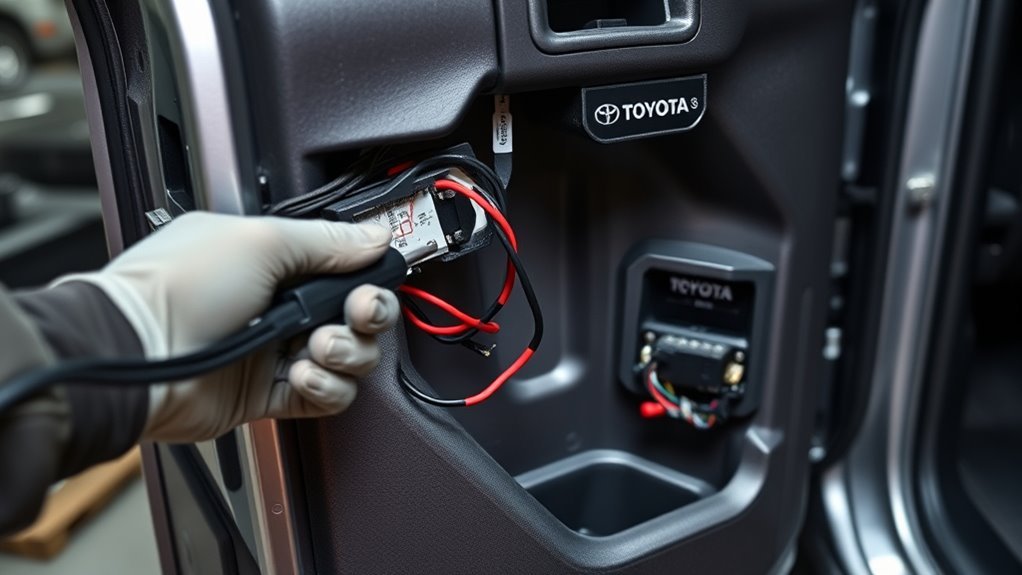
Although the actuator may seem dead, start by verifying the electrical signal at the connector: ground your multimeter to the vehicle body, probe the actuator pins, and energize the lock switch—you should see roughly 12 V on the positive pin when commanded. Next confirm signal continuity and wiring integrity: probe while toggling the switch, watch for voltage drop, and wiggle the harness to reveal intermittent connections. Check the central locking relay for faults if no voltage appears. If you measure ~12 V but the actuator stays silent, the actuator is likely failed and should be replaced.
| Check | Action |
|---|---|
| Voltage | Probe positive pin for ~12 V |
| Grounding | Multimeter negative to vehicle body |
| Wiring | Inspect harness for damage |
| Relay | Test/replace if signal missing |
Actuator Removal Steps
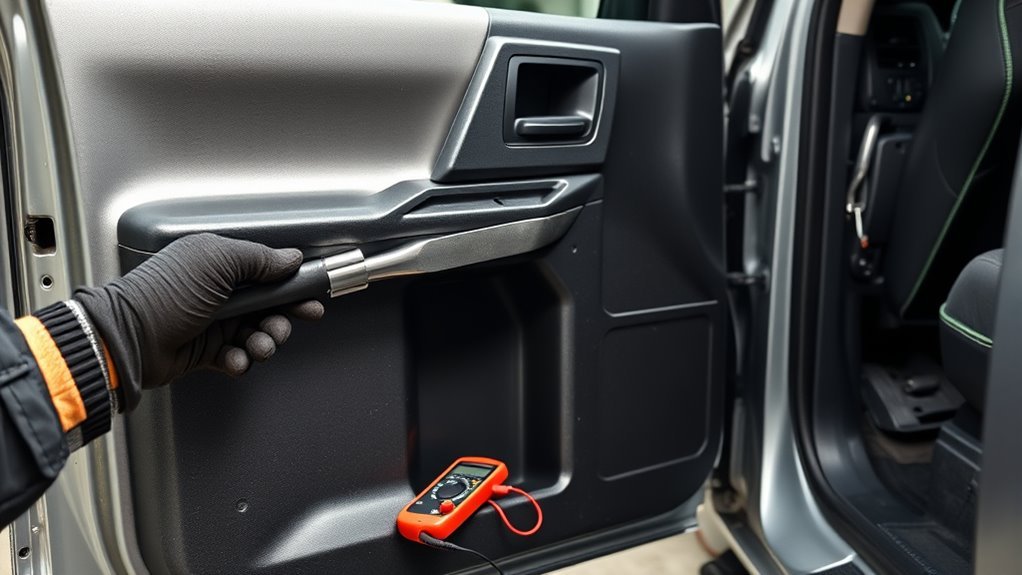
Now that you’ve verified voltage and wiring at the connector, proceed to remove the door panel to access the actuator. You’ll locate and remove screws and clips, detach trim carefully, and unplug electrical connectors. Expose the latch assembly, unplug the actuator, and test harness voltage with a multimeter before fully extracting the unit. Inspect for corrosion, damage, or seized gears; listen for grinding when operating the switch.
- Unbolt actuator fasteners, free linkage rods, note actuator types (OEM vs aftermarket) and orientation.
- Remove actuator, compare new unit to old, follow installation tips from the vendor and Tundra-specific guides.
- Reconnect harness, secure linkage, reassemble panel, then test lock/unlock to confirm restored freedom.
Multiple-Door Failures: Relay and Module Checks
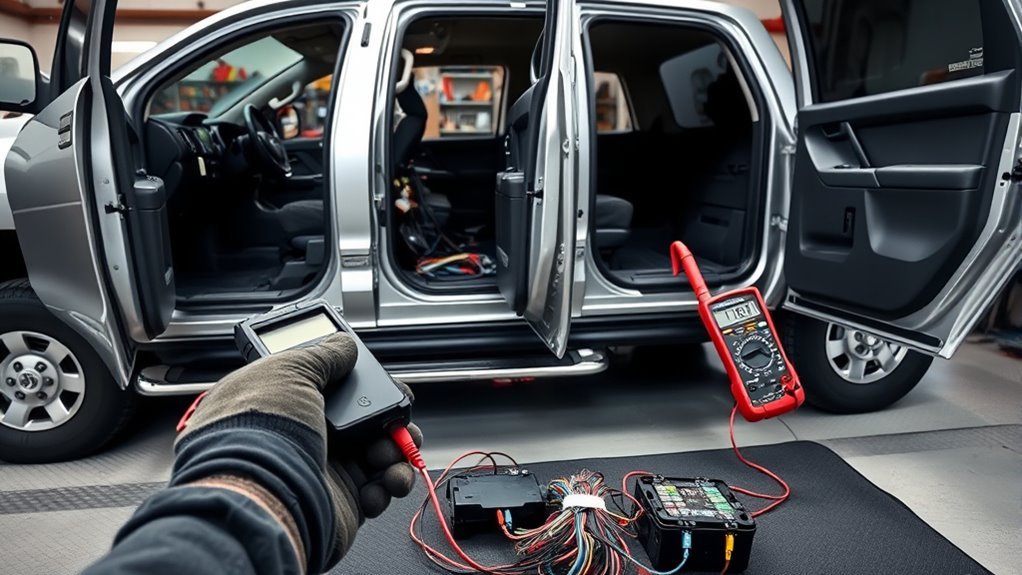
If your Tundra’s driver and passenger locks stop working together, you should treat it as a systemic electrical fault and start by isolating relays and control modules. You’ll inspect relay types used in the central locking kit and verify system integration at the fuse panel. Probe integration relay input triggers; use a test light or multimeter to confirm presence of trigger voltage when you actuate locks. Check actuator voltage across its wires to rule out local failures before replacing modules.
| Component | Test | Expected Result |
|---|---|---|
| Integration relay | Backprobe coil feed | Pulsed 12V on lock/unlock |
| Central relay | Continuity between terminals | Low resistance when energized |
| Fuse panel input | Voltage present | Constant 12V supply |
| Actuator | Voltage during command | 12V across correct polarity |
| Control module | Communication bus | Proper CAN/ground reference |
If relays and wiring pass, replace the central control door lock controller—it’s often the liberating, cost-effective fix.
Replace a Tundra Door Actuator (Tools & Steps)
Start by gathering basic tools—screwdrivers, a plastic trim knife, torx bits, and a multimeter—and disconnect the battery to prevent shorts; then remove the door panel carefully, keeping track of screws and plastic clips so you don’t damage them while exposing the actuator near the latch assembly. Work methodically: unplug the wiring harness, test the actuator with your multimeter to confirm failure, and note actuator types so you order the correct replacement.
- Remove panel and vapor barrier, locate actuator by latch, unplug harness and detach linkage.
- Test motor and switch continuity; if dead, unbolt actuator and swap in new unit, aligning linkages.
- Reconnect harness, secure mounting, reassemble panel, then test lock operation before finalizing.
Follow installation tips: match OEM specs, torque fasteners to spec, and avoid pinching wires. You’ll regain control and freedom of movement through careful, precise work—liberation achieved by competence, not force.
Cost, Warranty, and When to Call a Mechanic
Expect actuator parts to cost about $68–$250 depending on OEM vs aftermarket, with DIY saving you the $250+ in labor a shop would add. Check your warranty window and dealership service history—many dealers may cover the repair if the vehicle’s still near warranty expiration. If replacements don’t fix the problem or multiple doors fail, call a mechanic to diagnose possible electrical or central lock system faults.
Repair Cost Estimates
When evaluating repair costs for a faulty Tundra door lock actuator, factor part prices, labor, warranty status, and the scope of the fault. You’ll perform a methodical cost comparison between actuator types (OEM vs aftermarket), estimate part costs ($68–$250), and add labor—dealership totals often approach $500. If the vehicle’s under warranty, consult the dealer before investing in parts.
- DIY single-actuator replacement: low cost, parts often sourced online, freedom to learn.
- Professional single-door service: moderate cost, includes labor and diagnostic time.
- Systemic electrical diagnosis: higher cost, professional tools required; avoid repeated part swaps.
Call a mechanic when multiple doors fail, relays or door triggers are suspected, or diagnostics exceed DIY confidence.
Warranty Coverage Options
Although warranty eligibility usually hinges on proving the fault isn’t from aftermarket parts or user damage, you should contact your local Toyota dealer to verify coverage and potential goodwill repairs—dealerships may still help if your model has recurring issues even after warranty expiration. Check coverage eligibility against service records and any extended plans; document OEM parts and absence of user damage to avoid warranty limitations. If dealer repair estimates ($250–$500) exceed vehicle value or your budget, consider a DIY actuator replacement ($68–$113) using verified guides to reclaim autonomy. Call a qualified mechanic when diagnostics point to the integration relay, alarm system, or intermittent faults you can’t isolate—professional testing saves time and prevents wasted parts purchases.
Frequently Asked Questions
Why Is My Toyota Not Locking?
Your Toyota’s door lock likely fails due to a bad actuator, central locking relay, wiring fault, corrosion, or blown fuse; follow troubleshooting tips: test actuator, inspect wiring and connectors, check fuses, clean mechanisms, swap remotes, replace faulty parts.
How to Fix a Door That Won’t Lock Anymore?
Check the door lock actuator first: you’ll follow troubleshooting tips inspecting wiring, remove the door panel carefully, test/replace the actuator with OEM/reman parts, and use community guides so you can fix it yourself confidently.
Conclusion
In short, if your Tundra’s door won’t lock, it’s usually a tired actuator or a sulking central system—start with fuses, relay, key fob, and wiring checks. Isolated door issues point to a single actuator; multiple doors suggest relay or module grief. You can replace an actuator yourself with basic tools, but weigh cost, warranty, and safety. If diagnostic steps feel beyond your comfort, let a qualified technician finish the repair cleanly.