Which Differential Oil Does My Toyota Tundra Need?
What’s in This Article
- Toyota Tundra Differential Oil Quick Answer by Year
- Tundra Model-Year Guide: 2000-2006, 2007-2021, and 2022+ Viscosity Rules
- How to Tell Which Differential You Have
- What Labels and Specs to Require
- Best Differential Oil by Driving Condition
- How to Change Tundra Differential Fluid
- Maintenance Intervals, Signs of Wear, and Troubleshooting Tips
- Frequently Asked Questions
Your Toyota Tundra differential needs the right gear oil, not a guess based on brand alone. The safest choice starts with your model year, axle type, and owner’s manual.
Many newer Tundras call for Toyota Differential Gear Oil LT 75W-85 GL-5 or an equivalent. Many older Tundras use GL-5 80W-90, SAE 90, or another grade listed in the manual. If your truck has a clutch-type limited-slip differential, use a limited-slip-compatible oil or the correct Toyota-approved friction modifier.
Quick Answer
Use the differential oil grade listed in your Tundra owner’s manual. Many 2007 and newer Tundras use 75W-85 GL-5 gear oil, while many 2000-2006 trucks list 80W-90 GL-5. Use limited-slip additive only when your axle or oil spec calls for it.
Key Takeaways
- Match the gear oil to your exact model year, axle type, and owner’s manual.
- Choose American Petroleum Institute (API) GL-5 gear oil for Tundra differentials unless Toyota lists another spec.
- Use limited-slip friction modifier only for clutch-type limited-slip units that need it.
- Change differential oil more often when you tow, haul, drive off-road, or drive through deep water.
- Remove the fill plug before the drain plug so you know you can refill the axle.
Toyota Tundra Differential Oil Quick Answer by Year
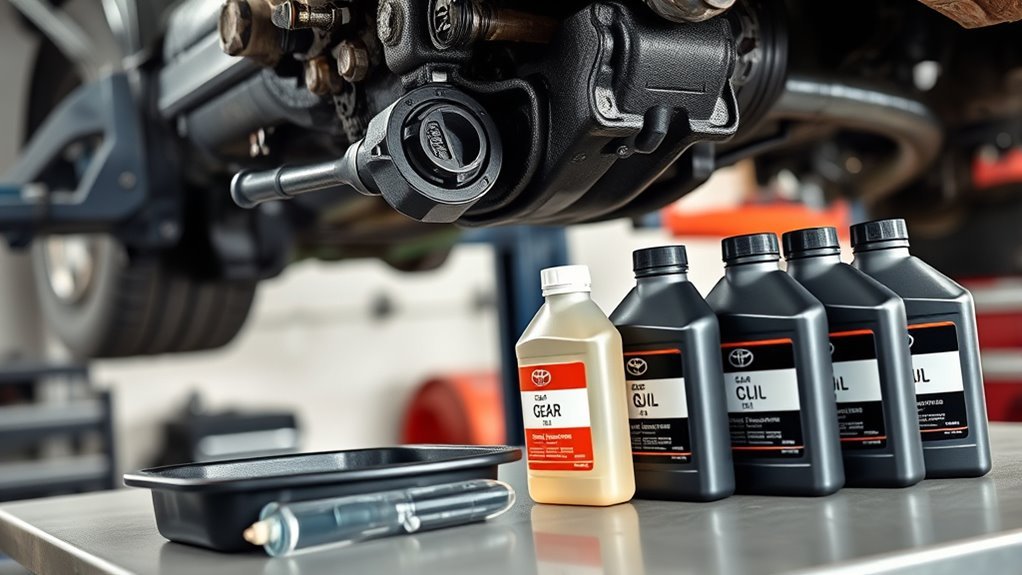
You should start with API GL-5 gear oil and the viscosity Toyota lists for your truck. Many late-model Tundras list 75W-85 GL-5, while many older Tundras list 80W-90 GL-5 or SAE 90 GL-5.
Do not treat 75W-90 GL-5 as a universal answer for every Tundra. Some owners use it when the oil maker lists compatibility, but your manual and axle spec should control the final choice.
If your Tundra has a limited-slip differential (LSD), use a gear oil marked for limited-slip service or add the Toyota-approved friction modifier. If your truck uses an open differential, brake-based traction control, or an electronic locker, do not add friction modifier unless the manual, axle builder, or oil label calls for it.
Tundra Model-Year Guide: 2000-2006, 2007-2021, and 2022+ Viscosity Rules
Tundra differential oil specs vary by generation, axle, market, and drivetrain. Use the table below as a buying guide, then confirm the final grade in your owner’s manual or with a Toyota parts counter.
| Tundra years | Common differential oil spec | What you should confirm |
|---|---|---|
| 2000-2006 | Often 80W-90 GL-5, with LSD oil where required | Rear axle type, 2WD or 4WD layout, and limited-slip requirement |
| 2007-2021 | Often Toyota Differential Gear Oil LT 75W-85 GL-5 or equivalent | Front and rear capacities, transfer case fluid, and any axle tag notes |
| 2022 and newer | Often 75W-85 GL-5, with capacity differences by axle | Electronic locker, drivetrain, and exact fill amount |
Older Tundras: 80W-90 GL-5
If you own an early Toyota Tundra, your manual may list 80W-90 GL-5 gear oil for the rear differential. That grade gives hypoid gears the film strength they need under normal load.
Do not switch to a different viscosity because a forum thread says it works. Confirm seal compatibility, bearing needs, climate, and axle type before you move to another synthetic gear oil.
Newer Tundras: 75W-85 GL-5
Many 2007 and newer Tundras call for Toyota Differential Gear Oil LT 75W-85 GL-5 or an equivalent. This lighter gear oil helps cold-flow performance while still meeting GL-5 axle requirements.
Some aftermarket 75W-90 GL-5 oils may work when the brand lists your Tundra as compatible. Still, you should not replace Toyota’s listed 75W-85 spec unless you can document compatibility.
- Confirm the model-year spec before you buy oil.
- Check the front differential, rear differential, and transfer case separately.
- Use GL-5 gear oil where Toyota calls for GL-5.
- Keep receipts and product labels for service records.
Limited-Slip Requirements
A clutch-type limited-slip differential needs the right friction behavior. If the oil lacks the correct limited-slip additive, you may feel chatter, grabbing, or binding during tight turns.
Use gear oil labeled for limited-slip service or add the Toyota-approved friction modifier in the amount the manual or product label recommends. Do not add friction modifier to every axle by habit, because too much additive can reduce locking action in some designs.
Note: Toyota uses different traction systems across Tundra years, so an LSD label, locker switch, or axle code matters more than the trim name.
How to Tell Which Differential You Have
Start by checking the door jamb label, axle tag, owner’s manual, and any switchgear inside the cab. Then ask a Toyota dealer to decode the vehicle identification number (VIN) if the labels do not give a clear answer.
A road test can help, but it should not replace documentation. Run any test slowly, away from traffic, and on a safe surface where you will not damage the drivetrain or tires.
Visual Inspection of the Axle
Look for tags, stamped labels, wiring, actuator housings, and warning labels on or near the axle. A factory locker often has wiring or an actuator, while a basic open differential usually has fewer external clues.
- Check the driver’s door jamb for axle and build codes.
- Look on the differential housing for tags or lubricant warnings.
- Check the cab for a factory locker switch or traction control controls.
- Ask a dealer parts specialist to decode unclear axle codes.
VIN and Build Codes
Your VIN helps Toyota identify factory drivetrain options. The build-code sticker can also show axle-related codes, but code formats vary by year and market.
Do not rely on a generic code chart without checking the source. A dealer, factory build sheet, or Toyota service record gives you a safer answer than a copied online list.
Road Test Behavior
You can sometimes identify differential behavior during slow turns or low-traction movement. Use this only as a clue, not as proof.
- Open differential: One wheel may spin more easily when traction drops.
- Clutch-type LSD: Power may transfer better, but tight turns may chatter if the oil lacks modifier.
- Locker: Both wheels can lock together when engaged, which can make turning feel stiff.
- Brake-based traction control: The system may use brakes to limit wheelspin without a clutch-type LSD.
Warning: Do not perform wheelspin tests on public roads, near people, or with the truck lifted unless you use proper shop equipment.
What Labels and Specs to Require
Tundra differentials use hypoid gears, which face high sliding pressure. API explains that GL-5 gear oils suit hypoid gears in axles that see shock loads and high-torque conditions.
Match three label items before you buy oil:
- API GL-5: Use this rating when Toyota lists GL-5 for your axle.
- Correct viscosity: Match 75W-85, 75W-90, 80W-90, or SAE 90 to your manual.
- LS or LSD label: Use it only when your limited-slip differential requires friction modifier.
Do not use transmission fluid, engine oil, motorcycle oil, or a non-GL-5 gear oil in the differential unless Toyota specifically lists it. The wrong fluid can cause noise, heat, wear, or poor limited-slip action.
Best Differential Oil by Driving Condition
After you confirm GL-5, viscosity, and limited-slip needs, choose oil by driving conditions. The label matters more than the brand name.
- Daily driving: Use the exact Toyota-listed viscosity and GL-5 rating for quiet, normal service.
- Towing or hauling: Keep the manual-approved viscosity and shorten service intervals under severe use.
- Cold climates: Favor the Toyota-listed low-temperature grade, often 75W-85 on many newer trucks.
- Clutch-type LSD: Choose limited-slip-compatible gear oil or add the correct friction modifier.
- Aftermarket lockers: Follow the locker maker’s oil guidance before you add any modifier.
Do not jump to 75W-140 for towing unless your manual, axle builder, or qualified Toyota technician approves it. A thicker oil can raise drag and may not match Toyota’s spec for your axle.
Pro tip: Take a photo of the gear oil bottle label before you fill the axle so you can prove the viscosity and GL-5 rating later.
How to Change Tundra Differential Fluid
Estimated time: Plan on 45 to 90 minutes per differential if you have basic tools and safe access. Work on a level surface, wear eye protection, and support the truck correctly if you need extra clearance.
Before You Begin
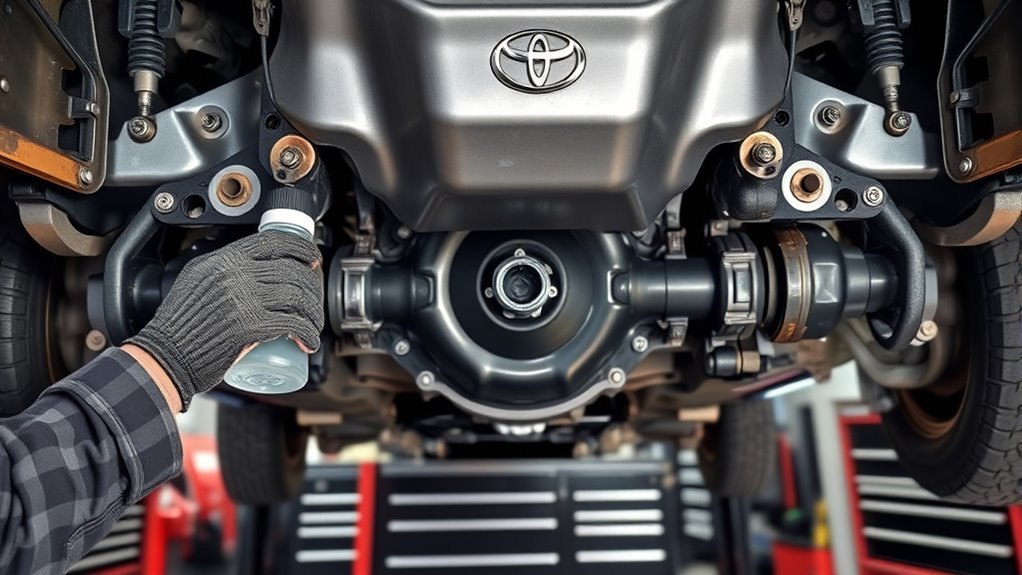
Gather the correct gear oil before you remove any plug. You should also confirm fill capacity, washer type, and plug torque from your owner’s manual or service information.
- Correct GL-5 gear oil in the listed viscosity
- Limited-slip additive, only if your axle requires it
- 10 mm hex socket or the correct plug tool for your truck
- Fluid pump or squeeze bottle
- Drain pan, rags, gloves, and eye protection
- New crush washers or gaskets where Toyota calls for them
- Torque wrench and service-spec torque values
Step-by-Step Drain and Fill
- Park the truck on level ground and let the drivetrain cool until you can work safely.
- Clean the fill and drain plug areas so dirt cannot enter the housing.
- Remove the fill plug first to confirm you can refill the differential.
- Place a drain pan under the differential and remove the drain plug.
- Drain the old gear oil until the flow slows to a drip.
- Inspect the drain plug magnet for fine paste, metal flakes, or larger metal pieces.
- Reinstall the drain plug with the correct washer and torque it to the service spec.
- Pump new gear oil into the fill hole until the oil reaches the lower edge of the port.
- Reinstall the fill plug with the correct washer and torque it to the service spec.
- Check for leaks after a short drive, then recheck the area once the axle cools.
Fill capacity changes by generation and axle. Use the fill-hole level as the final check unless Toyota gives a different procedure for your exact model.
Maintenance Intervals, Signs of Wear, and Troubleshooting Tips
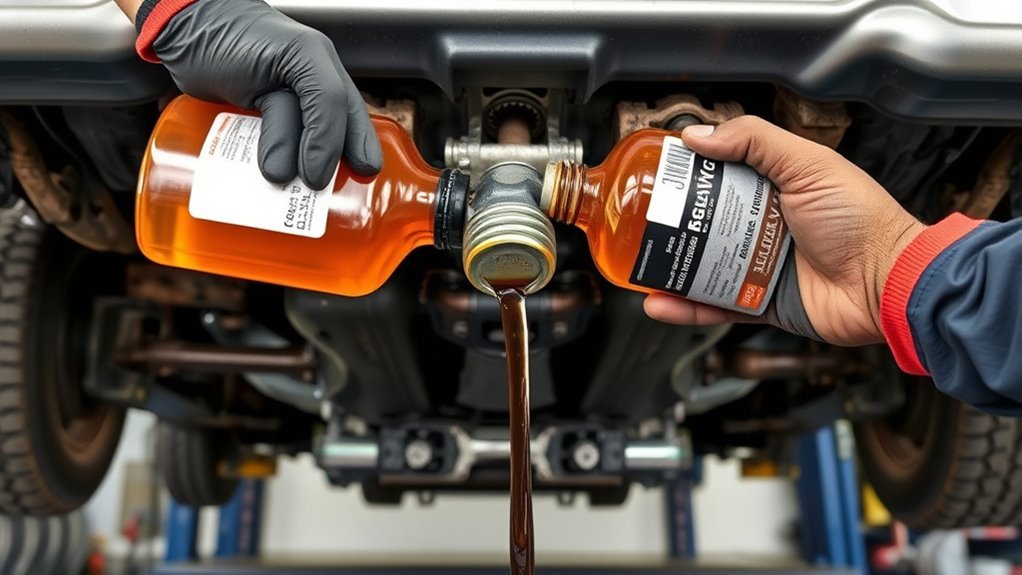
Toyota maintenance guides call for differential oil inspection at normal service points and replacement under special operating conditions. Towing, heavy loading, dirt roads, dusty roads, and off-road use can shorten the service interval.
Many owners use a 30,000-mile drain-and-fill interval for severe service. If you drive mostly on pavement without towing or deep-water crossings, follow the normal schedule in your manual.
- Inspect the fluid level and plug area at least once a year.
- Change the fluid after deep-water crossings or axle contamination.
- Service the axle sooner if the oil looks milky, dark, or gritty.
- Check for leaks around axle seals, pinion seals, and drain plugs.
- Diagnose chatter after a fluid change before you add more friction modifier.
What Metal on the Drain Plug Means
A light gray paste on the magnet can appear during normal wear. Sharp flakes, chunks, or repeated heavy buildup point to a problem that needs diagnosis.
If you find large metal pieces, do not just refill the axle and keep driving. A shop should inspect the gears, bearings, and carrier before the damage spreads.
When to Seek Professional Help
Call a qualified mechanic if you hear grinding, feel binding, see active leaks, or find large metal pieces on the magnet. You should also get help if the fill plug rounds off or the truck needs lifting beyond basic home tools.
Professional service costs less than replacing a damaged ring-and-pinion set. It also helps protect you if the truck still has warranty coverage.
Frequently Asked Questions
Can I Mix Synthetic and Conventional Differential Oils Safely?
You can mix them in an emergency if both oils meet the same Toyota-required spec. Do not use that mix as a long-term plan, because one correct oil gives you cleaner records and more predictable performance.
Does Differential Fluid Affect Fuel Economy Noticeably?
The effect usually stays small, but viscosity and fluid condition can change drivetrain drag. Use the listed grade and keep the oil clean instead of chasing fuel economy with the wrong fluid.
Are There Warranty Implications for Using Third-Party Gear Oil?
A warranty provider generally cannot require a specific brand unless it provides that item for free or has a legal waiver. It can still deny a repair if the wrong fluid or poor service caused the failure, so keep receipts and label photos.
Can I Use Motorcycle Oil in a Tundra Differential?
No. Motorcycle engine oil does not replace the API GL-5 gear oil your Tundra differential needs. Use the gear oil spec Toyota lists for your axle.
How Should I Dispose of Used Differential Fluid Responsibly?
Collect used gear oil in a clean, sealed container and take it to a used-oil recycling site, auto parts store, repair shop, or local waste facility that accepts it. Do not pour it on the ground, into drains, or into household trash.
Safety Disclaimer: This article is for informational purposes only and does not replace professional mechanical advice. Always use proper lifting equipment, follow Toyota service information, and consult a qualified mechanic if you are unsure about any step.
Conclusion
Your Tundra differential will last longer when you match the oil to the exact axle, not to a one-size-fits-all rule. Check the manual, confirm API GL-5, match the viscosity, and use limited-slip additive only when your axle needs it.
Before your next service, take a photo of the axle tag, manual spec, and gear oil label. That simple record can help you avoid chatter, leaks, warranty problems, and expensive gear wear.
References
- Toyota 2021 Tundra Owner’s Manual – Toyota, 2021
- 2014 Toyota Tundra Warranty & Maintenance Guide – Toyota, 2014
- Lubricant Service Designations for Automotive Manual Transmissions, Manual Transaxles, and Axles – American Petroleum Institute, 2013
- Managing, Reusing, and Recycling Used Oil – U.S. Environmental Protection Agency, 2025
- Businessperson’s Guide to Federal Warranty Law – Federal Trade Commission