If your Toyota Camry hesitates when you press the accelerator, shifts late, bumps into gear, or feels like it pauses before moving, the problem may be in the transmission—but it is not the only possibility. Low or degraded transmission fluid, incorrect fluid, valve-body or shift-solenoid problems, torque converter issues, outdated control-module calibration, and even engine problems can all feel like “transmission hesitation.” Start with safe, simple checks, then use a proper scan and Toyota-specific service information before replacing parts.
Quick Answer
Camry transmission hesitation is most often linked to fluid condition, incorrect fluid level, delayed hydraulic pressure, valve-body or shift-solenoid control, torque converter behavior, or a software/calibration issue. Because engine hesitation can feel similar, confirm the symptom, check for warning lights, inspect for leaks, scan for codes, and follow the Toyota procedure for your model year.
Key Takeaways
- Do not assume every hesitation is a failed transmission; ignition, fuel, airflow, and sensor problems can mimic shift delay.
- Check your Camry’s owner’s manual before checking or servicing fluid, because many newer transmissions are sealed and do not use a traditional dipstick.
- Dark, burnt-smelling, low, or incorrect transmission fluid can cause delayed engagement, slipping, harsh shifts, or overheating.
- For some 2018 Camrys, Toyota T-SB-0330-17 addresses shift shock or delay after slowing down with an ECM/PCM calibration update.
- Stop driving and get help immediately if the transmission slips badly, will not move, leaks heavily, smells burnt, overheats, or triggers warning lights.
At a Glance
| Time Required | 10–20 minutes for basic visual checks; longer for scan-tool diagnosis or dealer inspection |
| Difficulty | Easy for leak and warning-light checks; moderate to advanced for sealed-transmission fluid checks |
| Tools Needed | Owner’s manual, flashlight, lint-free cloth, OBD-II scanner that can read powertrain/transmission data, Toyota service information when available |
| Cost | Visual checks are free; scan-tool diagnosis, fluid service, programming, or repairs vary by shop, model year, and transmission type |
What Are the Symptoms of Transmission Hesitation in Camrys?

Transmission hesitation usually feels like the car is slow to respond after you ask it to move or shift. In a Camry, the most common signs include:
- Delayed engagement: You shift from Park to Drive or Reverse, but the car takes a moment before it moves.
- Lag after slowing down: You coast or brake, then press the accelerator and feel a pause before power returns.
- Harsh or late shifts: The transmission bumps, flares, or shifts later than expected.
- Gear hunting: The transmission feels unsure about which gear to use, especially on hills or during light throttle changes.
- RPM flare or lugging: Engine speed rises without matching acceleration, or the car feels like it is pulling in too high a gear.
- Warning lights: The check engine light, master warning light, or transmission-related codes may appear.
- Burnt smell or fluid leak: Red, pink, or brown fluid under the car can point to a transmission leak that needs immediate attention.
Warning: Do not keep driving if the Camry slips badly, will not move in Drive or Reverse, leaks a large amount of fluid, smells burnt, overheats, or shows a flashing warning light. Pull over safely and arrange a tow or professional inspection.
Is It Really the Transmission?
A hesitation complaint can come from the transmission, but it can also come from the engine or electronic controls. Before replacing transmission parts, separate the symptom:
| What You Feel | More Likely Area | First Check |
|---|---|---|
| Engine stumbles, shakes, or misfires before the transmission shifts | Engine, ignition, fuel, airflow, or sensor issue | Scan for misfire, fuel trim, MAF, throttle, or oxygen-sensor codes |
| Engine runs smoothly, but the car pauses before moving | Transmission fluid pressure, valve body, solenoid, torque converter, or calibration | Check for leaks, scan transmission data, and verify service history |
| Hesitation happens only when shifting from Park to Reverse or after slowing nearly to a stop | Transmission control strategy or model-specific calibration issue | Check Toyota TSBs and service campaigns by VIN |
| Delay is worse cold, then improves as the vehicle warms up | Fluid condition, pressure control, or internal wear | Confirm correct fluid type, level procedure, and diagnostic trouble codes |
Note: A basic code reader may show only engine codes. For transmission hesitation, use a scanner that can read powertrain and transmission data, freeze-frame information, and manufacturer-specific codes when available.
What Causes Transmission Hesitation in Camrys?
Transmission hesitation in a Camry can come from several systems working together. The most common causes include:
- Low transmission fluid: Low fluid can reduce hydraulic pressure and delay clutch or gear engagement.
- Old, burnt, or contaminated fluid: Degraded fluid may not lubricate, cool, and control pressure as effectively.
- Incorrect fluid: Toyota transmissions require the correct specification. Toyota’s World Standard ATF is formulated for Toyota automatic transmissions and transaxles, supporting smooth hydraulic operation, consistent shifting, and lubrication.
- Valve-body or shift-solenoid problems: Sticky valves, debris, or failed solenoids can cause late, harsh, or inconsistent shifts.
- Torque converter issues: Converter clutch problems may feel like shudder, slipping, or hesitation during light acceleration.
- Control-module calibration: Some hesitation or shock complaints are corrected with updated ECM/PCM software rather than mechanical parts.
- Internal wear: High-mileage clutch, band, pump, seal, or pressure problems can create slipping or delayed movement.
- Engine performance problems: Misfires, dirty airflow sensors, throttle issues, weak fuel delivery, or vacuum leaks can feel like transmission lag.
Use the diagnostic order below before jumping to expensive repairs. Guessing at solenoids, torque converters, or transmissions without confirming the cause can waste money.
How Fluid Quality Can Cause Transmission Issues
Automatic transmission fluid does more than lubricate. It helps apply hydraulic pressure, cool internal parts, and allow the control system to shift smoothly. When the fluid is low, overheated, contaminated, or the wrong specification, shifting can become delayed, harsh, or erratic.
| Fluid Issue | What It Can Cause | What To Do |
|---|---|---|
| Low level | Delayed engagement, slipping, overheating | Inspect for leaks and verify level using the Toyota procedure for your model |
| Dark or burnt fluid | Harsh shifts, poor lubrication, clutch wear | Have the fluid condition inspected and service the transmission if appropriate |
| Contaminated fluid | Sticky valves, clogged screens, solenoid issues | Diagnose before flushing; severe contamination may indicate internal damage |
| Wrong fluid | Incorrect friction behavior and poor shift quality | Use the fluid specification listed for your exact Camry year and transmission |
Pro Tip: If hesitation began soon after a fluid service, confirm the shop used the correct Toyota fluid specification and the correct fill-level procedure. A small underfill or overfill can cause shift problems, especially on sealed transmissions.
How Do You Know When to Change Your Transmission Fluid?
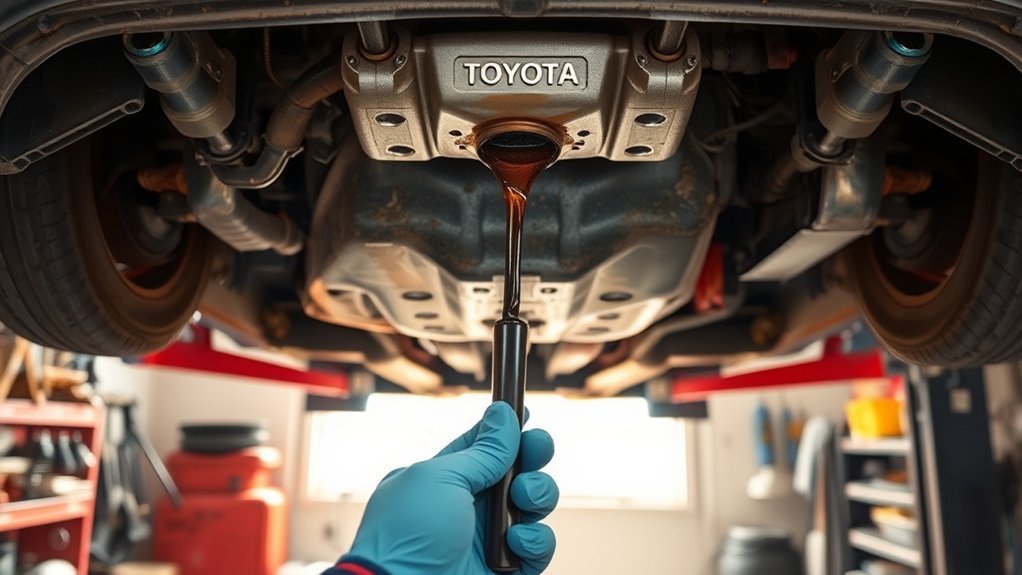
There is no single fluid-change mileage that fits every Camry. Toyota advises owners to follow the maintenance schedule and owner’s manual for the specific vehicle. Severe use—such as frequent stop-and-go driving, towing, steep grades, high heat, or repeated short trips—can justify earlier inspection or service. Transmission symptoms also change the timeline: delayed shifts, slipping, burnt smell, grinding, vibration, or leaks mean the fluid should be checked now, not at the next routine interval.
Look for these signs that fluid inspection is due:
- Color change: Healthy fluid is often pinkish-red when new, but color alone is not a complete diagnosis. Very dark or black fluid is a warning sign.
- Burnt smell: A burnt odor can indicate overheating or clutch material wear.
- Grit or debris: Particles on the dipstick or in drained fluid suggest internal wear or contamination.
- Low level or leaks: Fluid on the ground, around the pan, axle seals, cooler lines, or case should be inspected immediately.
- Shift symptoms: Slipping, harsh shifts, delayed engagement, or shudder can point to fluid, pressure, or control problems.
For model-specific guidance, check the Toyota Owners manuals and warranty guides and Toyota’s guidance on how often transmission fluid should be changed.
The Role of Shift Solenoids in Transmission Hesitation
Shift solenoids are electrically controlled valves that help route transmission fluid through the valve body. The control module commands these solenoids based on speed, throttle position, load, temperature, and other inputs. If a solenoid sticks, fails electrically, or receives incorrect commands because of wiring or control issues, the transmission may shift late, shift harshly, or hesitate before engaging.
Shift Solenoid Functionality
A solenoid problem is rarely diagnosed by feel alone. Similar symptoms can come from low fluid, dirty fluid, internal wear, valve-body problems, sensors, wiring, or software. A proper diagnosis should include:
- OBD-II scan: Look for powertrain and transmission codes, not just generic engine codes.
- Live data review: Compare commanded gear, actual gear, solenoid command, turbine speed, output speed, and transmission temperature.
- Fluid inspection: Check condition and level using the correct Toyota procedure.
- Road test: Recreate the hesitation under the same conditions: cold start, hot stop-and-go, uphill, highway, or light throttle.
- Electrical checks: Inspect connectors, wiring, resistance, and power/ground before replacing parts.
Common Failure Symptoms
Possible shift-solenoid or valve-body symptoms include delayed engagement, harsh upshifts, slipping, getting stuck in one gear, gear hunting, limp mode, or a check engine light. These symptoms deserve quick attention because a small control or fluid problem can become an expensive internal transmission problem if the car is driven hard while slipping or overheating.
Simple DIY Checks to Assess Your Transmission Fluid Levels
Before you touch the transmission, confirm whether your Camry has a traditional dipstick. Many newer Toyota vehicles use sealed transmission systems, and Toyota warns that some newer vehicles may not have a dipstick for checking transmission fluid. If your Camry is sealed, do not guess at the level or pour in fluid through the wrong point. A sealed transmission usually needs a specific temperature-based check procedure.
Inspect Fluid Color & Consistency
For Camry models with a transmission dipstick, park on level ground and follow the owner’s manual procedure. Depending on the model, the fluid may need to be checked at operating temperature with the engine running. Use a clean lint-free cloth and look for:
- Color: Pinkish-red usually suggests cleaner fluid; very dark brown or black fluid needs attention.
- Smell: A burnt odor is a strong warning sign.
- Texture: Grit, foam, or metal-like debris suggests contamination, aeration, or wear.
- Leaks: Check under the vehicle and around the transmission pan, cooler lines, axle seals, and case.
Check Fluid Level Properly
If your Camry has a dipstick, wipe it clean, reinsert it fully, then read the level according to the marks and the manual’s temperature instructions. Do not overfill. Too much fluid can foam and cause shifting problems. Too little fluid can cause slipping, delayed engagement, and overheating.
If your Camry has a sealed transmission, the safest DIY step is a visual leak check and code scan. Leave the actual fill-level check to a Toyota dealer or qualified transmission shop with the correct scan tool, fluid, and service procedure.
Diagnostic Checklist for Camry Transmission Hesitation
Use this order to narrow the cause without guessing:
- Write down the exact symptom: Does it happen cold, hot, from a stop, from Park to Reverse, uphill, during 2–3 shifts, or at highway speed?
- Check for warning lights: Scan codes before disconnecting the battery or clearing anything.
- Look for leaks: Red, pink, or brown fluid under the car needs attention.
- Check the manual: Confirm whether your model uses a dipstick or sealed transmission procedure.
- Inspect fluid condition: Only if the model allows safe checking. Otherwise, have it checked professionally.
- Review service history: Note fluid changes, repairs, battery replacement, software updates, and any recent work.
- Scan transmission data: Use a scanner that can read manufacturer-specific powertrain data.
- Check Toyota TSBs and campaigns: Some symptoms are corrected with calibration updates.
- Road test carefully: Recreate the problem gently. Do not force hard acceleration if the transmission is slipping.
- Get professional diagnosis: If codes, slipping, harsh shifts, leaks, or repeated hesitation remain, stop guessing and have the system tested.
A hesitation that happens only once in a while may still leave stored data in the powertrain control module. Scan before clearing codes or disconnecting the battery.
When Should You Seek Professional Help for Transmission Hesitation?
Seek professional help if hesitation happens repeatedly, becomes worse, or appears with any of these signs:
- Slipping gears: The engine revs but the car does not accelerate normally.
- Delayed engagement: The car takes more than a brief moment to move after shifting into Drive or Reverse.
- Harsh banging shifts: A hard slam can damage internal parts if ignored.
- Burnt smell: Burnt fluid can point to overheating or clutch wear.
- Fluid leak: Low fluid can destroy a transmission quickly.
- Warning lights or stored codes: Transmission-related codes need proper diagnosis, not parts guessing.
- No movement: If the Camry will not move in Drive or Reverse, do not continue trying to force it.
A Toyota dealer or qualified transmission shop should be able to perform a fluid inspection, diagnostic scan, road test, calibration check, electrical test, and, when needed, pressure or valve-body testing. Ask for the trouble codes and test results before approving major repairs.
Review Technical Service Bulletins (TSB) for Your Camry
Technical Service Bulletins are manufacturer repair guidance for known symptoms. They are not the same as safety recalls, and eligibility can depend on VIN, production date, mileage, in-service date, warranty status, and the exact symptom.
One important example is Toyota T-SB-0330-17. This bulletin applies to some 2018 Camry vehicles that may exhibit shift shock when shifting from Park to Reverse on initial startup or a delay/shock when reaccelerating quickly after slowing down to a stop or near stop. The repair procedure involves confirming the condition and flash reprogramming the ECM/PCM with updated calibration; the bulletin states that the ECM/PCM should not be replaced as part of that procedure.
To check your Camry:
- Use the Toyota Safety Recalls & Service Campaigns lookup with your VIN.
- Ask a Toyota dealer to check TSBs and calibration updates for your exact VIN.
- Describe the symptom exactly: when it happens, speed, temperature, gear, and warning lights.
- Ask whether the repair is covered by warranty, a campaign, or customer-pay service.
Note: A TSB is useful only when the vehicle, symptom, production range, and diagnostic results match the bulletin. If they do not match, continue normal diagnosis rather than forcing the TSB to fit.
Benefits of Regular Maintenance for Transmission Longevity

Regular maintenance helps prevent many transmission complaints, but it must match your Camry’s model year and transmission design. The goal is not to follow a random mileage number; it is to keep the correct fluid at the correct level, catch leaks early, and address symptoms before internal wear spreads.
Good maintenance habits include:
- Follow the Toyota maintenance guide: Use the schedule for your exact year, engine, and transmission.
- Use the correct fluid: Toyota Genuine World Standard ATF is designed for Toyota automatic transmissions that specify it, but always confirm the required fluid for your vehicle.
- Fix leaks early: A small leak can become low fluid and delayed engagement.
- Avoid overheating: Heavy traffic, towing, steep hills, and hot climates increase transmission stress.
- Service symptoms early: Delayed engagement, shudder, slipping, or harsh shifts should be diagnosed before they become a rebuild.
- Keep software current: Some shift-quality issues are corrected with updated calibration, not mechanical replacement.
What to Expect From Transmission Repair Services
A quality transmission diagnosis should be methodical. Expect the technician to ask when the hesitation happens, scan for codes, check fluid condition, verify the correct fill procedure, perform a road test, inspect for leaks, and check for Toyota TSBs or calibration updates.
Common service outcomes may include:
- Fluid service: Appropriate when fluid is degraded but there is no evidence of severe internal damage.
- Software update or relearn: Appropriate when Toyota service information supports it for the exact symptom.
- Solenoid or valve-body repair: Considered when scan data and testing point to hydraulic or electrical control issues.
- Torque converter repair: Considered when shudder, slipping, lockup codes, or test results point to converter clutch trouble.
- Internal repair or replacement: Needed when there is confirmed clutch, pump, seal, or hard-part damage.
Ask the shop to explain the diagnosis in plain language and show the supporting evidence: trouble codes, fluid condition, scan data, pressure readings, or TSB match. Avoid approving a full transmission replacement based only on a generic “hesitation” complaint.
Frequently Asked Questions
How do you fix Camry transmission hesitation?
Start by confirming the symptom, checking for leaks, scanning for codes, and verifying the correct fluid level and condition using the Toyota procedure for your model. The fix may be a fluid service, software update, solenoid or valve-body repair, torque converter repair, or engine-performance repair if the hesitation is not actually transmission-related.
What causes a Toyota Camry to hesitate when accelerating?
Acceleration hesitation can come from low or degraded transmission fluid, shift-solenoid or valve-body issues, torque converter problems, outdated transmission control calibration, or engine issues such as misfires, airflow sensor faults, throttle problems, weak fuel delivery, or vacuum leaks.
Can I drive my Camry with transmission hesitation?
Light, occasional hesitation should be diagnosed soon, but severe slipping, no movement, a burnt smell, overheating, a major leak, or warning lights means you should stop driving and get professional help. Driving while the transmission is slipping or low on fluid can cause expensive internal damage.
Do all Toyota Camrys have a transmission dipstick?
No. Some older Camrys have a traditional dipstick, but many newer Toyota vehicles use sealed transmission systems without a normal dipstick. If your Camry is sealed, the fluid level should be checked with the correct temperature-based procedure and tools.
Will changing the transmission fluid fix hesitation?
It can help if the issue is caused by low, old, contaminated, or incorrect fluid. It will not fix internal wear, a failed solenoid, a torque converter fault, wiring problems, or an outdated calibration. If the fluid is burnt or full of debris, diagnose the transmission before doing an aggressive flush.
Conclusion
Camry transmission hesitation should be handled in a careful order: confirm the symptom, rule out engine hesitation, check for leaks and warning lights, verify fluid condition using the correct procedure, scan for codes, and review Toyota service information for your exact VIN. Simple issues like fluid condition or calibration can sometimes be corrected early, but severe slipping, burnt fluid, or no movement needs immediate professional diagnosis. With the right checks, you can avoid unnecessary parts replacement and protect your Camry’s transmission from further damage.
Sources
- Toyota — How Often Should You Change Your Transmission Fluid? — Supports fluid-change guidance, sealed-transmission caution, and fluid-condition checks.
- Toyota Support — Automatic Transmission Fluid Inspection and Replacement — Supports using the Warranty and Maintenance Guide for model-specific service intervals.
- Toyota Genuine World Standard Automatic Transmission Fluid — Supports correct-fluid and hydraulic-operation claims.
- Toyota T-SB-0330-17 via NHTSA — Supports the 2018 Camry shift shock/reacceleration delay bulletin and ECM/PCM calibration update details.
- Toyota Safety Recalls & Service Campaigns Lookup — Supports VIN-based recall and campaign lookup advice.
- Toyota Owners Manuals and Warranty Guides — Supports checking the correct manual and maintenance guide for the exact vehicle.