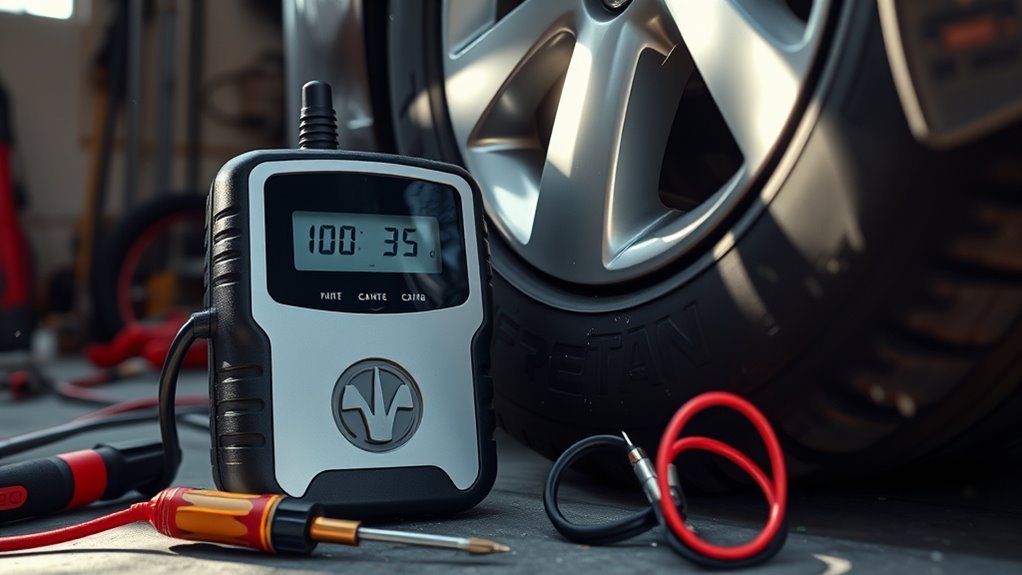
Maintaining the right tire pressure in winter is essential for safety and grip on icy roads. You should check your tire pressure regularly, aiming for 30 to 35 PSI. Remember, cold weather can decrease pressure by 1-2 PSI for every 10°F drop. Underinflated tires can compromise your vehicle’s performance and fuel efficiency. To guarantee your safety, keep a reliable gauge handy and monitor your tires monthly. You’ll discover more essential tips to enhance your winter driving experience.
Why Tire Pressure Matters for Winter Driving
When temperatures drop, maintaining the right tire pressure becomes essential for safe winter driving. Cold tire pressure can decrease by 1-2 PSI for every 10°F drop, impacting traction and increasing stopping distances on icy roads. Underinflated tires not only compromise safety but also hinder tire performance, reducing fuel efficiency by 0.2% for every 1 PSI drop. To enhance your grip and guarantee handling stability, keep your tire pressure within the recommended PSI range of 30 to 35. Regular tire checks, especially when tires are cold, help prevent uneven wear and extend their lifespan. So, make it a habit to monitor your tire pressure; doing so can be the difference between safe driving and a perilous winter journey.
How to Check and Adjust Your Tire Pressure
Checking and adjusting your tire pressure is a straightforward process that can greatly enhance your winter driving safety. Follow these steps to guarantee your tires perform at their best:
- Check tire pressure when cold. Ideally, do this after your vehicle has been stationary for at least three hours.
- Use a reliable tire pressure gauge to measure the pressure. The recommended PSI is typically found in your owner’s manual or on the vehicle’s door placard.
- Remove the valve stem cap, attach the gauge securely, and read the displayed pressure. If needed, inflate your tires or deflate them to maintain the recommended pressure, especially since underinflated tires can pose safety risks in cold weather. Regularly check tire pressure at least once a month to guarantee safe driving conditions.
Finding the Right Tire Pressure for Winter
Maintaining the right tire pressure during winter is essential for ensuring your vehicle handles safely on icy roads. The ideal tire pressure for winter driving typically ranges from 30 to 35 PSI, but always consult your vehicle’s manual for the recommended pressure. In cold weather, tire pressure can drop by 1-2 PSI for every 10°F decrease, making regular checks a must. Proper tire pressure enhances traction and grip, reducing stopping distances and boosting safety. Conversely, underinflated tires can decrease fuel efficiency and lead to uneven wear or tire failures. Utilize your tire pressure monitoring system to stay informed, and make those regular checks part of your winter driving routine to keep you safe on slippery surfaces.
Common Causes of Low Tire Pressure and How to Fix Them
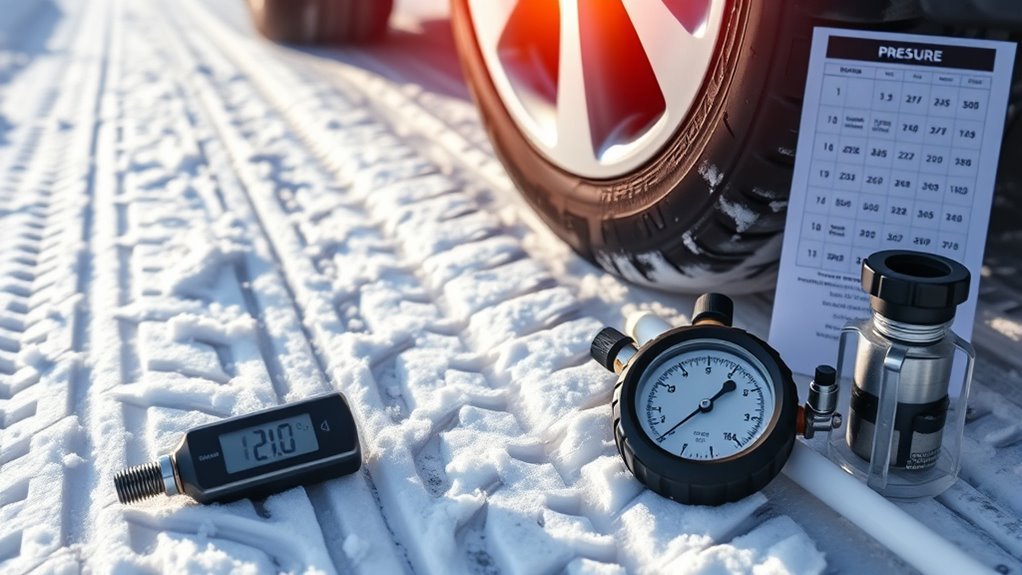
Although cold weather is a significant factor in low tire pressure, it’s not the only culprit. To keep your tires safe and efficient, it’s vital to identify other causes. Here are three common reasons for low tire pressure and how to fix them:
Cold weather isn’t the sole reason for low tire pressure; identifying other causes is crucial for tire safety and efficiency.
- Slow Air Leaks: Check for punctures or valve stem issues that can cause air loss. Regular tire checks can help you spot these problems early.
- Improper Installation: Verify your tires are installed correctly, with a proper seal to prevent air loss.
- Temperature Fluctuations: Monitor tire pressure regularly, especially with the pressure drop in temperature. Use a pressure monitoring system (TPMS) to make this easier.
Tips for Maintaining Optimal Tire Pressure in Winter
Keeping your tires properly inflated during winter is essential for safe driving and peak vehicle performance. Check your tires at least once a month, as cold weather can cause a drop of 1-2 PSI for every 10°F decrease in temperature. Always measure tire pressure when the tires are cold, ideally after parking for three hours. Refer to your owner’s manual or tire placard for the recommended tire pressure, usually between 30 to 35 PSI for winter conditions. If you’re carrying heavier loads, consider adjusting the pressure slightly higher to maintain maximum performance. Keep a reliable tire pressure gauge handy to make quick checks and adjustments, ensuring your tires remain properly inflated and you stay safe on the road this winter.
Enhancing Safety and Performance With Proper Tire Maintenance
To enhance your safety and performance on winter roads, regular tire pressure checks are essential. Using winter tires and maintaining proper tire pressure not only boosts grip but also extends tire lifespan and improves fuel efficiency. By following key maintenance tips, you can guarantee your vehicle performs effectively in icy conditions.
Regular Pressure Checks Essential
As winter temperatures plummet, tire pressure can drop considerably, making regular checks essential for your safety and performance on the road. Maintaining ideal tire pressure not only enhances grip but also reduces risks associated with underinflated tires. Here are three key tips to keep in mind:
- Check monthly: Monitor your tire pressure at least once a month to avoid falling below the manufacturer’s recommended PSI, typically between 30-35 PSI in winter.
- Measure when cold: Confirm tires are cold, ideally after being stationary for at least three hours, for the most accurate reading.
- Stay alert: Underinflated tires can lead to increased stopping distances and reduced handling stability, compromising your safety during winter driving.
Importance of Winter Tires
While regular pressure checks are crucial for your tire safety, the type of tires you use during winter greatly impacts your overall performance on the road. Winter tires, crafted with specialized rubber compounds, stay flexible in temperatures below 45°F, offering improved traction on snow and ice. Their enhanced tread patterns improve grip in cold weather, considerably reducing stopping distances and promoting safety in slippery conditions. Installing winter tires before the temperature consistently drops prepares your vehicle for sudden cold spells. Remember to maintain the recommended tire pressure of 30-35 PSI to avoid uneven wear and guarantee ideal road contact. Prioritizing winter tires not only enhances your driving experience but also empowers you to navigate winter roads with confidence.
Proper Tire Maintenance Tips
Maintaining proper tire pressure is essential for ensuring safety and performance during winter driving. In cold weather, tire pressure can drop, affecting traction and handling. To keep your winter tires performing at their best, follow these maintenance tips:
- Check tire pressure monthly: Cold temperatures can cause a 1-2 PSI drop for every 10°F decrease.
- Maintain the recommended range: Keep your tire pressure between 30 to 35 PSI for peak grip and safety.
- Inspect for wear and damage: Regularly check your tires for uneven wear, which can indicate incorrect air pressure.
Frequently Asked Questions
What Psi Should My Tires Be at During Winter?
During winter, keep your tire pressure between 30-35 PSI for ideal traction control and driving performance. Regular tire maintenance is essential, as cold temperatures can reduce air pressure, impacting safety and inflation efficiency. Stay winter-ready!
What Is the 7 7 Rule for Winter Tires?
The 7 7 Rule means you should switch to winter tires when temperatures drop consistently below 7°C. It boosts cold weather performance, ensuring better snow traction, tire pressure adjustments, and increased winter driving safety.
What Is the 4 Psi Rule?
The 4 PSI rule states that for every 10°F drop in air temperature, your tire pressure decreases by 1-2 PSI. Monitoring this helps guarantee ideal grip, vehicle handling, and tire wear during winter driving.
Is 40 Psi Too Much for Winter Tires?
Think of tire pressure as the foundation of a house—if it’s too high, your winter performance crumbles. At 40 PSI, you sacrifice traction, safety, and tire longevity. Monitor it for ideal cold weather driving conditions.
Conclusion
To summarize, keeping your tire pressure at the recommended levels can greatly enhance your winter driving safety and performance. Did you know that under-inflated tires can decrease fuel efficiency by up to 3% for every 1 PSI drop? By regularly checking and adjusting your tire pressure, you not only improve grip on icy roads but also extend the life of your tires. Stay proactive, and make sure your vehicle is ready to tackle winter’s challenges effectively.