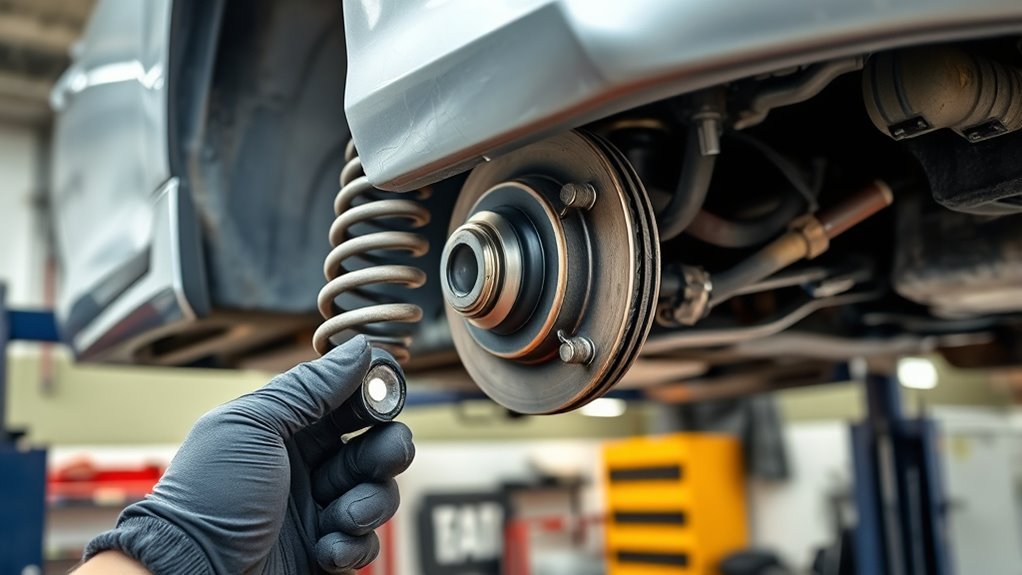
If your Camry’s transmission is slipping, the safest first move is to slow down, avoid hard acceleration, and confirm whether the problem is a true transmission issue or another drivetrain fault. Slipping often feels like the engine revs but the car does not gain speed, a delayed shift into Drive or Reverse, harsh gear changes, or a pause before acceleration. Because Camry transmissions vary by model year, always use your owner’s manual and get a qualified diagnosis before replacing parts.
Quick Answer
If your Camry transmission is slipping, check for warning lights, red or brown fluid leaks, burnt smells, delayed engagement, and high RPM with poor acceleration. Do not keep driving if the car will not move normally. Scan for codes and have the fluid level, leaks, and transmission operation checked by a qualified technician.
Key Takeaways
- Slipping can be caused by low or degraded fluid, leaks, overheating, worn internal parts, solenoid problems, sensor faults, or engine issues that mimic transmission trouble.
- Many newer Camrys use sealed transmission procedures, so fluid level checks are not always a simple dipstick job.
- 2025 and newer U.S. Camrys use a hybrid eCVT-style transaxle, so “slipping” may feel different than it does in an older geared automatic.
- If the Camry revs but barely moves, smells burnt, leaks fluid, or shows a transmission warning, stop driving and arrange a tow or professional inspection.
At a Glance
| Time Required | 10–20 minutes for basic visual checks; 1–2 hours for professional diagnosis |
| Difficulty | Easy for warning-light and leak checks; advanced for sealed fluid checks or repairs |
| Tools Needed | Flashlight, clean white paper towel, OBD-II scanner, owner’s manual; lift/service tools for shop work |
| Cost | Basic inspection may be low-cost; a Camry fluid change commonly falls around $214–$288, while major transmission replacement can cost far more |
Common Symptoms of Transmission Slipping in Your Camry

When a Camry hesitates after you shift into Drive or Reverse, that delayed engagement can be an early sign of low fluid pressure, a control issue, or internal wear. You may also feel a sudden flare in RPM, a pause before the car moves, a harsh shift, or a “bucking” sensation during acceleration.
Another common sign is when the engine sounds like it is working harder, but the vehicle speed does not rise as expected. In older automatic Camrys, that can point to clutch pack wear, torque converter issues, low fluid, solenoid problems, or overheating. In hybrid Camrys, especially newer eCVT models, the engine may rev differently than a conventional automatic, so poor acceleration should be diagnosed as a hybrid transaxle, engine, sensor, or high-voltage system concern rather than assuming “gear slip.”
Watch for these warning signs:
- Delayed engagement: The Camry takes more than a moment to move after shifting into Drive or Reverse.
- RPM flare: The tachometer rises, but road speed does not match the engine speed.
- Harsh or erratic shifting: The car bangs, shudders, or hunts between gears.
- Burnt smell: A burnt odor can suggest overheated or damaged fluid.
- Fluid spots: Red or brown fluid under the vehicle may be transmission fluid, although some coolant can also be reddish.
- Warning lights: A check engine, transmission, hybrid system, ABS, or traction-control light means codes should be scanned before guessing.
Warning: Do not keep driving if the Camry revs but barely moves, loses acceleration in traffic, has a strong burnt smell, leaks heavily, or shows a transmission/hybrid warning. Pull over safely and arrange a tow or professional inspection.
How to Diagnose Camry Transmission Slipping Problems
Diagnosing a slipping transmission is not just a matter of adding fluid. The right approach is to confirm the symptom, check for leaks and codes, and then decide whether the problem is maintenance-related, electronic, hydraulic, mechanical, or not actually the transmission at all.
- Confirm the symptom. Note when the slipping happens: cold start, after warm-up, during acceleration, while shifting into Drive or Reverse, uphill, or at highway speed. Warm-up-related slipping can point to fluid pressure, overheating, or internal wear.
- Identify your Camry’s transmission type. Older gas Camrys use conventional automatic transmissions. Many hybrid Camrys use a hybrid transaxle/eCVT, and 2025–2026 U.S. Camrys are all-hybrid models according to Toyota’s current Camry information. Match your diagnosis to the model year.
- Scan for diagnostic trouble codes. Use an OBD-II scanner that can read powertrain, transmission, ABS, and hybrid-system codes. Codes for shift solenoids, input/output speed sensors, wheel-speed sensors, temperature sensors, misfires, or throttle issues can change the repair path.
- Check for leaks before checking fluid level. Look under the vehicle for red, pink, or brown fluid. Common areas include cooler hoses, axle seals, the transmission pan area, and the case. Toyota’s 2024 Camry Warranty & Maintenance Guide lists inspection of automatic transmission fluid cooler hoses, connections, and signs of leakage at scheduled intervals.
- Check fluid only the correct way. Some older Camrys have a dipstick. Many newer Toyota transmissions are sealed and require a specific inspection procedure and fluid temperature. If your Camry does not have a dipstick, do not guess or overfill it.
- Inspect fluid condition if accessible. Healthy automatic transmission fluid often looks red or pink, but color alone is not enough. Burnt odor, glitter-like metal debris, black fluid, or low level are stronger warning signs.
- Rule out non-transmission causes. Engine misfires, a clogged air filter, bad MAF sensor, throttle issues, wheel-speed/ABS faults, bad motor mounts, or hybrid-system problems can feel like slipping or hesitation.
- Get a pressure, road-test, or shop diagnosis when symptoms persist. A shop can compare commanded gear, actual gear ratio, line pressure, temperature, and solenoid activity under load.
Note: Never crawl under a Camry supported only by a jack, and never open a hot transmission fill/check plug without the correct procedure. Hot ATF can burn, and an incorrect level can make slipping worse.
Prevent Transmission Slipping: Essential Maintenance Tips
To prevent transmission slipping in your Camry, follow the maintenance schedule for your exact year, engine, and drivetrain. Toyota says scheduled maintenance helps maintain performance, safety, and reliability, and the official manuals are available through the Toyota Owners Manuals and Warranties hub.
For a 2024 Camry, Toyota lists maintenance every 5,000 miles or six months, whichever comes first. The 2024 guide also lists inspection and adjustment of fluid levels, inspection of automatic transmission fluid cooler hoses and connections, and inspection of the automatic transmission for signs of leakage at scheduled mileage points. It lists automatic transmission fluid replacement under special operating conditions such as towing, using a car-top carrier, heavy vehicle loading, extensive idling, or long low-speed driving.
That means the best interval is not a one-size-fits-all “change it every 30,000 miles” rule. Use the manual, your driving conditions, and a technician’s inspection results.
| Maintenance Task | Frequency | Why It Matters |
|---|---|---|
| Check for leaks under the vehicle | Monthly and before long trips | Low fluid can cause slipping, overheating, and delayed engagement |
| Follow Toyota scheduled maintenance | Every 5,000 miles or 6 months on many Camry schedules | Keeps inspections consistent and protects warranty documentation |
| Inspect cooler hoses, connections, and transmission leakage | At Toyota-specified service intervals | Finds leaks before the fluid level drops enough to damage the transmission |
| Use the correct Toyota-approved fluid specification | Whenever service is performed | Wrong or universal fluid can cause shift quality, temperature, or wear problems |
| Replace fluid when the manual calls for it | Often tied to severe/special operating conditions | Helps reduce heat- and contamination-related wear |
| Scan codes when warning lights appear | Immediately | Prevents replacing good parts and helps catch electronic control issues |
Pro Tip: Keep service records with mileage, date, fluid type, and repair notes. If you sell the car or need warranty help, records make the transmission history much easier to prove.
When Should You Call in a Pro for Repairs?
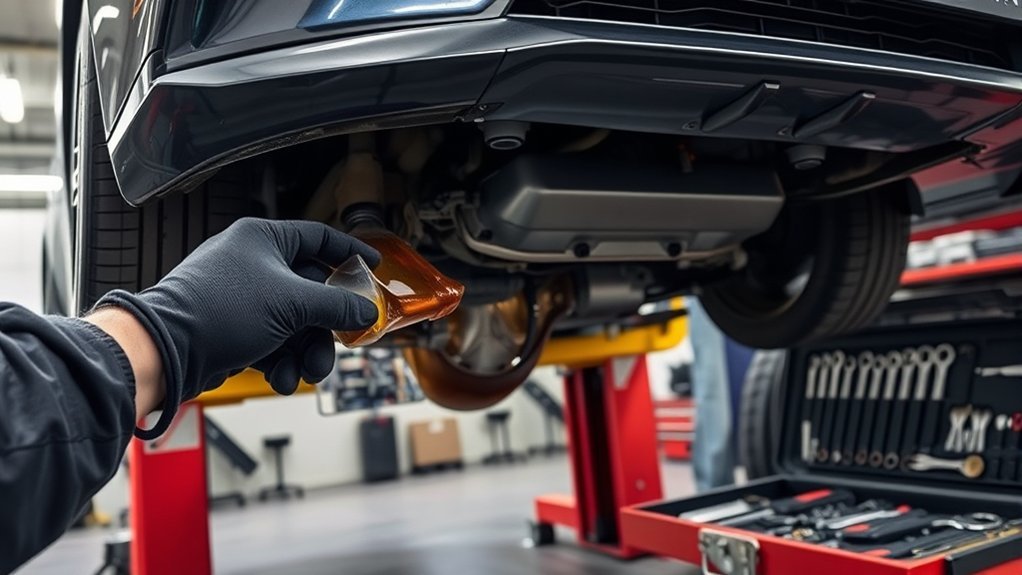
You should call a professional if the Camry slips more than once, has delayed engagement, leaks fluid, smells burnt, enters limp mode, or shows a check engine, transmission, ABS, traction-control, or hybrid-system warning. AAA advises drivers not to ignore slipping gears, unusual noises, or fluid spots and to get the vehicle checked sooner rather than later.
Get professional help right away if you notice:
- Delayed response or sudden pauses during acceleration
- Engine RPM rising while vehicle speed barely changes
- Red or brown fluid dripping under the car
- Burnt smell after driving
- Hard clunks when shifting into Drive or Reverse
- Speedometer, ABS, traction-control, or hybrid-system warnings
- Slipping that appears after the transmission warms up
A qualified shop can scan the correct modules, check the fluid level using Toyota’s procedure, inspect for leaks, measure operating temperature, and determine whether the issue is fluid-related, electronic, or internal. You can also check your vehicle for open safety recalls through the NHTSA recall lookup using your VIN.
Repair vs. Replacement: Cost-Effective Solutions
When facing transmission issues in your Camry, the right choice depends on the diagnosis, mileage, service history, vehicle value, and warranty on the repair. Start with the lowest-risk checks first: codes, leaks, fluid level/condition, and service history.
A transmission fluid change is often the least expensive transmission-related service, and RepairPal lists the average Toyota Camry transmission fluid change cost at about $214–$288, before taxes, fees, and location differences. Kelley Blue Book lists transmission flush averages around $165–$290, but a flush is not always the right choice, especially if the unit is already slipping or full of debris.
Major internal repair or replacement is much more expensive. Kelley Blue Book notes that a new transmission or replacement can average roughly $2,900–$7,100, depending on vehicle, transmission type, location, and whether the unit is rebuilt, remanufactured, or new.
| Option | Best For | Caution |
|---|---|---|
| Leak repair + fluid correction | Low fluid from a confirmed leak | Do not just top off fluid without fixing the leak |
| Drain-and-fill service | Maintenance or mildly degraded fluid with no major symptoms | Use the correct Toyota-specified fluid and level procedure |
| Solenoid, sensor, or wiring repair | Code-confirmed electronic faults | Do not replace parts without scan data |
| Rebuild or remanufactured unit | Internal wear on a car worth repairing | Compare warranty, labor, and torque converter coverage |
| Used transmission | Budget repair on an older Camry | History is unknown; warranty may be limited |
Note: If your Camry has more than 200,000 miles, compare the repair cost with the car’s market value. A reliable repair with a written warranty may still make sense, but repeated slipping, metal debris, and high repair estimates may point toward replacement or selling the vehicle.
Frequently Asked Questions
Can a transmission that’s slipping be fixed?
Yes, a slipping Camry transmission can sometimes be fixed, especially if the cause is low fluid from a leak, degraded fluid, a sensor fault, wiring issue, or shift-solenoid problem. If the clutch packs, torque converter, pump, valve body, or hybrid transaxle are damaged, the repair may require a rebuild or replacement.
Is it safe to drive a Camry with a slipping transmission?
It is not safe to keep driving if the Camry struggles to accelerate, revs without moving, slips in traffic, leaks fluid, smells burnt, or shows a transmission or hybrid warning light. Short, gentle driving to a nearby repair shop may be possible for mild symptoms, but towing is safer when drivability is poor.
Will changing transmission fluid fix slipping?
A fluid service may help if slipping is caused by low, old, contaminated, or incorrect fluid. It will not repair worn clutch packs, a failing torque converter, damaged gears, or a bad pump. If the fluid is burnt or full of metal, get a diagnosis before approving a flush.
Why does my Camry slip after it warms up?
Slipping after warm-up can happen when fluid thins with heat, line pressure drops, a solenoid acts up, or worn internal parts can no longer hold properly. It can also point to overheating or restricted fluid flow. A shop should check codes, fluid temperature, pressure, and leak points.
Do Toyota Camry hybrids have transmission slipping?
Hybrid Camrys use a different transaxle design than a conventional geared automatic. They usually do not “shift” the same way, so a slipping feeling may be engine, hybrid transaxle, inverter, traction battery, sensor, or brake/traction-control related. Scan the hybrid and powertrain systems before assuming a conventional transmission failure.
Conclusion
If you notice your Camry’s transmission slipping, treat it as an early warning rather than a minor annoyance. Start with safe checks for leaks, warning lights, fluid condition if accessible, and service history. Then scan for codes and follow Toyota’s model-year-specific maintenance guidance. If the problem continues, the car loses acceleration, or you smell burnt fluid, stop driving and get a professional diagnosis before a small issue becomes a major transmission repair.
Sources
- Toyota 2024 Camry Warranty & Maintenance Guide — scheduled maintenance, automatic transmission fluid inspection, leakage checks, and special operating condition service guidance
- Toyota 2026 Camry official page — current Camry hybrid powertrain and model context
- Toyota Owners Manuals and Warranties — official owner manual and warranty access by model year
- AAA Club Alliance: How to Catch Transmission Problems Before They Get Expensive — warning signs and when to seek inspection
- RepairPal Toyota Camry Transmission Fluid Change Cost — average Camry transmission fluid service cost and service notes
- Kelley Blue Book Transmission Repair and Replacement Prices — broad repair/replacement cost context and transmission warning signs