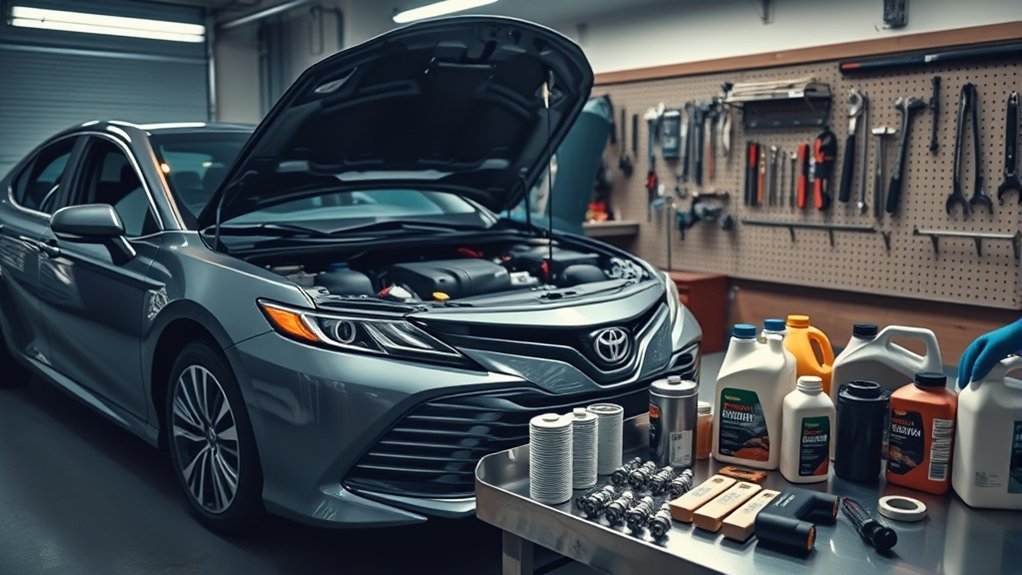
If your Toyota Camry spends most of its time on dusty roads, in stop-and-go delivery use, on short cold trips, or carrying heavier loads, use the severe-driving maintenance schedule in your model-year Toyota Warranty & Maintenance Guide. The key is not just “service it more often.” It is knowing which items Toyota adds at each mileage interval and which items depend on your engine, drivetrain, and model year.
Quick Answer
For most recent Toyota Camry models, scheduled maintenance is due every 5,000 miles or 6 months. If the applicable Toyota special operating conditions apply, engine oil and filter service may move to 5,000 miles or 6 months. Always confirm your exact model year, engine, and drivetrain in the Toyota maintenance guide.
Key Takeaways
- Toyota’s severe-driving items apply when most of your driving falls under the listed special operating conditions, not when it happens once in a while.
- A 5,000-mile/6-month visit usually includes tire rotation, fluid checks, wiper inspection, and brake inspection; severe use may add oil and filter replacement.
- Do not use one universal Camry schedule for every year. A 2024 V6, a 2024 four-cylinder, and a 2025+ hybrid Camry have different long-interval items.
- Use “inspect or replace transmission fluid as specified,” not “flush,” unless your Toyota technician confirms the correct procedure for your vehicle.
At a Glance
| Best For | Camry owners who drive mostly in dusty, cold short-trip, heavy-load, towing, idling, or low-speed conditions |
| Check Interval | Every 5,000 miles or 6 months, whichever comes first |
| Difficulty | Easy to track; most inspections and fluid services should be handled by a qualified technician |
| Main Tools Needed | Maintenance guide, service records, tire-pressure gauge, and a trusted Toyota or qualified repair facility |
| Cost | Varies by model year, engine, drivetrain, parts, labor rate, and whether extra severe-use items are due |
When to Use the Toyota Camry Severe-Driving Schedule

Use the Toyota Camry severe-driving schedule when the majority of your driving matches the special operating conditions listed in your Toyota Warranty & Maintenance Guide. Toyota’s wording matters: these added services are generally for vehicles driven mostly under the listed conditions, not for a one-time rough road or occasional cold morning.
Common Toyota-listed special operating conditions for recent Camry models include driving on dirt, dusty, muddy, or road-salt/melted-snow roads; driving while towing, using a car-top carrier, or carrying heavy loads where the vehicle is designed for that use; repeated very short trips in freezing weather on some model years; and extensive idling or long-distance low-speed operation on some model years.
Note: Toyota changed the Camry lineup for 2025. The 2025 and newer U.S. Camry is hybrid-only, so long-interval items such as spark plugs, coolant, hybrid battery cooling intake filter service, and drivetrain-fluid checks may differ from earlier gas-only or V6 Camry models.
Verify Your Model Year Before Following Any Schedule
Before you book service, confirm your Camry’s model year, engine, and drivetrain. A schedule that fits a 2024 Camry with a 3.5L V6 may not fit a 2025 hybrid Camry. The safest approach is to look up the official guide for your VIN or model year through Toyota Owners manuals and warranties.
| Camry Type | Why It Matters |
|---|---|
| 2018–2024 gas or hybrid Camry | May include 2.5L four-cylinder, 3.5L V6, hybrid, FWD, or AWD variations. Spark plug, vacuum pump, transfer case, and rear differential items can differ. |
| 2025+ hybrid Camry | Uses the newer all-hybrid schedule format and includes hybrid-specific items such as the HV battery cooling intake filter. |
| AWD Camry | May add rear differential, transfer case, propeller shaft, or drive shaft nut checks depending on model year and AWD system design. |
[Products Worth Considering]

This genuine Toyota fuel tank cap assembly ensures a perfect fit for your vehicle, delivering reliable sealing and protection against fuel leaks. It meets OEM specifications, offering Toyota‑quality assurance and a manufacturer warranty for peace of mind. Ideal for drivers seeking authentic parts that maintain performance and safety.

Ensure accurate engine cooling with Toyota's genuine water temperature sensor, designed for precise coolant monitoring and reliable performance. This OEM part fits seamlessly into your vehicle, offering durability and consistent temperature readings for optimal engine health.

Secure your vehicle's fuel tank with this durable ABS locking gas cap that provides a tight, waterproof seal to prevent leaks and theft. The key‑operated lock offers peace of mind while meeting OEM part numbers for a wide range of makes and models. Ideal for harsh weather conditions, it protects the tank from rust and corrosion, ensuring safe and reliable driving.
Standard vs. Severe-Driving Service: What Changes?
The standard Camry maintenance rhythm is built around 5,000-mile or 6-month service visits. The difference is that severe driving adds or advances certain items, especially oil and filter service, air-filter inspections, chassis fastener checks, and drivetrain-fluid replacement under specific uses.
| Service Item | Normal Recent-Camry Pattern | Severe-Use Adjustment |
|---|---|---|
| Engine oil and filter | Often 10,000 miles or 12 months on recent models when the correct oil is used | Often 5,000 miles or 6 months when the applicable special operating conditions apply |
| Tires | Rotate every 5,000 miles or 6 months | Keep the same rotation rhythm and check pressure, tread, cuts, uneven wear, and load limits more carefully |
| Engine air filter | Inspect or replace at scheduled intervals | Inspect more often on dirt, dusty, muddy, or road-salt/melted-snow roads |
| Automatic transmission fluid | Inspect or replace at specified intervals | Replace at the severe-use interval only when the guide calls for it, such as heavy loading/towing or certain low-speed/idling use depending on model year |
Every 5,000 Miles / 6 Months: Oil, Tires, and Quick Checklist
Every 5,000 miles or 6 months, schedule a basic Camry maintenance visit. At this interval, Toyota’s recent guides commonly include checking the driver’s floor mat installation, inspecting and adjusting fluid levels, inspecting wiper blades, rotating tires, and visually inspecting brake linings, drums, pads, and discs.
Severe use does not mean guessing. It means adding the exact extra items Toyota lists for your driving condition and model year.
For severe-use service, ask whether your driving requires oil and filter replacement at this same 5,000-mile/6-month interval. On recent Toyota schedules, this can apply when the vehicle is driven primarily under qualifying special operating conditions.
- Check and adjust all fluid levels, including brake fluid and coolant level/condition where applicable.
- Inspect wiper blades and replace them if they streak, split, skip, or chatter.
- Rotate tires and inspect tread depth, pressure, uneven wear, cuts, bulges, and sidewall damage.
- Visually inspect brake pads, discs, shoes, drums, and brake hardware.
- For dusty-road use, inspect the engine air filter and intake area more often.
- For AWD models, ask whether the guide calls for a propeller shaft bolt, drive shaft nut, rear differential, or transfer case-related check.
Pro Tip: Keep a photo or PDF of your model-year maintenance guide on your phone. When you arrive at the shop, show the exact severe operating condition that applies to your driving.
[Products Worth Considering]

The SCUARI Wiper Arm Removal Tool offers a durable carbon steel construction and an adjustable knob for flexible height control, making it easy to detach wiper arms on cars, SUVs, and trucks. Its rotating handle and secure locking screw ensure safe, damage‑free removal, while the compact collar fits most standard wiper arm sizes. Ideal for both DIY owners and professional mechanics seeking quick, reliable service.

This compact power adapter plugs directly into the rearview mirror wiring, providing a stable 5V/2A (10W) output for USB dash cams. It includes three short USB cables (Mini, Micro, Type‑C) for versatile compatibility with popular dash cam brands. The design features pry tools for easy installation and a sturdy cable that resists wobbling, ensuring reliable power on the road.
Every 15,000 Miles: Inspections, Not Routine Filter Replacement
At 15,000 miles, do not assume the main job is replacing both air filters. For recent Camry schedules, the 15,000-mile service is more about inspection: suspension joints, brake lines and hoses, drive shaft boots, engine coolant condition, exhaust components, and other underside items.
If you drive mostly on dusty roads, the engine air filter may need extra inspection or earlier replacement. If you drive in heavy traffic, urban dust, desert areas, or dirt roads, the cabin filter can also clog sooner than the normal interval. The right call is to inspect the filters and replace them when the schedule or actual condition calls for it.
- Inspect ball joints and dust covers for looseness, wear, or torn boots.
- Inspect brake lines and hoses for chafing, cracking, corrosion, leakage, or poor routing.
- Inspect drive shaft boots and clamps for cracks, grease loss, or damage.
- Inspect engine coolant level, condition, and freeze protection where applicable.
- Inspect exhaust pipes and mountings for corrosion, cracks, loose hangers, or leaks.
Every 30,000 Miles: Brakes, Suspension, and Drive-System Inspection
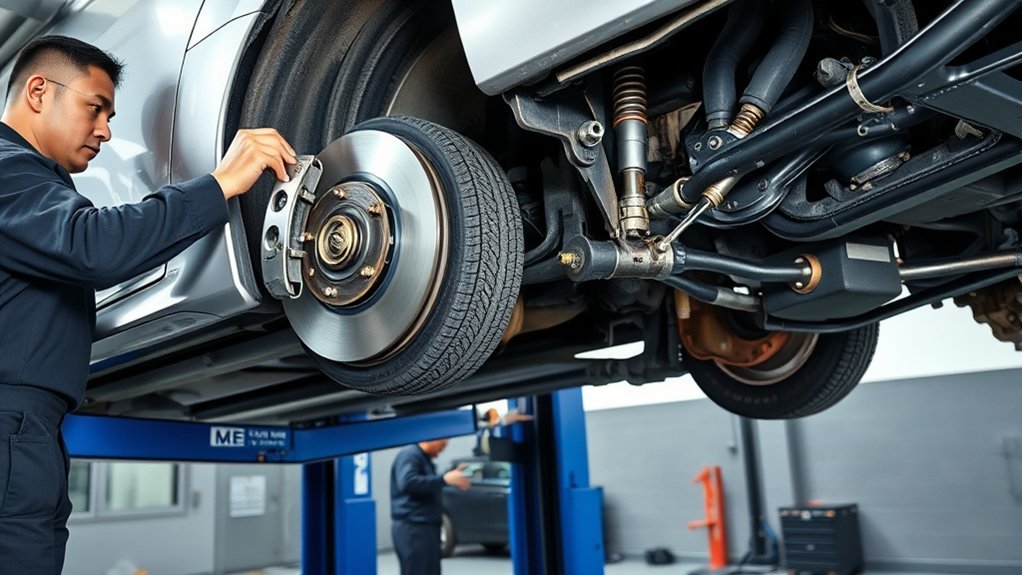
The 30,000-mile service is one of the most useful checkpoints because it combines routine service with a broader inspection. For many recent Camry schedules, this interval can include replacing the engine oil and filter, replacing the cabin air filter, replacing the engine air filter, rotating tires, and inspecting major brake, steering, suspension, fuel, coolant, and drivetrain components.
- Inspect brake pad/disc thickness and disc runout where specified.
- Inspect brake lines and hoses for leaks, cracks, chafing, or corrosion.
- Inspect automatic transmission fluid cooler hoses, connections, and the transmission for leakage where applicable.
- Inspect drive shaft boots, steering gear, steering linkage, and suspension ball joints.
- Inspect radiator, condenser, coolant level/condition, and hoses for debris, corrosion, or leakage.
- Inspect fuel lines, fuel tank cap gasket, vapor vent hoses, rear differential oil, and transfer case oil where applicable.
Warning: Do not assume your Camry is approved for towing or heavy loading just because the maintenance guide mentions those conditions. Check your Owner’s Manual and load ratings before towing, using a roof carrier, or carrying unusually heavy cargo.
At 60,000 Miles: Spark Plugs, Coolant, Belts, and Transmission Fluid
The 60,000-mile service needs model-year context. On some 2018–2024 Camry models with the 2GR-FKS V6, spark plugs are listed at 60,000 miles. On 2025+ hybrid Camry models, spark plugs are listed later, at 120,000 miles. That is why the service writer should identify your engine before recommending spark plug replacement.
| Item | What to Check at 60k |
|---|---|
| Spark plugs | Replace at 60k only if your model-year guide lists it for your engine, such as certain V6 models. Many newer four-cylinder/hybrid schedules list spark plugs later. |
| Drive belts | Inspect for cracking, glazing, oiliness, fraying, tension issues, pulley noise, or misalignment where applicable. |
| Coolant | Inspect coolant level/condition at scheduled checks. Initial coolant replacement is often later, such as 100,000 miles/120 months on recent guides. |
| Automatic transmission fluid | Replace only when the severe-use schedule calls for it. Toyota uses “inspect” or “replace” language; ask before approving a “flush.” |
| AWD fluids and fasteners | AWD models may require rear differential, transfer case, propeller shaft, or drive shaft nut service depending on model year and system design. |
90,000+ Miles: Drive Belts, Coolant, Spark Plugs, and Major Replacements
After 90,000 miles, the schedule becomes more powertrain-specific. This is where owners often overpay for services that are not due yet, or miss items that are due because they followed a generic Camry checklist.
Drive Belt Inspection & Replacement
On Camry models with serviceable drive belts, inspect the belts at the interval listed in your guide. A technician should check for cracks, glazing, oil contamination, fraying, missing ribs, abnormal belt noise, tensioner weakness, and pulley misalignment. Replace a belt if it is damaged or if Toyota’s schedule calls for replacement.
- Visual check: cracks, frays, missing ribs, glazing, or oil contamination.
- Tensioner check: smooth movement, correct tension, and no rattling or binding.
- Pulley check: no wobble, rough bearing noise, or misalignment.
- Accessory check: alternator, water pump, A/C, and other driven components where applicable.
Vacuum Pump & Brake Booster
Some 2018–2024 Camry gas-engine schedules include vacuum pump inspection or replacement around 120,000 miles, depending on engine. For example, some four-cylinder applications call for inspection, while some V6 applications call for replacement. The 2025+ hybrid schedule is different, so do not approve this item unless your model-year guide lists it.
Brake assist is safety-critical. If the brake pedal feels unusually hard, braking effort changes, warning lights appear, or you hear abnormal pump noises, have the brake system inspected immediately by a qualified technician.
Coolant, Spark Plugs, and Hybrid Items
Recent Toyota guides often list the first engine coolant replacement around 100,000 miles or 120 months, then every 50,000 miles or 60 months after that. Hybrid models can also have inverter or intercooler coolant intervals. Use Genuine Toyota Super Long-Life Coolant or a coolant that meets the specification in your guide.
For 2025+ Camry hybrid models, spark plugs are listed at 120,000 miles. The schedule also includes recurring inspection or cleaning of the hybrid battery cooling intake filter. Keeping that intake area clean helps the hybrid battery cooling system work as designed.
Special-Condition Checks: Dusty Roads, Heavy Loads, Short Cold Trips, and Idling
Special operating conditions do not all stress the same parts. Dust attacks filters and boots. Heavy loading stresses brakes, tires, suspension, and drivetrain fluids. Repeated short cold trips can contaminate oil because the engine may not fully warm up. Long idling and low-speed operation can age fluids faster than highway miles alone suggest.
Dust Ingress Inspections
If you frequently drive on dirt, dusty, muddy, or road-salt/melted-snow roads, inspect the engine air filter, intake housing, cabin filter, suspension boots, steering linkage boots, ball joint dust covers, and brake areas more often. Replace filters that are clogged, torn, oil-soaked, or visibly contaminated.
- Inspect the engine air filter and housing for dust packing, tears, poor sealing, or oil contamination.
- Check suspension boots, ball joint covers, and steering linkage boots for cracking or abrasive wear.
- Examine brake calipers, pads, dust shields, and exposed hardware for grit buildup or uneven wear.
- Inspect cabin filter condition if ventilation airflow drops or dust enters the cabin.
Load-Related Service Checks
Heavy loading, roof cargo, and towing can increase heat and stress in the brakes, tires, suspension, transmission, and AWD components. If your Camry is approved for the load you carry, ask the technician to check brake wear, tire pressure, tread condition, suspension components, chassis fasteners, and any drivetrain-fluid replacements listed for that use.
Note: Always follow the tire placard and Owner’s Manual for tire pressure and load limits. Tire pressure should be checked cold, and heavy loads make proper inflation and tread condition more important.
Cold Short-Trip Care
Repeated trips of less than five miles in freezing temperatures can prevent the engine oil from reaching full operating temperature. On model years where Toyota lists this as a special operating condition, the oil and filter may need replacement at the severe-use interval. Ask the shop to check the battery, charging system, coolant condition, and oil condition if your driving is mostly short winter trips.
- Use the severe-use oil interval when your Toyota guide lists your short-trip pattern.
- Keep the battery tested before winter if most trips are short.
- Check coolant freeze protection before freezing weather.
- Inspect brakes for corrosion or sticking if the car sits outside or sees road salt.
How to Schedule Service and What to Tell the Technician for Severe-Driving Care

When you schedule service, do not just ask for “the severe package.” Tell the technician exactly how the car is used. Clear details help the shop apply the correct Toyota checklist instead of adding generic services.
- Dust or dirt roads: ask for engine air filter, cabin filter, boots, ball joints, steering linkage, brakes, and chassis fastener checks.
- Heavy loading, roof carrier, or towing: ask about brake wear, tire load/pressure, suspension, chassis fasteners, and any listed transmission, rear differential, transfer case, or AWD fluid service.
- Short freezing trips: ask whether your model-year guide moves oil and filter service to 5,000 miles or 6 months.
- Long idling or low-speed use: ask about severe-use oil service and any transmission-fluid replacement listed for your model year.
- Hybrid Camry: ask about the HV battery cooling intake filter and inverter/intercooler coolant intervals where applicable.
Keep Records for Warranty and Resale
Keep every service receipt, including the date, mileage, services performed, parts used, and shop name. Toyota maintenance guides include log sections for this reason. Good records help you track severe-use intervals, avoid duplicate work, support warranty discussions, and show future buyers that the Camry was maintained correctly.
Pro Tip: Create one folder called “Camry Maintenance.” Save PDFs of the Toyota guide, service invoices, tire purchases, battery tests, and any technician notes about severe-use driving.
Frequently Asked Questions
What are the major service intervals for a Toyota Camry?
For recent Camry models, the basic rhythm is every 5,000 miles or 6 months. Larger checkpoints often appear around 30,000, 60,000, 100,000, and 120,000 miles, but the exact work depends on model year, engine, hybrid system, and drivetrain.
What are Toyota severe driving conditions?
Toyota’s special operating conditions vary by model year, but recent Camry examples include driving mostly on dirt, dusty, muddy, road-salt, or melted-snow roads; towing or heavy loading where permitted; repeated short freezing trips on some model years; and extensive idling or low-speed long-distance driving on some model years.
At what mileage does Toyota recommend a transmission flush?
Do not assume Toyota recommends a “flush.” Toyota maintenance guides usually say to inspect or replace automatic transmission fluid at specified intervals. Severe use, such as heavy loading, towing, or certain low-speed/idling use depending on model year, may require fluid replacement around 60,000-mile intervals. Ask the technician to follow Toyota’s procedure for your vehicle.
Should I change Camry oil every 5,000 miles?
Change the oil and filter every 5,000 miles or 6 months if your Toyota guide lists that interval for your driving conditions. If your driving does not meet the special operating conditions and the correct oil is used, many recent Camry schedules list oil and filter replacement at 10,000 miles or 12 months.
When are Toyota Camry spark plugs due?
It depends on engine and model year. Some 2018–2024 V6 Camry schedules list spark plugs at 60,000 miles, while 2025+ hybrid Camry schedules list spark plugs at 120,000 miles. Verify the engine code and model-year guide before replacing them.
Does severe driving mean I need every service the dealer recommends?
No. Severe driving means you should apply the additional Toyota-listed items that match your actual driving conditions. Ask the service advisor to show which items are in the Toyota maintenance guide and which are dealer-recommended extras.
Conclusion
A Toyota Camry severe-driving schedule is only useful when it is specific. Start with the official Toyota guide for your exact model year, then match your driving to the listed special operating conditions. Keep the 5,000-mile/6-month visit on your calendar, move oil and filter service earlier when Toyota calls for it, inspect brakes, tires, filters, fluids, and suspension on time, and treat 60,000–120,000-mile services as model-specific rather than universal. That approach prevents both skipped maintenance and unnecessary upsells.
Sources
- Toyota Owners Manuals & Warranties — official lookup source for model-year owner’s manuals and warranty/maintenance guides.
- 2024 Toyota Camry Warranty & Maintenance Guide — supports 5,000-mile/6-month maintenance cadence, special operating conditions, 2024 service intervals, V6 spark plug timing, coolant, transmission-fluid, vacuum pump, and AWD-related notes.
- 2025 Toyota Camry Warranty & Maintenance Guide — supports 2025+ hybrid schedule items, 100,000-mile coolant timing, 120,000-mile spark plug timing, hybrid battery cooling intake filter service, and severe-use tables.
- Toyota USA Newsroom: 2025 Camry Goes Exclusively Hybrid — supports the 2025+ model-year freshness note.
- NHTSA TireWise — supports tire pressure, tread, rotation, and load-limit safety reminders.