What’s in This Article
- What the Camry “Check Engine” Light Means
- Quick Actions: What to Check Right Now
- Is It Safe to Drive? When to Stop
- How to Read OBD-II Codes on a Camry
- Common Camry Codes and What They Usually Mean
- Repair Options and Cost: DIY, Local Shop, Toyota Tech
- When to Call a Technician
- Frequently Asked Questions
Your Toyota Camry’s check engine light can mean a loose gas cap or a fault that can damage costly parts. If the light flashes, or the car shakes, loses power, knocks, or overheats, pull over safely and shut the engine off. If the light stays steady and the car drives normally, check the gas cap, look for other warning lights, then read the code with an OBD-II scanner.
Quick Answer
A steady Camry check engine light usually means you can drive carefully for a short trip while you check simple causes and scan the code. A flashing light often points to a severe misfire, so stop driving and get service as soon as you can. Start with the gas cap, then use the diagnostic trouble code (DTC) to guide the next test.
Key Takeaways
- Stop driving if the check engine light flashes or the Camry runs rough.
- Tighten the gas cap until it clicks, then watch the light over several drives.
- Read and record OBD-II codes before you clear anything.
- Use the code as a starting point, not a final diagnosis.
- Call a technician for misfires, overheating, fuel smells, or repeated warning lights.
What the Camry “Check Engine” Light Means
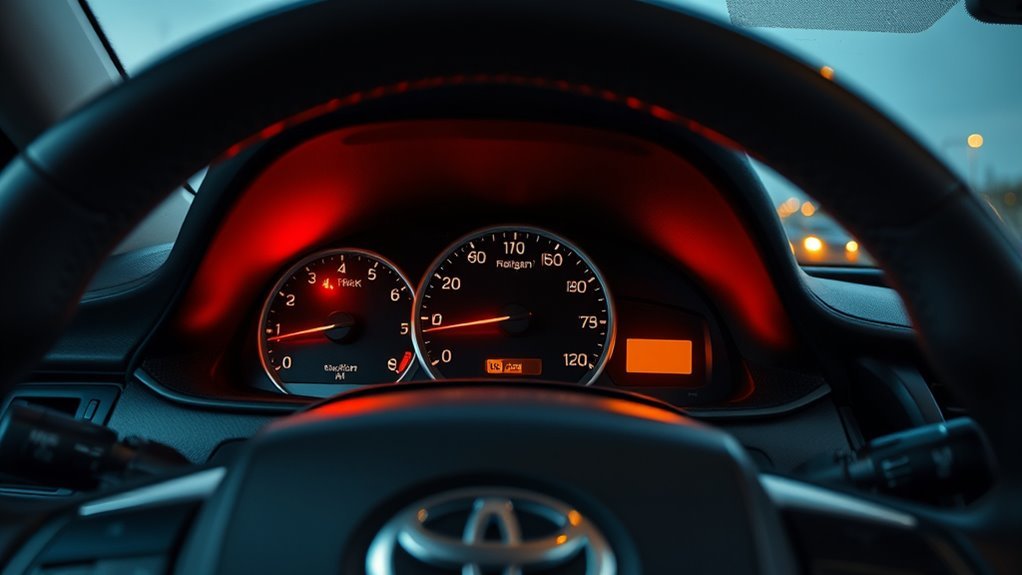
When your Camry’s Check Engine Light turns on, the engine control system has detected a fault. Toyota owner information describes this light as the malfunction indicator lamp, which can relate to the engine control system, throttle control system, or transmission control system.
You should treat the light as a diagnostic flag, not a guess. Common causes include a loose gas cap, worn spark plugs, faulty oxygen sensors, evaporative emissions control (EVAP) faults, mass air flow (MAF) sensor problems, or catalytic converter faults.
A steady light means you need diagnosis soon. A flashing light can signal a severe misfire, and the Environmental Protection Agency (EPA) warns that severe misfires can damage emissions parts, especially the catalytic converter.
Warning: Do not keep driving with a flashing check engine light unless you must move the car to a safe place.
You’ll use diagnostic tools to read stored fault codes and review clues such as fuel trims, misfire counts, and sensor data. If a loose gas cap caused the fault, Toyota notes that the indicator may go off after you drive several times. If the light stays on, use targeted diagnosis or ask a qualified technician to inspect the car.
Quick Actions: What to Check Right Now
Start with checks that take only a few minutes and carry low risk. Confirm the gas cap fits tightly and shows no cracks. Then check oil and coolant levels, look for leaks, and scan the car before you replace parts.
Check Gas Cap Tightness
If your Camry’s Check Engine Light turns on after refueling, inspect the gas cap first. Toyota owner guidance says you should turn the cap clockwise until you hear one click, because a loose cap can trigger the malfunction indicator lamp.
- Remove the cap, then inspect the gasket and threads for cracks, dirt, or wear.
- Re-seat the cap and tighten it until you hear a firm click.
- Replace the cap with the correct Toyota-spec part if the gasket looks cracked or flat.
- Drive several normal trips and scan the code again if the light stays on.
A loose or damaged cap can let fuel vapors escape and trigger EVAP codes. It does not usually cause engine damage by itself, but you should fix it so the system can seal and test correctly.
Inspect Engine Fluids
Check fluids because low levels can create safety risks or point to a deeper problem. Pull the engine oil dipstick, verify the level, and look for thick sludge, a burnt smell, or metal-like debris. Check the coolant reservoir only when the engine has cooled.
Also look at the dash for separate oil pressure, temperature, brake, or battery warnings. These lights may need faster action than a steady check engine light. Do not open a hot cooling system, and do not drive if the engine overheats.
- Check engine oil level and condition.
- Check coolant level in the reservoir after the engine cools.
- Look under the car for fresh leaks.
- Watch for fuel smell, smoke, shaking, or loss of power.
Scan For Codes
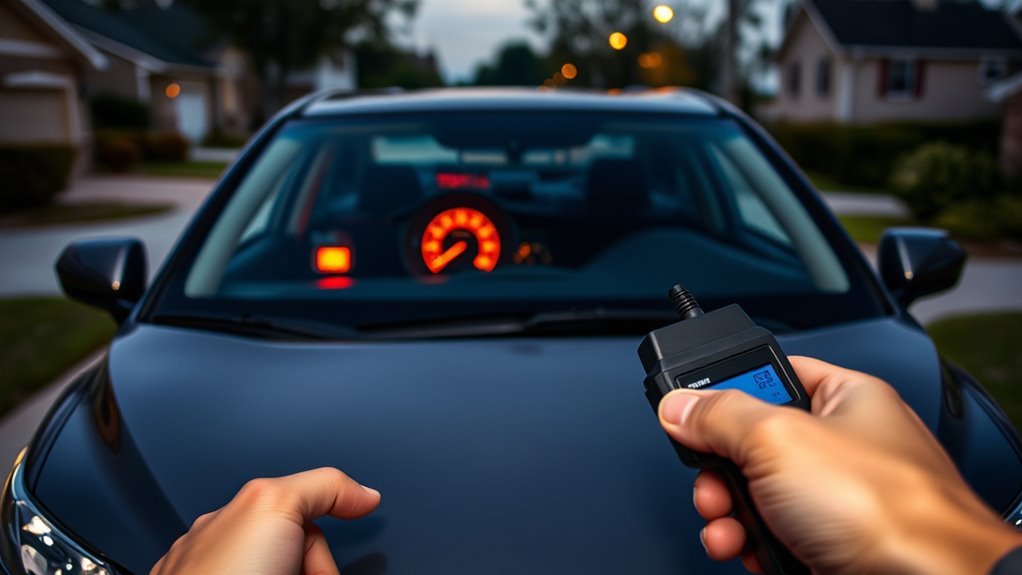
Before you call a mechanic, plug an OBD-II scanner into the diagnostic port under the driver-side dash. Most scan tools can read powertrain codes that start with P, such as P0300 or P0420. Record every stored and pending code before you clear anything.
- Confirm that the scanner works with your Camry model year.
- Turn the ignition to ON, then read stored and pending codes.
- Write down each code, freeze-frame data, and driving symptoms.
- Check the gas cap first if EVAP codes appear.
- Inspect ignition parts if misfire codes appear.
A scanner gives you direction, but it does not prove which part failed. Use the code, symptoms, and basic tests together before you buy parts.
Is It Safe to Drive? When to Stop
When your Camry’s engine light comes on, treat a flashing lamp as urgent. Pull over as soon as you can do so safely, then shut the engine down. A flashing light often points to a misfire that can overheat or damage the catalytic converter.
Watch for warning signs while you slow down. Loud knocking, severe shaking, heavy fuel smell, smoke, overheating, or major power loss means you should stop and call for help. Do not keep driving to “see what happens.”
If the light stays steady with no performance loss, you can usually continue carefully to home or a repair shop. Avoid hard acceleration, heavy loads, and long highway trips until you scan the codes. If the light stays on after a gas cap check, schedule diagnosis soon.
How to Read OBD-II Codes on a Camry

Start by locating the OBD-II diagnostic port, which usually sits under the dashboard near the driver’s seat. Plug in a compatible scanner, turn the ignition to ON without starting the engine, and let the scanner communicate with the car.
- Select “Read Codes” and wait for DTCs to appear.
- Write each code exactly, including the letter and four numbers.
- Check stored, pending, and permanent codes if your tool supports them.
- Save freeze-frame data before you clear codes.
- Use a repair manual or trusted database to plan the next test.
Do not clear a code just to turn off the light before you diagnose the fault. Clearing codes can remove helpful data and reset emissions readiness monitors. That can also cause trouble if your area requires an emissions inspection.
Common Camry Codes and What They Usually Mean
The check engine light can point to many systems, but some codes appear often across Toyota Camry repairs. Use these meanings as a starting point only. Your Camry still needs tests that confirm the cause.
| Code | Usual Meaning | What to Check First |
|---|---|---|
| P0420 | Catalyst system efficiency below threshold | Exhaust leaks, oxygen sensors, misfires, and catalytic converter condition |
| P0171 / P0174 | Fuel trim system too lean | Vacuum leaks, intake boots, MAF sensor, fuel pressure, and air leaks |
| P0300 | Random or multiple cylinder misfire | Spark plugs, ignition coils, fuel delivery, compression, and vacuum leaks |
| P0440 | EVAP system malfunction | Gas cap, EVAP hoses, purge valve, vent valve, and vapor leaks |
| P0131 / P0132 | Oxygen sensor circuit voltage issue | Oxygen sensor wiring, exhaust leaks, fuel trim data, and sensor response |
Misfire codes need fast attention because unburned fuel can enter the exhaust and harm the catalytic converter. Lean codes need careful testing because a vacuum leak, dirty MAF sensor, weak fuel pump, or exhaust leak can create similar symptoms. EVAP codes often start with the gas cap, but they can also involve valves or vapor hoses.
Repair Options and Cost: DIY, Local Shop, Toyota Tech
You can handle simple checks yourself, but you should match the repair path to your tools and risk level. A basic OBD-II scanner can help you pull codes before you spend money on parts or labor. Do not replace sensors only because a code mentions them.
- DIY: Read codes, check the gas cap, inspect hoses, replace worn spark plugs, and monitor results.
- Local shop: Ask for a full diagnosis, scan report, and repair estimate before approving work.
- Toyota technician: Choose dealer-level service for warranty concerns, module programming, hybrid faults, or repeated issues.
- Cost strategy: Add the diagnostic fee to the repair estimate so you can compare total cost.
RepairPal lists the average Toyota Camry check engine light diagnosis and testing cost at $122 to $179, before taxes, fees, location changes, and repair costs. Your local price may run higher if the shop performs advanced testing or your area has higher labor rates.
When to Call a Technician
Call a technician when the light flashes, the engine runs rough, or the same code returns after a basic repair. You should also get help if the car overheats, smells like fuel, stalls, loses power, or fails an emissions test. These signs can point to faults that need tools and tests beyond a basic scanner.
Ask the shop to explain the code, the test result, and the failed part before you approve the repair. A good diagnosis should connect the DTC to measured evidence, such as fuel trim data, smoke test results, coil output, sensor voltage, or exhaust readings.
Pro tip: Keep a note with the code, date, mileage, fuel level, and symptoms so repeat faults become easier to trace.
Frequently Asked Questions
Will a Loose Gas Cap Cause Long-Term Damage if Ignored?
A loose gas cap alone usually does not damage the engine. It can trigger EVAP codes, reduce the system’s ability to control fuel vapors, and keep the warning light on. Tighten or replace the cap so the system can seal correctly.
Can Low Oil Pressure Trigger the Check Engine Light?
Low oil pressure more often triggers a separate oil warning light, not just the check engine light. Some engine oil control or sensor faults can also set powertrain codes. Stop driving if you see an oil pressure warning or hear knocking.
Does Unplugging the Battery Reset the Camry’s Codes Safely?
Disconnecting the battery may turn the light off for a while, but it does not fix the fault. It can also erase stored data, reset readiness monitors, and remove helpful clues. Read and save the codes before you reset anything.
Will Aftermarket Exhaust Parts Cause Persistent Check Engine Lights?
Aftermarket exhaust parts can cause persistent warning lights if they create leaks, move oxygen sensors, alter sensor readings, or change catalytic converter performance. Scan the codes and inspect the exhaust before you replace sensors.
Do Newer Camry Models Need Dealer-Only Scanners?
Most newer Camry models work with standard OBD-II scanners for basic powertrain codes. Some factory-level tests, module programming, hybrid diagnostics, and calibration work may require Toyota-level tools or dealer service.
Automotive Safety Disclaimer: This article is for informational purposes only and does not replace advice from a qualified automotive technician. Always stop driving when the vehicle feels unsafe, overheats, loses power, or shows a flashing check engine light.
Conclusion
Your Camry’s check engine light tells you the car needs a clear diagnosis, not guesswork. Start with the gas cap, check for urgent symptoms, and read the OBD-II code before you clear anything. Drive cautiously only when the light stays steady and the car feels normal. If the light flashes or the car runs rough, stop safely and get professional help. Fast action protects your engine, your catalytic converter, and your next repair bill.
References
- Environmental Fact Sheet: On-Board Diagnostics Frequently Asked Questions — U.S. Environmental Protection Agency
- Toyota Owner’s Manual: Fuel Tank Cap and Malfunction Indicator Lamp Guidance — Toyota
- Toyota Camry Check Engine Light Diagnosis and Testing Cost — RepairPal, 2026 data shown on estimator
- P0420 Code: Catalyst System Low Efficiency — Kelley Blue Book
- P0171 Code: Fuel Trim System Too Lean — Kelley Blue Book
- P0300: Random/Multiple Cylinder Misfire Detected — Edmunds, 2024
- P0440: Evaporative Emission Control System Malfunction — Edmunds, 2024