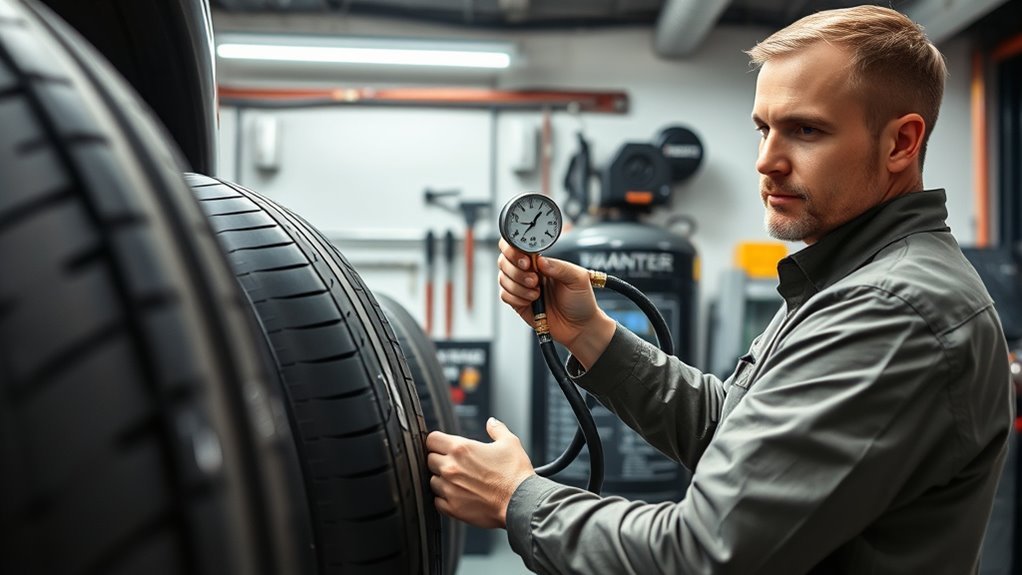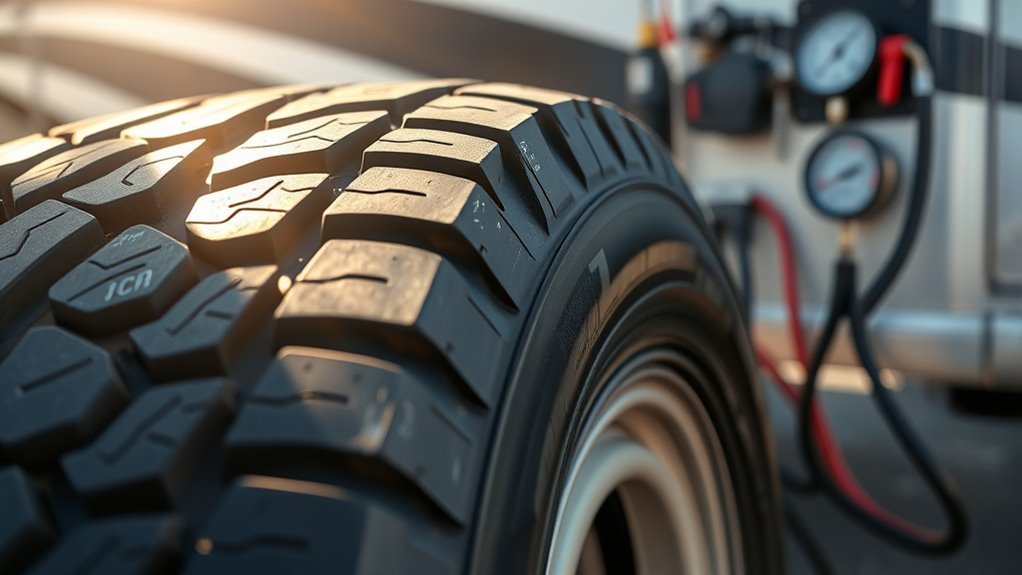
Understanding RV tire pressure is essential for safe travel. Tire load ratings indicate maximum weight per tire; exceeding them can lead to failures. Weighing your RV helps establish correct tire pressure, ensuring safety and performance. Always use tire load and inflation tables to match your RV’s requirements accurately. Regular maintenance and inspecting for pressure errors can help you avoid common pitfalls. If you’re interested in optimizing your setup, there’s more valuable information to explore.
Understanding RV Tire Load Ratings
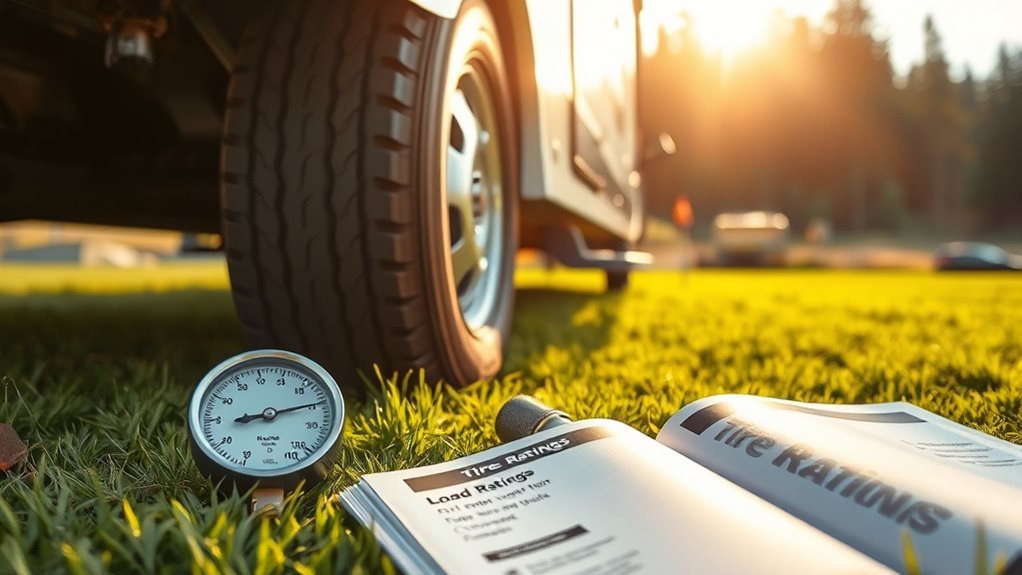
When you’re hitting the road in your RV, understanding tire load ratings is vital for your safety and the vehicle’s performance. Each tire’s load rating, found on the tire sidewall, indicates the maximum weight it can support. Adhering to the Gross Vehicle Weight Rating (GVWR) is significant; overloading tires can cause catastrophic failures. It’s wise to choose higher load-rated tires if necessary, but consult an industry expert before changing sizes. Additionally, accurate tire pressure must align with the load being carried. Proper tire inflation is determined using manufacturer-specific load and inflation tables. Regularly weighing your RV by individual wheel position guarantees you maintain peak RV tire safety, preventing blowouts and enhancing performance on the road.
How to Weigh Your RV for Accurate Tire Pressure
Accurately weighing your RV is fundamental for determining the right tire pressure, guaranteeing ideal safety and performance on the road. To achieve this, weigh each tire position individually rather than just the overall weight. Services like Escapees Smart Weigh or CAT scales provide precise measurements of individual tire weights, which is essential since uneven weight distribution can affect your RV tire load. Always weigh your RV with its typical load, including passengers and gear, to make certain the proper tire inflation rating aligns with the actual weight. After weighing, consult the manufacturer’s inflation chart to find the appropriate PSI for each tire, particularly using the heavier weight for dual tires on the same axle. Regular checks are significant to prevent tire blowouts.
Why Correct Tire Pressure Matters
Maintaining correct tire pressure is essential for preventing blowouts, which can pose serious risks while towing. It also plays a key role in enhancing your RV’s overall performance and handling on the road. Additionally, proper inflation extends the lifespan of your tires, saving you money in the long run.
Preventing Tire Blowouts
Understanding the critical role of correct tire pressure can greatly reduce the risk of blowouts, which are often caused by under-inflated tires that overheat and fail. In fact, approximately 200,000 accidents occur annually due to tire-related issues, highlighting the necessity of maintaining proper inflation. Regularly checking tire pressure, especially during cold inflation, guarantees that you’re within safe limits. Remember, overloading your RV can considerably stress your tires, risking failure if they’re overloaded by more than 100 pounds. By adhering to load and inflation ratings, you not only enhance your safety but also improve handling and fuel efficiency. Prioritizing correct tire pressure is essential for a safe and liberating RV experience.
Enhancing Vehicle Performance
Tire pressure directly influences your RV’s overall performance, affecting everything from handling to fuel efficiency. Maintaining the correct tire inflation pressure is essential for RV safety and enhances vehicle performance. Under-inflated tires can lead to overheating, which greatly increases the risk of tire failure. Adhering to the load ratings specified on your tire sidewall guarantees ideal traction and stability, especially when towing. Regularly monitoring tire pressure, particularly before travel, can also improve fuel efficiency, as improperly inflated tires may reduce fuel economy by up to 3%. Utilizing a Tire Pressure Monitoring System (TPMS) further supports ongoing assessment, allowing you to identify issues proactively and maintain safe, efficient operation of your RV on the open road.
Prolonging Tire Lifespan
Proper tire pressure plays an essential role in extending the lifespan of your RV tires. Maintaining the correct tire pressure according to tire load and inflation specifications helps prevent overheating and premature wear. Under-inflated tires lead to uneven tread wear, greatly reducing their longevity. By regularly monitoring your tire pressure—ideally when cold—you can avoid costly replacements and enhance safety; remember, under-inflated tires contribute to about 200,000 accidents annually. Adhering to manufacturer recommendations and load/inflation tables guarantees your tires operate within safe limits. This proactive approach not only prolongs tire life but also aligns with the principles advocated by the Safety Education Foundation, empowering you to travel with confidence and freedom.
Reading and Using Tire Load and Inflation Tables
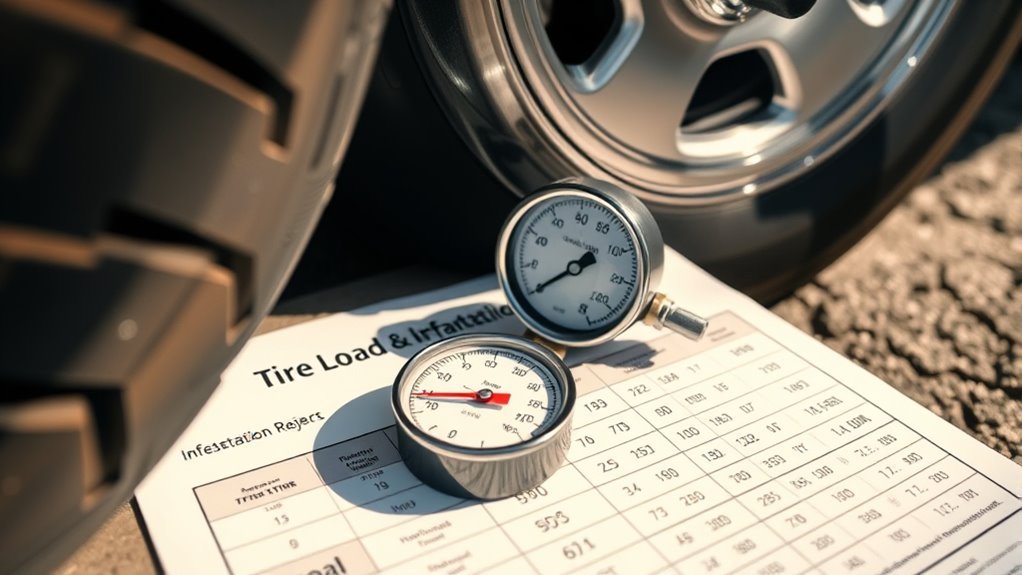
When you’re looking to guarantee your RV’s tires are properly inflated, consulting tire load and inflation tables is essential. These tables provide specifications that help you determine the correct PSI based on the weight each tire carries, ensuring safe performance. To use these tables effectively, match the tire size indicated on the tire sidewall with the corresponding specifications.
Here’s a simple example:
| Tire Size | Maximum Load (lbs) |
|---|---|
| LT225/75R16 | 2,540 |
| LT235/80R16 | 3,000 |
| LT245/75R16 | 3,200 |
| LT265/75R16 | 3,400 |
Ensure each axle’s tire pressure is set according to the heaviest weight measured, using a tire pressure monitoring system for accuracy. Regularly consult updated load and inflation tables from manufacturers like Michelin.
Avoid These Common Mistakes in Tire Pressure Management
While many RV owners believe they’re managing tire pressure correctly, a few common mistakes can undermine safety and performance on the road. One major error is inflating RV tires to the maximum pressure on the sidewall, ignoring the actual load. This can lead to under-inflation and tire failure. Additionally, operating with overloaded or unevenly loaded tires increases the risk of blowouts. Always weigh individual wheel positions for accurate pressure settings. Remember to check tire pressure when cold, as heat from driving can distort readings. Over-inflating reduces contact patches, impairing braking, while under-inflated tires generate excess heat. Consult load and inflation tables from tire manufacturers to adjust pressures correctly based on your heaviest load for ideal safety and performance.
Why Regular Tire Maintenance and Inspections Are Essential
Regular tire maintenance and inspections play an important role in guaranteeing your safety on the road. Under-inflated tires contribute to around 200,000 accidents each year, resulting in thousands of injuries and fatalities. By routinely checking tire pressure and examining for uneven tread wear, cracks, or bulges, you can greatly reduce the risk of blowouts and enhance tire performance. Maintaining the correct tire pressure not only prolongs tire life but also makes sure weight is distributed evenly, which is essential during travel. Remember, tire temperatures can rise quickly, so check pressure before long trips. Additionally, replace tires every 5–7 years to combat rubber degradation. Prioritizing regular tire maintenance and inspections is crucial for your safety and peace of mind.
Effective Strategies for Balancing Weight Distribution in Your RV
To maintain ideal tire performance and safety, you need to assess weight distribution regularly in your RV. By utilizing storage solutions wisely and redistributing cargo as needed, you can prevent overloading any single tire. This proactive approach not only enhances stability but also prolongs the life of your tires.
Assess Weight Distribution Regularly
Evaluating weight distribution in your RV is essential for maintaining tire health and overall safety. Regularly weigh each tire position to uncover discrepancies in axle weight, as uneven loading can overload tires, risking failure. Use load distribution tools or apps to plan cargo placement, ensuring heavier items are stored closer to the axles for better balance. Implement the 4-Step Weight Safety Plan by weighing your RV with a typical load, allowing you to set tire pressure according to the heaviest axle. Always check your RV’s Gross Vehicle Weight Rating (GVWR) to avoid exceeding limits, which contributes to tire wear. Redistributing cargo based on wheel weights can prevent one tire from carrying considerably more weight, enhancing tire longevity and performance.
Utilize Storage Solutions Wisely
While managing weight distribution might seem challenging, utilizing storage solutions wisely can greatly enhance your RV’s stability and tire health. To achieve the correct weight distribution, consider these strategies:
- Position heavier items closer to the RV’s center of gravity.
- Monitor water tank levels to adjust weight as needed.
- Regularly weigh each wheel position to identify imbalances.
Redistribute Cargo as Needed
Redistributing cargo effectively is crucial for maintaining balanced weight distribution in your RV, as uneven loads can lead to tire blowouts and compromised safety. Start by checking the load ratings on your tire sidewall and weighing each tire position. This helps you identify which areas are overloaded. To counterbalance weight, use storage compartments on the opposite side of heavier components. Keep heavy items, like water tanks and batteries, positioned low and close to the axle to lower your center of gravity and improve handling. Regularly reassess your cargo distribution, especially when prepping for trips or adding new items, to maintain ideal tire pressure and guarantee safety on the road.
How to Pick the Best Tires for Your RV
Choosing the right tires for your RV is essential for safety and performance, as they directly affect handling, fuel efficiency, and wear. To make the best choice, consider the following:
Selecting the right RV tires is crucial for safety, handling, and fuel efficiency. Make informed choices for a worry-free journey.
- Ensuring load ratings match your RV’s requirements prevents overload and tire failure.
- Opt for higher load-rated tires if you frequently carry heavy loads or plan extended trips.
- Regularly check tire pressure according to cold tire specifications for peak performance.
Consult the manufacturer’s load and inflation tables to determine the correct tire pressure based on weight distribution. Properly inflated RV tires enhance durability, improve fuel efficiency, and contribute to a safer journey. Make informed choices, and liberate your travels with confidence and peace of mind.
Frequently Asked Questions
What’s Better Load Range, D or E?
Load Range E’s the better choice for your needs. It offers enhanced tire durability factors, handles inflation impact analysis more effectively, and improves performance under load, especially with uneven weight distribution. Choose wisely for safety.
What PSI Should My RV Trailer Tires Be At?
Your RV trailer tires should typically be between 65-80 PSI. For ideal inflation strategies, use tire maintenance tips like seasonal pressure adjustments to combat common tire issues, ensuring safety and improving fuel efficiency on your adventures.
What Is the 5 PSI Rule?
The 5 PSI Rule means you should inflate tires to recommended pressure if they’re 5 PSI low. Monitoring tire pressure regularly guarantees ideal load capacity, reduces uneven wear patterns, and supports safety during seasonal adjustments.
What Is the 3% Tire Rule?
The 3% tire rule means you shouldn’t exceed a 3% difference in tire pressure between left and right tires. Regular pressure monitoring and adherence to this rule promotes tire wear, load distribution, and overall safety in your vehicle.
Conclusion
So, you’ve mastered the art of tire pressure, load ratings, and weight distribution—congratulations! You’re officially a tire whisperer. But let’s be real; ignoring these factors is like deciding to bake a cake without measuring ingredients. You might end up with a flat tire instead of a smooth ride. Regular maintenance and smart choices are your best friends on the road. After all, you wouldn’t want your RV to become a rolling disaster, would you? Happy travels!