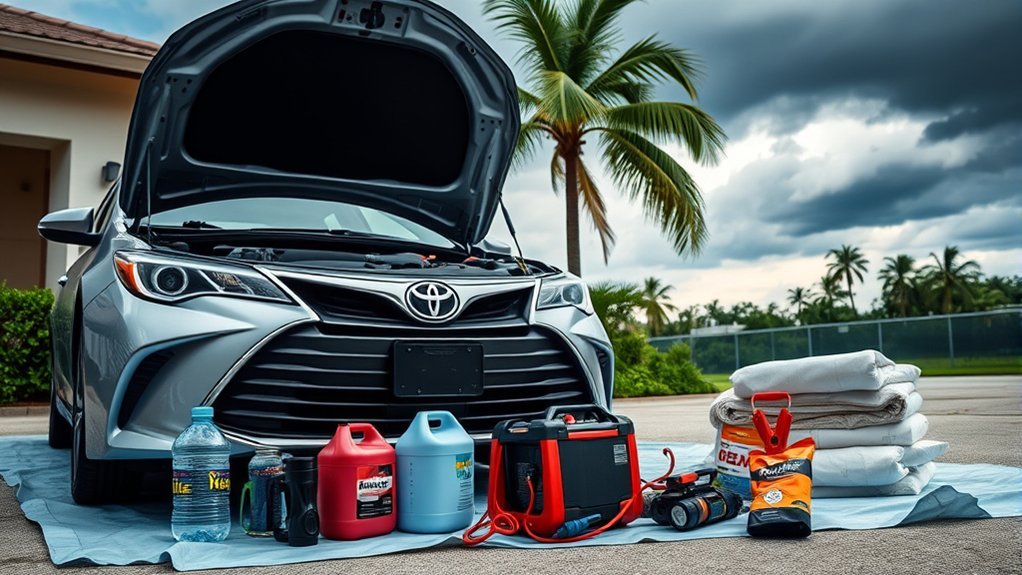
Prep your Toyota Camry by filling the tank, checking tires and spare, and topping off oil, coolant, brake fluid and washer fluid. Test wipers, inspect belts, hoses and battery, and stash a charged phone, power bank, first-aid kit, water and nonperishable snacks. Park on high ground or in covered/garage parking, cover the car if needed, and photograph documents and vehicle for insurance. Follow evacuation routes and keep contacts handy—more practical checks and post-storm steps follow.
Immediate Checklist: What to Check on Your Camry First
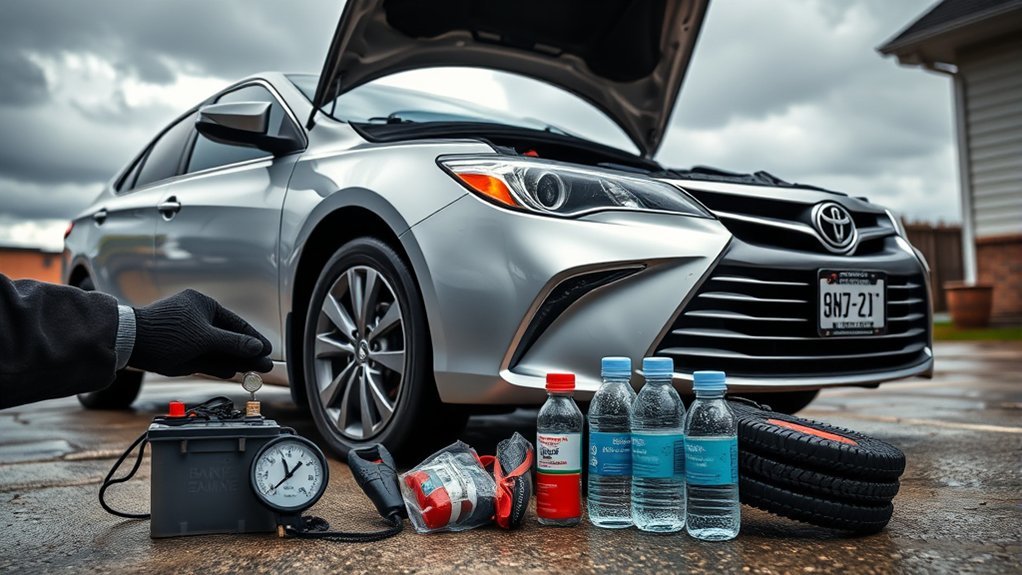
Start by filling the gas tank so you’ve got enough fuel to evacuate and to avoid long lines as the storm approaches; confirm fuel efficiency won’t suffer by removing excess weight and checking tire pressure. Inspect tire maintenance needs: measure tread depth, guarantee even wear, and verify the spare’s condition and inflation. Test windshield wipers and perform wiper replacement now if blades streak or chatter—visibility is nonnegotiable in heavy rain. Take clear photos of your Camry’s exterior and interior, documenting current condition for insurance claims. Stow an accessible kit with a charged phone charger, first aid, bottled water, and nonperishable snacks; keep maps and written emergency contacts inside in case electronics fail. Walk through these items methodically, ticking them off as you go, so you leave with confidence rather than fear. This checklist gives you control—practical steps that free you to act quickly and safely when the storm hits.
Pre-Season Maintenance: Oil, Tires, Fluids, and Battery
Once you’ve completed the immediate checklist, move on to pre-season maintenance so your Camry won’t leave you stranded when weather turns bad. You’ll start with an oil change per Toyota’s intervals—usually every 5,000–7,500 miles—to keep the engine reliable under stress. During your tire inspection, check tread depth and set inflation to the owner’s manual specs so you get traction and efficiency when roads are poor. Check fluid levels: top off coolant, brake fluid, and windshield washer fluid to preserve cooling, stopping power, and visibility in storms. Perform battery maintenance by testing state-of-charge, cleaning terminals, and replacing batteries older than three to five years; extreme weather weakens cells. Finally, schedule a mechanic inspection for belts, hoses, and the A/C so nothing fails when you need mobility or comfort during evacuation. These precise steps let you act with autonomy and control, ensuring your Camry’s systems are resilient when hurricane season arrives.
Stock an Emergency Car Kit for Evacuation
A well-stocked emergency car kit gives you the essentials for a safe evacuation, so pack non-perishable snacks and at least one gallon of water per person for a three-day supply, plus a first-aid kit with bandages, antiseptics, and any personal meds. You’ll choose snack options that balance calories and shelf life: nut bars, dried fruit, jerky, and sealed crackers. For water storage, include sealed bottled water and a collapsible jug to top up if needed, keeping bottles in a cool, shaded compartment. Add a reliable flashlight and extra batteries, a compact multi-tool or basic toolkit for quick fixes, and a high-capacity portable power bank to maintain phone charge for navigation and emergency calls. Organize items in a durable, labeled bag so you can grab it and go; keep perishable-free rotation every six months. This kit lets you move freely and confidently when evacuation becomes necessary, protecting your safety and autonomy on the road.
Keep Fuel and Fluids Topped Up; Check Tires and Battery
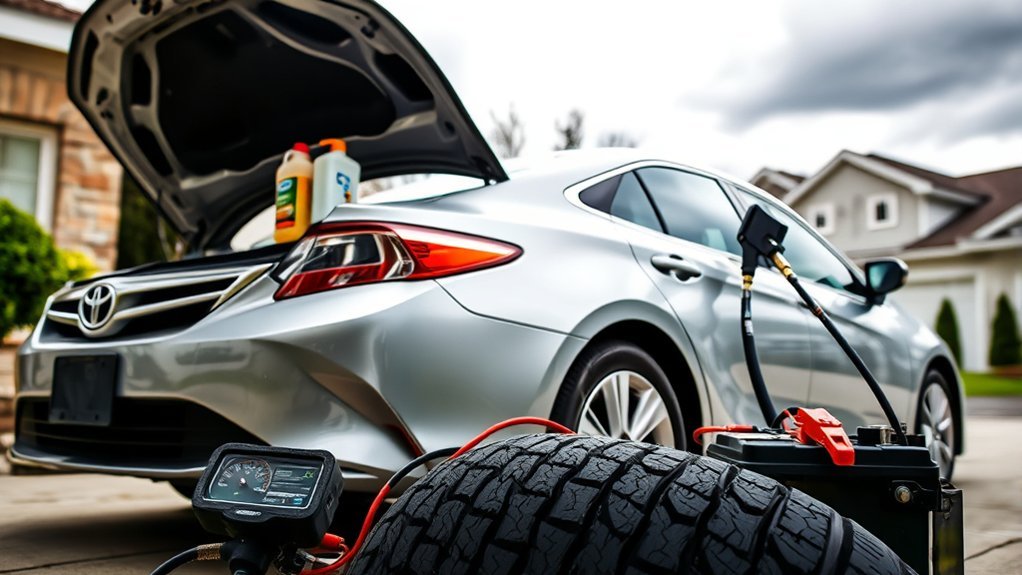
Because you may need to leave on short notice, keep your Camry’s gas tank topped off and all fluids checked so the car’s ready to go without delays. Keep a full tank to avoid gas‑line delays and to preserve fuel efficiency during stop‑and‑go evacuation traffic. Check oil, coolant, and windshield washer fluid regularly; low levels can cause overheating or visibility problems when you can’t afford a breakdown.
Inspect tire pressure and tread depth—properly inflated tires improve traction, extend tire life, and reduce blowout risk in heavy rain. Use a gauge and adjust to the factory PSI listed on the door jamb. Test the battery’s charge and clean terminals; a weak battery can strand you at the worst moment. If you want freedom from roadside failures, schedule a mechanic’s pre‑season inspection of tires and battery to catch issues early. This focused fluid maintenance and tire/battery care keeps your Camry reliable when you need to move fast.
Protecting Your Toyota Camry: Parking, Covers, and Elevation
When you can, park your Camry on high ground or inside a garage to reduce flood and debris risk, and avoid trees or nearby power lines that can fall during the storm. Choose covered parking first; it shields against wind-driven debris and reduces contact with salt and rain. Prioritize flood prevention by evaluating local elevations — move your car ahead of predicted storm surge or heavy runoff. If garage space isn’t available, elevate your vehicle mentally: seek parking on an overpass, hill, or parking structure to gain vehicle elevation above likely flood lines.
Use a sturdy tarp tied down to protect paint and windows from flying debris, but avoid trapping water against the body. Don’t park under large trees or near power lines; fallen branches and downed lines are preventable dangers. These actions protect your Camry and preserve your independence after the storm, letting you move freely when conditions clear.
Document Your Camry and Secure Vehicle Records
Before hurricane season hits, take clear photos of your Camry from multiple angles and note the VIN and license plate so you can prove its pre-storm condition. Put your registration, insurance, and maintenance records in a waterproof folder and keep scanned copies on your phone or secure cloud storage. Review and update your insurance policy now to make sure you’ve got adequate hurricane coverage.
Photograph Vehicle Condition
Grab your phone or camera and systematically photograph your Camry from all angles—exterior front, rear, both sides, the engine bay, interior seats and dash, plus close-ups of any existing scratches, dents, the odometer and the VIN—so you have clear, time-stamped evidence of its pre-storm condition. You’ll want consistent photograph angles and sharp odometer documentation for claims and freedom from dispute. Film a short video walkthrough if you can; video captures context photos miss. Save images to a secure cloud folder and a waterproof flash drive kept with your emergency kit.
- exterior front, rear, both sides
- engine bay, interior, dash
- close-ups: scratches, dents, VIN, odometer
- video walkthrough and saved backups
Keep a physical service-history copy accessible for quick reference.
Secure Important Documents
Although storms can scatter paper and damage electronics, you can prevent last-minute scramble by assembling and protecting all your Camry’s records now. Photograph your Toyota Camry from multiple angles to create dated evidence of condition for insurance claims. Organize originals—registration, insurance policy, maintenance records—and place them in a waterproof container labeled for quick retrieval. Scan or photograph every document and upload encrypted copies to cloud storage or a secure app on your phone so you’ll have emergency access if physical items are lost. Review your policy now, note hurricane-related coverage and insurer contact details, and add them to the digital folder. Finally, create a compact checklist of essentials to grab during evacuation; keep it with your container for consistent document organization and peace of mind.
Plan Routes and In-Car Communication for Evacuation
When storms threaten, plan multiple evacuation routes you’ll actually use and keep redundant ways to communicate so you don’t get stranded or cut off. You should do route mapping before you leave: check traffic apps, weather alerts, and local advisories to pick primary and alternate roads that avoid flood zones. Keep a paper map in the glove box in case GPS fails.
Establish a clear communication plan with family or friends: set meeting points, check-in times, and who reports to whom. Make sure your phone is charged and pack a portable power bank. Tune your car radio to local stations for live traffic and emergency updates.
- Confirm primary and backup routes using apps and paper maps
- Designate meeting points and scheduled check-ins
- Pack charged device, power bank, and spare cables
- Monitor local radio and emergency broadcasts for route changes
Relying on multiple route mapping methods and layered communication tools frees you from single points of failure during evacuation.
Post-Storm Steps: Assess Damage and File Insurance Claims
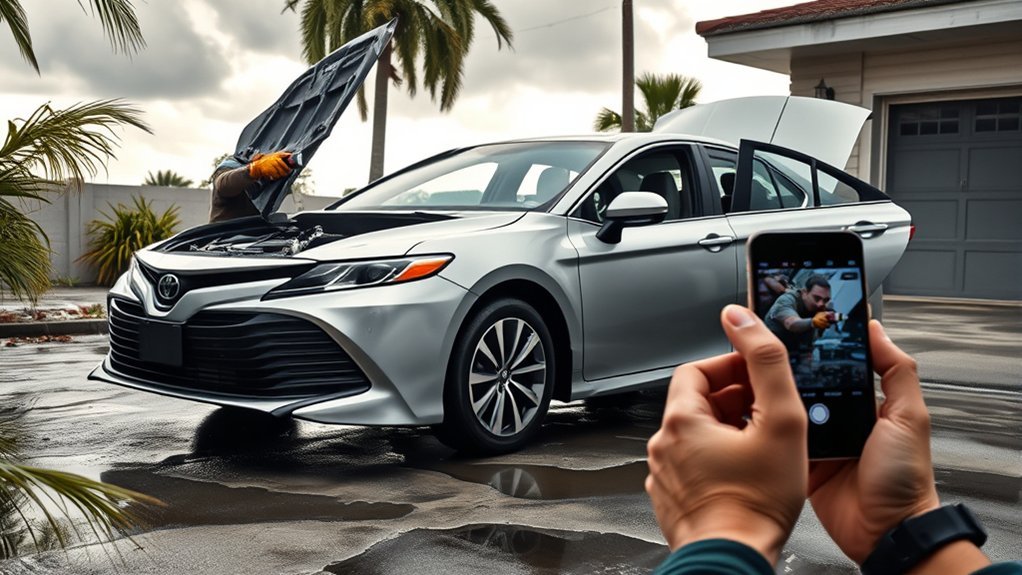
Once the immediate danger has passed and you’ve confirmed everyone is safe, inspect your Toyota Camry carefully for visible damage and signs of water intrusion before moving the vehicle. Walk around the car, note dents, scratches, broken glass, or undercarriage issues, and check carpets, trunk, and electronics for dampness that indicates flooding. Photograph the vehicle from multiple angles, zooming on problem areas so your images serve as clear evidence for storm damage claims. Review your policy to confirm coverage, deductibles, and required insurance documentation; knowing deadlines prevents lost benefits. File your claim promptly through your insurer’s preferred channel, attach photos, a written description, and any repair estimates. Save copies of every message, form, and claim number, and log phone calls with dates and names. Follow up regularly until you get confirmation and a timeline for inspection or payout. Stay persistent and organized so the process frees you to rebuild, not remain stuck.
Frequently Asked Questions
How to Prepare Your Car for a Hurricane?
You’ll secure your car by parking high, maintaining tire maintenance, fueling fully, and covering it; pack an emergency kit with water, snacks, first aid, flashlight and batteries, photograph damage, tape windows, and keep documents handy.
Where Should I Put My Car During a Hurricane?
Find a secure location: park in a garage safety spot or elevated parking structure, ideally a storm shelter-equipped facility. You’ll avoid trees, use tarp backups, photograph damage, and keep keys handy for liberated, confident recovery.
What Should You Stock up on Before a Hurricane?
Stock emergency supplies: water containers and food storage for three days, fuel reserves for your vehicle, first aid and safety equipment, battery chargers, insurance documents, and practical tools so you’re ready, self-reliant, and liberated during storms.
Can Hurricane Winds Move Cars?
Absolutely — winds over 100 mph can lift or push cars, so you’ll prioritize car safety to avoid storm damage. Secure vehicles in garages or on high ground; anchor or move them to minimize displacement and collisions.
Conclusion
Prep now so your Camry keeps you moving when a storm hits. Nearly 40% of Americans live in coastal or high-risk flood zones—so topping off fuel and fluids, checking tires and battery, and packing an evacuation kit isn’t optional. Park on high ground, document VIN and photos, use a breathable cover, and keep records in the cloud. After the storm, inspect for damage, report floods to your insurer, and don’t drive through standing water.