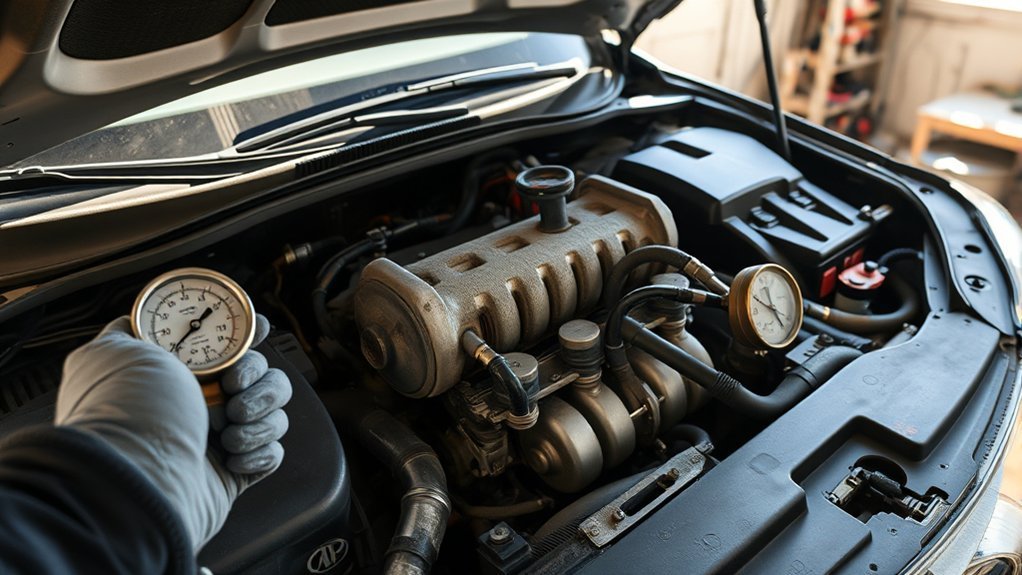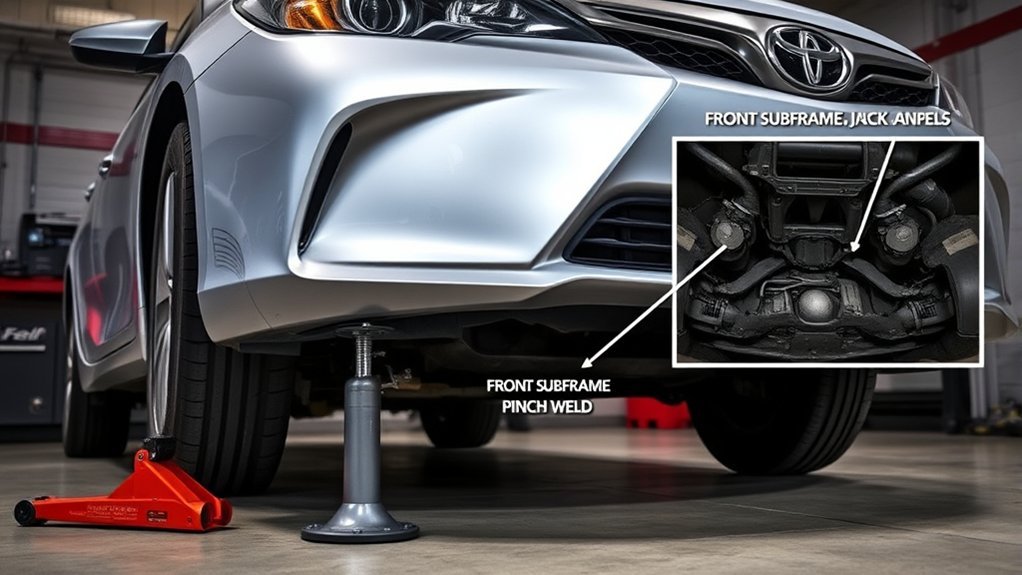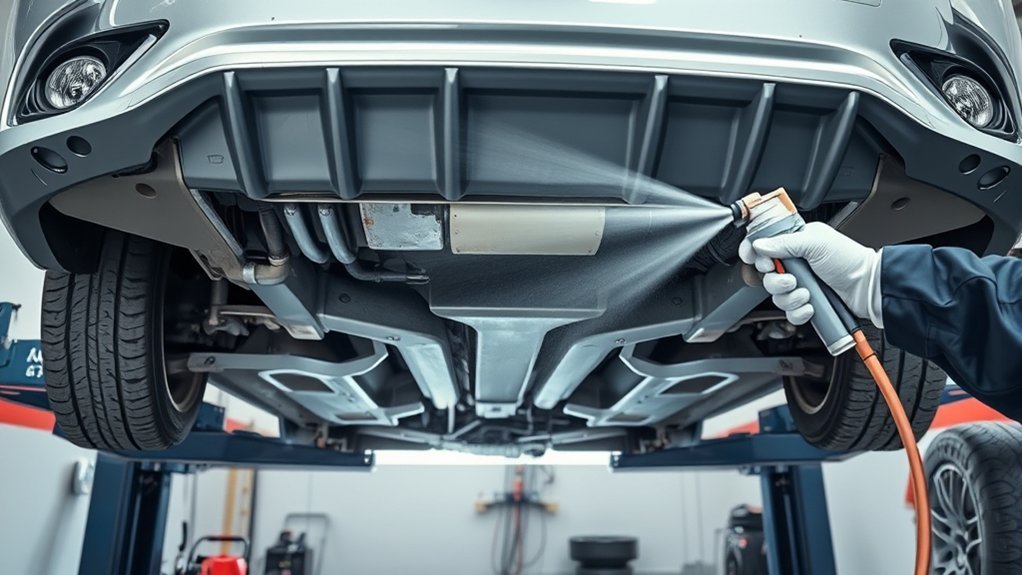
Inspect the Camry undercarriage thoroughly for rust, salt and debris, gather safety gear, inspection light, wire brushes and corrosion-control products like Fluid Film or lanolin-based wax. Pressure-wash using the Salt Shift method, turn wheels to expose suspension, then dry fully. Mask brakes and apply thin even coats of chosen treatment, allow proper cure and recheck 3–4 days later. Do seasonal touch-ups after winter and escalate to a pro for structural loss — keep going to learn exact steps and product choices.
Prep the Camry: Inspection, Tools, and Product Checklist
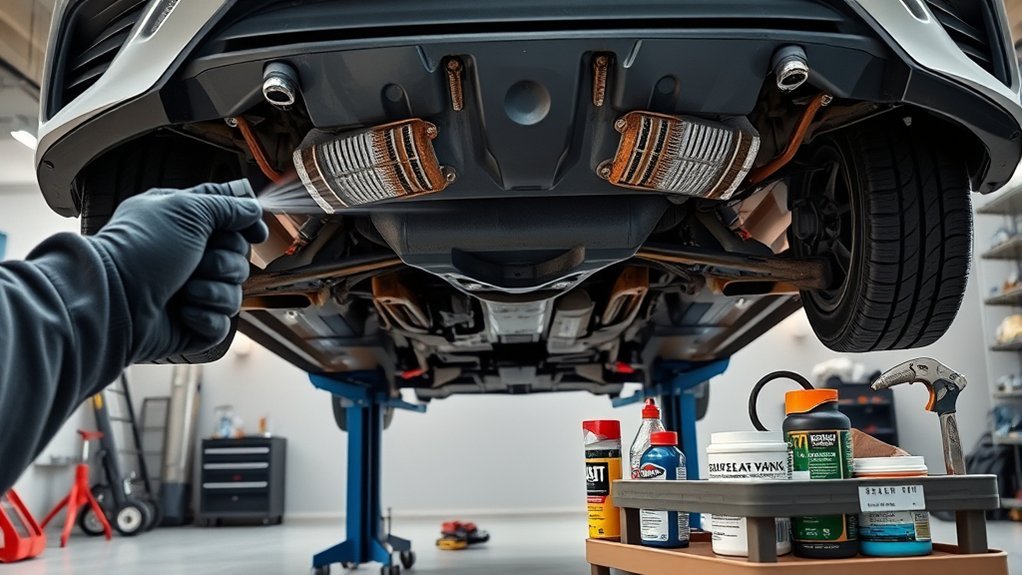
Start by giving your Camry’s undercarriage a careful, systematic inspection to pinpoint rust, salt buildup, and trapped debris before winter sets in. You’ll work methodically: lift the vehicle safely, use a bright inspection light, and probe seams, welds, and suspension mounts for corrosion or lodged grit. Document locations and severity so you can prioritize treatment.
As you prepare, assemble essential tools: inspection light, creeper or jack stands, wire brush, scrapers, and safety gear. Include product-specific items—rags, applicator wand, and calibrated spray bottle—for precise coating. Bring corrosion-control products such as Fluid Film or Rust Shield and an all-purpose cleaner; these are listed because they target different failure modes.
Avoid applying protection over contaminated surfaces. Plan the sequence: inspect, clean, verify residue-free, then treat. Schedule routine undercarriage inspection checkpoints through winter to detect new damage and reapply thin, even rust-preventative coats as needed to sustain liberation from corrosion.
Wash the Undercarriage (Pressure-Wash + Salt Shift Method)
Pressure-wash the Camry’s undercarriage using a Salt Shift undercarriage wash to strip road salt and grime before it causes corrosion. Use a pressure washer with calibrated PSI and follow pressure washer tips: keep the wand 12–18 inches away, use sweeping passes, and avoid prolonged spray on seals. Set the flusher canister dial to maximum foam for ideal foam application so the detergent clings to crevices and suspension linkages. Turn the front wheels to expose control arms, inner fenders, and steering components for targeted cleaning. Pre-spray heavily soiled zones with an all-purpose cleaner, allow a brief dwell to break bonds, then engage the Salt Shift rinse cycle until run-off shows no residue. Work systematically: left side, right side, center, repeating where necessary. Rinse thoroughly; trapped detergent accelerates corrosion if left behind. This method is preventive, controlled, and liberating—you reclaim undercarriage integrity and minimize winter rust risk through consistent, precise maintenance.
Pick the Right Rust Treatment for a Camry (Fluid Film, Lanolin, Alternatives)
When deciding on a rust treatment for your Camry, pick a product that balances corrosion inhibition, ease of application, and maintenance interval so you get reliable protection without unnecessary rework. You’ll evaluate Fluid Film for its lanolin base and proven moisture-repelling performance in snowy climates; it offers straightforward Application Techniques and periodic reapplication for Long lasting Protection without heavy tooling. Lanolin Benefits appear again in Wool Wax-style products: they bond to metal, resist salt, and are forgiving to apply, helping you maintain freedom from corrosion with minimal fuss. Cosmoline Pros include exceptional permanence and barrier strength, but plan for difficult removal if you later need repairs. Honey Goo combines penetration, lubrication, and crevice coverage—useful where moving components need both protection and smooth operation. Choose based on how permanent you want the coating, how often you’ll reapply, and whether ease of future service matters; match product selection to your maintenance rhythm and liberation from constant upkeep.
Apply Undercoating: Step-by-Step, Curing Times, and Common Pitfalls
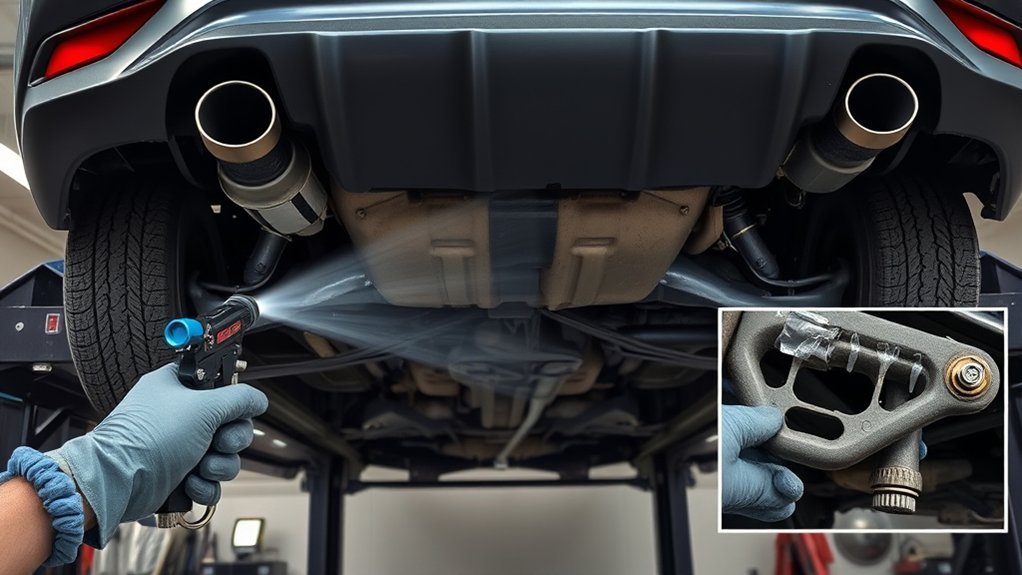
Before applying undercoating, you’ll need a spotless, dry undercarriage—use a pressure washer with a degreaser (Salt Shift or equivalent), rinse thoroughly, and let the metal dry completely so moisture won’t interfere with cure. You’ll work methodically: mask brake components, lift safely, and plan your application techniques to lay thin, even coats from front suspension to rear axle using a light mist setting.
- Mask brakes, rotors, and exhaust to prevent performance or heat issues.
- Start at the front, maintain consistent overlap, avoid puddling.
- Use thin coats; multiple passes beat one heavy pass.
- Allow shelter and ambient temps per product for consistent curing duration.
- Inspect after 3–4 days; look for soft spots or missed areas.
You’ll avoid common pitfalls by preventing overspray, moisture, and clogged nozzles. This controlled, technical approach liberates you from rust anxiety and gives durable, hydrophobic protection without compromising critical systems.
Seasonal Checks, Touch-Ups, and When to Call a Pro
After the undercoating cures, schedule seasonal inspections of the Camry’s undercarriage—focus on fuel lines, strut mounts, weld seams, and other low points that collect salt and moisture. Inspect visually and with a probe for coating breaches, concentrate on rust hotspots, and document findings. Perform touch-ups at least annually or after harsh winter exposure; use compatible rust-inhibitor and seam sealers to restore barrier integrity. Blast salt and grime away with a high-pressure washer after winter to prevent accelerated corrosion. Monitor local road treatment intensity; increase inspection cadence where salt use is heavy. If you detect extensive surface loss, structural pitting, or hear clunks that suggest compromised mounts or brackets, call a pro for nondestructive evaluation and corrective welding or replacement. Maintain a preventive maintenance log to track treatments, dates, and professional interventions so you control the process and preserve freedom from unexpected failures.
| Task | Frequency |
|---|---|
| Visual inspection | Seasonal |
| Pressure wash | Post-winter |
| Touch-up coating | Annual/after severe winter |
| Monitor roads | Ongoing |
| Pro consult | When structural issues appear |
Frequently Asked Questions
How to Prevent Rust Under a Car in Winter?
Prevent rust by practicing rigorous undercarriage maintenance: wash away salt after winter driving, apply lanolin-based undercoating, inspect vulnerable lines and brakes, use pressure-washer attachments, and get professional rust-proofing to preserve freedom of mobility.
Is Undercarriage Rust Protection Worth It?
Absolutely worth it — it’s like hiring armor against corrosion. You’ll get measurable rust prevention, lower repair risk, and streamlined winter maintenance; invest in coatings and inspections, and you’ll liberate your Camry from expensive decay.
Can You Rubberise the Underneath of Your Car to Prevent Rust?
You can rubberize the underside, but rubber coating often traps moisture and fails; you should prefer proven rust inhibitors like lanolin-based products, perform regular maintenance, and reapply to liberate your car from persistent corrosion risks.
What Can I Put on Rust Underneath a Car to Stop It From Rusting More?
Apply rust inhibitors like Fluid Film or a rust converter after brushing or sanding; then spray or brush on protective coatings (rubberized undercoating or wax-based sealant). Reapply regularly and keep the area clean and dry.
Conclusion
You’ve inspected, washed, and picked the right rust treatment — now it’s time to seal the promise. As you apply the undercoating, watch the spray bead into seams and around welds; it should bead, not run. Let curing temperatures hold steady, then recheck hidden brackets and fasteners for missed salt. Do touch-ups each season and don’t delay when corrosion appears. If rust advances beyond surface scale, stop and call a professional before structure fails.