Last updated: May 20, 2026
Camry Water Pump Lifespan
A Toyota Camry water pump can often last past 100,000 miles, but model year, engine design, coolant history, climate, and driving conditions all matter. Treat 90,000-120,000 miles as a practical inspection window, not a guaranteed failure point.
Toyota maintenance guides list the initial engine coolant replacement at 100,000 miles or 120 months on many Camry schedules, with later coolant service at shorter intervals. That makes the 100,000-mile service a smart time to inspect the pump, hoses, thermostat area, belt condition, and coolant quality.
Do not replace a quiet, dry water pump only because the odometer reached a certain number. Replace it when you find active coolant leaks, dried coolant crust, pulley play, bearing noise, overheating, poor coolant circulation, or confirmed pump-related trouble codes.
Quick Recommendation: Replace, Inspect, or Wait?
| What You See | Best Action | Why It Matters |
|---|---|---|
| No leaks, no noise, stable temperature | Wait and inspect during routine service | A good pump does not need automatic replacement. |
| Near 100,000 miles with no symptoms | Inspect the pump and service coolant if due | This is a good checkpoint for coolant and cooling-system health. |
| Pink or red crust near the pump | Schedule inspection soon | Dried coolant can show early seal or gasket seepage. |
| Active coolant leak, grinding, whining, or overheating | Replace after diagnosis | These signs can lead to rapid engine damage. |
| Hybrid code such as P0A93 or pump-control code such as P261B | Scan and diagnose the cooling system | Electric pumps may fail without classic belt-driven pump noise. |
Use the table as a decision guide. If the engine temperature rises, steam appears, or coolant is actively dripping, stop driving and arrange professional help.
Check Your Camry Type First
Before you plan a water pump job, confirm your Camry model year and engine. Older Camry engines may use a timing belt, while many later Camry engines use a timing chain. Hybrid and newer electric-pump setups can also change the diagnosis and repair process.
This difference matters because labor overlap is not the same on every Camry. Replacing the water pump during timing belt service can make sense when the pump is already accessible. On timing-chain or electric-pump models, replacement should depend more on symptoms, test results, coolant condition, and diagnostic codes.
Camry Water Pump Failure: Top Signs
Watch for coolant residue, puddles, unusual noise, overheating, and warning lights. A failing pump may show one clear symptom, or it may show several small clues before the car overheats.
Pink Crust Buildup
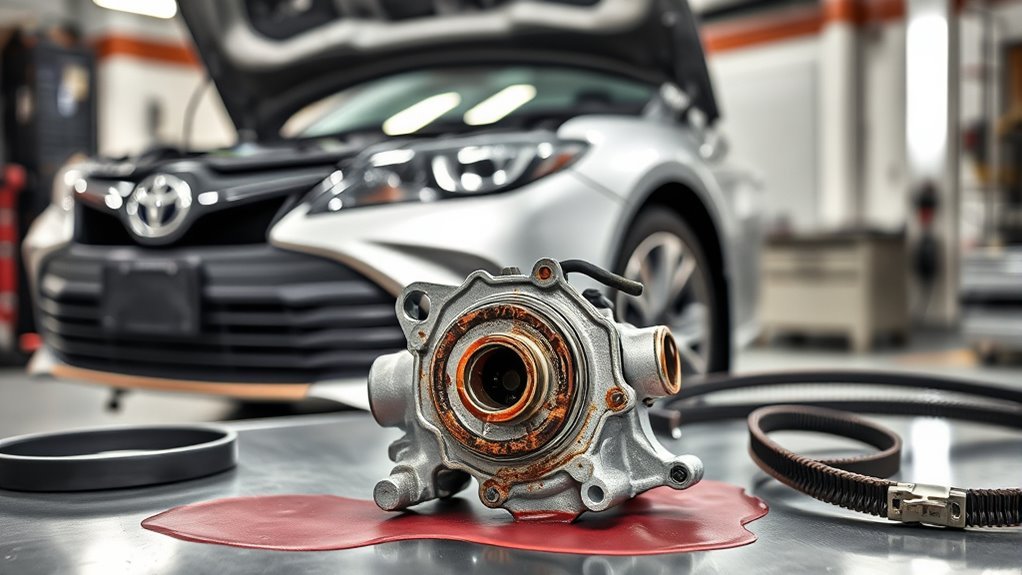
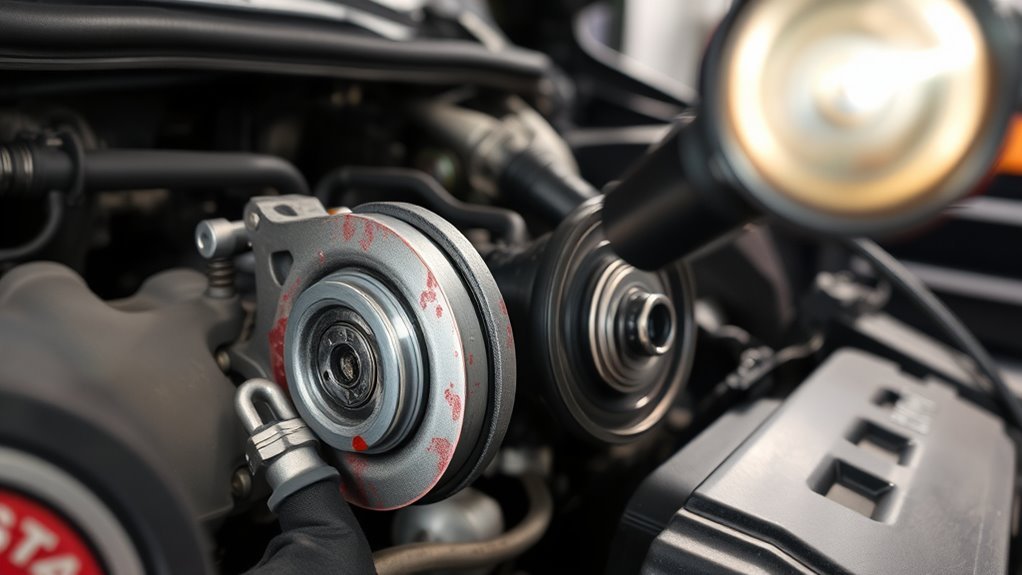
A chalky pink or reddish crust near the pump, gasket, weep hole, pulley area, or nearby hose connection usually means coolant has seeped out and dried. Camrys that use Toyota Super Long Life Coolant often show pink residue instead of green residue.
Do not ignore a small crust ring. It can appear before a major coolant loss. Ask for a cooling-system pressure test and a close inspection of the pump housing, gasket surface, and nearby hoses.
Grinding Or Whine
A grinding, growling, or high-pitched whine that changes with engine speed can point to bearing wear in a mechanical water pump. The noise may also come from a pulley, belt tensioner, alternator, or another accessory, so confirm the source before replacing parts.
If the pump bearing has play or the noise comes directly from the pump area, replace the pump promptly. Bearing failure can damage belts, create leaks, and reduce coolant circulation.
Overheating, Low Coolant, or Steam
Overheating is the most urgent warning sign. If the temperature gauge climbs, a warning light appears, steam rises from the engine bay, or coolant level drops again after topping off, stop driving as soon as it is safe.
Overheating can damage the head gasket, cylinder head, and engine. Do not keep driving to “make it home” if the temperature stays high.
Why Camry Pumps Fail: Mechanical vs Electric
Camry water pump failures depend on pump design. A mechanical pump usually fails through a worn bearing, seal, gasket, or impeller. An electric pump can fail through the motor, internal electronics, wiring, connector problems, coolant blockage, or air trapped in the system.
- Mechanical pump: Look for coolant leaks, pulley play, belt contamination, grinding noise, and overheating.
- Electric pump: Scan for codes, check coolant circulation, inspect connectors, and confirm pump operation before replacing parts.
- Hybrid cooling system: Treat inverter or pump-related codes seriously because electric cooling problems may not make the same noise as belt-driven pump failures.
The key point is simple: match the diagnosis to your Camry’s pump type. Do not replace parts based only on mileage or one generic symptom.
Inspecting Leaks, Pink Crust, and Bearing Noise
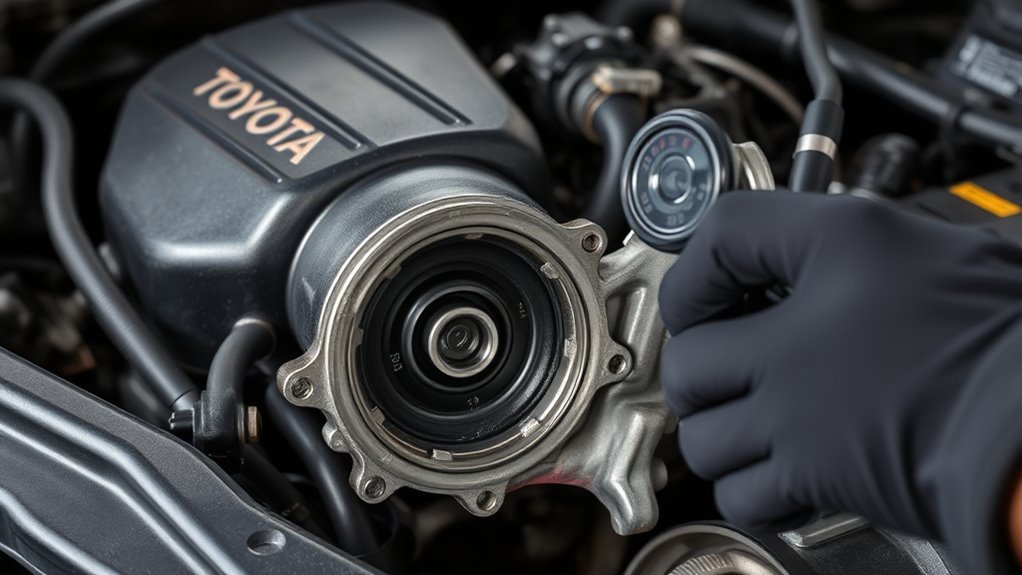
Safety warning: Never remove the radiator cap or coolant reservoir cap when the engine is hot. Hot coolant can spray under pressure and cause serious burns.
- Start cold. Park on level ground and let the engine cool fully.
- Check coolant level. Look at the reservoir level and note repeated drops.
- Inspect the pump area. Look for fresh wetness, dried pink or red crust, stains, or splatter.
- Check nearby hoses. A hose leak can mimic a water pump leak.
- Use cardboard overnight. Place cardboard under the engine bay to help locate drips.
- Listen carefully. A mechanic’s stethoscope can help separate water pump bearing noise from belt tensioner or pulley noise.
- Scan for codes. On hybrid or electric-pump models, scan before replacing the pump.
If you find crust but no active drip, schedule an inspection soon. If you find an active leak or overheating, treat it as urgent.
When to Replace: Preventive vs Urgent Actions
Replace the Camry water pump urgently if testing confirms active leakage, bearing failure, poor coolant circulation, overheating, or pump-related electrical failure. Preventive replacement makes sense when the pump is already exposed during timing belt service on an applicable older engine.
Preventive Replacement Timing
Preventive replacement is not the same as replacing a good pump by mileage alone. It is most useful when labor overlap lowers the total cost, such as during timing belt service on older Camry engines that use a belt-driven setup.
- Confirm whether your Camry has a timing belt, timing chain, mechanical pump, or electric pump.
- Ask the shop whether the water pump is already accessible during the planned repair.
- Replace the pump if the added parts cost is reasonable and the old pump is high-mileage, leaking, noisy, or original.
Signs Requiring Towing
Tow the car or stop driving if the temperature gauge stays high, coolant is pouring out, steam appears, the engine warning light flashes with overheating symptoms, or the car enters reduced power mode. These symptoms can lead to severe engine or hybrid-system damage.
For hybrid models, treat codes such as P0A93 or pump-control codes such as P261B as urgent diagnostic signals. The code alone does not prove the pump is the only failed part, but it does mean the cooling system needs proper testing.
Timing Belt Coordination
If your Camry has a timing belt and the water pump sits behind the same labor path, replacing both at the same service can reduce repeat labor. This advice does not apply the same way to every Camry because many later engines use timing chains.
- Good time to coordinate: Older timing-belt Camry engines with an original or high-mileage pump.
- Good time to wait: Timing-chain models with no leaks, no noise, stable temperature, and normal test results.
- Do not wait: Any Camry with active coolant loss, overheating, bearing noise, or confirmed pump failure.
Camry water pump replacement: Process, Timeline and Costs
A shop usually drains the cooling system, removes the belt or related front-engine components, removes the old pump, cleans the mounting surface, installs a new pump and gasket, refills coolant, bleeds air, and pressure-tests the system.
The timeline depends on engine layout and pump access. Some jobs are straightforward. Others take longer because the shop must remove more parts to reach the pump. Electric-pump and hybrid diagnostics can add time because the technician may need to test circuits, connectors, pump command, and coolant circulation.
Current public cost estimates vary by model year, location, shop rate, and engine. RepairPal lists an average Toyota Camry water pump replacement estimate of $611-$791, with some newer Camry year estimates higher. Kelley Blue Book lists a broader Toyota water pump replacement range of $375-$787 and notes that electric pumps and hard-to-access pumps can raise costs.
| Cost Factor | What to Ask the Shop |
|---|---|
| Parts | Is the quote for OEM, Aisin, or aftermarket parts? |
| Labor | How many labor hours does this engine require? |
| Coolant | Does the quote include the correct Toyota coolant and bleeding procedure? |
| Related parts | Are belts, gaskets, thermostat, hoses, or tensioners included? |
| Testing | Will the shop pressure-test the system and confirm no air remains? |
Before approving the repair, ask for a written estimate based on your VIN. The estimate should separate parts, labor, coolant, taxes, and related repairs.
Frequently Asked Questions
How Do I Know if My Toyota Camry Water Pump Is Bad?
Common signs include coolant leaks near the pump, pink or red crust from dried coolant, grinding or whining from the pump area, rising engine temperature, low coolant, steam, or related trouble codes on hybrid and electric-pump models.
How Long Does a Toyota Camry Water Pump Last?
Many Toyota Camry water pumps last beyond 100,000 miles, but there is no single universal replacement interval for every model year. Use 100,000 miles as a good inspection point, especially when coolant service is due.
Should I Replace the Camry Water Pump Before It Fails?
Preventive replacement makes the most sense when the pump is already accessible during timing belt service on an applicable older engine. For timing-chain or electric-pump models, replace based on leaks, noise, overheating, codes, or test results.
Can I Drive With a Leaking Camry Water Pump?
Do not keep driving if coolant is dripping, the temperature gauge rises, or steam appears. A small seep needs prompt inspection, but active coolant loss can lead to overheating, head gasket damage, or engine failure.
What Does Pink Crust Near the Water Pump Mean?
Pink or reddish crust usually means Toyota Super Long Life Coolant has seeped out and dried near the pump, gasket, weep hole, or nearby hose connection. It can appear before a major leak, so inspect the area soon.
How Much Does Toyota Camry Water Pump Replacement Cost?
Current estimates vary by model year, engine, location, and shop rate. Many U.S. estimates fall in the mid-hundreds to low-thousands range. Always ask for a VIN-based quote that separates parts, labor, coolant, and related belt or gasket work.
Do Toyota Camry Hybrids Have Different Water Pump Issues?
Yes. Hybrid and electric-pump models may set trouble codes before you hear mechanical noise. Codes such as P0A93 or P261B point to cooling system or pump-control problems, but a technician should confirm circulation, wiring, coolant level, and pump operation.
Can a Water Pump Last 300,000 Miles?
It can happen, but you should not plan maintenance around that best-case outcome. Coolant condition, heat, bearing wear, gasket condition, and driving history all affect pump life. Inspect regularly and replace when symptoms or tests show failure.
Sources Used for This Guide
- Toyota 2024 Camry Warranty and Maintenance Guide: used to verify coolant service timing.
- RepairPal Toyota Camry Water Pump Replacement Cost Estimate: used to verify current cost range, symptoms, diagnosis notes, and replacement process.
- Kelley Blue Book Toyota Water Pump Replacement Guide: used to cross-check cost factors and common symptoms.
- Kelley Blue Book P0A93 OBD-II Code Guide: used to verify inverter cooling system code context.
- Kelley Blue Book P261B OBD-II Code Guide: used to verify coolant pump control circuit context.
Conclusion
A Toyota Camry water pump can last a long time, but it should not be ignored after high mileage. Use 100,000 miles as a strong inspection checkpoint, especially when coolant service is due.
Replace the pump quickly if you find active coolant leaks, pink or red crust with seepage, bearing noise, overheating, poor coolant circulation, or confirmed pump-related codes. Wait if the pump is quiet, dry, and tests normally. Coordinate replacement with timing belt service only when your Camry engine actually uses a timing belt and the labor overlap makes sense.