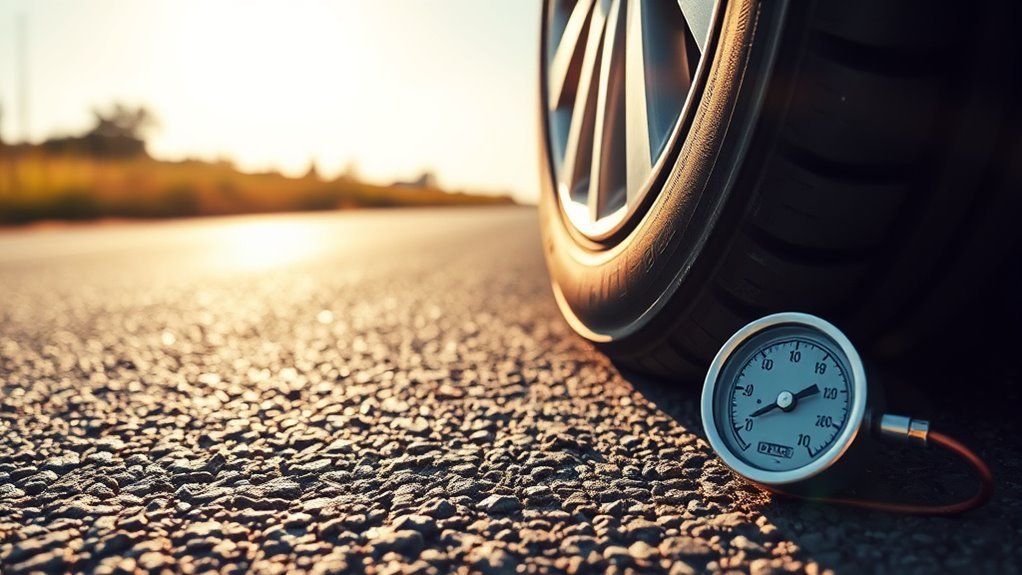
In hot weather, tire pressure can rise by 1 to 2 PSI for every 10°F increase due to air expansion. Over-inflated tires can lead to diminished traction, longer stopping distances, and even blowouts. You should regularly check pressure, especially before trips, as excessive pressure can cause uneven wear and weaken tire walls. If you notice significant drops in pressure or abnormal readings, it’s critical to address these issues. Explore further to understand how to maintain tire safety this summer.
How Heat Affects Tire Pressure: The Science Explained

When temperatures rise, you may not realize that the air inside your tires expands, leading to increased tire pressure. For every 10°F increase, tire pressure can rise by 1 to 2 PSI. If you’ve filled your tires to the recommended pressure in cooler conditions, hot weather might cause them to become over-inflated. This condition can lead to reduced traction and increased central tread wear, ultimately diminishing road contact and raising the risk of blowouts. Regularly checking your tire pressure is crucial, particularly during summer fluctuations that can result in about 5 PSI changes. To guarantee accurate readings, monitor tire pressure in the morning when temperatures are cooler, reinforcing effective tire care during these sweltering months.
Why Hot Weather Can Mess With Your Tire Safety?
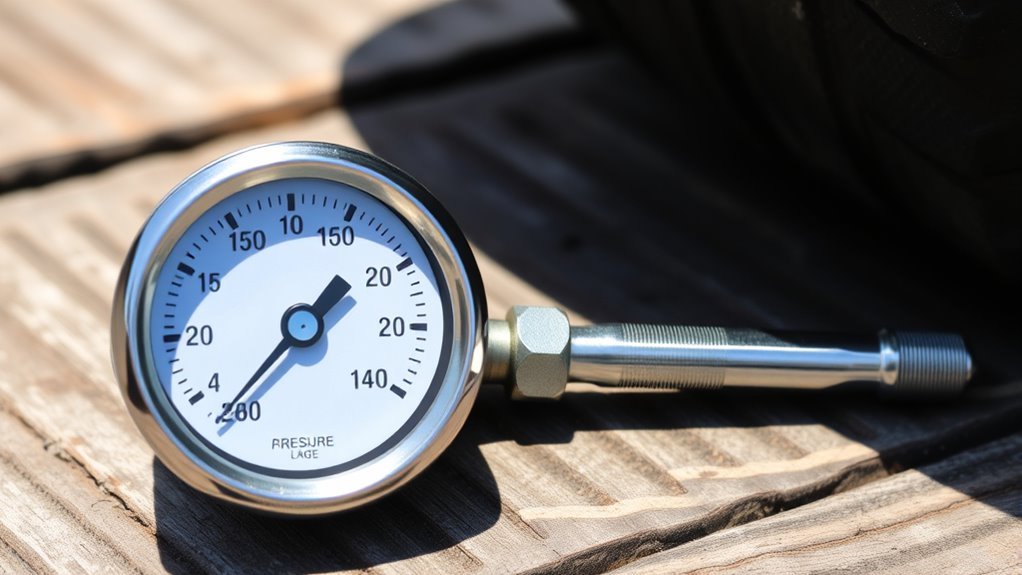
Hot weather substantially impacts tire safety due to the increase in tire pressure stemming from elevated temperatures. As temperatures rise, tire pressure can increase by 1 to 2 PSI for every 10°F, leading to over-inflated tires. This condition causes the tire to bulge at the center, reducing road contact and adversely affecting traction. Consequently, stopping distances lengthen during sudden braking, raising the risk of tire blowouts. Excess pressure weakens tire walls, potentially resulting in loss of vehicle control. Regularly checking tire pressure with a tire pressure gauge is crucial, especially in hot weather, to maintain proper care. This proactive approach guarantees safety, enhances fuel efficiency, and extends tire lifespan, empowering you to navigate the roads with confidence.
Identifying Symptoms of Tire Inflation Issues
Understanding the symptoms of tire inflation issues is essential for maintaining vehicle safety and performance. You should regularly conduct visual inspections of your tires, looking for cracks, bulges, or uneven wear patterns. Over-inflated tires may show excessive wear in the center of the tread, while under-inflated tires typically wear on the edges. A significant drop in fuel efficiency can indicate under-inflated tires, as each PSI drop reduces gas mileage by 0.2%. If your tire pressure monitoring system triggers a warning light, it’s vital to inspect your tires immediately, as this signals significant inflation issues. Addressing these symptoms can enhance safety, prolong tire life, and optimize your vehicle’s performance on the road.
Top Tips for Maintaining Tire Pressure During Summer
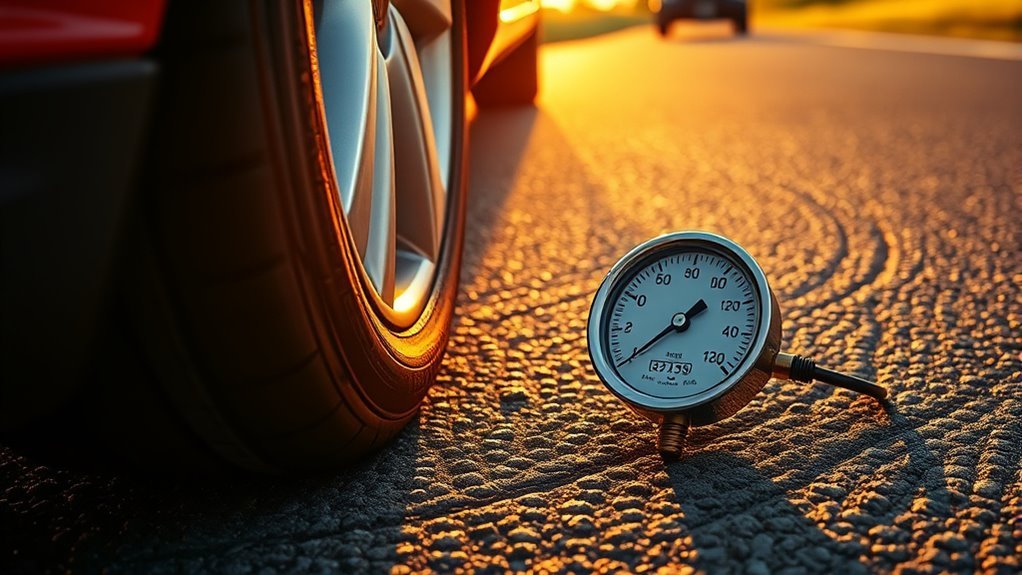
Maintaining proper tire pressure during the summer months is essential for ensuring vehicle safety and performance, especially as temperatures rise. To keep your tires in peak condition, check your tires at least once a month or before long trips. Remember, tire pressure can increase by 1-2 psi for every 10°F rise in temperature, so measure pressure when the tires are cold, ideally in the morning. Always refer to your vehicle’s recommended tire pressure from the owner’s manual or door sticker and adjust your tire pressure accordingly. Regularly inspect for uneven tire wear, bulges, or cracks, as heat affects these issues. Utilizing a Tire Pressure Monitoring System (TPMS) can also provide real-time alerts for enhanced safety on the road.
When to Seek Professional Help for Tire Inflation Problems
When should you consider seeking professional help for tire inflation issues? If you experience a significant and persistent drop in tire pressure, it may indicate a leak or puncture requiring expert attention. Over-inflated tires can also pose risks; if they remain consistently inflated beyond recommended levels, consult a technician to guarantee proper tire health. Additionally, heed alerts from your vehicle’s Tire Pressure Monitoring System (TPMS); abnormal readings necessitate a professional assessment to prevent blowouts. Regular inspections can uncover uneven wear patterns, bulges, or cracks that compromise safety. If you’re unsure how to accurately check or adjust tire pressure, especially amid temperature fluctuations, don’t hesitate to schedule an appointment. Prioritize your safety and maintain peak tire performance.
Frequently Asked Questions
Why Does My Tire Pressure Go up When It’s Hot?
Your tire pressure rises in hot weather due to air expansion, increasing tire inflation. This affects vehicle performance and safety, leading to concerns about blowouts and tire lifespan. Regular pressure monitoring’s essential to mitigate risks.
When to Worry About Tire Pressure?
You shouldn’t ignore tire pressure safety during summer driving. If your tires exceed inflation recommendations by more than 5 PSI, it’s time to worry. Regularly use pressure gauges and tire monitoring systems for effective vehicle maintenance.
Should I Put More Air in My Tires When It’s Hot?
You shouldn’t add air when it’s hot; instead, monitor tire pressure regularly. Follow tire inflation guidelines, focusing on seasonal tire changes, to maintain ideal vehicle performance and guarantee summer driving safety amidst hot climate effects.
How to Detect a Slow Leak in a Tire?
To detect a slow leak, regularly perform tire inspections, noting visual damage signs. Use an air pressure gauge, check valve stem issues, and employ the soapy water test to pinpoint leaks effectively. Follow your tire maintenance checklist diligently.
Conclusion
In hot weather, tire pressure can increase by about 1 psi for every 10°F rise in temperature, which can lead to safety issues if left unchecked. Keeping your tires properly inflated is essential; under-inflated tires can reduce fuel efficiency by up to 3%. Regularly checking your tire pressure not only enhances your vehicle’s performance but also prolongs tire life. Don’t overlook this simple maintenance step—your safety and wallet will thank you.