When measuring tire pressure, always check it when the tires are cold, ideally after at least three hours of not being driven. Warm tire pressure can be misleading due to heat causing an increase of 4-6 psi, which can lead to inaccurate readings. Maintaining correct cold tire pressure is essential for safety, handling, and fuel efficiency. For the best practices and common misconceptions about tire pressure, continue exploring the details further.
Understanding Cold vs Warm Tire Pressure
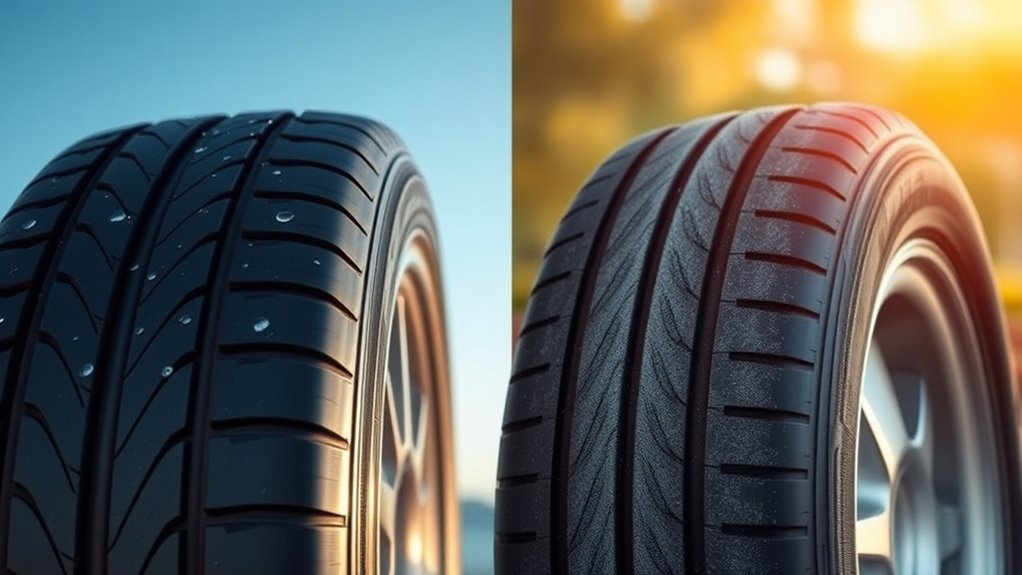
When you check your tire pressure, it’s important to understand the difference between cold and warm readings. Cold tire pressure is measured when your tires haven’t been driven for at least three hours or have traveled less than one mile, offering the most accurate reading. In contrast, warm tire pressure can increase by 4-6 psi due to heat generated while driving, potentially leading to under-inflation if adjustments are made based on these readings. To guarantee you’re at the recommended pressure, check your tires first thing in the morning or before your first drive. Maintaining proper cold tire pressure is vital for safety, handling, and fuel efficiency, while neglecting it can cause rapid tire wear and increase the risk of blowouts.
How Temperature Affects Tire Pressure Readings
Temperature greatly impacts tire pressure readings, and understanding this is vital for maintaining proper inflation. When you measure tire pressure, keep in mind that cold readings can be misleading, especially if you’ve driven recently, as heat increases pressure. For accurate assessments, always check your tire pressure when the tires are cold, ideally after they’ve been parked for a few hours.
Temperature Impact on Pressure
As ambient conditions fluctuate, your tire pressure can considerably change, impacting vehicle performance. When tires are warm from driving, readings can increase by 2-6 psi. For accurate measurements, it’s recommended to check tire pressure when cold, ideally after parking for at least three hours or having driven less than a mile. Temperature also has a significant effect; for every 10 degrees Celsius drop, expect about a 3 psi decrease in tire pressure. In colder months, pressure can drop nearly 5 psi, adversely affecting traction and handling. Monitoring these changes is essential to maintain optimum tire performance and longevity, ensuring your vehicle operates safely and efficiently regardless of external temperature variations.
Cold vs. Hot Readings
Checking tire pressure at the right time is essential for accuracy, especially when considering the differences between cold and hot readings. Cold inflation pressure is your baseline, measured after your vehicle has been parked for at least three hours or driven less than a mile. When tires heat up from driving, temperature rises can inflate their pressure by 4-6 psi. This can lead you to mistakenly think you have adequate pressure when, in fact, you might face low tires. Always use a reliable tire pressure gauge to check against recommended tire pressures. Remember, inaccurate hot readings can result in poor handling, increased tire wear, and compromised safety, making regular checks critical for peak performance.
Why Cold Tire Pressure Is Essential for Vehicle Safety
Ensuring your vehicle’s tire pressure is at the correct cold level is crucial for maintaining safety on the road. Cold tire pressure readings reflect the true inflation level, unaffected by heat from driving. Accurate measurements prevent underinflated tires, which are prone to rapid deterioration and blowouts. Maintaining proper pressure enhances vehicle handling, fuel economy, and tire longevity, considerably impacting safety.
| Aspect | Importance | Consequence |
|---|---|---|
| Cold Tire Pressure | Accurate inflation measurement | Enhanced safety |
| Proper Pressure | Prevents tire failure | Reduced blowout risk |
| Underinflated Tires | Higher sidewall flexibility | Increased wear and instability |
| Fuel Economy | Optimized efficiency | Increased fuel consumption |
| Regular Monitoring | Consistent performance | Prevents uneven tire wear |
How Warm Tire Pressure Affects Your Vehicle’s Performance
While driving, tire pressure naturally increases due to heat generated from friction, and this change can greatly impact your vehicle’s performance. Warm tire pressure can rise by 4-6 psi compared to cold tires, which may lead you to mistakenly adjust based on these readings. Higher warm tire pressure reduces the contact patch, compromising handling and stability. However, it raises hydroplaning speed, allowing for higher speeds on wet surfaces. It’s essential to monitor warm tire pressure, as over-inflation can negatively affect driving comfort and directional stability, especially during cornering. Verify you regularly check and inflate your tires to the recommended PSI to maintain peak performance, fuel efficiency, and tire longevity.
Debunking Common Myths About Tire Pressure Measurement

When it comes to tire pressure, measuring cold pressure is essential for accurate readings. Many believe that tire pressure can be checked at any time, but doing so when tires are warm can lead to misconceptions about overinflation. Additionally, relying solely on the Tire Pressure Monitoring System (TPMS) may not provide a complete picture, making regular manual checks necessary.
Cold Pressure Importance
Understanding the significance of cold tire pressure is crucial for maintaining your vehicle’s performance and safety. Checking tire pressure when tires are cold—ideally after being stationary for three hours—guarantees accurate readings. Hot tires can inflate by 4-6 psi, leading to low pressure if you adjust based on those readings. Regular checks, especially with temperature fluctuations, are essential.
| Factor | Impact on Tire Pressure |
|---|---|
| Cold tire pressure | Ideal safety and performance |
| Low pressure | Increased wear and blowout risk |
| Manufacturers recommended | Guarantees proper tire function |
| Temperature increase | Pressure increases by up to 3 psi |
Overinflation Misconceptions
Many drivers mistakenly believe that higher tire pressure is always beneficial, but this misconception can lead to serious performance issues. Over-inflation reduces the contact patch, resulting in diminished traction, poor handling, and uneven tire wear. Measuring tire pressure when tires are warm can show readings 4-6 psi higher than when they’re cold, which may cause you to under-inflate during adjustments. Additionally, the maximum pressure on the tire sidewall isn’t the ideal for everyday driving; it’s merely the highest safe limit. Remember, tire pressure fluctuates with temperature changes—expect a 1-2 psi drop for every 10°F decrease. Finally, relying solely on a TPMS isn’t wise, as it may not alert you until a 25% drop in pressure occurs. Regular checks are essential.
TPMS Reliability Issues
Although TPMS offers a convenient way to monitor tire pressure, relying solely on this system can lead to dangerous oversights. TPMS only alerts you after a 25% drop in tire pressure, meaning minor under-inflation in cold tires might go unnoticed. Many drivers mistakenly trust TPMS exclusively, neglecting manual checks at least once a month for accuracy. Temperature changes can also cause pressure drops that TPMS may not immediately reflect, with a 10-degree Celsius shift altering tire pressure by about 3 psi. Regular manual checks are essential, as TPMS can provide intermittent readings due to sensor issues. Remember, both over-inflation and under-inflation pose significant safety risks that a monitoring system alone may not adequately address. Stay vigilant for your safety.
How to Check Your Tire Pressure Like a Pro
How can you guarantee your tire pressure is spot on? Start by checking your tire pressure when the tires are cold, ideally after your vehicle has been parked for at least three hours or driven less than one mile. Use a reliable tire pressure gauge, either digital or stick-type, and insert it firmly onto the valve stem to confirm an accurate reading in PSI. Refer to your vehicle’s owner manual or the sticker on the driver’s door for the recommended cold tire pressure. Avoid measuring in direct sunlight or after driving, as this can lead to artificially high readings. Regularly check your tire pressure every month and before long trips for ideal safety, handling, and fuel efficiency.
Year-Round Tire Pressure Maintenance
Maintaining proper tire pressure year-round is essential for your vehicle’s performance and safety. Check your tire pressure about once a month, as temperature fluctuations can cause air pressure changes of 1-2 psi for every 10°C drop. Always measure tire pressure when the tires are cold, ideally in the morning or after parking for at least three hours. Accurate readings prevent under-inflation, which can increase rolling resistance, reduce fuel efficiency, and accelerate tire wear. Refer to your vehicle’s manual or the driver’s door post for the recommended pressures. Regular tire maintenance guarantees safety and longevity, allowing you to enjoy a smoother ride, better handling, and improved fuel economy. Don’t compromise; keep your tires properly inflated year-round.
Frequently Asked Questions
When to Check Tire Pressure Cold or Hot?
You should check tire pressure when cold for accurate readings, avoiding hot tire effects. Ideal checking times are early morning or before driving. Remember tire pressure fluctuations and adjust accordingly for safety and efficiency.
What Is the 3% Tire Rule?
Oh, you thought tire pressure’s a set-it-and-forget-it deal? Think again! The 3% Tire Rule dictates adjusting pressure with temperature changes to guarantee proper inflation, enhancing tire performance and prolonging your tires’ life.
What Is the 4 Psi Rule?
The 4 psi rule indicates that tire pressure increases by about 4 psi when heated. When measuring, consider temperature effects to avoid inaccurate pressure adjustments, ensuring ideal safety and performance while driving.
What Is the 5 Psi Rule?
Think of it like a medieval knight’s armor; the 5 PSI rule states that tire pressure can rise by 4-6 PSI after driving. Proper measurement techniques guarantee peak performance and prevent pressure variations that compromise tire inflation.
Conclusion
In the world of tires, measuring cold pressure is vital for safety and performance—after all, “a stitch in time saves nine.” Regularly checking your tire pressure guarantees peak handling, fuel efficiency, and prolongs tire life. By understanding the differences between cold and warm tire pressure, you can make informed decisions that keep your vehicle running smoothly. Don’t let misconceptions steer you off course; stay vigilant and maintain your tire pressure year-round for a safer driving experience.