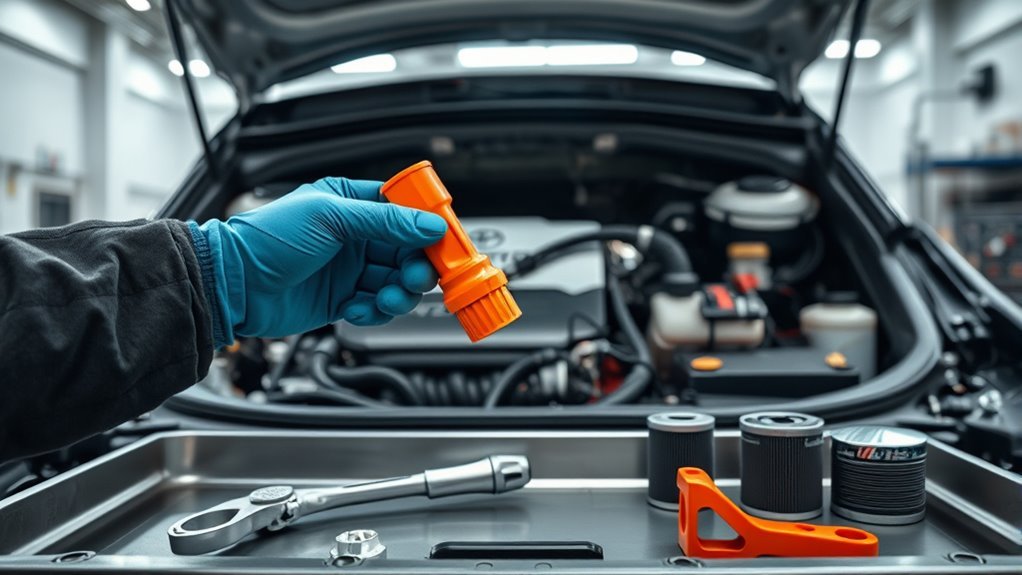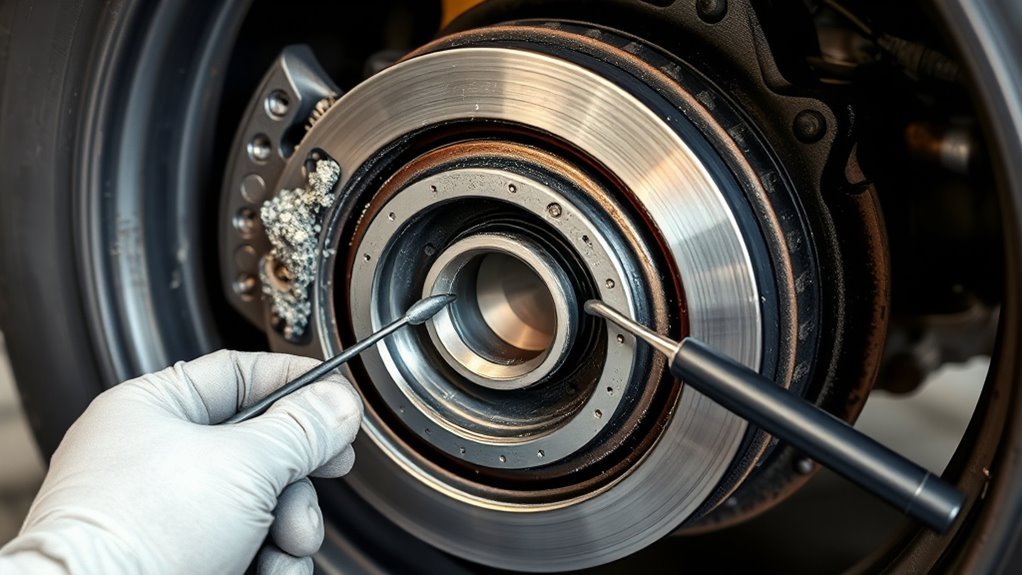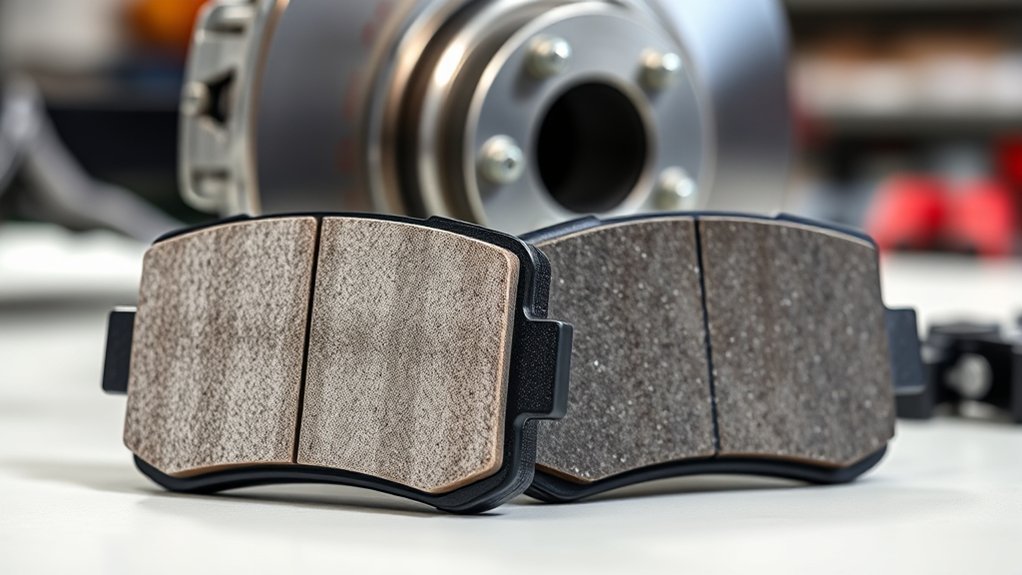
Choosing brake pads for a Toyota Camry comes down to how you drive. For most daily commuters, a quality ceramic pad is the best match because it is quiet, low dust, and easy on wheels. Semi-metallic pads make more sense only when you need stronger heat control for repeated hard stops, mountain driving, or higher-load use that stays within your Camry owner’s manual limits.
Quick Answer
For a Toyota Camry used for normal commuting, choose ceramic brake pads. They usually run quieter, make less visible dust, and suit everyday stops well. Choose semi-metallic pads only if your driving creates more heat, such as steep descents or repeated hard braking. Always confirm fitment by VIN, model year, trim, and axle.
Key Takeaways
- Ceramic pads are the safer default for most Camry owners who want quiet stops, clean wheels, and low-maintenance daily driving.
- Semi-metallic pads can handle heat better, but they may create more noise, more dark dust, and more rotor wear.
- Do not use semi-metallic pads as a workaround for towing. Check your specific Camry owner’s manual before towing or adding a hitch.
- Fitment matters as much as material: match the pads to your VIN, year, trim, engine, front or rear axle, caliper type, and rotor condition.
Ceramic or Semi-Metallic: Which for Camry?
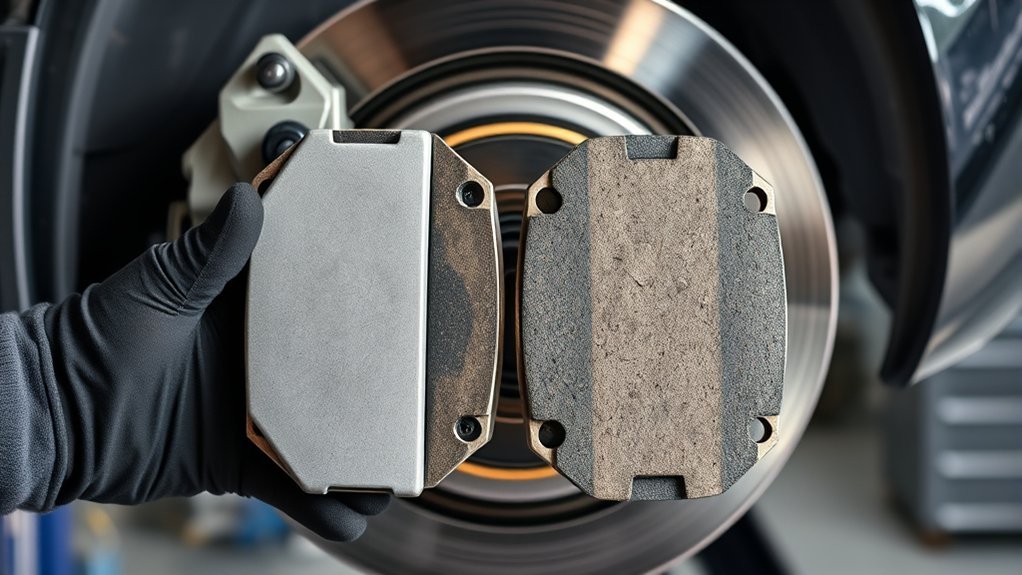
For most Camry drivers, ceramic brake pads are the better everyday choice. They fit the way a Camry is usually used: commuting, school runs, highway cruising, stop-and-go traffic, and normal city braking. Ceramic pads are commonly chosen for lower dust, lower noise, and driving comfort, which makes them a strong fit for a sedan that is built around smooth, quiet transportation.
Semi-metallic brake pads are better when heat is the main problem. They can be useful if you drive steep hills, carry heavier loads within the vehicle’s limits, brake hard often, or prefer a firmer initial bite. Semi-metallic material can dissipate heat well and resist fade during high-temperature braking, but that comes with tradeoffs: more dust, more noise, and more potential rotor wear.
Warning: Do not choose brake pads to exceed your Camry’s design limits. Toyota states for the current Camry Hybrid that it does not recommend towing a trailer or installing a tow hitch. Check your exact owner’s manual before towing, carrying heavy loads, or changing brake parts for severe use.
| Driving Priority | Better Choice | Why |
|---|---|---|
| Quiet commuting | Ceramic | Lower noise and smoother everyday feel. |
| Clean wheels | Ceramic | Less visible dust than many metallic pads. |
| Repeated hard stops | Semi-metallic | Better heat dissipation and fade resistance. |
| Rotor friendliness | Ceramic | Usually less abrasive in normal street use. |
| Mountain or spirited driving | Semi-metallic or performance street ceramic | Depends on temperature range, rotor condition, and pad quality. |
How Ceramic Brake Pads Work on a Camry
Ceramic pads use a ceramic-based friction compound blended with fibers, resins, fillers, and other friction modifiers. Older descriptions often mention copper fibers, but modern pads should not be described that way as a blanket rule. The EPA Copper-Free Brake Initiative pushed the industry toward low-copper and copper-free brake pad formulations, with a 0.5% copper-by-weight target by 2025.
Heat Management and Pedal Feel
On a Camry used for normal street driving, ceramic pads provide steady, predictable braking. They do not need to be noisy or aggressive to work well. Their main strength is balanced daily performance: smooth pedal feel, low noise, low dust, and good comfort.
The tradeoff is heat. Ceramic pads can handle normal braking well, but repeated hard stops or long downhill braking may push some ceramic compounds outside their ideal range. In those conditions, a semi-metallic or performance-rated street pad may feel more consistent.
Dust and Noise Reduction
Ceramic pads are popular on commuter sedans because the dust they make is usually lighter in color and less visible on wheels. Many ceramic lines are also designed to reduce noise, vibration, and harshness. That does not mean every ceramic pad is silent, but a quality ceramic pad with the right shims, hardware, rotor surface, and bedding process is usually the quietest option for a Camry.
Friction Material Composition
Do not buy only by the word “ceramic” on the box. Look for an application-specific pad made for your Camry’s model year, trim, brake package, and axle. A good ceramic pad should include correct chamfers, slots, shims, clips, and wear indicators when required. This helps the pad fit correctly and keeps braking smooth.
Note: Camry front and rear pads can use different part numbers. Hybrid, V6, TRD, AWD, and different production years can also change fitment. Use your VIN or a trusted parts catalog before ordering.
How Semi-Metallic Pads Work on a Camry
Semi-metallic pads use a friction compound with metal fibers or powders such as steel, iron, graphite, or other conductive materials. The exact formula varies by brand. The main benefit is heat control. Semi-metallic brake pads are known for heat tolerance, heat dissipation, and fade resistance, which is why they are common in harder-use braking situations.
On a Camry, semi-metallic pads can make sense if you drive steep grades, carry passengers and cargo often, or brake aggressively. They often give a stronger first bite than comfort-focused ceramic pads. However, they can also be noisier, dustier, and harder on rotors.
| Property | Effect | Benefit |
|---|---|---|
| Metal content | Improves heat transfer | Better cooling under repeated braking |
| Friction behavior | Strong bite under load | Confident hard stops |
| Compound stiffness | Can feel firmer | More direct pedal response |
| Tradeoff | More dust and noise possible | More wheel cleaning and rotor monitoring |
Choose semi-metallic only when you actually need those benefits. If your Camry is mostly a commuter car, ceramic pads will usually feel more refined.
Compare: Noise, Dust, Heat, Rotor Wear, Lifespan
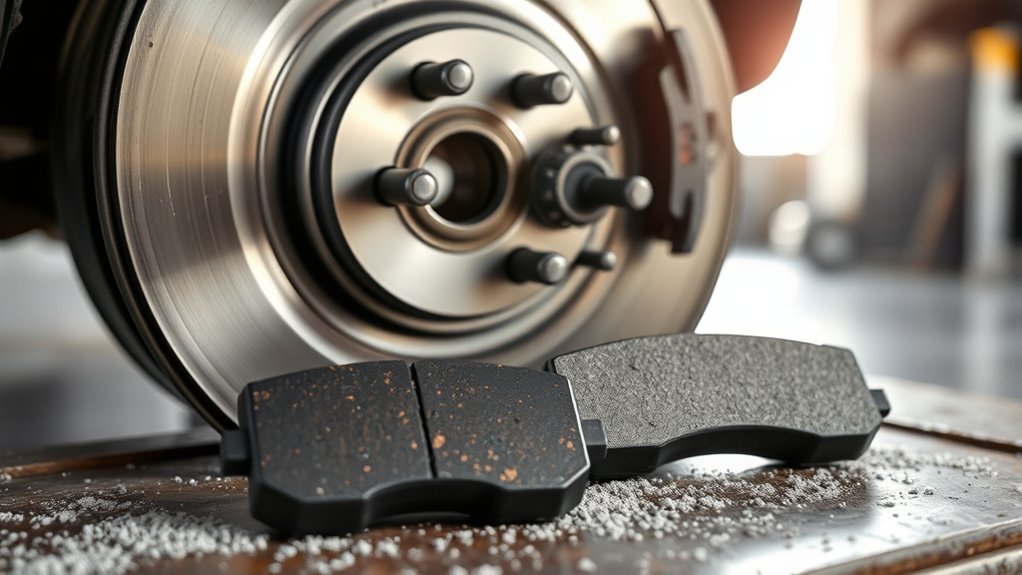
Your Camry’s pad choice affects five things you will notice most: noise, dust, heat handling, rotor wear, and service life.
- Noise: Ceramic pads are usually quieter. Semi-metallic pads can squeal more, especially when cold, dusty, poorly bedded, or installed with worn hardware.
- Dust: Ceramic pads usually leave less visible dust. Semi-metallic dust is often darker and can make wheels look dirty faster.
- Heat: Semi-metallic pads usually win under repeated hard braking because they move heat away more efficiently.
- Rotor wear: Ceramic pads are usually easier on rotors in normal use. Semi-metallic pads can be more abrasive, so rotor thickness and surface condition matter.
- Lifespan: There is no universal mileage number. Gentle highway driving, hybrid regenerative braking, smooth stops, and good rotors can extend pad life. Aggressive city driving, hills, rust, seized slide pins, and heavy braking can shorten it.
The pad material matters, but inspection matters more. Toyota’s maintenance guidance calls for regular scheduled maintenance and brake pad/disc inspection rather than a single fixed replacement mileage for every driver.
Match Your Driving: Commuting, Towing, Sport
Daily commuting: Choose ceramic pads. They are quiet, clean, and comfortable, which fits the Camry’s normal role as a smooth family sedan.
City driving: Ceramic is still the best first choice for most drivers. If you drive a Camry Hybrid, regenerative braking may reduce friction-brake use during light deceleration, but the pads, rotors, calipers, and fluid still need inspection.
Mountain roads or repeated hard stops: Consider semi-metallic pads or a high-quality performance street ceramic pad. You want a pad with a temperature range that matches the way you drive.
Towing or heavy loading: Start with the owner’s manual, not the pad box. Some Camry manuals do not recommend towing at all. Better pads cannot raise the vehicle’s tow rating, payload rating, cooling capacity, or chassis limits.
Spirited driving: Semi-metallic pads can feel stronger and more repeatable under heat, but they are not always the best choice for quiet daily use. If you drive hard only occasionally, a premium ceramic or low-metallic street pad may be a better balance.
Camry Buying & Installation Tips (OEM, Aftermarket, Cost)
The safest buying path is to match the pads to your exact Camry first, then choose the compound. Use your VIN, model year, trim, engine, axle, and brake package. Do not rely only on “fits Toyota Camry” in a marketplace listing.
- OEM pads: Best when you want the original feel, direct fit, and a conservative choice for normal driving.
- Ceramic aftermarket pads: Best when you want quiet braking, low dust, and low maintenance. Brands such as Akebono ProACT ceramic pads are built around smooth, quiet, consistent street braking.
- Semi-metallic aftermarket pads: Best when heat control and bite matter more than low dust and low noise.
- Hardware kits: Replace clips, shims, and worn hardware when recommended. Old hardware can cause noise, uneven wear, and sticking.
- Rotors: Inspect rotor thickness, runout, scoring, rust, and hot spots. New pads on damaged rotors may squeal, pulse, or wear unevenly.
- Brake fluid: Use the correct brake fluid specified for your vehicle. U.S. brake fluid requirements are covered under FMVSS No. 116, and contaminated or incorrect fluid can affect braking safety.
Pro Tip: If your old pads wore unevenly, do not just install new pads. Check caliper slide pins, piston movement, brake hose condition, rotor surface, and hardware. Uneven wear usually means another part needs attention.
Basic Installation Safety
Brake work is safety-critical. Use jack stands, wheel chocks, correct torque specs, brake cleaner, high-temperature brake lubricant in the correct locations, and the bedding procedure from the pad manufacturer. Never put grease on the pad friction surface or rotor face. If the pedal feels soft, the warning light stays on, fluid is leaking, or the car pulls while braking, stop driving and have the brake system inspected by a qualified technician.
When to Replace Camry Brake Pads
Replace or inspect the pads if you hear grinding, feel vibration, see uneven pad thickness, notice longer stopping distance, smell overheated brakes, or see a brake warning message. Also inspect the pads during scheduled maintenance. Toyota’s maintenance guide recommends scheduled service every 5,000 miles or six months and includes brake pad/disc inspection in the maintenance log.
Frequently Asked Questions
Are ceramic brake pads better than normal pads?
For most Camry owners, yes. Ceramic pads are usually quieter, cleaner, and smoother than many semi-metallic or basic organic pads. They are not always the strongest choice for repeated hard braking, but they are the best match for normal commuting.
What lasts longer, metallic or ceramic brakes?
Ceramic pads often last longer in normal commuter use, but there is no fixed mileage rule. Driving style, rotor condition, road salt, hills, traffic, caliper condition, and hybrid regenerative braking all affect pad life.
Are semi-metallic pads bad for Camry rotors?
Not automatically. A good semi-metallic pad can work well, especially under heat. The tradeoff is that semi-metallic compounds can be more abrasive than ceramic pads, so rotor thickness, surface finish, and bedding matter more.
Do Camry Hybrid models need different brake pads?
They may. Camry Hybrid models can have different part numbers, brake hardware, and service steps than gas-only models. Regenerative braking can reduce pad wear during light braking, but the friction brakes still need regular inspection.
Can semi-metallic pads make my Camry safe for towing?
No. Brake pads cannot change the vehicle’s tow rating or design limits. If your Camry owner’s manual says towing is not recommended, do not use pad material as a workaround.
Conclusion
Choose ceramic pads for a Toyota Camry if you want quiet, clean, comfortable daily braking. Choose semi-metallic pads only when heat resistance and stronger bite matter more than noise, dust, and rotor friendliness. The best choice is the one that fits your exact Camry, matches your driving, and is installed with healthy rotors, fresh hardware, correct fluid, and proper bedding.
Sources
- Toyota 2025 Camry Warranty & Maintenance Guide — scheduled maintenance, brake inspection, Toyota parts guidance.
- Toyota 2025 Camry Hybrid Owner’s Manual: Trailer Towing — current towing limitation guidance.
- U.S. EPA Copper-Free Brake Initiative — copper reduction targets for brake pads.
- Brembo Prime Ceramic Brake Pads — ceramic pad dust, noise, comfort, and wear claims.
- Goodyear Brakes: Semi-Metallic Brake Pads — semi-metallic heat dissipation and fade resistance.
- 49 CFR 571.116: Motor Vehicle Brake Fluids — U.S. brake fluid performance and labeling requirements.