Rodents can turn a stored Toyota Camry into a nesting spot because the engine bay is warm, dark, and full of protected corners. The best defense is simple: remove attractants, block access, inspect often, and clean any rodent evidence safely before you start the car.
Quick Answer
To keep rodents out of a stored Toyota Camry, clean out food and nesting material, park in a tidy open area, seal small gaps with steel wool or hardware cloth, protect vents without blocking airflow, and inspect the engine bay every one to two weeks.
Key Takeaways
- Rodents are drawn to stored cars by warmth, shelter, food smells, leaves, and soft nesting material.
- Focus on exclusion first: seal garage gaps, protect vents, and close off obvious access points around the storage area.
- Never sweep or vacuum fresh droppings. Wet them with disinfectant first and follow CDC cleanup guidance.
- Peppermint oil, lights, and cameras can help you monitor activity, but they work best when paired with cleaning and sealing.
At a Glance
| Time Required | 30–90 minutes for the first setup, then 5–10 minutes per inspection |
| Difficulty | Easy to moderate |
| Tools Needed | Flashlight, gloves, mask, eye protection, trash bags, disinfectant, steel wool, hardware cloth or fine mesh, zip ties, automotive-safe sealant |
| Cost | Usually $20–$75 for basic prevention supplies |
Immediate Checklist: Seal Gaps and Check the Engine
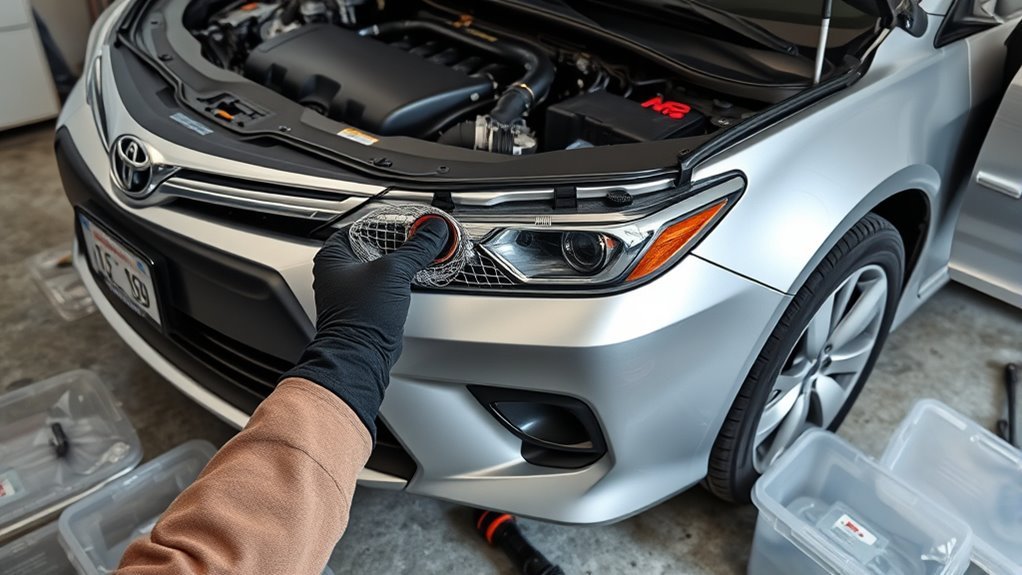
Before you store your Camry, do a focused walkaround and under-hood check. Rodents can use small gaps around garages, sheds, vents, doors, and stored clutter to reach a parked vehicle. The CDC recommends sealing holes with steel wool, caulk, metal sheeting, lath screen, cement, or hardware cloth, depending on the size of the opening.
- Clear leaves, grass clippings, cardboard, fabric, and trash from around the car.
- Check the engine bay, wheel wells, cowl area, firewall grommets, hood insulation, and air intake area.
- Look for shredded insulation, paper, droppings, nut shells, stored seeds, or gnaw marks.
- Secure loose wiring looms and hoses so they do not become easy bite points.
- Photograph any damage before cleaning, especially if you may file an insurance claim.
Warning: Do not start the Camry if you see a nest, chewed wires, fluid leaks, damaged belts, or debris near hot engine parts. Remove the debris safely first, then have damaged wiring or hoses inspected by a qualified technician.
Find Signs of Nesting in a Stored Toyota Camry
Work from the outside in. Start with the tires and wheel wells, then open the hood and inspect the engine bay. Rodents often choose hidden, warm, protected spots such as the airbox area, under the battery tray, behind plastic covers, near wiring looms, and around firewall insulation.
Look for these signs:
- Droppings: Small dark pellets near tires, under the hood, along garage walls, or inside the cabin.
- Nesting material: Shredded paper, fabric, leaves, grass, insulation, or pet hair packed into corners.
- Gnaw marks: Fresh chew marks on wires, hoses, plastic covers, weather stripping, or stored items nearby.
- Odor: A stale, musky smell from vents, carpets, or the engine bay.
- Noise: Scratching or squeaking after dark when the storage area is quiet.
Document what you find before you disturb it. A few photos can help you track repeat entry points, explain the issue to a mechanic, or support a comprehensive insurance claim if rodent damage is covered by your policy.
How to Seal Your Camry: Mesh, Steel Wool, and Vents
For a stored Camry, your main goal is to block access without blocking airflow, drainage, or normal vehicle operation. Do not pack material into hot, moving, or service-sensitive parts. When in doubt, seal the storage area instead of modifying the car itself.
Seal Entry Points
Inspect the storage area first. A mouse can enter through a gap slightly larger than 1/4 inch, and a rat can enter through a gap slightly larger than 1/2 inch, according to Nebraska Extension rodent-proofing guidance. That means garage doors, wall penetrations, vents, utility openings, and gaps around pipes matter.
| Spot | Material | Action |
|---|---|---|
| Garage gaps | Steel wool and caulk | Pack and seal |
| Large wall holes | Hardware cloth or metal flashing | Fasten securely |
| Storage-area vents | Fine metal mesh | Cover without blocking airflow |
| Door bottoms | Door sweep | Replace worn rubber |
| Vehicle-adjacent clutter | Storage bins | Remove nesting material |
Pro Tip: Use metal materials for exclusion. Rodents can chew through many plastics, foam-only patches, cardboard, and soft rubber if those materials are the only barrier.
Protect Vents and Openings
Vents, cowl openings, and air paths need extra care because they must still breathe. Use snug metal mesh only where it will not touch moving parts, hot exhaust components, belts, fans, or sensors. If you are not sure whether a screen is safe, ask a Toyota technician before installing it.
- Use fine stainless mesh or hardware cloth for storage-area vents and large openings.
- Pack small structural gaps with steel wool, then hold it with caulk or sealant so it cannot be pulled out.
- Replace torn grommets, missing plugs, and damaged weather stripping around the car.
- Keep the hood closed and the cabin clean while the Camry is stored.
- Check the seals after storms, cold snaps, or any sign of new rodent activity.
Safe Cleaning: Remove Nests and Droppings Step by Step
Rodent droppings, urine, nests, and dead rodents can carry germs. The CDC advises wetting contaminated material with a bleach solution or EPA-registered disinfectant before wiping it up, because sweeping or vacuuming can stir particles into the air.
Warning: Do not use a leaf blower, compressed air, broom, or regular vacuum on fresh droppings or nests. Wet the area first, let the disinfectant sit, and use disposable towels or a HEPA-filtered method only when appropriate.
| Step | Action |
|---|---|
| 1 | Ventilate the area if possible, then put on gloves, a mask, and eye protection. |
| 2 | Spray droppings, urine, and nesting material until wet with disinfectant or bleach solution. |
| 3 | Let it sit for the label time, or at least 5 minutes when using the CDC bleach-solution method. |
| 4 | Pick up debris with disposable towels and seal it in a plastic bag. |
| 5 | Wipe the area again, wash gloved hands, remove gloves, and wash hands with soap and water. |
| 6 | After the area is dry, inspect for chewed wires, hoses, belts, filters, and insulation. |
If a nest is inside the cabin air intake, air filter box, dashboard, or heater/AC ducting, avoid running the blower until the system is inspected and cleaned. A cabin filter replacement may not be enough if nesting material has moved deeper into the HVAC system.
Storage Habits to Stop Rodents Returning to Your Car
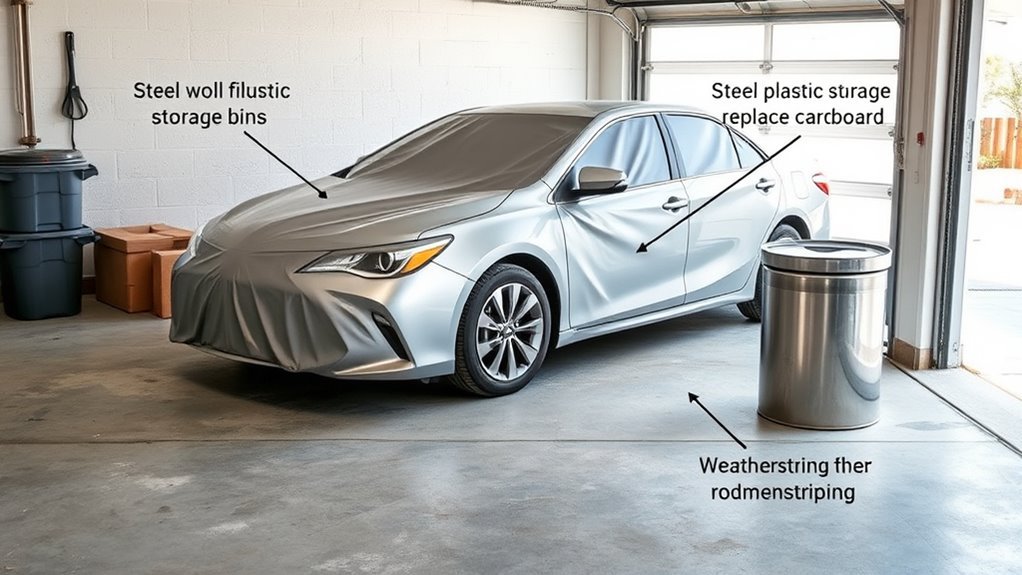
The best long-term plan is simple: make the area less useful to rodents. The EPA recommends removing food, water, and shelter sources, then sealing holes that allow rats and mice to enter.
Remove Food Sources
Food smells bring rodents closer to the car. Before storage, empty the cabin, trunk, glove box, console, door pockets, and under-seat areas. Even small crumbs, spilled drinks, birdseed, pet treats, and fast-food wrappers can attract mice.
- Store pet food, birdseed, and grass seed in sealed hard plastic or metal containers.
- Keep garbage cans closed and away from the vehicle when possible.
- Do not park under bird feeders or near spilled seed.
- Vacuum the cabin and trunk before long storage.
- Remove cardboard boxes, blankets, towels, and paper piles from near the car.
Choose a Better Parking Spot
Parking location matters. A clean garage with sealed wall gaps is better than a cluttered shed, tall grass, or a spot beside firewood. If indoor storage is not available, choose pavement or gravel instead of grass or soil, and keep vegetation trimmed around the car.
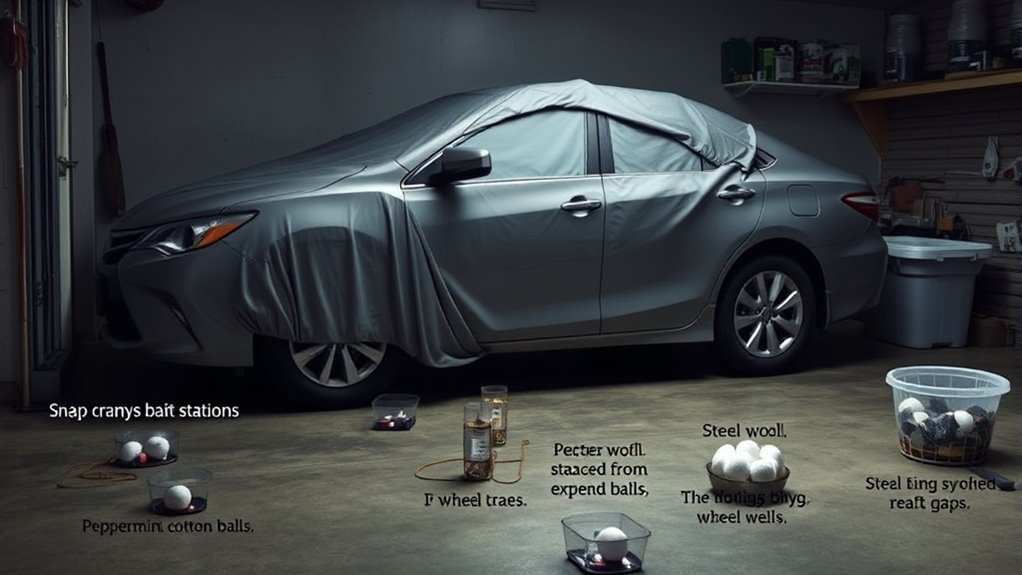
Do not rely on a tight car cover alone. Covers can hide early signs of rodent activity and may create protected pockets if they touch the ground. If you use a cover, choose a breathable vehicle cover that fits well and still allows you to inspect underneath it often.
Regular Visual Inspections
Do an exterior and under-hood walkaround at least every one to two weeks while the Camry is in storage. Inspect more often in cold weather, after storms, or if you have seen rodents nearby.
- Scan for droppings, shredded material, fresh gnaw marks, and stored seeds.
- Check the airbox, battery area, cowl, wheel wells, firewall area, and hood insulation.
- Look for new gaps in garage doors, vents, walls, and storage bins.
- Refresh or replace deterrents that have lost their scent or charge.
- Start and move the vehicle only after confirming the engine bay is clear.
Cheap Deterrents and Monitors: Oils, Lights, Cameras, Wire Guards
Deterrents help most when they are part of a bigger plan. They should not replace cleaning, sealing, and inspections. Use them as extra layers so you spot problems early.
- Peppermint oil: Place scented cotton balls or sponges near the storage area, not on hot engine parts, belts, wiring connectors, painted surfaces, or filters. Refresh often because scent fades.
- Motion lights: Battery or plug-in motion lights can make the area less comfortable for nocturnal pests and help you see activity.
- Cameras: A basic night-vision camera aimed at the tires, undercarriage, or garage wall can show where rodents are traveling.
- Wire protection: Ask a mechanic about automotive-safe wire loom, rodent-resistant tape, or repairs if wiring has already been chewed.
- Traps: Snap traps or enclosed traps may help control active rodents, but place them where children, pets, and non-target wildlife cannot reach them.
Note: Avoid loose poison bait around a stored vehicle. Rodenticides can harm children, pets, and wildlife when misused, so follow EPA rodent bait safety guidance and the product label if you use them.
What to Do If Rodents Chewed Wires or Hoses
If you find chewed wires, do not twist them together and hope for the best. Modern Toyota electrical systems rely on clean signals, proper insulation, and safe routing. A damaged wire can cause warning lights, no-start problems, sensor faults, blown fuses, or short circuits.
- Photograph the damage before moving anything.
- Remove nesting material safely if it is not tangled in electrical parts.
- Do not start the engine if wiring, belts, hoses, or fuel lines look damaged.
- Call a qualified mechanic or Toyota service department for inspection.
- Check your auto insurance policy. Comprehensive coverage may help with animal-related damage, but coverage varies by policy.
- After repairs, seal the storage area and inspect more often for the next month.
A clean storage area, sealed entry points, and regular inspections do more than any single scent repellent or gadget.
Frequently Asked Questions
How do I keep rats out of a stored vehicle?
Remove food and clutter, seal garage and storage-area holes with metal materials, inspect the engine bay often, and use traps or professional pest control if you see ongoing activity. Avoid leaving poison bait loose around the vehicle.
How do I keep mice out of a parked Toyota Camry?
Clean the cabin and trunk, park away from tall grass and food sources, seal nearby gaps, check the airbox and wheel wells every one to two weeks, and add monitoring such as motion lights or a camera near the tires.
Does peppermint oil really keep rodents away from cars?
Peppermint oil may discourage some rodents for a short time, but it fades quickly and does not block access. Treat it as a temporary scent deterrent, not a complete prevention plan. Cleaning, sealing, and inspections matter more.
Can rodents damage a Camry’s wiring?
Yes. Mice, rats, squirrels, and other rodents can chew wiring insulation, hoses, plastic covers, and sound-deadening material. If you see chewed wires, do not start the car until the damage is inspected.
Should I leave the hood open to prevent rodents?
Leaving the hood open may make the engine bay less dark, but it can also expose parts to dust, moisture, or accidental contact. A better plan is to clean the area, seal the storage space, inspect often, and use lights or cameras around the vehicle.
Conclusion
You can keep rodents out of a stored Toyota Camry by making the car and storage area boring to them. Remove food, clean away nesting material, seal gaps with rodent-resistant materials, protect vents carefully, and inspect the engine bay on a schedule. Small prevention steps now can save you from chewed wiring, bad odors, HVAC contamination, and expensive repairs later.
Sources
- CDC — How to Seal Up to Prevent Rodents — supports sealing gaps with steel wool, caulk, metal, and hardware cloth.
- CDC — How to Clean Up After Rodents — supports safe droppings, urine, and nest cleanup steps.
- U.S. EPA — Identify and Prevent Rodent Infestations — supports removing food, water, shelter, and sealing holes.
- U.S. EPA — Safely Use Rodent Bait Products — supports rodenticide safety cautions around people, pets, and wildlife.
- Nebraska Extension — Rodent-Proof Construction — supports mouse and rat gap-size guidance and exclusion methods.
- Toyota Owners — Manuals and Warranties — supports checking model-specific Toyota owner and maintenance guidance.