Checking Toyota Camry fluids is a simple routine that helps you catch low oil, coolant loss, brake-fluid problems, washer-fluid shortages, and possible transmission leaks before they become expensive repairs. Work on level ground, let hot parts cool, use the fluid type listed in your owner’s manual or on the reservoir cap, and treat any repeated fluid loss as a repair warning.
Quick Answer
To check Camry fluids, park level, shut the engine off, let it cool, then inspect engine oil, coolant, brake fluid, washer fluid, and visible transmission leaks. Use Toyota-approved fluid types for your exact year and engine. If coolant, brake fluid, oil, or transmission fluid keeps dropping, schedule service instead of only topping it off.
Key Takeaways
- Check oil monthly and before long trips; low oil can cause severe engine damage.
- Read coolant only when the engine is cold, and never open a hot radiator or coolant cap.
- Brake fluid should stay between the MIN and MAX marks; a sudden drop can mean worn pads or a leak.
- Many late-model Camrys have sealed transmissions, so DIY transmission-fluid checks may require a temperature-based service procedure.
- Always confirm fluid specs in the Toyota manual for your exact model year, engine, and trim.
At a Glance
| Time Required | 10–20 minutes for a basic inspection |
| Difficulty | Beginner for oil, coolant, brake, and washer checks; advanced for sealed transmission service |
| Tools Needed | Gloves, safety glasses, clean lint-free cloth, flashlight, funnel, owner’s manual, optional brake-fluid tester |
| Cost | Usually $0 for inspection; extra cost only if fluid, tools, or service is needed |
What This Checklist Fixes: Common Camry Fluid Problems
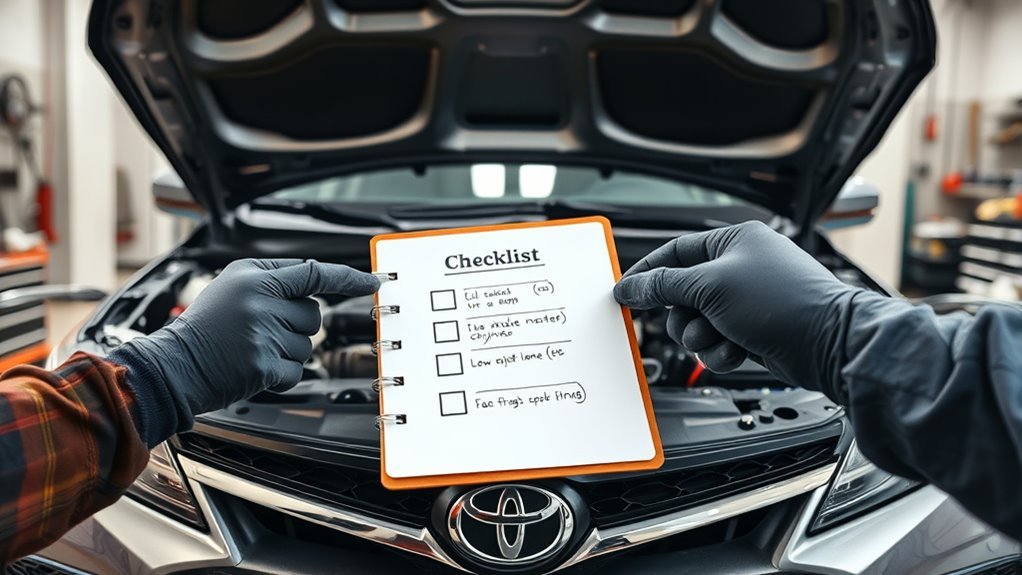
This checklist targets the fluid issues that most commonly affect Camry reliability: low or dirty engine oil, coolant loss, contaminated brake fluid, an empty washer reservoir, and transmission leaks or service concerns. Toyota’s official maintenance guidance says Camry owners should perform ongoing general maintenance such as fluid checks and visual inspections in addition to scheduled service. Toyota’s Warranty & Maintenance Guide also stresses regular service records and routine oil-level checks.
The key is not just topping off fluids. The real goal is to spot patterns: oil that keeps dropping, coolant that disappears from a closed system, brake fluid below the safe range, washer fluid that empties unusually fast, or oily residue under the transmission. Those patterns tell you when a simple maintenance check has become a repair issue.
Prepare Your Camry: Tools, Safety, and Parking
Before opening the hood, park the Camry on level ground, shift to Park, set the parking brake, and give hot parts time to cool. A level surface matters because dipsticks and translucent reservoirs can read incorrectly when the car is tilted.
- Clean lint-free cloth or paper towel for wiping dipsticks and caps
- Flashlight for reading reservoir marks and spotting leaks
- Funnel dedicated to each fluid type to avoid contamination
- Nitrile gloves and safety glasses for chemical protection
- Owner’s manual or Toyota digital manual for your exact year, engine, and trim
- Brake-fluid moisture tester, if you want a quality check beyond color and level
Warning: Never open a hot radiator cap or coolant reservoir cap on a pressurized system. Hot coolant can spray out and cause serious burns. Let the engine cool fully before touching the cooling system.
Quick Safety Tips Before Any Fluid Check
Work one fluid at a time so you do not mix caps, funnels, or fluids. Wipe the area around each cap before opening it; dirt that falls into a brake-fluid reservoir, oil filler, or coolant tank can create problems later. Keep children and pets away from coolant and used fluids, and clean spills immediately.
Do not guess on fluid type. Camry oil viscosity, coolant type, brake-fluid specification, and transmission fluid vary by model year and powertrain. Toyota directs owners to use the owner’s manual for the recommended oil grade and viscosity, and its support materials note that sealed transmissions using Toyota WS fluid are not designed to consume fluid. Toyota support recommends checking the warranty and maintenance guide for transmission-fluid inspection timing and having leaks diagnosed.
Check Engine Oil With the Yellow Dipstick
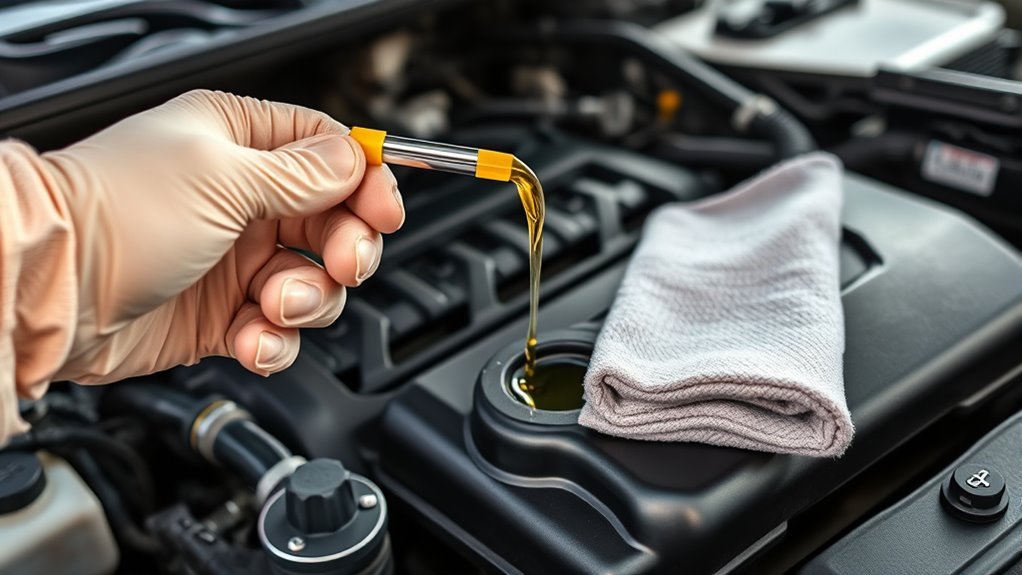
Engine oil protects moving parts, helps manage heat, and gives you one of the quickest clues about engine health. Toyota’s 2025 Camry maintenance guide says engine oil level should be checked routinely, and the oil and filter should be replaced at the specified interval for your driving conditions.
Yellow Dipstick Location
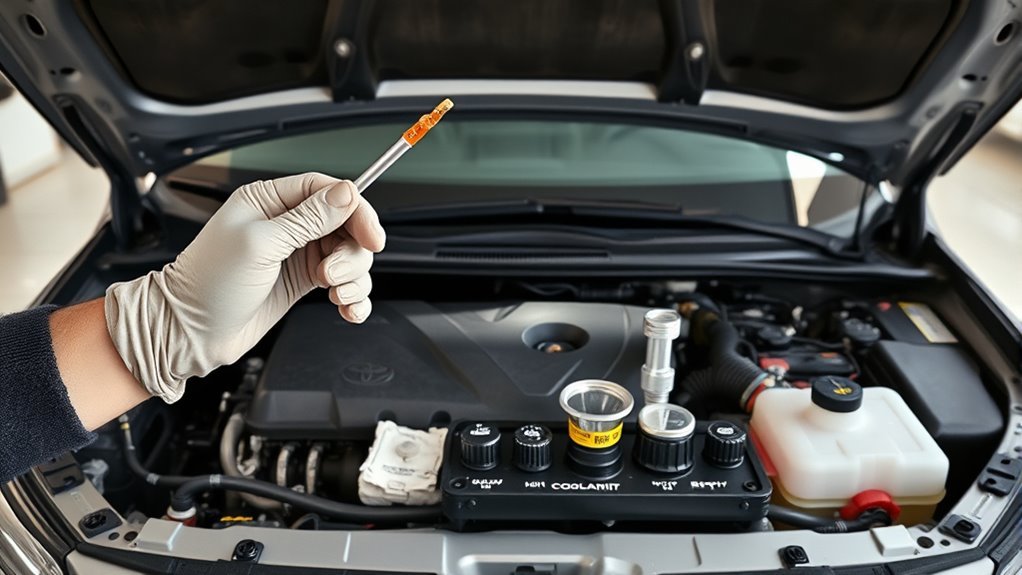
Most Camry models have a yellow or bright-colored engine-oil dipstick handle in the engine bay. Its exact position varies by generation and engine, but it is usually easy to identify once the hood is open. If you are not sure, use the engine-compartment diagram in your owner’s manual.
- Park on level ground.
- Turn the engine off and wait several minutes so oil drains back into the pan.
- Pull the dipstick out and wipe it clean.
- Reinsert it fully, then pull it out again.
- Read the level between the low and full marks.
Proper Oil Level Check
The oil level should sit between the low and full marks. If it is near or below the low mark, add the correct oil in small amounts, then recheck. Do not overfill; too much oil can cause foaming, leaks, or engine damage.
Note: Do not assume every Camry uses 0W-20. Some newer Camry hybrid models specify lower-viscosity oil, while older engines may use different grades. Check the oil cap and the Toyota Owners manual lookup for your exact vehicle.
What Oil Color and Smell Can Tell You
Oil that is amber to brown can be normal depending on mileage since the last change. Oil that looks milky may indicate coolant contamination. Oil with a strong fuel smell can point to fuel dilution. Oil that is very low soon after a top-off may indicate an external leak or internal consumption. In those cases, do not rely on repeated top-offs alone; have the cause diagnosed.
Inspect Engine Coolant Using the Overflow Tank
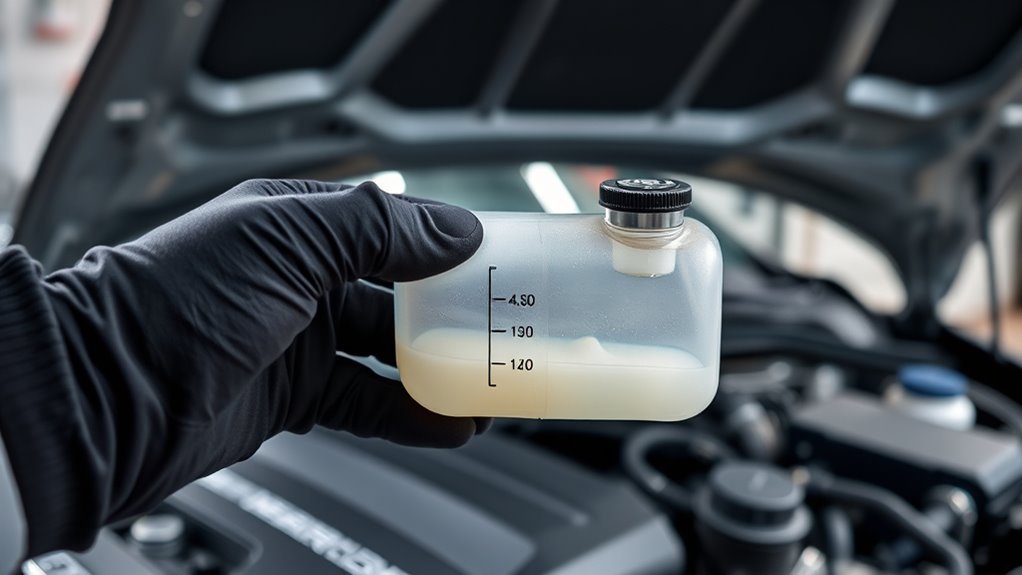
Check coolant when the engine is cold. The coolant reservoir is translucent on many Camry models and marked with low and full lines. A normal cold reading should be within the marked range, not randomly “half full” unless that aligns with the marks on your specific reservoir.
- Find the coolant reservoir and read the level through the side of the tank.
- If the level is below the low mark, look for pink, red, or white crusty residue around hoses, clamps, the radiator, the water pump area, and under the vehicle.
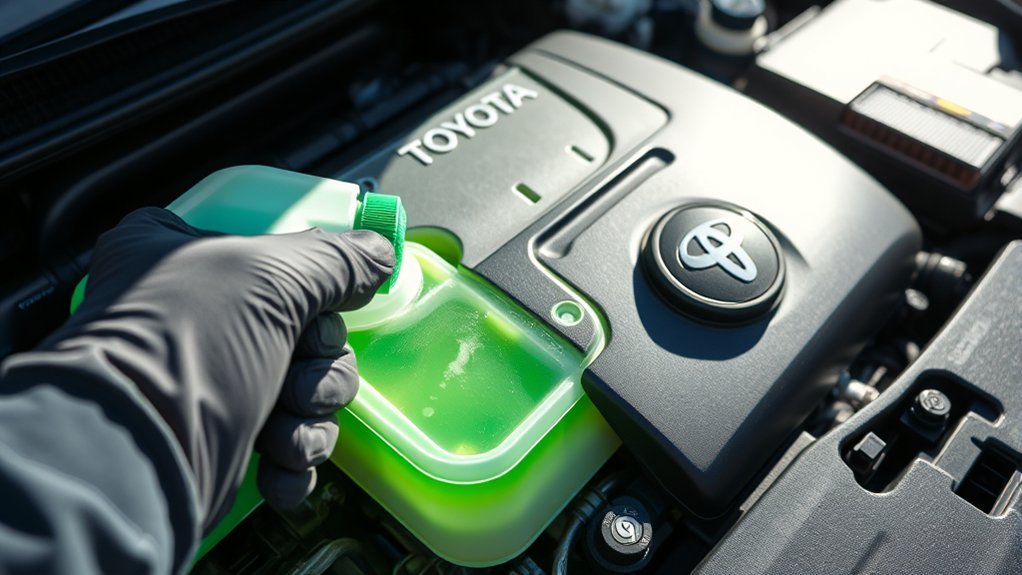
- Top off only with Toyota Super Long Life Coolant or an equivalent coolant that matches Toyota’s specification for your model.
- After topping off, recheck over the next few drives. A repeated drop means the system needs diagnosis.
Coolant loss is more urgent than washer-fluid loss because the cooling system is closed. If coolant disappears quickly, the engine may overheat or suffer internal damage.
Check Transmission Fluid Level and Color
Transmission checks depend heavily on Camry model year. Older Camrys may have a transmission dipstick that lets you check fluid level and color from above. Many newer Camrys use sealed automatic transmissions or hybrid transaxles without a normal dipstick, and those systems may require a lift, scan-tool temperature reading, and a factory overflow procedure.
Warning: Do not loosen transmission drain, fill, or overflow plugs unless you know the factory procedure for your exact Camry. On sealed units, the wrong fluid temperature or plug sequence can create an incorrect level and shifting problems.
For a safe owner-level check, look for signs of leakage instead:
- Red, amber, or dark oily spots under the center or driver-side area of the vehicle
- Wet residue around the transmission pan, axle seals, cooler lines, or underbody panels
- Delayed engagement, harsh shifts, shuddering, or whining noises
- Burnt odor after driving
If your Camry has a transmission dipstick, follow the owner’s manual exactly. Some models require the fluid to be warm and the engine running; others do not use the same method. Healthy automatic-transmission fluid is often red or amber, but color alone is not a complete service test. Burnt smell, metal particles, leaks, or poor shifting deserve professional inspection.
Check Brake Fluid Level and Test Quality
Brake fluid transfers pedal force through the hydraulic brake system. It must stay clean, sealed, and within the marked range. Low brake fluid can mean the brake pads are worn, the system has a leak, or the fluid was previously underfilled.
Locate Brake Fluid Reservoir
The brake-fluid reservoir is usually on the driver’s side near the firewall. Clean the cap and the surrounding area before touching it. Then read the fluid level against the MIN and MAX lines on the reservoir body.
- If the level is between MIN and MAX, do not top it off just to reach the very top.
- If the level is below MIN, inspect for leaks and schedule service.
- If the fluid is dark, cloudy, or contaminated, ask a technician about a brake-fluid exchange.
- Use only the brake-fluid type listed on the reservoir cap or in the owner’s manual.
Test Fluid Moisture Content
Brake fluid can absorb moisture over time, which lowers its boiling performance. Federal brake-fluid standards define boiling-point requirements for DOT brake fluids under 49 CFR § 571.116. A simple electronic brake-fluid tester can help screen for moisture, but it does not replace inspection of pads, lines, hoses, calipers, and the master cylinder.
Brake fluid that drops below the reservoir’s safe range should be treated as a symptom, not just a top-off job.
Top Off and Inspect Windshield Washer Fluid
Windshield washer fluid is the easiest Camry fluid to check and refill. Look for a cap with a windshield or spray symbol, open it, and add washer fluid until the reservoir reaches the indicated fill point.
- Use winter-rated washer fluid in freezing climates.
- Use bug-removing or summer fluid when insects and road film are a problem.
- Do not use plain water in freezing weather because it can freeze and crack the reservoir or lines.
- If washer fluid disappears quickly, check the reservoir, pump area, and washer hoses for leaks.
Pro Tip: Refill washer fluid before long highway trips. Running out during rain, snow, salt spray, or bug season can quickly reduce visibility.
Spot Leaks and When Low Fluid Means Trouble
Low fluid is not always caused by normal use. Some systems, such as washer fluid, are designed to be consumed. Others, such as brake fluid, coolant, and sealed transmission fluid, should not need frequent top-offs. Use the color, location, and smell of the fluid to narrow the issue.
| Fluid | Common Appearance | What Repeated Loss May Mean |
|---|---|---|
| Engine oil | Amber to dark brown, slippery | Leak, burning oil, worn seals, or internal consumption |
| Coolant | Pink, red, or orange, often sweet-smelling | Hose, radiator, water pump, cap, or internal cooling-system issue |
| Brake fluid | Clear to amber, slick | Worn pads, leaking hose, caliper, wheel cylinder, or master cylinder |
| Transmission fluid | Red, amber, brown, or dark oily residue | Seal, pan, cooler-line, or case leak requiring diagnosis |
| Washer fluid | Blue, purple, orange, or clear watery fluid | Cracked reservoir, loose hose, pump leak, or normal use |
Take photos of leaks before wiping them away. Note the date, mileage, fluid level, and location of the drip. This record helps a repair shop diagnose the problem faster.
Toyota Camry Fluid Check Intervals and Replacement Timing
Toyota’s maintenance schedule is built around time and mileage. For modern Camry models, Toyota recommends scheduled maintenance every 5,000 miles or six months, whichever comes first. Oil-change timing, transmission-fluid inspection, coolant replacement, and special-operating-condition service can vary by model year and driving use, so use the schedule for your exact vehicle.
| Fluid | Owner Check | Service Guidance |
|---|---|---|
| Engine oil | Monthly and before long trips | Replace oil and filter at Toyota’s specified interval; severe use may require shorter intervals. |
| Coolant | At least at routine service and before long trips | Use Toyota-approved coolant; replace according to your maintenance guide. |
| Transmission fluid | Check for leaks, symptoms, or dipstick level if equipped | Follow Toyota’s inspection or replacement schedule; sealed systems usually require service tools. |
| Brake fluid | At routine service and anytime braking feels different | Inspect level and condition; flush if contaminated, moisture-heavy, or specified by maintenance schedule. |
| Washer fluid | Monthly and before bad weather | Top off as needed with seasonal washer fluid. |
Dispose of used oil and automotive fluids responsibly. The U.S. Environmental Protection Agency recommends recycling used motor oil rather than dumping or throwing it away.
Frequently Asked Questions
Are synthetic oils safe for older Camry engines?
Yes, synthetic oil can be safe for many older Camry engines when it matches the viscosity and specification in the owner’s manual. If an older engine already has leaks or high oil consumption, synthetic oil may make existing problems more noticeable, so monitor the level closely after switching.
Can aftermarket coolant cause corrosion in a Camry radiator?
Yes, the wrong coolant can contribute to corrosion, deposits, or poor protection. Use Toyota Super Long Life Coolant or an equivalent coolant that meets Toyota’s requirements for your model. Avoid mixing random coolant types unless the label and manual confirm compatibility.
How do I read dipstick markings on hybrid Camry models?
Use the same basic oil-check method: park level, turn the vehicle off, wait for oil to settle, wipe the dipstick, reinsert it fully, then read the oil between the low and full marks. Hybrid Camry oil type can differ by year, so confirm viscosity in the Toyota manual before adding oil.
Is it normal for new brake fluid to look slightly discolored?
Slight color variation can be normal because different brake-fluid brands and formulations have different shades. New brake fluid should still look clean and clear, not cloudy, gritty, or dark. If you are unsure, test moisture content and verify the fluid type on the reservoir cap.
Can low washer fluid trigger dashboard warnings?
Yes, some Camry trims and model years have a washer-fluid level warning. If the warning stays on after refilling, the sensor, wiring, or reservoir may need inspection.
Should I check transmission fluid myself on a newer Camry?
Only do a full level check if your Camry has a dipstick or you have the factory procedure and tools. Many newer Camrys use sealed transmissions or hybrid transaxles. For those, a safe owner check is limited to looking for leaks and symptoms, then using qualified service when needed.
Conclusion
A good Camry fluid check is calm, quick, and consistent: park level, work safely, read the marks, use the correct Toyota-approved fluids, and write down anything unusual. Washer fluid may simply need a top-off, but repeated loss of oil, coolant, brake fluid, or transmission fluid is a warning sign. Catch those changes early and you protect the engine, brakes, cooling system, drivetrain, and your confidence on the road.
Sources
- Toyota Owners Manuals and Warranties — official owner-manual lookup for model-specific fluid specifications and procedures
- 2025 Toyota Camry Warranty & Maintenance Guide — Toyota maintenance timing, fluid inspections, oil-check guidance, and service-record recommendations
- Toyota Support: Vehicles Without a Transmission Dipstick — sealed transmission guidance and WS fluid note
- 49 CFR § 571.116 Motor Vehicle Brake Fluids — federal brake-fluid performance standards and boiling-point requirements
- U.S. EPA: Managing, Reusing, and Recycling Used Oil — used motor-oil recycling and disposal guidance