

To prevent overinflating your tires, regularly check their pressure using a reliable gauge, ensuring it matches the manufacturer’s recommended PSI. Inflate your tires gradually, adjusting for temperature changes since pressure can rise with heat. Watch for signs of overinflation like uneven tread wear or a harsher ride. Remember to conduct checks at least once a month and consider getting a professional inspection if you notice persistent pressure issues. Stick around for more tips on ideal tire maintenance and safety.
What Does Overinflation Mean for Your Tires?

Overinflation occurs when your tire pressure exceeds the manufacturer’s recommended levels, typically by more than 10% of the suggested PSI. When tires are overinflated, they take on a rounded shape, which reduces contact with the road, compromising traction and increasing safety hazards during sharp turns. This lack of proper tire contact can lead to blowouts, posing serious risks, including loss of vehicle control and longer stopping distances due to decreased braking effectiveness. Additionally, overinflated tires can negatively affect your vehicle safety features, such as anti-lock braking systems, making them less responsive in emergencies. To avoid these dangers, make regular checks and adjustments to your tire pressure, ideally monthly or with significant temperature changes.
How to Identify Overinflated Tires
To identify overinflated tires, start with a visual inspection; they typically appear more rounded and may show uneven tread wear, especially with the center wearing faster than the edges. Pay attention to performance indicators like increased road noise and a bumpy ride, which suggest the tires are too stiff. Regularly checking your tire pressure with a reliable gauge is essential for catching overinflation before it affects safety and performance.
Visual Tire Inspection
While inspecting your tires, it’s important to look for signs of overinflation, as this condition can greatly affect your vehicle’s safety and performance. Conduct regular visual inspections to spot any uneven tread wear, where the center treads wear down faster than the outer edges. This uneven wear indicates potential safety issues. Check for bulges or cracks in the tire sidewalls, as these are clear signs of overinflated tires. Additionally, if you notice increased road noise or a bumpier ride, your tires may be too stiff. To prevent these issues, monitor tire pressure regularly, especially after significant temperature changes. Keeping your tires properly inflated not only enhances safety but also extends their lifespan.
Performance Indicators
Identifying overinflated tires is essential for maintaining peak vehicle performance and safety. Use a tire pressure gauge to check if your tire pressure exceeds the recommended PSI, as overinflated tires can lead to dangerous blowouts. Look for signs of uneven tread wear; if the center treads wear out faster than the outer edges, this indicates improper contact with the road. You might also notice increased road noise and a stiffer ride, which are indicators that your tires can’t absorb bumps effectively. Additionally, decreased fuel efficiency can occur, as overinflated tires create less traction, making your vehicle work harder. Regularly monitoring your tire pressure helps prevent overinflated conditions and guarantees ideal performance and longevity.
Understanding the Dangers of Overinflated Tires
Overinflated tires pose significant dangers that can compromise both safety and performance on the road. When tire pressure exceeds 10% of the manufacturer’s recommended tire pressure, your tires become stiffer, increasing the risk of tire blowouts. This stiffness reduces traction and hinders vehicle control, particularly during sharp turns. You may also notice increased road noise and a harsher ride, which indicate compromised stability. Furthermore, overinflation adversely affects safety features, like anti-lock braking systems, resulting in longer stopping distances and heightened skidding risks. Regularly using pressure gauges to monitor tire pressure is essential, as the low-pressure warning light only activates when air is below 25% of recommended levels, leaving you vulnerable to overinflation issues.
How to Safely Inflate Your Tires?
To safely inflate your tires, start by checking the manufacturer’s recommended PSI, usually found on the driver’s side door or in your owner’s manual. Use a reliable tire pressure gauge to measure the current PSI and guarantee you stay within 10% of the recommended level. Regularly monitoring and adjusting your tire pressure will enhance your vehicle’s safety and performance.
Recommended PSI Guidelines
Maintaining the correct tire pressure is essential for vehicle safety and performance, and it starts with knowing the manufacturer’s recommended PSI. You can typically find this information on the driver’s side door or in your owner’s manual. To guarantee the PSI remains within ideal inflation levels, check your tire pressure with a reliable gauge at least once a month, especially before long trips. Remember, an overinflated tire exceeds 10% above the recommended PSI. Also, adjust your tire pressure for temperature changes, as a 1 PSI increase occurs for every 10-degree Fahrenheit rise.
| Recommended PSI | Action Needed |
|---|---|
| Under 30 PSI | Inflate immediately |
| 30-35 PSI | Check monthly |
| 36-38 PSI | Monitor regularly |
| Over 38 PSI | Deflate slightly |
| Above 40 PSI | Inflate carefully |
Using a Tire Gauge
A tire gauge is an essential tool for ensuring your tires are properly inflated, promoting safety and fuel efficiency. Start by locating the recommended tire pressure on the driver’s door or in the owner’s manual. Use a reliable pressure gauge to check your tires’ PSI before you inflate tires, ensuring you know the current level. Inflate gradually, checking frequently; if you need to release air, do it in short bursts to maintain control over the desired pressure. Regularly check your tire pressure, ideally once a month and especially before long trips or during temperature changes, as PSI can fluctuate. Finally, always replace the valve caps after adjusting to protect against dirt and moisture, preventing leaks.
Tips for Optimal Tire Pressure
Regularly checking and maintaining your tire pressure is essential for peak vehicle performance and safety. Use a reliable gauge to measure your tire pressure at least once a month, ensuring it aligns with the manufacturer’s recommended PSI found on the driver’s side door or in your owner’s manual. Be mindful that underinflated tires can lead to poor handling, while overinflated tires increase the risk of blowouts and reduce control. Adjust tire pressure for temperature variations, as a 1 psi change occurs for every 10-degree shift. Invest in high-quality air pumps to prevent inaccurate readings. Finally, conduct regular tire inspections for wear or damage, as uneven tread may signal improper inflation, necessitating immediate adjustments for maximum safety.
How Temperature Affects Tire Pressure
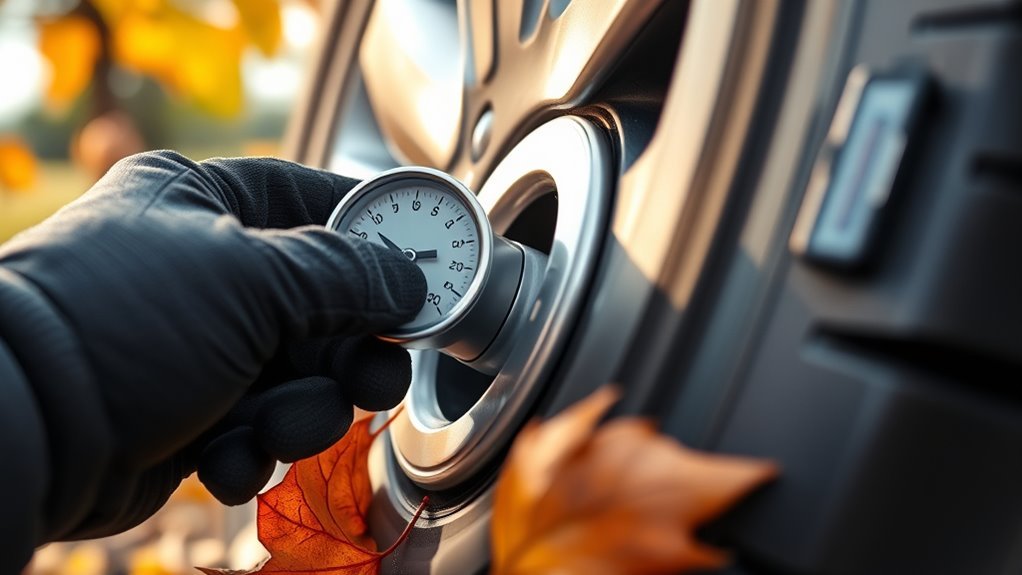
As temperatures fluctuate, tire pressure can change considerably, impacting your vehicle’s safety and performance. When temperatures drop, tire pressure typically decreases by about 1 psi for every 10-degree Fahrenheit drop, leading to underinflation. Conversely, rising temperatures can increase tire pressure by approximately 1 psi for every 10-degree Fahrenheit rise, which may result in overinflated tires. To guarantee peak performance, it’s essential to check the tires PSI during significant temperature changes and adjust accordingly. Regularly adjusting tire pressure helps maintain levels within the manufacturer’s recommended levels, assuring better traction and reducing the risk of blowouts. Prioritizing these adjustments is critical for your safety while driving, allowing you to navigate confidently in varying weather conditions.
Effective Strategies for Monitoring Tire Pressure
To maintain ideal tire performance and safety, it’s crucial to monitor tire pressure consistently. Check your tire pressure at least once a month using a reliable gauge to verify it aligns with the manufacturer’s recommended PSI, typically located on the driver’s door or in the owner’s manual. Adjust tire pressure according to seasonal temperature changes—remember, a 1 psi variation occurs for every 10-degree shift. Use high-quality air pumps for inflating your tires accurately, minimizing human error. Before long trips or when carrying heavy loads, always monitor tire pressure; overinflated tires increase the risk of blowouts and diminish vehicle control. Finally, know the difference between the recommended PSI and maximum PSI on the tire sidewall to avoid unsafe inflation levels.
When to Seek Professional Tire Services?
Monitoring tire pressure is an essential step, but knowing when to seek professional tire services is equally important for maintaining vehicle safety and performance. If you find that tire pressure consistently requires adjustment beyond the manufacturer’s recommended levels, it may indicate underlying issues. Additionally, pay attention to uneven tread wear or visible damage like cracks or bulges; a professional inspection can prevent further deterioration. Regular tire rotations, ideally every 5,000 to 7,000 miles, are best handled by trained technicians to guarantee optimal performance. Finally, if your vehicle exhibits handling issues or vibrations, don’t hesitate to consult a tire professional. Their expertise and specialized equipment greatly enhance your vehicle’s safety and performance.
Must-Have Tools for Tire Care

Having the right tools for tire care can make all the difference in maintaining ideal performance and safety. A reliable tire pressure gauge is essential for accurately measuring tire pressure, ensuring it aligns with the manufacturer’s recommended PSI. An air compressor is invaluable for inflating tires, allowing you to control the inflation process and prevent overinflation. For quick adjustments, keep a valve cap removal tool or a simple screwdriver handy to release air in brief bursts. Tire patch kits are vital for swiftly addressing small punctures, preserving tire integrity. Additionally, having a portable jack and a lug wrench in your vehicle enables easy tire changes during roadside emergencies, ensuring your safety.
Frequently Asked Questions
What Are the 4 Tips for Maintaining a Tire?
To maintain your tires, regularly check tire pressure, inspect tread depth, perform alignment checks, follow a rotation schedule, adapt to seasonal changes, and conduct visual inspections. Use proper inflation techniques for ideal performance and safety.
How to Reduce Overinflated Tires?
To reduce overinflated tires, monitor tire pressure monthly, adjust for temperature changes, and use proper inflation techniques. Regularly check valve stems and observe tire wear indicators to guarantee consistent, ideal inflation and extend tire life.
What Is the 3 Tire Rule?
The “3 Tire Rule” means you check front tires and one rear tire for correct tire pressure. This practice enhances tire lifespan, guarantees safety standards, and promotes effective tire maintenance by using an air gauge regularly.
What Is the Safest Way to Handle a Tire Blowout?
To handle a tire blowout safely, maintain vehicle control by easing off the accelerator, steering straight, and pulling over. Activate hazard lights and call roadside assistance if necessary. Regular tire inspection aids in blowout prevention.
Conclusion
In summary, maintaining the right tire pressure is essential for safety and performance. Did you know that overinflated tires can reduce traction by up to 30%? By regularly checking your tire pressure and adjusting it according to manufacturer recommendations, you can prevent overinflation and guarantee peak handling. Remember, a little vigilance goes a long way in protecting your tires and enhancing your vehicle’s efficiency. Stay proactive, and keep your tires in top shape!



