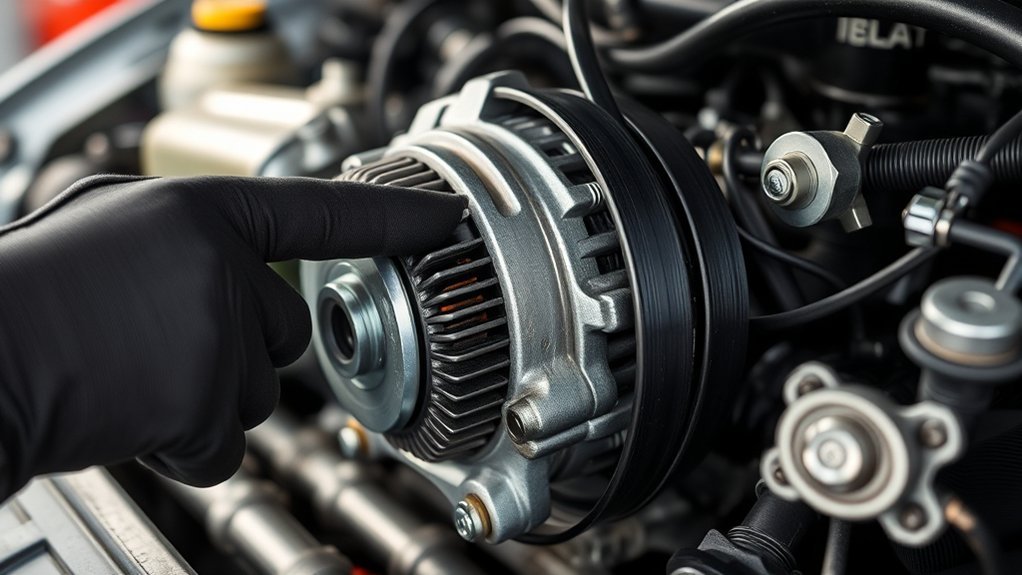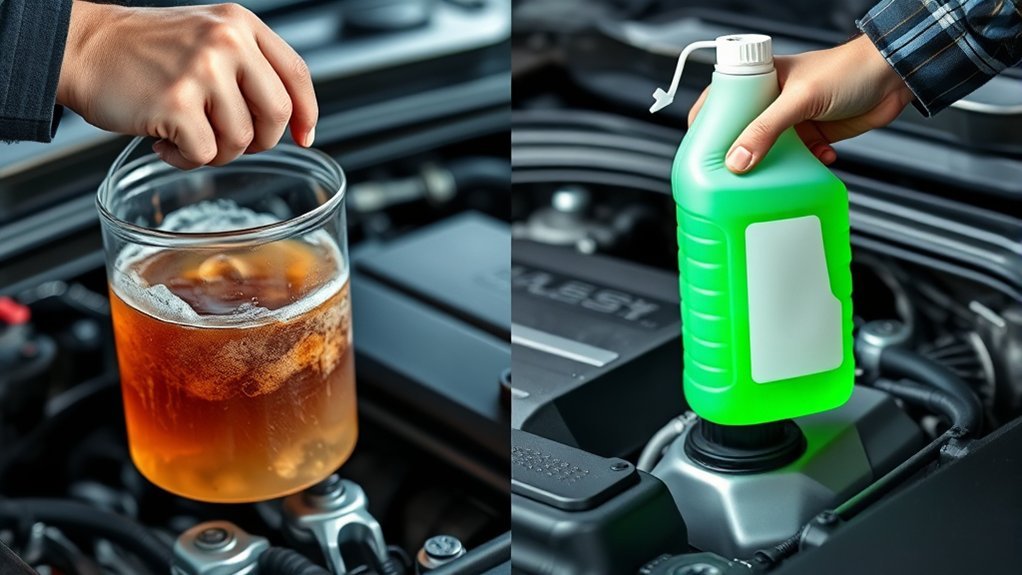
You should replace your Toyota Camry’s brake fluid every two years or about 20,000 miles, but check it sooner in humid or aggressive-driving conditions. Brake fluid is hygroscopic, so moisture lowers boiling point and risks pedal fade, ABS faults, and corrosion. Inspect reservoir color and level at services; amber is good, brown/black means change. Use DOT3 or DOT4 (avoid DOT5). If you want procedures, signs, and DIY versus pro guidance, keep going for full details.
Camry Brake-Fluid Interval : The Short Answer and Caveats
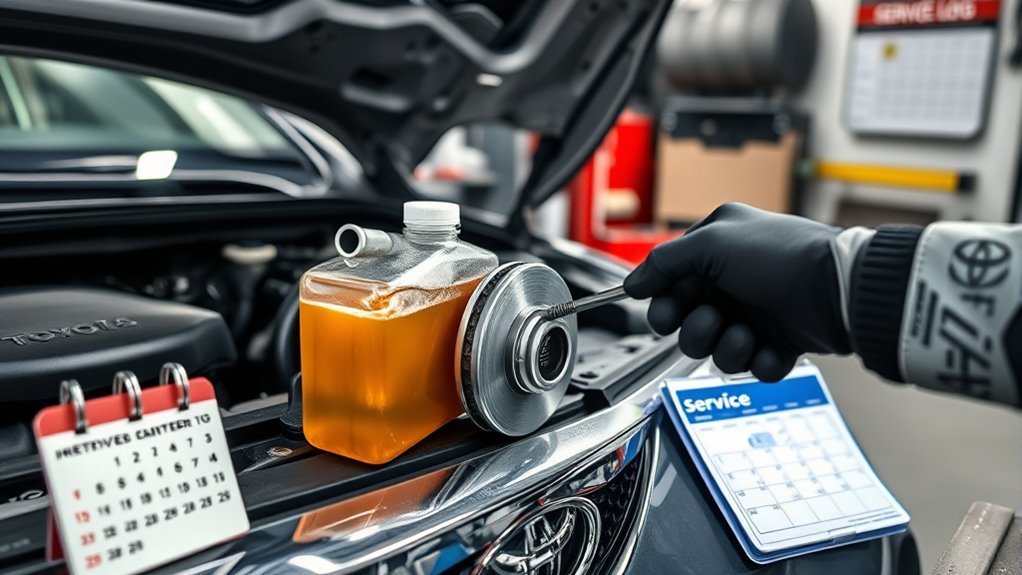
Every two years (or about 20,000 miles) you should replace the Camry’s brake fluid; it’s hygroscopic, so absorbed moisture lowers boiling point and risks pedal fade, ABS faults, and corrosion if you wait longer. You’ll follow a clear interval: schedule fluid replacement every 24 months or when mileage nears 20k, whichever comes first. Inspect fluid color and level during routine service; dark or low fluid mandates immediate bleed and fill. If you feel a spongy brake pedal, see intermittent ABS lights, or detect a burning smell after hard stops, prioritize service—those are actionable symptoms indicating contamination. Use manufacturer-specified DOT fluid, purge lines until new fluid exits at each caliper or wheel cylinder, and confirm reservoir level and cap seal afterward. Document date and mileage to enforce the regimen. Treat brake fluid maintenance as essential safety and a practice of autonomy: sticking to this procedural cadence reduces component corrosion, avoids failures, and keeps you in control of your Camry’s braking system.
Why Brake-Fluid Condition Matters for Safety and Performance
Because brake fluid absorbs moisture, its condition directly affects your stopping power and component longevity: even small water content can cut boiling point dramatically, causing vapor lock under hard braking and a spongy pedal feel that reduces responsiveness. You should treat brake fluid condition as a safety-critical parameter. Measure moisture absorption or perform a fluid test every inspection cycle; if moisture approaches thresholds (even ~3%), plan immediate replacement. Contaminated or degraded fluid promotes internal corrosion of calipers, lines, and master cylinder, shortening service life and increasing failure risk. Drain and refill using manufacturer-specified fluid to restore boiling point margins and purge trapped vapor. Monitor pedal feel and braking response: a spongy pedal signals compromised fluid and demands priority service. Follow a fixed renewal rhythm and verify system integrity after flushing; this keeps braking predictable and liberates you from avoidable mechanical constraints. Prioritize prevention—regular exchanges preserve performance, reduce repair scope, and maintain your control when it matters most.
Toyota’s Recommendation vs. Real-World Replacement Timing
Toyota specifies a brake fluid change every two years or 20,000 miles to preserve system performance. In practice, you should shorten that interval in humid climates or when you see early signs like dark fluid, spongy pedal feel, or failed moisture tests. Have a technician inspect and document moisture content rather than relying on DIY checks to decide on earlier replacement.
Manufacturer Recommended Interval
1 clear rule from Toyota calls for replacing Camry brake fluid every two years or 20,000 miles to maintain brake performance and safety; however, you should adjust that interval based on real-world factors like humid climates, frequent short trips, or heavy towing that accelerate moisture absorption and corrosion. Follow the manufacturer interval as your baseline. Schedule fluid replacement during routine service, document date and mileage, and use DOT-specified fluid. Add these maintenance tips: inspect reservoir clarity, test fluid moisture with a technician-grade tester, and replace if boiling point drops below spec. Don’t wait for warning lights or a soft pedal. Regular professional inspections prevent corrosion-related failures and costly repairs, and they free you from reactive, risky maintenance habits.
Real-World Driving Factors
While the manufacturer’s two-year/20,000-mile guideline gives you a baseline, real-world factors often require tighter monitoring and earlier replacement. You should treat that interval as a minimum, not an absolute. In humid environments increased moisture absorption accelerates brake fluid degradation; inspect and test annually. If your driving includes frequent hard braking or prolonged stop-and-go traffic, expect faster contamination and schedule earlier service. Implement a simple procedure: measure moisture content with a sensor, document readings, and compare against replacement thresholds. Prioritize replacement when tests show elevated water percentage or when service history is unknown. By relying on objective testing and adapting intervals to climate and use, you reclaim control over safety and avoid the risks tied to unchecked moisture absorption and brake fluid degradation.
Signs To Replace Early
Because stated service intervals assume average conditions, you should act sooner when clear signs appear: a spongy brake pedal, unexpected ABS engagement, or the brake warning light. Inspect brake fluid color and clarity during routine oil changes; discolored or murky fluid means contamination and requires immediate replacement regardless of mileage. Remember Toyota’s two-year/20,000-mile guideline, but humid climates raise moisture absorption and lower boiling point—just 3% water content can compromise braking. If you detect soft pedal feel, intermittent ABS activation, or warning lamps, flush and replace fluid, then bleed the system per procedure. Maintenance tips: document fluid checks, use specified DOT-grade fluid, and increase inspection frequency in corrosive or wet environments. Act decisively to maintain control and safety.
How Climate and Driving Habits Change Your Camry’s Interval
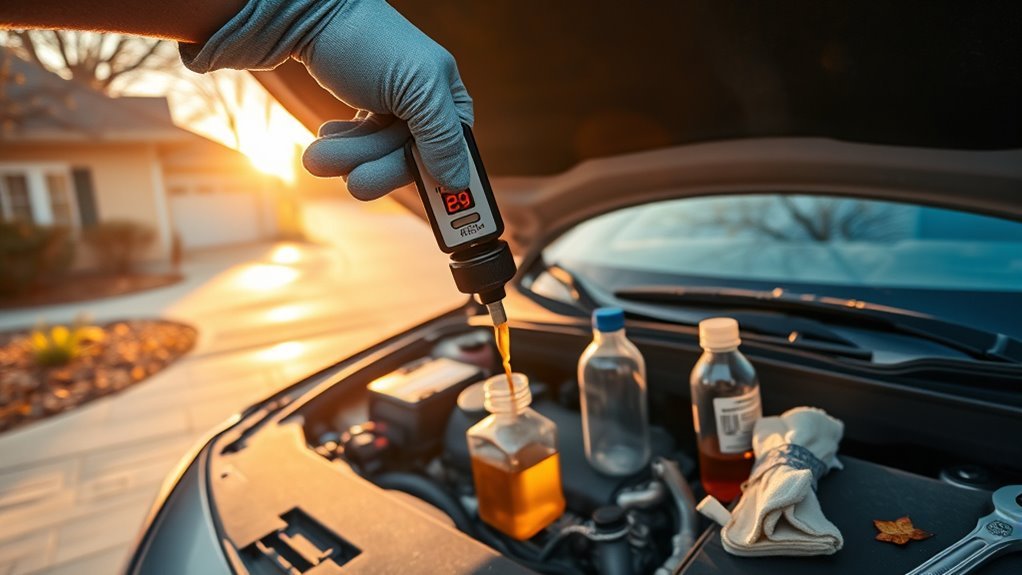
If you drive in humid regions or tackle steep, stop-and-go routes, expect your Camry’s brake fluid to absorb moisture and degrade faster, so plan on checking and replacing it more frequently than the standard two-year interval. You’ll use climate impact and driving habits as decision factors: humid, mountainous, or high-temperature commuting conditions shorten service life; cold climates are milder but not immune.
- Humidity: moisture accelerates corrosion and lowers boiling point — inspect yearly and replace sooner than two years.
- Aggressive driving habits: hard braking and frequent stops raise fluid temperature and contamination — shorten interval to 12–18 months.
- Long commutes/high temps: sustained heat reduces fluid effectiveness — monitor fluid condition and test boiling point annually.
- Mountainous/hilly use: repeated braking stresses fluid — perform visual checks and replace more often, prioritize safety.
Follow a procedure: assess environment and habits, test fluid condition, then set a customized replacement schedule that frees you from unnecessary risk.
Signs Your Camry Needs a Brake-Fluid Change Now
If the brake or ABS warning light comes on, stop driving and check the brake-fluid level and condition immediately. A spongy or soft pedal when you press it indicates air or contaminated fluid that requires flushing and replacement. Inspect the reservoir: dark, murky fluid means moisture or debris has accumulated and you should replace the fluid to restore proper braking performance.
Illuminated Brake Warning Light
When the brake warning light stays illuminated on your Camry, stop driving and inspect the brake-fluid level immediately, because low or contaminated fluid impairs hydraulic pressure and braking response. You’ll perform basic warning light troubleshooting and brake fluid maintenance steps to reclaim control and safety.
- Check the reservoir: confirm fluid level against MIN/MAX marks; top only with specified DOT fluid if needed.
- Inspect for leaks: look under the car and around calipers, lines, and master cylinder; any leak means don’t drive.
- Test fluid condition: dark or milky fluid indicates moisture contamination and reduced boiling point—plan replacement.
- If light persists after servicing, seek professional diagnostics to rule out sensor or ABS module faults.
Spongy Or Soft Pedal
After checking the warning light and reservoir, check pedal feel next: a spongy or soft brake pedal usually means air in the lines or low/contaminated fluid that’s reducing hydraulic pressure. If you notice increased travel or a squishy response, stop driving and inspect fluid level immediately. Low fluid or absorbed moisture degrades performance; reduced hydraulic pressure gives a soft pedal and longer stopping distances. You’ll want to bleed the system to remove air and replace fluid if it’s aged—Toyota recommends roughly every two years or 20,000 miles. Perform a pressure check after bleeding to confirm firm pedal return. Don’t ignore softness; act decisively to restore reliable braking and reclaim control and safety.
Dark Or Contaminated Fluid
Because brake fluid darkens as it absorbs moisture and contaminants, you should inspect the reservoir frequently and act immediately if the fluid looks brown or murky. Dark or contaminated fluid signals brake fluid contamination that reduces boiling point and promotes corrosion. You’ll prevent failure by flushing the system when fluid color indicators deviate from light amber.
- Check reservoir with clean cloth and flashlight; note color change from amber to brown or black.
- Look for particles or cloudiness—signs of moisture absorption and contamination.
- If contamination’s present, schedule a complete system flush and refill with manufacturer-specified DOT fluid.
- After service, bleed brakes and recheck fluid color indicators; document date and mileage to reclaim control.
Brake-Fluid Types for Camry: DOT3, DOT4, DOT5 (What to Use)
Although Toyota typically specifies glycol-based DOT3 or DOT4 for Camrys, you should confirm your model year in the owner’s manual before topping up or flushing the system. You’ll encounter brake fluid types listed as DOT3 or DOT4; both are hygroscopic and absorb moisture, so they require periodic replacement to maintain boiling point and corrosion protection. DOT3 benefits include wide availability and compatibility with older systems; DOT4 advantages are higher wet and dry boiling points, better performance under heat, and suitability for newer Camry variants. DOT5 drawbacks are significant: silicon-based DOT5 doesn’t absorb water, can cause vapor-lock at moisture interfaces, and is chemically incompatible with seals and ABS components in most Toyotas, so don’t use it unless the vehicle was explicitly converted. Always inspect fluid color and clarity—dark or cloudy fluid signals contamination. If you’re unsure, follow the manual’s spec and replace with fresh, manufacturer-approved glycol-based fluid to retain safe, reliable braking and your autonomy on the road.
What a Professional Brake-Fluid Flush Includes
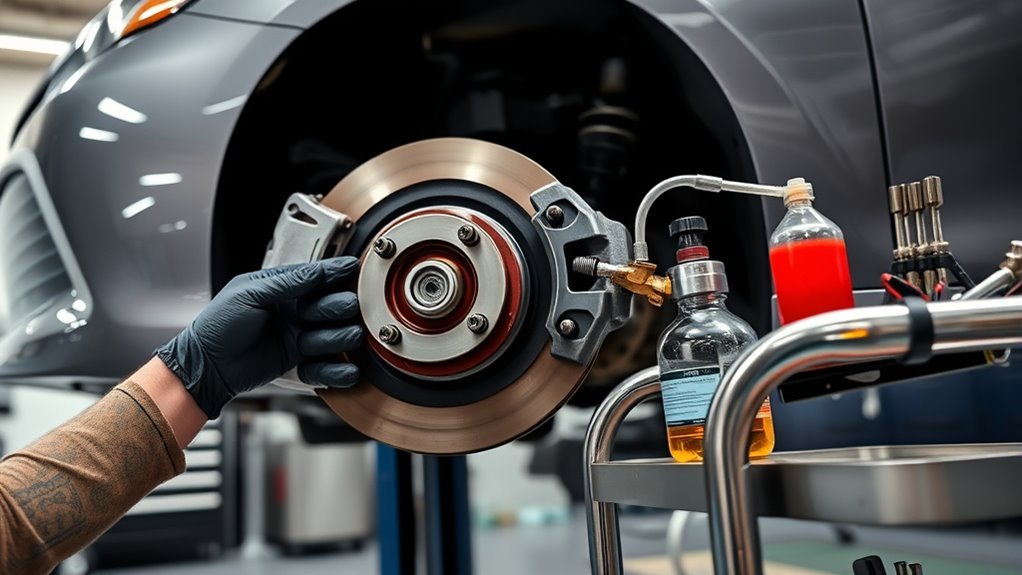
When you bring your Camry in for a professional brake-fluid flush, the technician fully evacuates the old, moisture-laden fluid and replaces it with fresh, manufacturer-specified glycol-based fluid while pressurizing and cycling the system to purge trapped contaminants and air. You’ll get a measured procedure that restores braking reliability and resists vapor lock by addressing brake fluid composition and moisture content.
Technician steps you should expect:
- Verify moisture percentage in reservoir fluid; if >3% they proceed with full evacuation using flushing equipment to extract all lines and ABS modulator cavities.
- Drain and refill with the correct DOT glycol-based fluid, monitoring system pressure while cycling brakes to remove air pockets.
- Inspect lines, calipers, master cylinder, and ABS components for corrosion or wear accelerated by contaminated fluid.
- Final road-test and recheck fluid level and pressure, documenting service interval and recommending next flush (typically every two years or ~20,000 miles).
DIY Camry Brake-Fluid Change: Risks, Tools, and Checklist
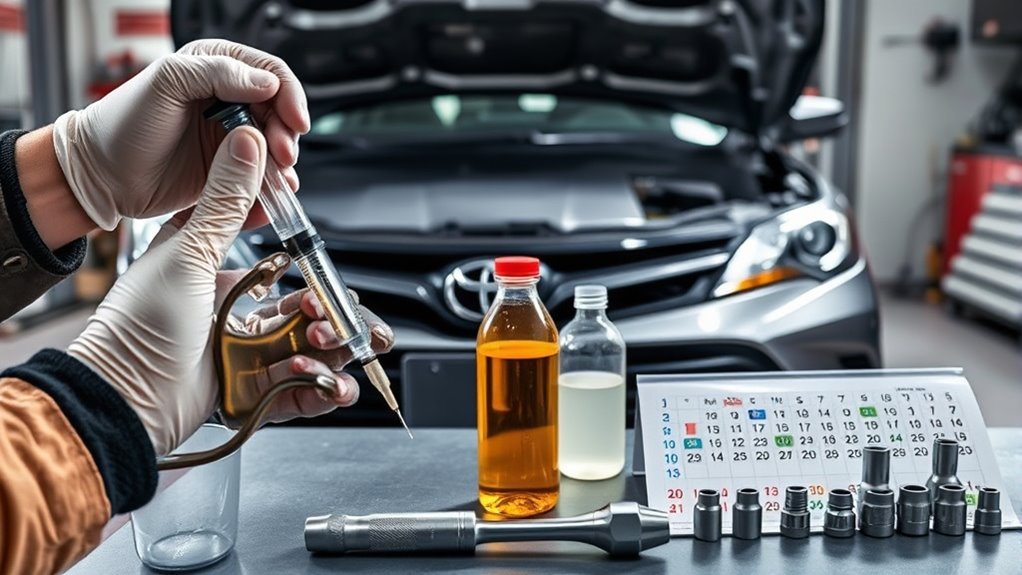
If you’ve read what a pro does during a brake-fluid flush, you’ll know the procedure restores system integrity but also involves specialized tools and inspection steps—tasks you may choose to handle yourself. You’ll need a wrench for the bleeder valve, a clear tube, a catch container, and fresh DOT3 or DOT4 fluid matching your Camry. Embrace DIY maintenance only if you’re disciplined about brake fluid safety: avoid skin contact, keep reservoirs sealed, and prevent moisture contamination.
Recognize risks: improper handling, contaminated fluid, and trapped air can degrade braking efficiency. Follow a strict checklist: confirm fluid spec, secure vehicle, top reservoir, open bleeder, drain until clear fluid exits, close bleeder, refill to proper level, inspect lines and calipers for leaks, and verify a firm pedal feel. Dispose of old fluid as hazardous waste. If any step feels uncertain, step back—your freedom depends on reliable brakes, not shortcuts.
Cost, When to Visit Your Toyota Technician, and Service Frequency
How often should you replace Camry brake fluid? Replace it every two years or 20,000 miles to preserve brake performance and safety. Costs run about $100 at dealerships or shops — a modest expense versus repair or failure.
Replace Camry brake fluid every two years or 20,000 miles — about $100 — to preserve safety and performance.
- Monitor: Check moisture levels and fluid condition at every oil change; technicians will inspect and advise.
- Symptoms: Visit your Toyota technician immediately if you feel a hard or spongy brake pedal, see an illuminated ABS warning light, or notice unusual brake performance.
- Service: Schedule professional testing and replacement; pros use calibrated equipment for accurate assessments you can trust, unlike many DIY testers.
- Frequency: Adhere to the two-year/20,000-mile interval as baseline; shorten interval if moisture levels are high or if you experience symptoms.
You’ll maintain control and reduce risk by following a strict, liberation-minded routine: regular inspections, timely professional service, and prompt responses to warning signs.
Frequently Asked Questions
How Often Should I Change the Brake Fluid on My Toyota Camry?
You should change brake fluid every two years or ~20,000 miles. Use proper brake fluid types, test for fluid contamination professionally, purge the system thoroughly, and stay proactive so you’ll maintain braking performance and preserve your safety and autonomy.
How to Tell When Brake Fluid Needs Changing?
About 60% of failures link to contaminated fluid: you’ll watch brake fluid signs like murky fluid color, spongy pedal, dashboard warning, low reservoir; test moisture ≥3.5% or flush when color darkens or performance degrades.
Conclusion
You’ll want to follow Toyota’s interval but trust what you see and feel: if your pedal feels spongy or moisture tests high, change the fluid sooner. Coincidentally, the same rainy commute that stains your shoes is the one that accelerates brake-fluid aging—act before those small signs become an emergency. Use DOT specifications, flush properly or have a tech do it, and schedule checks with routine service so stopping power stays predictable and safe.