You should change your Camry’s oil every 10,000 miles or 12 months using 0W‑20 full synthetic under normal driving, but shorten to about 5,000 miles for severe use or older engines; vehicles with the 3UR‑FBE need 5,000 miles or six months. Always replace the filter, check oil level every 5,000 miles, and consider high‑mileage 5W‑30 for worn engines. Follow these limits and monitor condition closely, and you’ll find practical interval and oil-choice guidance ahead.
Quick Answer: Camry Oil Change Interval
For most Toyota Camry models, change the oil every 10,000 miles or 12 months when using 0W‑20 full synthetic oil under normal driving; if you drive under severe conditions (frequent short trips, towing), shorten the interval to about 5,000 miles. You’ll follow the 5,000‑mile/6‑month rule for vehicles with the 3UR‑FBE engine regardless of oil type. Check oil level every 5,000 miles to verify consumption and detect leaks early. Replace the oil filter at each oil change to maintain filtration efficiency and reduce contaminant recirculation. Use dealership online scheduling or your preferred shop to set maintenance reminders so service stays aligned with operating conditions and engine design limits. This regimented approach preserves compression, reduces wear, and supports long‑term reliability. You’re liberating yourself from breakdowns by applying disciplined intervals, documented checks, and timely filter swaps—simple, measurable actions that keep the Camry performing as intended.
Which Oil for a Camry: 0W‑20, 5W‑30, or High‑Mileage 5W‑30?
Now that you’ve got the interval plan and filter advice nailed down, pick the oil that matches your Camry’s engine and mileage. Use 0W‑20 full synthetic for modern Camrys: it optimizes fuel economy, cold starts, and allows extended intervals when driving conditions are standard. Prioritize oil viscosity and engine compatibility by checking your owner’s manual; manufacturer specs govern seals, tolerances, and warranty compliance.
If you run an older or high‑mileage Camry, choose high‑mileage 5W‑30. Its seal‑conditioning additives reduce oil consumption and mitigate leaks, improving longevity in worn engines. When 0W‑20 is unavailable, 5W‑30 is an acceptable substitute but expect slightly higher consumption and plan more frequent checks and changes. Regardless of choice, monitor oil level and quality regularly—especially with 5W‑30 variants—to detect consumption, contamination, or degradation early. Match oil viscosity to engine compatibility and operating conditions to keep control and preserve freedom from premature repairs.
When to Choose 5,000 vs. 10,000 Miles for Your Camry
When should you stick to a 5,000‑mile oil change and when is 10,000 miles acceptable? You choose 10,000 miles only under standard driving when using 0W‑20 synthetic oil—this leverages synthetic oil benefits like thermal stability and extended contaminant suspension. Opt for 5,000 miles if you regularly face severe operating conditions: frequent short trips, towing, extreme temperatures, stop‑and‑go traffic, or hilly routes. Also use 5,000 miles for Camrys with the 3UR‑FBE engine; its interval is limited to 5,000 miles regardless of oil type. Even if you follow extended intervals, check oil level every 5,000 miles to catch consumption or contamination early. If you want control and reduced risk, choose the shorter oil change frequency—it’s a practical, liberating choice that prioritizes longevity over marginal savings. Balance manufacturer guidance, your driving patterns, and the synthetic oil benefits to set an interval you can trust.
How Knoxville Driving Conditions Affect Oil Intervals

In Knoxville, your Camry’s oil interval should account for frequent stop-and-go traffic that accelerates contaminant buildup and thermal cycling. Hilly terrain raises engine load and oil consumption, which shortens effective oil life. Seasonal high temperatures further increase oxidation rates, so adjust intervals seasonally rather than using a one-size-fits-all schedule.
Stop-And-Go Traffic
Because Knoxville’s stop-and-go traffic and hilly streets raise engine load and thermal stress, your Camry’s oil will degrade faster than under ideal highway conditions. You must monitor traffic patterns and engine stress closely; extended idling and frequent acceleration cycles accelerate contamination and viscosity breakdown. Under these severe-service conditions—short trips, cold starts, time-in-traffic—change intervals shorten from the 10,000-mile ideal to about 5,000 miles, or 5,000–7,500 miles depending on use. You should inspect oil quality more often and prioritize filtration and synthetic blends designed to resist shear and moisture. This disciplined approach liberates you from avoidable wear: regular checks and proactive oil service prevent sludge buildup, preserve combustion efficiency, and maintain reliable performance in Knoxville’s demanding urban environment.
Hilly Terrain Strain
As Knoxville’s steep grades force your Camry to work harder, oil experiences higher temperatures and shear rates that accelerate additive depletion and viscosity breakdown. You must treat hilly terrain as a demanding service condition: increased workload and frequent stop-and-go traffic speed chemical degradation and reduce oil longevity, harming engine performance if ignored. Short trips increase moisture and sludge risk, and towing or sustained climbs can push recommended intervals toward 5,000–7,500 miles. Adjust schedules proactively to preserve freedom of the road and mechanical resilience.
- Monitor oil condition more often: look for darkening and viscosity change.
- Prefer manufacturer-grade synthetic when seeking extended oil longevity.
- Short-trip drivers should shorten intervals.
- Increase inspection frequency after towing or heavy incline use.
Seasonal Temperature Effects
Hilly driving raises engine load, and seasonal temperatures add another variable that alters oil chemistry and service frequency. You’ll see a clear seasonal impact in Knoxville: summer heat accelerates synthetic oil breakdown, so you may need changes every 5,000–7,500 miles rather than the 10,000-mile nominal interval. Stop-and-go urban traffic compounds thermal and mechanical stress, increasing degradation rates. In winter, repeated short trips under 32˚F produce moisture and fuel dilution, promoting sludge and reducing oil life—5,000-mile intervals are prudent. Temperature variations drive viscosity shifts and additive depletion; monitor oil condition and operating patterns. To stay liberated from unexpected failures, adapt your schedule to heat, cold, and terrain—inspect oil regularly, follow heavier-duty intervals when conditions demand, and document changes for reliability.
Special Cases: Hybrids and High‑Mileage Camrys
When you own a Camry hybrid or a high‑mileage Camry, oil change strategy should shift from a one‑size‑fits‑all schedule to one tailored by usage, mileage, and oil type. For hybrid maintenance, full synthetic oil at 10,000 miles or 12 months is standard; you’ll preserve the electric–gas balance and reduce thermal stress by sticking to that interval when driving is mostly highway. For high‑mileage Camrys (over ~75,000 miles), shorten intervals to 5,000–7,500 miles to limit wear and oil degradation. Under severe conditions—short trips, extreme heat/cold—use the 5,000‑mile interval regardless of oil.
Tailor Camry oil changes by usage: synth at 10,000 miles for hybrids, 5,000–7,500 for high‑mileage or severe conditions
- Use high‑mileage synthetic oils to reduce consumption and seal wear.
- Run periodic oil analysis to detect contamination, viscosity loss, and metalwear.
- Adjust intervals based on oil analysis trends, not just calendar miles.
- Prioritize engine longevity by choosing oil formulation aligned with mileage and duty cycle.
Act with autonomy: monitor, test, and choose intervals that free your Camry to perform reliably.
Signs Your Camry Needs an Oil Change Now
When the oil change light illuminates, you should stop and schedule service immediately because it signals the system has detected oil-related limits. If the engine starts clattering, idling roughly, or feels unresponsive you’re likely experiencing lubrication breakdown that needs attention. Also inspect the oil: dark, gritty, or burnt-smelling fluid confirms degradation and an overdue change.
Oil Change Light
1 clear warning light on your Camry is the quickest prompt that an oil change is due—typically around every 5,000 miles or 6 months depending on driving conditions. You should act when the system alerts you; it encodes oil change frequency and helps preserve engine performance. Trust the lamp and your judgment.
- Light illuminates as a scheduled reminder; don’t defer beyond the interval.
- Check oil color and odor; dark, gritty, or burnt-smelling oil confirms degradation.
- Note fuel economy drops; reduced efficiency often accompanies old oil.
- Combine indicator data with your driving patterns to set proactive service.
You’re reclaiming control of maintenance: respond to indicators, schedule service, and keep your Camry liberated from preventable wear.
Engine Noise Or Roughness
You’ll hear or feel engine noise and roughness long before a complete failure if your Camry’s oil has degraded or dropped below proper levels; contaminated or thin oil reduces film strength, increasing metal-to-metal contact that produces ticking, knocking, or a coarse idle. You’ll notice diminishing engine performance as friction rises and timing components lose hydraulic damping. An illuminated oil change light often accompanies these symptoms, but you shouldn’t wait for it. Inspect oil level and condition immediately; low or dirty oil signals lubrication issues that accelerate wear on bearings, camshafts, and lifters. Addressing the oil change restores hydrodynamic lubrication, reduces mechanical noise, and reclaims efficient operation. Act decisively to preserve freedom of mobility and prevent costly repairs.
Dark Or Burnt Oil
If your Camry’s engine oil looks dark, feels gritty, or smells burnt, it’s no longer providing effective lubrication and needs an immediate change. You’re facing oil degradation that reduces protection, raises friction, and degrades engine performance. Check oil condition every 5,000 miles; if dark or gritty sooner, contaminants or poor oil quality are likely. Ignoring burnt oil will cut fuel efficiency and accelerate wear, risking costly repairs. Act to reclaim control of your vehicle’s lifespan.
- Inspect oil color, texture, and odor during level checks.
- Replace oil immediately if it’s gritty, heavily darkened, or has a burnt scent.
- Use recommended Toyota-grade oil to prevent premature degradation.
- Track changes to diagnose leaks, contamination, or extended service intervals.
Maintenance to Combine With Oil Changes (Fluids, Tires)
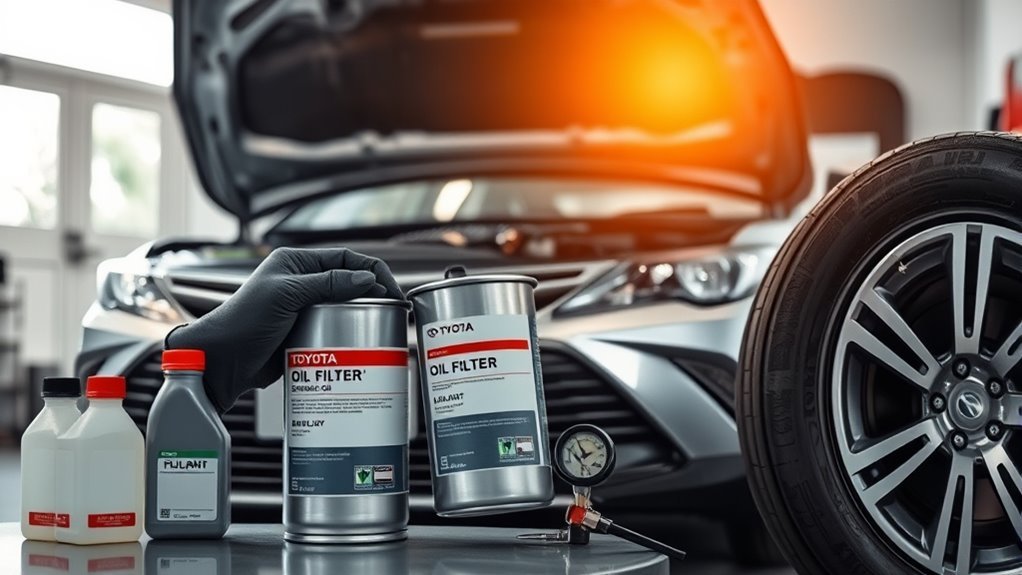
When you change your Camry’s oil, also check brake fluid, coolant, power steering fluid, and windshield washer fluid to catch leaks or contamination early; inspect tire pressure, tread wear, and rotate tires (about every 5,000 miles) to guarantee even wear, better fuel economy, and safe handling. You’ll perform fluid maintenance and tire care together to maximize uptime and autonomy. Check brake fluid clarity and level; replace if dark or low. Verify coolant level and concentration; top with correct mixture. Confirm power steering and washer reservoir levels for control and visibility. Measure tire pressure against placard specs, assess tread depth across shoulders, and correct alignment if uneven. Rotate tires front-to-rear and cross-pattern as specified. These combined checks expose systemic issues early, reduce costs, and free you from avoidable breakdowns.
| Item | Check | Action |
|---|---|---|
| Brake fluid | Level/color | Top/flush |
| Coolant | Level/concentration | Top/replace |
| Tires | Pressure/tread | Inflate/rotate |
Practical Schedule & Monitoring Tips (DIY vs Dealer)
Pairing fluid and tire checks with oil changes sets you up to choose a practical schedule and monitoring approach that matches your driving and skill level. Use the Camry’s oil life monitor as primary feedback; it tailors intervals between the 7,500–10,000 mile range for 0W-20 full synthetic based on load, temperature, and duty cycle. Check oil and other fluids every 5,000 miles and rotate tires at the same interval to maintain safety and longevity.
- DIY tips: keep an oil filter wrench, drain pan, torque spec sheet, and OEM-grade 0W-20 on hand.
- Monitor: reset oil life only after confirming correct oil level and filter installation.
- Dealer benefits: certified technicians, genuine Toyota filters, and thorough multi-point inspections.
- Decision: choose DIY when you value autonomy and have competence; choose dealer when you prioritize warranty alignment and expert diagnostics.
Be disciplined: record dates, miles, and observations to liberate future decisions from guesswork.
Frequently Asked Questions
How Often Should a Toyota Camry Get an Oil Change?
You should change your Camry’s oil every 10,000 miles or 12 months under ideal conditions; for severe use or the 3UR-FBE engine, change every 5,000 miles or 6 months. Follow the maintenance schedule and check levels.
Will My Toyota Camry Tell Me When I Need an Oil Change?
Yes — your Camry will: its oil life system often flags maintenance reminder around 5,000 miles, so you’ll get precise alerts based on driving patterns; check oil level regularly to avoid performance loss and long-term damage.
Conclusion
Like the saying goes, “An ounce of prevention is worth a pound of cure.” Stick to Toyota’s oil spec—usually 0W‑20 for newer Camrys, 5W‑30 or high‑mileage 5W‑30 when appropriate—and choose 5,000‑mile service for severe Knoxville conditions or older engines, 10,000 miles with synthetic and normal driving. Watch oil life monitor, dipstick, leaks and engine noise. Combine fluid checks and tire care. Keep records; DIY or dealer, be consistent and proactive.