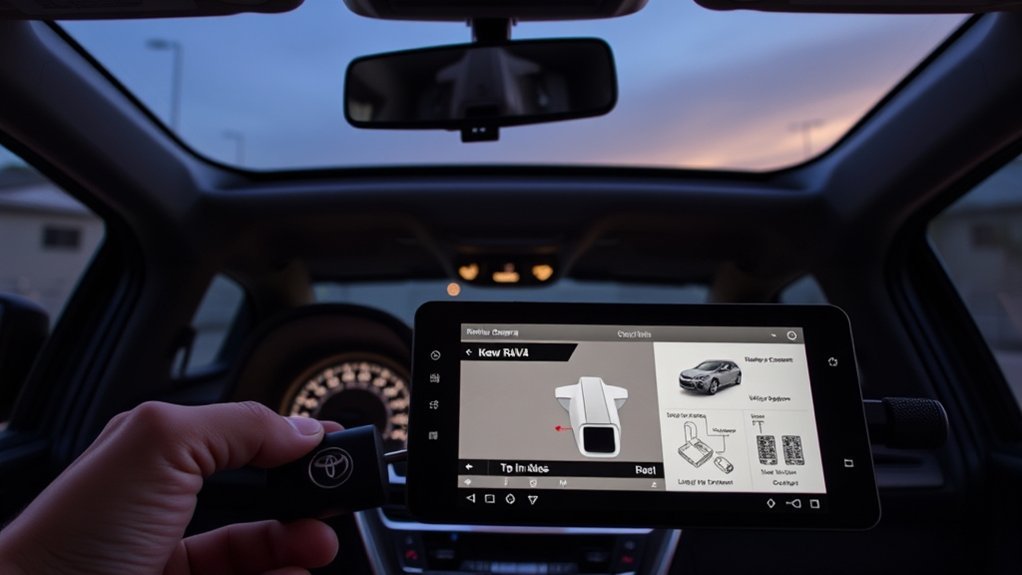
You’ll save on premiums and cut crash risk by keeping your RAV4’s Toyota Safety Sense suite—Pre‑Collision System (automatic emergency braking for vehicles, pedestrians, motorcycles), Lane Departure/Tracing/Keeping assists, and Dynamic Radar Cruise Control—active and calibrated. Parking aids (360° camera, sensors, Rear Cross Traffic Alert) plus multi‑airbags and LATCH lower repair and injury severity. Insurers verify feature operation, software versions, and inspection records, so keep documentation handy. Continue for specifics on verification and discount tactics.
Which RAV4 Safety Features Insurers Care About
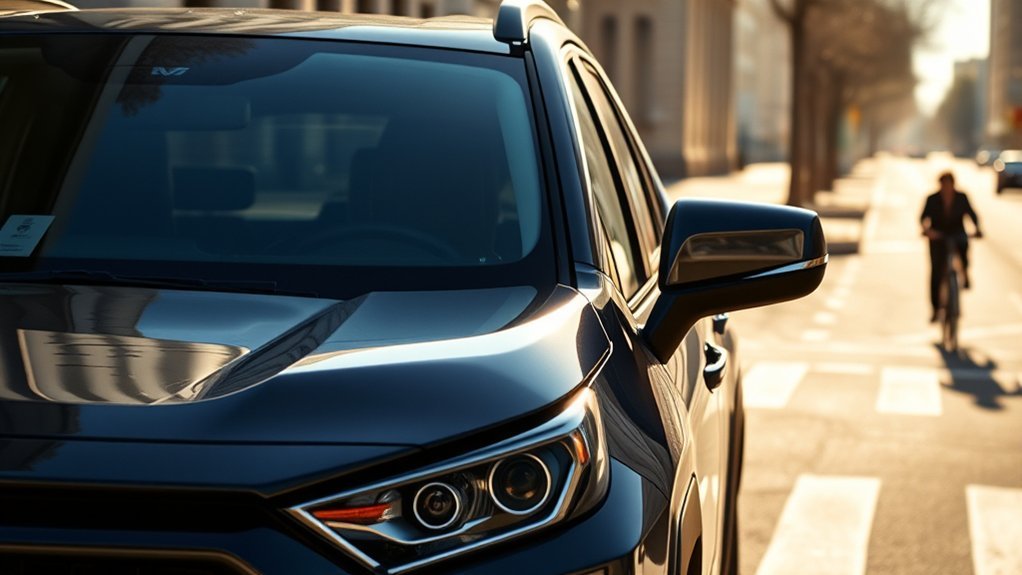
Insurers focus on features that measurably reduce collision frequency and severity, and the 2025 RAV4’s Toyota Safety Sense 3.0 package checks many of those boxes: its Pre-Collision System with automatic braking, Blind Spot Monitor, Dynamic Radar Cruise Control, Lane Departure Alert with Steering Assist, and 360-degree camera all lower crash risk or limit impact forces, so you’re more likely to qualify for discounts when those systems are standard or verified as active. You’ll want to prioritize collision avoidance technology that demonstrably intervenes—automatic braking and adaptive cruise control directly reduce rear-end and parking impacts, which insurers track. The Blind Spot Monitor and Lane Departure Assist cut lane-change and lane-drift incidents, lowering claim frequency. The 360-degree camera minimizes low-speed mishaps that inflate repair costs. Insurers reward quantifiable risk reduction; documenting system activation and opting for factory-installed packages strengthens your case for insurance premium reductions. Be critical: verify features operate as intended and keep records to claim discounts.
RAV4 Toyota Safety Sense: How It Lowers Crash Risk and Cost
Because Toyota equips every RAV4 with its Safety Sense suite, you get layered, automated systems—like the Pre-Collision System with automatic braking, Lane Departure Alert with Lane Tracing Assist, and Dynamic Radar Cruise Control—that actively reduce both crash likelihood and impact severity. You’ll benefit from integrated safety technology that enforces safer behavior, minimizes human error, and preserves your autonomy by preventing needless collisions and citations.
- Lane Departure Alert + Lane Tracing Assist keep you centered and cut lane-departure incidents.
- Dynamic Radar Cruise Control moderates speed in traffic, reducing rear-end crashes.
- Road Sign Assist informs you of limits and signals, lowering violation-related risk.
- Automated braking capability mitigates impact severity when evasive action fails.
- Combined systems reduce incident frequency, simplifying claims and negotiation.
Critically, these systems aren’t gimmicks; they produce measurable reductions in crash exposure. That lower exposure translates into potential insurance savings, since insurers reward demonstrable risk control. You’ll drive with more control and pay less for the privilege.
Pre-Collision System: Detections & Insurance Benefits
Building on how Toyota Safety Sense reduces overall crash exposure, the Pre-Collision System (PCS) targets frontal impacts by detecting vehicles, pedestrians, and motorcyclists and issuing audio/visual warnings before applying automatic emergency braking when a driver doesn’t respond. You’ll see PCS operate across 10–180 km/h for vehicles and 10–80 km/h for pedestrians, so it’s effective in both urban and highway contexts. Its enhanced intersection support detects oncoming vehicles during left turns, reducing blind-spot risk where human judgement often fails. As someone seeking freedom from avoidable constraints, you can rely on this pre collision technology to intercept momentary lapses and intervene decisively. Automatic emergency braking delivers a last-resort forceful response if you ignore warnings, clearly lowering collision severity or preventing impact. Insurers recognize that reduced frontal crash exposure translates to fewer claims, so you may qualify for premium discounts. Evaluate your policy terms, document the feature, and use PCS as a deliberate tool for accident prevention and personal autonomy on the road.
[Products Worth Considering]

Protect your Toyota RAV4 interior with this custom‑fit windshield sun shade that blocks 99% of harmful UV rays and reduces cabin heat. The mirror cut‑out ensures a seamless fit without gaps, while durable 240T polyester and bendable wire keep it sturdy through repeated use. Foldable and stored in a convenient pouch, it offers easy installation and removal for everyday comfort.

The Autovir windscreen shade offers full windshield coverage for Toyota RAV4 models from 2019 to 2026, blocking up to 99.95% of UV rays and reducing interior heat. Its multi‑layer reflective material provides SPF 100 and UPF 80+ protection while keeping the dashboard, seats, and steering wheel cooler. The foldable design installs quickly and stores conveniently in the glove box, and reinforced stitching ensures long‑lasting durability for daily use.

The Pigenius windshield sunshade protects your Tundra's interior from heat and UV damage while keeping the cabin cool. Its accordion design folds easily for storage and quick setup, and the triple‑laminate construction provides durable, reflective protection. Ideal for long trips and daily commutes, it guards dashboards, seats, and steering wheels from sun‑related wear.
Lane Tech (LDA, LTA, LKA): How Lane Systems Reduce Claims
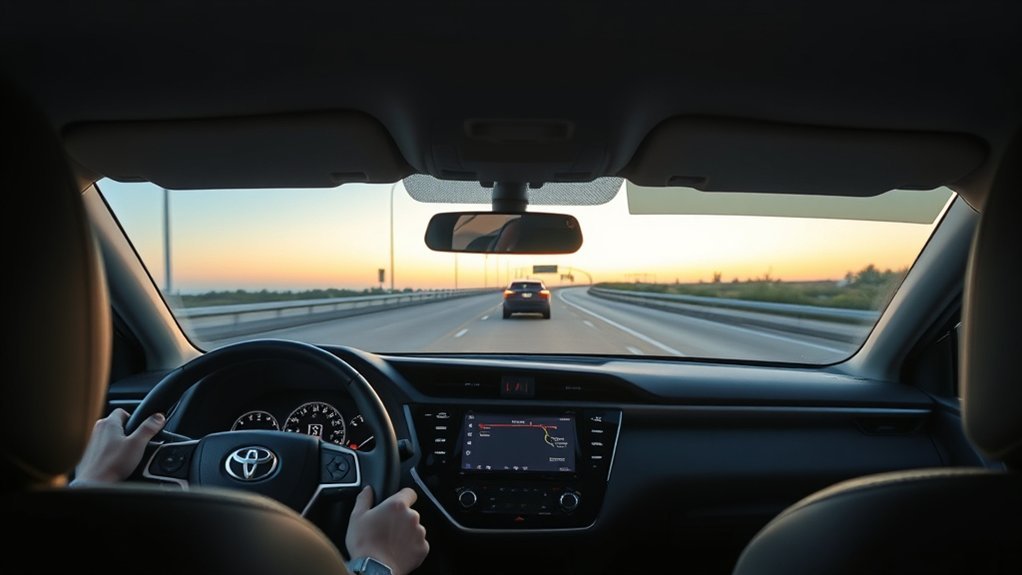
While lane systems won’t replace attentive driving, Toyota’s Lane Departure Alert (LDA), Lane Tracing Assist (LTA), and Lane Keeping Assist (LKA) actively reduce lane‑drift risks by warning you and applying subtle steering corrections when needed. You get layered protections: LDA alerts you when unintentional drift occurs, LTA centers the vehicle with gentle steering, and LKA reinforces corrections to prevent escalation. These lane technologies use three‑dimensional lane marker detection to improve reliability, lowering the chance of side‑swipe and run‑off incidents.
- LDA: audio/visual alerts above 50 km/h to counter inattention.
- LTA: continuous lane‑centering to reduce human error.
- LKA: supplemental torque to maintain course during critical moments.
- Sensor fusion: 3D marker recognition for fewer false triggers.
- Insurance impact: fewer and less severe lane departure claims.
You’ll appreciate the pragmatic, freedom‑oriented framing: these systems aim to liberate you from routine mistakes while delivering measurable claim reduction without promising autonomy.
[Products Worth Considering]
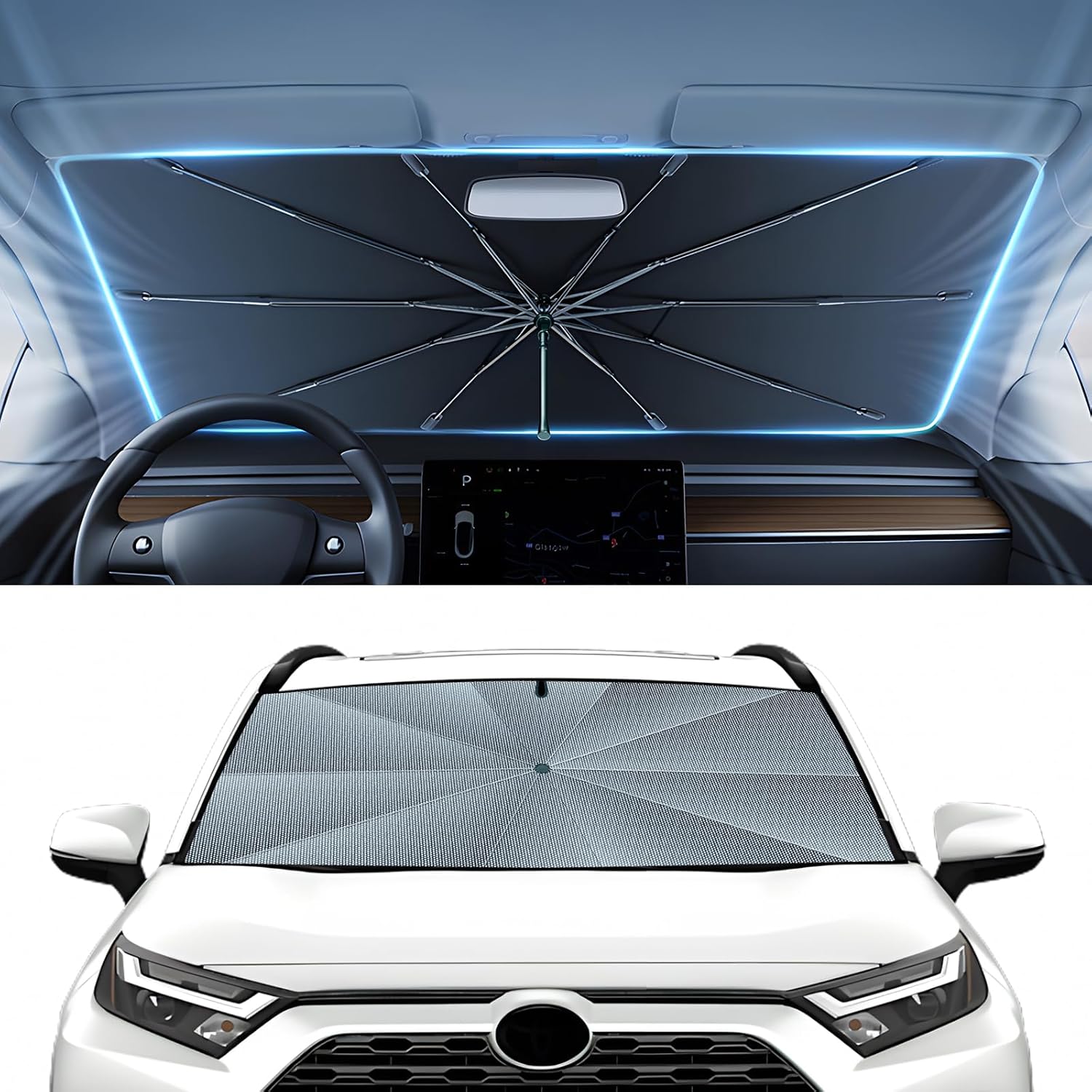
The Autorder windshield sun shade umbrella provides full coverage for Toyota RAV4 models from 2019 to 2026, blocking heat and UV rays with its advanced ice crystal material. Its ten reinforced skeletons and anti‑puncture edges ensure durability and stability, while the effortless umbrella‑style deployment and compact storage bag make it convenient for everyday use. Keep your car interior cool and protected from sun damage with this easy‑setup, high‑performance sunshade.

The KDOWES front windshield sun shade offers a custom fit for Toyota RAV4 SUVs, featuring a double‑layer heat shield that blocks up to 99% of solar rays and reduces interior temperature by up to 40°F. Reinforced steel rings and Velcro fasteners ensure easy installation and a secure fit, while the foldable cartilage steel ring allows convenient storage. This high‑quality, reflective fabric protects upholstery, dashboard, and electronics from UV damage, keeping the cabin cool and comfortable.
Dynamic Radar Cruise Control & Curve-Speed Benefits
How does Dynamic Radar Cruise Control (DRCC) make highway driving safer and less fatiguing? You set cruise control and DRCC maintains a preset distance from the vehicle ahead, automatically adjusting speed to smooth traffic flow and reduce rear-end collision risk. It functions effectively above 30 km/h, so on sustained highway segments you’ll experience consistent following gaps and less micro-braking.
The system now offers four cruise distance settings, letting you choose a spacing that matches your comfort and situational risk tolerance. Curve Speed Management augments DRCC by automatically reducing speed when sensors detect an approaching bend, and it gives a clear icon alert in the multi-information display when active. That interaction reduces abrupt steering inputs and speed variance through curves, limiting loss-of-control scenarios.
You’ll find this combination liberating: it offloads routine speed and gap control, enforces safer behavior, and gives you precise control over following distance without surrendering authority to automation.
Star Safety & Brakes: RAV4 Impacts on Claim Severity
Because the RAV4 bundles the Star Safety System™ with ABS, EBD, Brake Assist and a full airbag suite, insurers often see both fewer high-severity crashes and lower injury costs per claim. You benefit because brake technology plus stability control work together to reduce kinetic energy transfer in critical moments, lowering peak forces on occupants and downstream medical and repair costs.
- Vehicle Stability Control (VSC) and Traction Control (TRAC) help you maintain control in evasive maneuvers, cutting rollover and impact severity.
- ABS and Brake Assist shorten stopping distances, so collisions—if unavoidable—occur at lower speeds.
- Electronic Brake-force Distribution adapts braking per wheel, preserving directional stability under varied loads.
- Extensive airbags reduce occupant injury severity, which insurers track closely for claim valuation.
- Pre-Collision System can prevent or mitigate impacts, directly lowering claim frequency and cost.
Think critically: these systems don’t eliminate risk, but they shift exposure toward fewer, less severe claims—an objective metric insurers value.
Parking Cameras, Sensors, and Low-Speed Claim Prevention
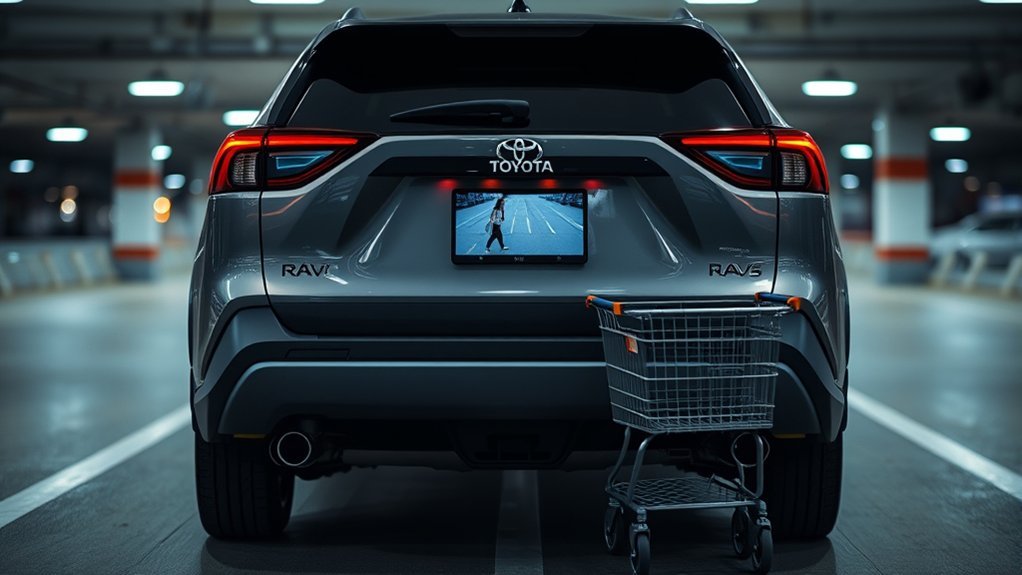
You’ll rely on the RAV4’s 360-degree camera suite and Panoramic View Monitor to get a thorough, real-time view of obstacles during parking. Combined with front/rear parking sensors, Rear Cross Traffic Alert, and automatic low-speed braking, these systems actively reduce the likelihood and severity of parking collisions. Evaluating how consistently sensors and cameras detect common obstructions will determine their true impact on low-speed claim frequency.
Parking Cameras Overview
One key set of RAV4 features you should know about are its parking cameras and sensors, which give a clear, technical foundation for preventing low-speed claims. You’ll see how camera technology and sensor integration work together to limit blind spots and reduce minor collisions.
- 360-Degree Camera System: provides full surround views to expose hidden hazards.
- Panoramic View Monitor: offers overhead perspective for precise positioning.
- Front and Rear Parking Assist: sensors detect obstacles and issue graded alerts.
- Integrated Automatic Braking: brakes or cuts power if an imminent contact is detected.
- Multimedia Display Fusion: consolidates inputs for decisive driver action.
You’ll evaluate these systems critically, relying on data-driven capability rather than marketing, to reclaim control in tight spaces.
Low-Speed Collision Prevention
Although low-speed maneuvers often feel routine, the RAV4’s camera and sensor suite actively intervenes to prevent minor collisions that drive up insurance claims. You get a Panoramic View Monitor for a bird’s-eye perspective, plus Front and Rear Parking Assist with Automatic Braking that warns you of obstacles and applies brakes when needed. Obstacle Anticipation Assist scans for parked cars, pedestrians, and cyclists around 30–60 km/h to maintain safe lateral spacing. Blind Spot Monitor with Rear Cross Traffic Alert bolsters situational awareness during reversals and tight lane changes. This collision avoidance technology, backed by targeted sensor integration benefits, reduces low-speed impacts and claim frequency. Critically, the system empowers you to assert safer control without ceding responsibility.
Passive Safety (Airbags, LATCH) and Rating-Agency Recognition
Crash protection on the RAV4 combines a multi-airbag architecture with proven child-restraint anchors to reduce injury risk for all occupants. You rely on airbag effectiveness paired with belt load management to limit crash forces, and you benefit from LATCH advantages when securing child seats quickly and correctly. Rating agencies recognize those integrated systems.
- Multiple strategically placed airbags cushion impact zones and work with seatbelts to control occupant kinematics.
- LATCH simplifies installation, reduces misuse, and anchors child restraints to the vehicle structure.
- IIHS accolades, including Top Safety Pick+ awards on some RAV4 variants, confirm objective performance in crash tests.
- The combined system lowers injury metrics for drivers, front passengers, and rear-seat children in certified scenarios.
- High safety ratings contribute to the RAV4’s market appeal and insurance-positioning, signaling reduced claim severity potential.
You’ll appreciate that this passive suite isn’t cosmetic: it’s engineered to liberate occupants from preventable harm through proven, audited protection.
Which Features Insurers Verify : What to Document and How
When you shop for coverage, insurers will check specific safety technologies and expect concise documentation showing their presence and configuration, because those systems materially affect risk assessments and premiums. You should prepare verifiable records for Toyota Safety Sense components—Pre-Collision System, Dynamic Radar Cruise Control, Lane Departure Alert—citing model-year software versions and activation status. Include vehicle inspections reports that list Blind Spot Monitor and Rear Cross Traffic Alert operation, and log the number and placement of airbags with OEM spec sheets. For added systems like a 360-Degree Camera, keep installation invoices and calibration certificates. Make these documents easy to cross-reference during premium evaluations: inspection date, inspector credentials, VIN, and photographic evidence of sensors and control modules. Be critical and exact—insurers won’t accept vague claims. By controlling the documentation chain-of-custody and demonstrating functioning safety tech, you reduce disputable gaps that can block discounts and facilitate equitable, transparent underwriting.
Practical Steps Owners Can Take to Maximize Insurance Discounts
Keep your RAV4’s active safety systems calibrated and up to date, since insurers will verify that features like pre-collision braking and lane-keeping aids are functioning before applying discounts. Log and retain receipts for software updates, Safety Connect installations, and any hardware upgrades so you can document the improvements clearly for your insurer. Combine that documentation with proof of completed safety courses and a clean driving record to maximize the premium reductions available.
Maintain Active Safety Systems
Because insurers often verify that active systems are functioning, you should proactively maintain and update your Toyota Safety Sense features so they reliably support claims of reduced risk. You’ll need active monitoring and regular safety assessments to prove system readiness and lower premiums. Take decisive, technical steps to keep features performing and to assert your driving autonomy.
- Schedule dealer or certified-shop checks for Pre-Collision System and Dynamic Radar Cruise Control.
- Keep OTA and firmware updates current to enhance detection algorithms.
- Verify Blind Spot Monitor and Rear Cross Traffic Alert sensors after impact or cleaning.
- Use Automatic High Beams and Lane Tracing Assist consistently to generate demonstrable safe-driving behavior.
- Enroll in Toyota safety training to strengthen documented competence and insurer credibility.
Document Safety Upgrades
After you’ve kept active systems calibrated and updated, start compiling a precise, verifiable record of the RAV4’s safety hardware and upgrades to maximize insurer recognition. You’ll list factory systems (Toyota Safety Sense 3.0, Pre-Collision System, Dynamic Radar Cruise Control), passive protections (advanced airbags, LATCH), and visibility aids (360-degree camera, Blind Spot Monitor). Include dates, VIN-linked receipts, installer credentials, and firmware versions where applicable. Add participation certificates for programs like TeenDrive365™. Organize files as timestamped PDFs and photos; maintain original manuals and service invoices. Submit concise insurance documentation highlighting measurable risk reductions and manufacturer certifications. By controlling the record, you claim rightful discounts and reduce insurer ambiguity—transforming safety upgrades into verifiable financial liberation.
Frequently Asked Questions
What Are the Safety Features of the RAV4?
You get active safety like Pre-Collision with Pedestrian Detection, Dynamic Radar Cruise Control, Lane Departure Alert with Steering Assist, Blind Spot Monitor, and 360° cameras; scrutinize RAV4 ratings to verify they match your liberation-driven safety priorities.
Is a Toyota RAV4 Expensive to Insure?
Yes — it’s not a wallet-crushing nightmare; you’ll face moderate insurance costs influenced by premium factors like location, driving record, model year, safety tech, reliability, age, and credit score, so shop rates and seek discounts.
Does RAV4 Have Collision Avoidance?
Yes — you get active collision detection and avoidance through the Pre-Collision System; it applies brakes, steers assist, and detects pedestrians. You’ll critically weigh those systems against safety ratings when choosing for liberated mobility.
Conclusion
Think of your RAV4’s safety tech as a modern suit of armor—Toyota Safety Sense, airbags, cameras and sensors all work together to deflect risk and lower premiums. Insurers look for documented, functioning systems like Pre‑Collision, lane tech, adaptive cruise and parking aids; keep records and use dealership verifications. Stay proactive: maintain sensors, update software, and carry proof. Do that, and you’ll translate safety features into real, measurable insurance savings.