Last updated: July 31, 2026
Editorial note: This guide is based on Toyota owner information, Toyota service bulletins, NHTSA-hosted documents, and diagnostic best practices. It does not claim hands-on testing of every RAV4 transmission or market configuration.
RAV4 transmission slipping usually means engine RPM rises without a matching increase in vehicle speed on a gas model with a conventional automatic. Delayed Drive or Reverse engagement, repeated loss of pulling power, or a ratio that will not hold can support the diagnosis. A hard shift, low-speed hesitation, torque-converter shudder, engine misfire, wheelspin, or normal hybrid eCVT behavior can feel similar but needs a different test path.
Stop driving and arrange a tow if the RAV4 cannot maintain safe speed, loses forward or reverse drive, engages unpredictably, leaks fluid heavily, makes grinding noises, or shows a flashing warning light or urgent stop message. Otherwise, identify the model year, market, and powertrain, then save all codes and freeze-frame data before anyone clears them or disconnects the battery.
Quick Answer
First decide whether the symptom is true slip, a hard shift, torque-converter shudder, low-speed hesitation, wheelspin, or normal hybrid eCVT operation. Save all diagnostic codes and freeze-frame data, confirm the exact transmission or transaxle, inspect for visible leaks, and use only the fluid specification and level procedure listed for that vehicle. Do not order a flush or replace a solenoid, valve body, controller, or transmission until testing supports the repair.
Key Takeaways
- An engine-speed flare without matching acceleration is a stronger slipping clue than a single hard shift.
- A hybrid eCVT does not make normal stepped gear changes and is not a belt-and-pulley CVT, so diagnose it differently from a gas automatic.
- Known Toyota bulletins apply only to listed years, symptoms, VIN ranges, and calibrations; they are not universal diagnoses or automatic free repairs.
- Save transmission-capable codes, code status, and freeze-frame data before clearing codes or disconnecting the battery.
- Use only the fluid and level procedure specified for your VIN, model year, market, and powertrain.
- Stop driving if the RAV4 loses propulsion, engages unpredictably, leaks heavily, or displays a flashing warning light.
- Ask separately about recalls, service campaigns, warranty coverage, TSBs, software updates, and goodwill assistance.
What’s in This Article
- Identify Your RAV4 Transmission Type First
- Known RAV4 Model-Year Patterns and Toyota Bulletins
- Before You Begin: Tools and Safety Checks
- How Do You Tell Slipping From Shudder or Hesitation?
- Recognize RAV4 Transmission Slipping: 7 Key Symptoms
- Quick Tests: Codes, Fluid Checks, and Road-Test Steps
- Common Causes: Solenoids, Controllers, Sensors, and Fluid
- Safe DIY Checks and Professional Repair Limits
- When a Solenoid, Valve Body, or Rebuild May Be Needed
- When to Stop Driving and Call a Technician
- What Dealers Check: Software, Campaigns, TSBs, and Programming
- Preventive Maintenance Plan
- Frequently Asked Questions
Identify Your RAV4 Transmission Type First
RAV4 transmission design varies by model year, market, and powertrain. Toyota paired the 2019 U.S. gas RAV4 with an eight-speed Direct-Shift automatic and the RAV4 Hybrid with an electronically controlled continuously variable transmission. Toyota lists the 2026 U.S. RAV4 lineup with hybrid electric or plug-in hybrid electric powertrains.
The Toyota hybrid eCVT is a power-split transaxle that uses a planetary gearset and motor-generators, not the belt-and-pulley design used by many conventional CVTs. Read the RAV4 hybrid eCVT guide for a focused explanation of normal operation.
Check your owner’s manual, VIN information, transmission code, or Toyota service data before you diagnose the symptom. Do not identify the transmission from the shift lever alone.
| RAV4 Powertrain | What the Driver May Notice | Best First Step |
|---|---|---|
| Gas model with a conventional automatic | RPM flare, delayed Drive or Reverse engagement, hard shifts, gear hunting, or loss of drive | Scan the engine and transmission systems, inspect for leaks, and verify fluid only by the exact factory procedure |
| Hybrid or Plug-in Hybrid with an eCVT | Unexpected engine-speed changes, reduced propulsion, warning messages, vibration, or unusual transaxle noise | Use a hybrid-capable scan tool and evaluate the hybrid control, battery, cooling, engine, and transaxle systems together |
| Other market or older RAV4 configuration | Symptoms depend on the installed automatic, CVT, manual, or hybrid transaxle | Confirm the exact transmission code and regional service information before testing or adding fluid |
Known RAV4 Model-Year Patterns and Toyota Bulletins
Some RAV4 complaints match narrow Toyota service-information patterns. These examples can improve the first conversation with a shop, but they do not replace diagnosis. A bulletin applies only when the listed model year, market, symptom, VIN or production range, codes, and calibration conditions match.
| RAV4 Example | Verified Symptom Pattern | What to Ask the Shop to Check |
|---|---|---|
| 2001–2003 U.S. automatic RAV4 | Harsh shifting and/or the MIL with DTC P0750, P0753, P0755, P0758, or P1760 | Applicability of Toyota T-SB-0156-10, ECM diagnosis, and evidence of any remaining transaxle damage |
| 2013–2015 U.S. gas RAV4 | Brief intermittent shudder under light load at about 25–50 mph, often most noticeable before an upshift | Applicability of Toyota T-SB-0023-15 Rev2, production-range details, torque-converter findings, and ECM calibration status |
| 2019 U.S. gas RAV4 | Hesitation at 6 mph or below after a 3–1 downshift with less than 40% accelerator input | Applicability of Toyota T-SB-0107-19, current ECM calibration, and completion of the specified post-update drive pattern |
| 2026 U.S. RAV4 | Hybrid or Plug-in Hybrid operation rather than a gas-only conventional automatic | Hybrid-capable scanning and current Toyota service information for the installed HEV or PHEV transaxle |
A TSB is technician guidance, not a safety recall. It does not prove that a listed repair is required or free. Give the dealer your VIN and ask separately about open recalls, service campaigns, warranty extensions, software updates, and bulletin applicability.
Before You Begin: Tools and Safety Checks
Gather a scan tool that can read manufacturer-specific transmission or hybrid data, your owner’s manual, a flashlight, gloves, shop towels, and a way to record codes and driving conditions. A basic generic code reader may miss transmission-control, hybrid-control, and manufacturer-specific data. The RAV4 diagnostic trouble-code guide explains why a code is a clue rather than proof that the named part has failed.
Work on level ground and keep away from hot exhaust parts, rotating fans, and moving belts. Do not crawl beneath a vehicle supported only by a jack. Do not open a hot transmission, remove a fill plug, or add fluid unless the exact service procedure says you can do so safely.
Photograph or export every code, code status, and freeze-frame record before clearing codes or disconnecting the battery. Clearing information too early can remove the conditions a technician needs to reproduce an intermittent fault.
[Products Worth Considering]
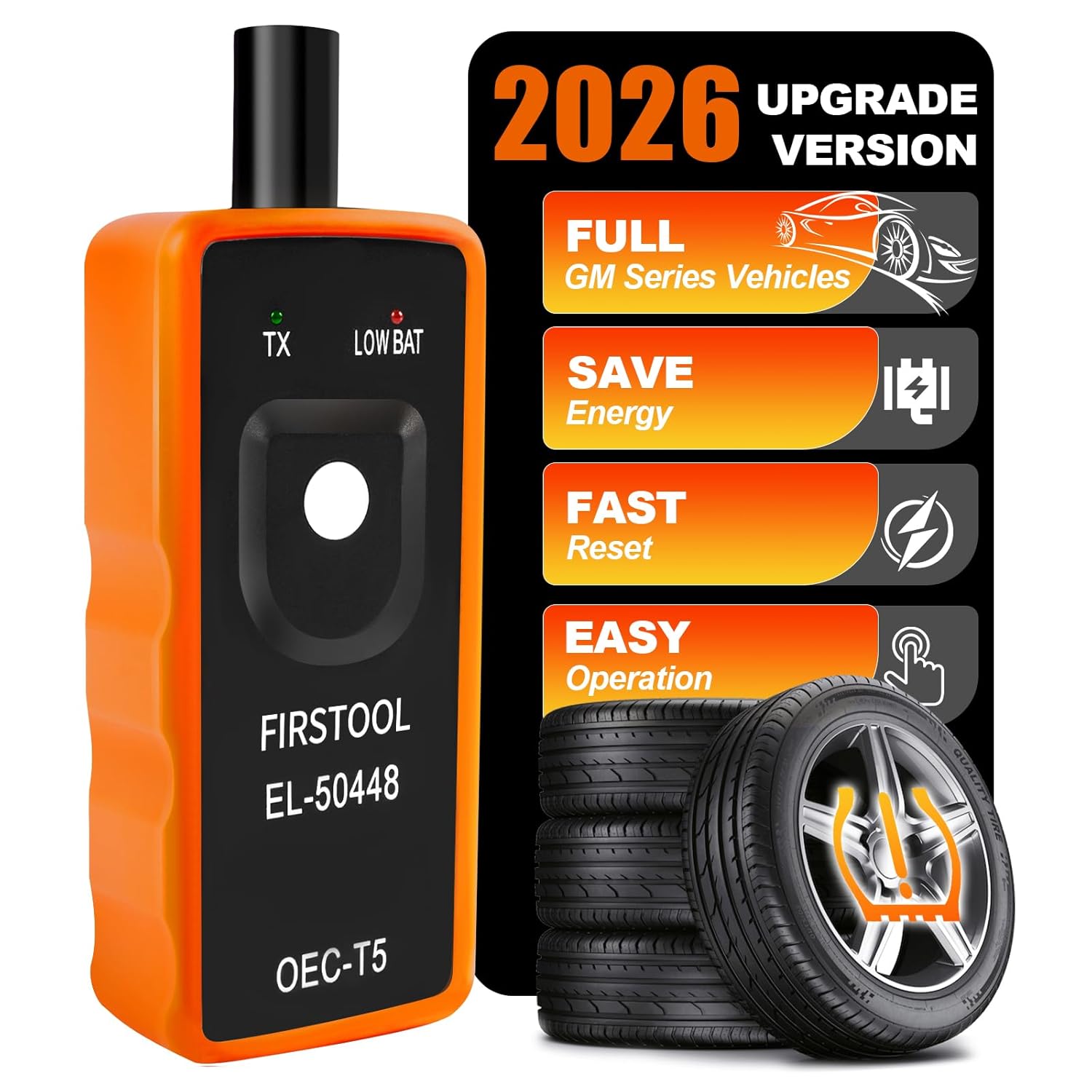
This EL-50448 TPMS relearn tool helps quickly activate and reset tire pressure sensors so your vehicle’s monitoring system stays accurate after tire rotations, sensor replacement, or seasonal tire changes. Designed for many GM-related vehicles and compatible with common 315 and 433 MHz TPMS systems, it offers simple one-button operation and reliable performance for clearing warning lights and relearning sensor positions.
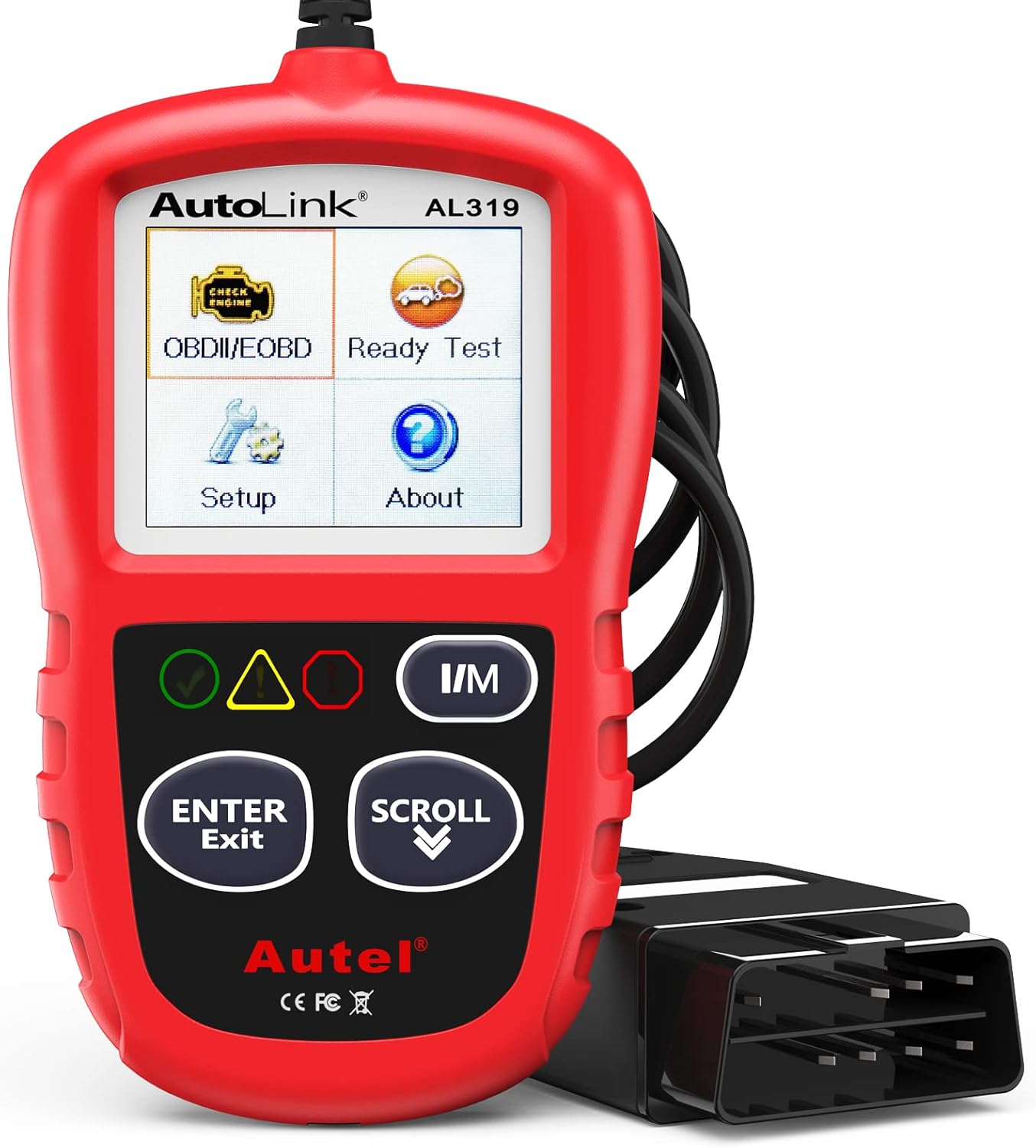
The Autel AL319 is a user-friendly OBD2 scan tool designed to help drivers quickly diagnose check engine light issues and understand vehicle fault codes. It supports reading and clearing DTCs, live data, freeze frame, I/M readiness, and vehicle information, making it a practical choice for DIYers and everyday car owners. With plug-and-play operation, a color display, built-in speaker, and broad vehicle compatibility, it delivers fast, reliable diagnostics without complicated setup.

The ANCEL AD410 helps drivers quickly read and clear engine-related fault codes, view live data, and understand why the check engine light is on before heading to a repair shop. With built-in code definitions, readiness checks, and support for common OBD2 functions, it makes basic diagnostics straightforward for beginners and DIY users. Powered directly from the vehicle and easy to use with no app required, it offers practical value for everyday vehicle troubleshooting.
How Do You Tell Slipping From Shudder or Hesitation?
True automatic-transmission slip usually means engine speed rises but vehicle speed does not increase at the expected rate. The most useful clue is a repeatable RPM flare or loss of pulling power under the same load, temperature, or shift condition.
| What You Feel | More Accurate Label | Best Evidence to Capture |
|---|---|---|
| RPM rises but road speed does not follow | Possible automatic-transmission slip or flare | RPM, vehicle speed, commanded ratio, actual ratio, throttle input, fluid findings, and fault codes |
| A thump or jolt while power still transfers | Harsh engagement or harsh shift | Selected gear, shift event, temperature, mount movement, adaptation data, and software status |
| Rumble-strip vibration under light load | Possible torque-converter shudder, engine misfire, axle, mount, or tire issue | Road speed, engine load, converter-slip data, misfire counts, and whether the symptom stops with more or less throttle |
| Pause, then acceleration from a rolling stop | Hesitation or shift-logic concern, not automatically internal slip | Exact speed, pedal input, prior downshift, calibration status, throttle data, and codes |
| Engine revs steadily during hard acceleration in a Hybrid or PHEV | Can be normal eCVT power delivery | Warning messages, propulsion level, battery state, abnormal noise, vibration, and hybrid-system codes |
| Traction light flashes as the tires spin | Wheelspin and traction-control operation | Road surface, tire condition, wheel-speed data, and whether RPM flare stops on dry pavement |
Hybrid and Plug-in Hybrid RAV4 models need extra care during diagnosis. Their eCVT systems do not make normal stepped shifts, and engine speed can change independently from road speed during normal hybrid operation. Warning messages, reduced propulsion, abnormal vibration, or a new mechanical noise are more useful clues than engine speed alone.
Recognize RAV4 Transmission Slipping: 7 Key Symptoms

One symptom does not prove internal transmission failure. Look for a repeatable pattern and record what the RAV4 was doing when it occurred.
Watch for seven useful warning signs:
- RPM flare: Engine speed rises during acceleration or a gear change without matching vehicle acceleration.
- Delayed engagement: Drive or Reverse takes longer than normal to engage after you move the selector.
- Harsh or unpredictable engagement: The RAV4 bangs, snatches, or lurches when a gear engages.
- Gear hunting or unexpected ratio changes: A conventional automatic repeatedly changes gears or appears to start in an unexpected ratio.
- Warning lights or reduced-power messages: The MIL, master warning light, transmission message, or hybrid-system message appears.
- Fluid evidence: You find a fresh leak, burned odor, incorrect level, or contamination where a safe inspection is possible.
- New noise or vibration: Whining, grinding, shuddering, or vibration appears with a specific speed, load, or operating temperature.
Write down whether the vehicle was cold or warm, the selected gear, road speed, RPM behavior, throttle input, warning lights, and whether the symptom happened after a stop, turn, hill, highway merge, or long drive. A short passenger-recorded video of the tachometer, speedometer, warning message, and road conditions can help a technician reproduce an intermittent concern; the driver should not handle a phone while moving.
Quick Tests: Scan Codes, Fluid Checks & Road-Test Steps
Begin with a full OBD-II scan that includes the engine, transmission, anti-lock brake, all-wheel-drive, and hybrid control systems when equipped. Record confirmed, pending, permanent, history, and manufacturer-specific codes. Note which module stored each code; the same code number can be interpreted differently when the year, market, or powertrain changes.
Warning: Do not road-test a RAV4 that loses propulsion, slips under light throttle, engages unpredictably, leaks heavily, makes grinding noises, or displays a flashing warning light.
- Save scan evidence. Export or photograph codes, status, freeze-frame records, and relevant live data before clearing anything.
- Inspect for external problems. Look for fresh leaks, damaged wiring, loose connectors, collision damage, rodent damage, and obvious mount movement.
- Check service history. Confirm previous fluid work, battery disconnection, software updates, repairs, overheating events, towing use, and the date the symptom began.
- Verify fluid correctly. Check the fluid only by the factory procedure for the exact transmission. Do not use a universal dipstick or overflow-plug method.
- Perform a limited road test only when safe. Use a low-traffic route and light throttle. A passenger or technician should watch scan data so the driver can focus on the road. Stop immediately if engagement worsens or propulsion becomes unpredictable.
- Scan again. Check for new pending codes and compare live data with the symptom time.
Toyota advises owners to follow the vehicle-specific manual for fluid type and level checks. Many newer sealed systems do not have a dipstick. Toyota T-SB-0036-13 describes a WS ATF level procedure for specified U660E/F and U760E/F transmissions, including 2013–2014 RAV4 applications. The bulletin uses a defined fluid-temperature window and model-specific equipment, so do not apply it to another transmission without confirming applicability. See the RAV4 transmission-fluid service guide for maintenance-specific questions.
What Causes a RAV4 Transmission to Slip or Shift Poorly?
The likely cause depends on the powertrain, symptom pattern, codes, fluid evidence, and operating conditions. A transmission code identifies a circuit or detected condition, not automatically the part that must be replaced.
| Symptom Pattern | Possible Area | Evidence That Helps Confirm It |
|---|---|---|
| RPM flare with a fresh leak or incorrect level | Fluid loss, incorrect level, hydraulic pressure loss, or internal wear | Leak location, factory-level check, pressure data, fluid condition, and pan inspection when justified |
| One-ratio or solenoid-related code | Solenoid, wiring, connector, valve body, or mechanical ratio fault | Circuit tests, command-versus-response scan data, resistance checks, hydraulic tests, and debris findings |
| Incorrect speed data or unpredictable shift timing | Input/output speed sensor, wheel-speed signal, wiring, or controller data problem | Live-data comparison, wiring inspection, signal testing, and related codes |
| Shudder under light load | Torque-converter operation, fluid condition, engine misfire, mount, axle, or tire problem | Misfire data, converter slip data, road-speed pattern, mount inspection, and fluid findings |
| Harsh shifting after battery or control work | Adaptation, calibration, incomplete relearn, wiring disturbance, or an unrelated fault | Software status, adaptation values, repair history, codes, and the correct relearn procedure |
| Hybrid warning message or reduced propulsion | Hybrid control, battery, cooling, engine, inverter, electrical, or transaxle fault | Hybrid-capable scan data and Toyota diagnostic procedures rather than conventional shift analysis alone; also review the RAV4 Hybrid System Malfunction guide |
Other possible causes include worn internal clutches, a damaged torque converter, blocked hydraulic passages, internal bearing damage, engine-performance faults, worn mounts, or incompatible prior service. Testing should narrow the list before a shop replaces parts.
Safe DIY Checks and Professional Repair Limits
Safe owner-level work usually ends with documentation, scanning, a visual leak inspection, connector inspection where accessible, and fluid service only when the exact factory procedure supports it. Do not open a sealed transmission or hybrid transaxle based on general online instructions. On a Hybrid or Plug-in Hybrid, do not touch orange high-voltage cables, connectors, the traction battery, or inverter components.
[Products Worth Considering]

The ANCEL AD410 PRO combines engine diagnostics and 12V battery testing in one easy-to-use tool, helping you read and clear check engine codes while checking battery health, cranking, and charging performance. It also provides live data, freeze frame details, and I/M readiness checks to help you diagnose issues faster and prepare for emissions testing. With plug-and-play operation, a clear screen, and broad vehicle compatibility, it is a practical solution for home mechanics and everyday drivers.

The TOPDON BT100 helps you quickly check the health and charge status of 12V lead-acid batteries with clear analytical results, including state of health, state of charge, voltage, and cranking performance. It supports a wide range of battery types and vehicles, making it a practical tool for diagnosing starting and charging issues at home or in the shop. Compact and easy to use, it provides fast, reliable testing without needing to charge the device first.
Can a Drain-and-Fill Fix Transmission Slipping?
A drain-and-fill may help only when testing shows that incorrect, degraded, or contaminated fluid is contributing to the symptom and no major internal damage is present. It cannot repair worn clutches, damaged bearings, broken wiring, failed sensors, or a defective control unit.
Do not order a flush or drain-and-fill solely because slipping began. Diagnose the cause first. When fluid service is justified:
- Confirm the exact fluid specification before opening a drain or fill point.
- Use the factory procedure for vehicle position, temperature, refill method, and final level.
- Measure what was removed when the approved procedure requires it.
- Inspect for leaks, unusual odor, contamination, and excessive metal debris.
- Do not add universal additives unless Toyota service information specifically approves them.
- Recheck for leaks and rescan the vehicle after service.
Should You Clean the Solenoids or Valve Body Yourself?
Solenoid and valve-body work is not a routine cleaning job. Small particles, incorrect bolt torque, a misplaced check ball, a damaged seal, or the wrong gasket can create new hydraulic faults.
A qualified technician should confirm the circuit fault, check wiring and connectors, review command-versus-response data, and follow the repair manual before removing these components. Some repairs also require programming, adaptation resets, or a specified relearn procedure.
Note: Some Toyota ATF level procedures require manufacturer scan data, a defined temperature window, and model-specific filling equipment. Use the procedure for the installed transmission, not a generic online method.
When Does a RAV4 Need a Solenoid, Valve Body, or Rebuild?
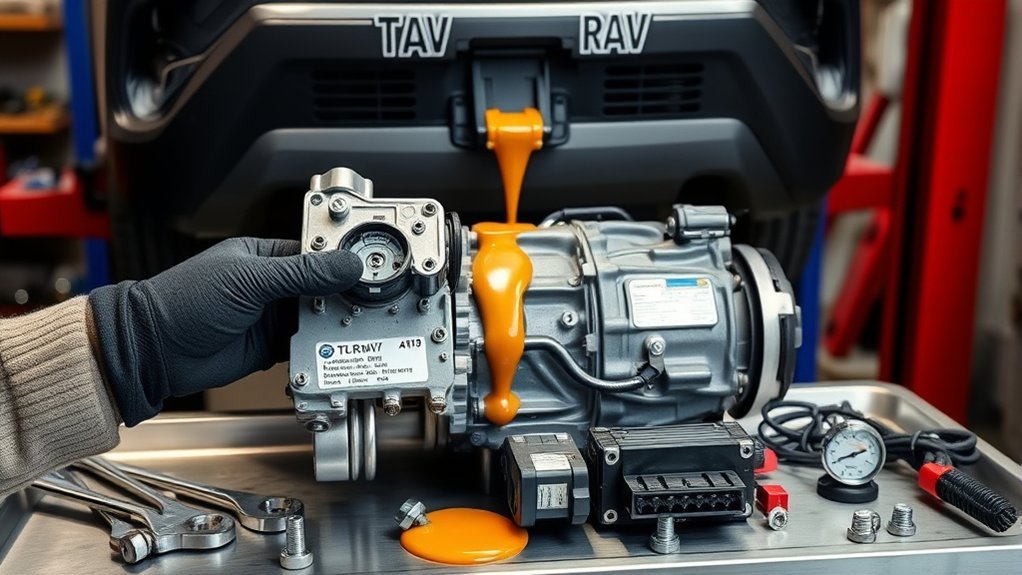
Approve the smallest repair supported by test evidence. A code alone does not prove that the component named in the code description has failed.
| Proposed Repair | Evidence to Request Before Approval |
|---|---|
| Fluid correction or service | Verified incorrect level, wrong fluid, contamination, service need, or leak repair plus the correct refill procedure |
| Sensor or wiring repair | Signal fault, circuit test failure, connector damage, wiring damage, or live-data disagreement |
| Shift solenoid replacement | Circuit and command tests that isolate the solenoid rather than the wiring, controller, hydraulic passage, or mechanical fault |
| Valve-body repair or replacement | Hydraulic-test results, repeatable shift data, sticking-valve evidence, contamination, or multiple related control faults |
| ECM, TCM, or software work | Verified power, ground, communication, wiring, calibration, and applicable service-information findings |
| Transmission or transaxle rebuild/replacement | Internal mechanical failure, excessive debris, failed pressure or ratio tests, severe bearing noise, repeated loss of drive, or damage that targeted repair cannot correct |
Ask for an itemized estimate showing diagnosis, parts, labor, fluid, programming, relearn work, taxes, core charges, and warranty terms. For a rebuild or replacement recommendation, ask whether the estimate is based on pressure or ratio-test failure, debris, bearing noise, repeated loss of drive, or teardown findings. Repair cost varies widely by model year, powertrain, location, and failure type, so an unsupported universal price range would not help you make a reliable decision.
[Products Worth Considering]

Perfect Replacement: Easy to install, no need for complex tools, easy to use, can directly replace old or damaged ones

✔️Replaces OE Number: U140 U240 U241 Transmission Valve Body. [Note]: Make sure same part number U140 U240 U241 as your original valve body.

Product Name: U660E U660 Transmission Valve Body With Solenoids
When to Stop Driving and Call a Technician
| Tow or Stop Now | Arrange Diagnosis Soon |
|---|---|
|
|
Call a Toyota dealer or qualified transmission or hybrid specialist if you cannot confirm the fluid level, smell burned fluid, find metal debris, or see recurring codes. Describe the symptoms before driving to the shop and ask whether towing is safer.
What Dealers Check: Software, Campaigns, TSBs, and Programming
A Toyota dealer can check the VIN for open safety recalls and service campaigns. It can also review warranty status, applicable Technical Service Bulletins, calibration files, transmission or hybrid data, and adaptation values. Ask the service adviser to list the bulletin number, the applicability criteria that match your RAV4, and the evidence that the stated condition was reproduced.
A recall or service campaign may provide a specified inspection or repair. A TSB is diagnostic or repair information for technicians and does not automatically mean the repair is free. Ask separately about recall coverage, campaign coverage, warranty, extended coverage, goodwill assistance, and TSB applicability.
A technician may update software, reset learned values, or perform a relearn only when Toyota service information calls for that procedure. The vehicle should be rescanned and road-tested after the work to confirm that the original symptom changed.
If the problem continues, ask the dealer to document codes, freeze-frame data, fluid findings, software versions, adaptation values, test results, and every repeat visit.
Preventive Maintenance Plan to Avoid Future Shift Problems
Use the maintenance guide for your exact model year, powertrain, market, and driving conditions. Do not apply a universal fluid-change interval or fluid specification to every RAV4, and do not treat a symptom-led repair as routine maintenance.
- Repair leaks before the fluid level falls enough to affect operation.
- Use only the specified fluid and an approved level procedure.
- Do not mix fluids or add unapproved transmission additives.
- Scan new warning lights promptly and save diagnostic evidence.
- Keep fluid-service, software-update, and repair records.
- Tell the technician about towing, heavy loads, overheating, flood exposure, collision repairs, and electrical work.
- Ask for transmission, mount, axle, wiring, connector, and cooling-system inspection when symptoms overlap.
Early documentation and correct diagnosis give you a better chance of fixing a control, wiring, leak, or service problem before it develops into major internal damage.
Frequently Asked Questions
What Does RAV4 Transmission Slipping Feel Like?
In a conventional automatic RAV4, slipping often feels like the engine revs rise without matching acceleration, especially during a gear change or under load. Delayed Drive or Reverse engagement can also occur. A hybrid eCVT behaves differently, so do not diagnose it from engine speed alone.
Can Low Transmission Fluid Cause a RAV4 to Slip?
Low fluid can reduce hydraulic pressure in a conventional automatic transmission and contribute to delayed engagement or slipping. However, a low level usually means a leak or an incorrect previous service. Verify the level only by the approved procedure for the installed transmission.
Will a Transmission Fluid Change Fix Slipping?
It may help when incorrect or degraded fluid contributes to the problem and major internal damage is absent. It will not repair worn clutches, damaged bearings, failed wiring, bad sensors, or a defective controller. Diagnose the cause before approving a fluid exchange.
Can My Vehicle Warranty or a Recall Cover a Transmission Issue?
A warranty, service campaign, recall, extended program, or goodwill decision may cover some repairs. Give the dealer your VIN and ask for separate checks of recall, campaign, warranty, TSB, and other coverage information.
Will Aftermarket Fluids or Additives Harm My RAV4 Transmission?
An incompatible fluid or additive can affect lubrication, hydraulic control, shift quality, or component life. Use only the fluid specification approved for your exact vehicle and avoid additives unless Toyota service information specifically permits them.
Can Harsh Shifts Come From Engine Problems, Not the Transmission?
Yes. Engine misfires, throttle-signal problems, worn mounts, axle faults, wheel-speed errors, and other control problems can mimic transmission trouble. Scan all related systems before approving transmission parts.
How Long After a Software Update Should I Expect Improvements?
The result depends on the repair procedure and whether a relearn is required. Some changes are immediate, while others need specified drive cycles. If the original symptom remains, ask the technician to rescan the vehicle and compare new data with the pre-repair records.
Is It Safe to Drive to the Dealer With a Slipping Transmission?
Do not drive if the RAV4 loses propulsion, slips under light throttle, engages unpredictably, leaks heavily, makes grinding noises, or displays a flashing warning light. Call the dealer, describe the symptoms, and ask whether the vehicle should be towed.
Is 2019 RAV4 Low-Speed Hesitation the Same as Transmission Slipping?
Not necessarily. Toyota T-SB-0107-19 describes a narrow 2019 RAV4 hesitation pattern at 6 mph or below, immediately after a 3–1 downshift, with less than 40% accelerator input. That condition called for an ECM calibration update when all applicability checks were met. An RPM flare at higher speed or under load needs a separate slip diagnosis.
Can a RAV4 Hybrid eCVT Slip Like a Belt CVT?
The RAV4 Hybrid eCVT is not a belt-and-pulley CVT and does not make normal stepped shifts. Engine RPM can rise and hold during acceleration without proving a transaxle fault. Diagnose warning messages, reduced propulsion, abnormal vibration, new mechanical noise, cooling problems, and hybrid-system codes instead of judging engine speed alone.
How Much Does RAV4 Transmission Repair Cost?
There is no reliable universal price because the repair may range from wiring or calibration work to a sensor, leak repair, torque converter, valve body, or complete transaxle. Ask for an itemized estimate and the test evidence supporting each line. Compare warranty length, programming and fluid charges, core charges, and whether the quote uses a new, remanufactured, rebuilt, or used unit.
Safety Disclaimer: This article provides general information and does not replace the owner’s manual, Toyota repair information, or diagnosis by a qualified technician. Stop driving and seek professional help when a RAV4 loses propulsion, engages unpredictably, leaks heavily, makes mechanical noises, or displays urgent warning messages.
Conclusion
Start a RAV4 transmission-slipping diagnosis by identifying the exact powertrain and labeling the symptom correctly: slip, harsh shift, shudder, hesitation, wheelspin, or abnormal hybrid operation. Save codes and freeze-frame data, inspect for visible leaks, and check fluid only through the correct factory procedure.
Take the model year, VIN, code report, symptom notes, service history, and any safe passenger-recorded video to a Toyota dealer or qualified transmission or hybrid specialist. Do not approve a flush, solenoid, valve body, controller, torque converter, or rebuild without evidence that supports the repair. If the RAV4 loses drive or becomes unpredictable in traffic, stop and arrange a tow.
References
- How Often Should You Change Your Transmission Fluid? — Toyota, accessed July 2026
- Look Up Safety Recalls and Service Campaigns by VIN — Toyota, accessed July 2026
- Check for Vehicle Recalls — National Highway Traffic Safety Administration, accessed July 2026
- WS ATF Level Adjustment for U660E/F and U760E/F Transmissions — Toyota Technical Service Bulletin T-SB-0036-13 Rev1
- Harsh Shift and/or MIL “ON” With DTC P0750, P0753, P0755, P0758 and/or P1760 — TSBSearch mirror of Toyota Technical Service Bulletin T-SB-0156-10, 2001–2003 RAV4
- Torque Converter Flex Lock-up Shudder — Toyota Technical Service Bulletin T-SB-0023-15 Rev2, 2013–2015 RAV4
- Hesitation on Acceleration From a Slow Roll or Rolling Stop — Toyota Technical Service Bulletin T-SB-0107-19, 2019 RAV4
- All-New 2019 Toyota RAV4 Breaks the Mold for the Segment It Created — Toyota USA Newsroom
- The Next Adventure Begins: 2026 RAV4 Arrives This Winter — Toyota USA Newsroom