If you drive a RAV4 where temperatures drop below freezing or you face regular snow and ice, fit dedicated 3PMSF winter tires—they materially shorten braking distances and improve traction versus all‑season rubber. AWD helps get you moving but won’t improve tire grip on ice, so winter compounds with high sipe density are critical for braking and lateral control. Expect higher upfront cost and seasonal mounting, but safer winter performance pays off; keep going to see specific tire options and fitment tips.
Quick Decision: Which Tire Should My RAV4 Use This Winter?

Looking for a quick, safety-first answer? You should choose snow tires for ideal tire performance and winter readiness when temperatures regularly drop below freezing or roads ice over. All-season tires on a RAV4 work in mild winter conditions, but they lose pliability and grip in severe cold. Snow-specific models—like Nokian WR G4 SUV or Bridgestone Blizzaks—retain flexibility, bite ice, and channel slush, producing measurably shorter stopping distances and steadier handling. Look for the Three-Peak Mountain Snowflake (3PMSF) mark: it certifies superior snow capability versus all-season designs. Drivers report greater control and confidence with dedicated winter rubber, which translates into fewer recoveries and lower crash risk during freeze-thaw cycles. Think of snow tires as inexpensive insurance: they cost up front but directly improve braking, traction, and vehicle control when conditions demand it. If you value autonomy and safety in winter, equip your RAV4 with certified snow tires to enhance winter readiness.
How Severe Is Your Winter Where You Live?
How severe is your local winter, and what specific patterns should you plan for? You should quantify severity by average snowfall, frequency of freeze-thaw cycles, and sustained low temperatures. If you live in the Upper Midwest or other zones with consistent heavy snowfall (10+ inches) and prolonged sub-45°F stretches, snow tires materially improve traction, braking, and cornering. In milder zones with occasional flurries or short icy snaps, modern all-season tires may suffice for urban winter driving, though performance degrades as temperatures fall. For rural snowfall scenarios where roads are plowed less frequently and ice accumulates in drifts, prioritize specialized winter compounds and tread designs. Measure local patterns: snow depth, number of freeze-thaw events, and typical road treatment response times. Choose tires that match those metrics to reduce risk. You’re not surrendering mobility—you’re reclaiming it by matching tire capability to climate realities.
Can RAV4 AWD Replace Snow Tires?
Although the RAV4’s AWD helps you maintain traction and control during acceleration and cornering, it doesn’t substitute for dedicated snow tires when roads are snowy or icy. You should treat AWD as a stability and traction aid, not a cure for poor contact between tire and surface. AWD limitations appear in braking distances and in low-friction maneuvers; AWD routes power but doesn’t increase the rubber’s grip.
Snow tires change tire performance by using compound and tread designed for cold, packed snow, and ice—attributes that materially shorten stopping distances and improve lateral control. Owners who switch report quantifiable gains in handling and safety, especially in severe conditions where snow tires function as cheap insurance. If you value freedom of movement and want to reduce risk, prioritize winter-specific tires over reliance on AWD alone. Make decisions based on measured tire performance data and the severity of local winters.
Why Winter Compounds and Sipes Matter
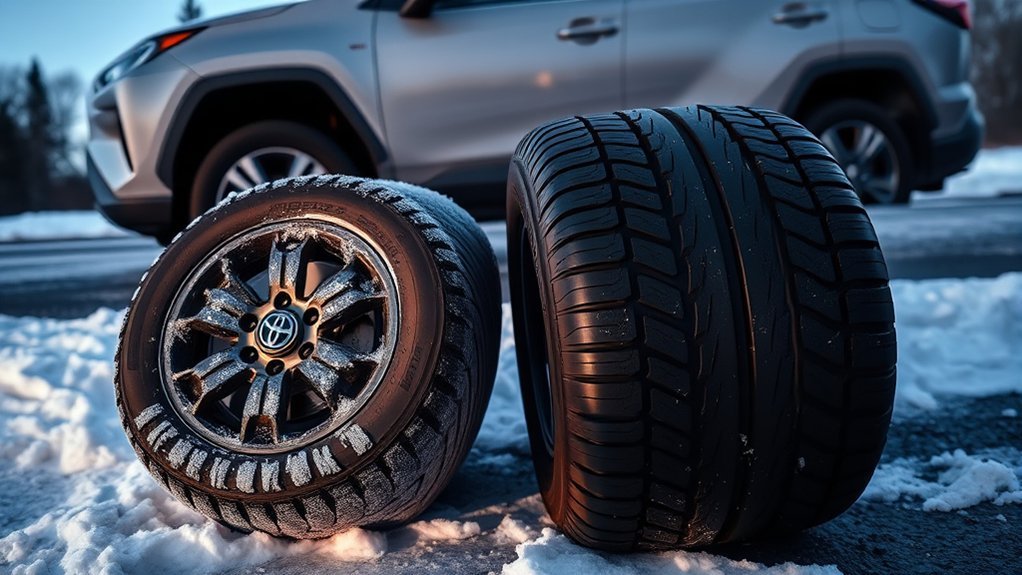
When temperatures drop, you’ll notice winter rubber stays pliable where all-season compounds can harden, preserving traction on ice and packed snow. The high density of sipes in winter tread creates many additional biting edges that improve lateral grip and shorten braking distances on slippery surfaces. For safe RAV4 winter operation, compound flexibility and effective sipes are thus critical design features, especially compared with standard all-season tread.
Winter Rubber Flexibility
Because winter temperatures make rubber compounds stiff, your choice of tire compound directly affects grip and braking on snow and ice: winter tires use specialized, low-temperature elastomers that stay flexible below freezing, preserving contact patch conformity and traction while all-season compounds tend to harden and lose bite. You’ll notice improved tire performance in cold weather because the winter compound deforms to microtexture in ice and compacts snow in the tread, increasing mechanical interlock. That flexibility reduces braking distance and lateral slip, essential for liberation on icy roads. Maintain proper winter tire tread depth and 3PMSF-rated selection to guarantee designed behavior. Prioritize these materials for predictable handling; hardening compounds and shallow tread compromise safety and undermine confident mobility in severe winter conditions.
Tread Sipes Benefit
If you want predictable traction in freezing conditions, choose tires with dense, fine tread sipes and a low-temperature compound that stay pliable and bite into ice and packed snow. You’ll notice sipe design directly alters tire performance: winter tires have many more, deeper sipes than all-season models, creating additional biting edges for ice and packed snow. The flexible rubber preserves those edges at subfreezing temperatures, whereas all-season compounds harden and lose grip. Sipes also evacuate snow and slush from the contact patch, restoring road contact and predictable steering response. Look for the 3PMSF symbol as proof the tread geometry and compound meet severe-snow requirements. For safe, liberated winter driving in your RAV4, prioritize purpose-built sipe design and compound.
All‑Weather & 3PMSF Tires for RAV4
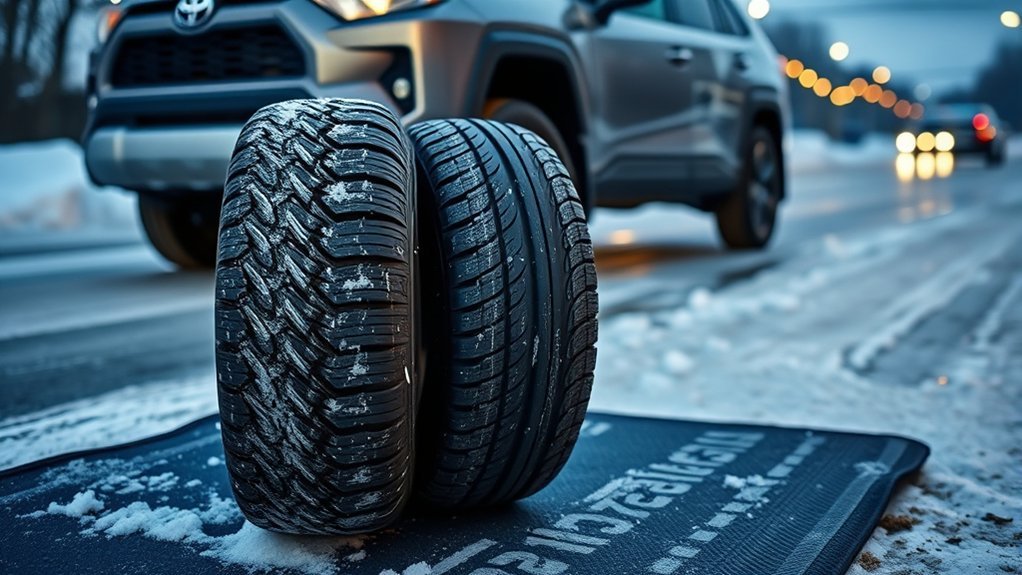
When you choose all‑weather tires bearing the 3PMSF symbol, you’re selecting rubber that’s been tested to meet defined winter traction standards for snow performance. Those compounds and tread patterns retain flexibility in cold temperatures and evacuate snow and slush to preserve grip, giving you reliable traction in winter without sacrificing wet‑season handling. For RAV4 drivers in mixed climates, 3PMSF‑rated all‑weather tires offer year‑round safety benefits and can remove the need for seasonal tire swaps.
3PMSF Certification Meaning
The Three-Peak Mountain Snowflake (3PMSF) certification identifies tires that have passed standardized tests for severe snow traction, so you’ll get verified performance for acceleration, braking, and lateral grip in winter conditions. The 3PMSF standards measure a tire’s controlled traction relative to a reference, ensuring objective tire performance metrics rather than marketing claims. For your RAV4, that means quantifiable improvements in hazardous winter maneuvers and a clear safety baseline.
- Choose 3PMSF-marked all-weather tires for combined-season versatility.
- Prioritize tread compound and siping that meet certified criteria.
- Verify lab and field test alignment for consistent on-road results.
You’ll liberate yourself from uncertainty by selecting certified tires that deliver predictable, repeatable winter safety.
Year‑Round Traction Benefits
One clear advantage of 3PMSF-rated all‑weather tires for your RAV4 is consistent traction across temperature extremes, as their cold‑flex compounds and aggressive siping preserve grip on ice and packed snow without sacrificing wet or dry handling. You gain year round performance without swapping rubber each season: deeper grooves and biting edges channel snow and slush, maintain contact patch stability, and shorten braking distances on icy surfaces. That predictable behavior increases control, letting you drive with confidence and autonomy in mixed climates. Proper selection and maintenance also support tire longevity by minimizing uneven wear caused by temperature-induced hardening. Choose 3PMSF all‑weather tires to balance liberated mobility with quantifiable safety and sustained service life.
Traction, Braking, Handling: Snow vs All‑Season
Because winter conditions change traction in seconds, you should choose tires that maintain grip, shorten braking distances, and preserve predictable handling; purpose-built snow tires use softer rubber compounds and aggressive tread geometry to stay flexible in cold temperatures, deliver up to ~30% shorter stopping distances on ice versus all‑season tires, and provide deeper grooves and more biting edges for reliable control in deep snow. You’ll notice measurable improvements in traction performance, braking efficiency, and handling stability when you fit snow tires to your RAV4. All‑season tires are competent in mild conditions but lose edge in severe winter weather, reducing your control margin.
- Prioritize tires that maximize grip in subfreezing temps.
- Seek tread designs that evacuate packed snow and resist hydroplaning.
- Consider compound resilience to balance winter performance with tire longevity.
Choose based on objective metrics and your need for freedom to move safely; snow tires expand your operational envelope and enhance confidence on icy, snowy roads.
Best Tires for RAV4: Safety, Comfort, Off‑Road, Value
While choosing tires for your RAV4, prioritize safety metrics first—grip in cold temperatures, predictable braking distances, and stable handling under load—because these factors directly affect crash risk and control margins. You’ll favor dedicated snow tires (Nokian WR G4 SUV, Bridgestone Blizzak) for peak winter safety; they deliver superior tire performance on ice and deep snow compared with all-season rubber. If you want liberation from seasonal worry, fit snow tires during cold months for consistent control and confidence.
| Purpose | Recommended Type |
|---|---|
| Winter safety and ice control | Dedicated snow tires |
| Comfort and daily driving | Quality all-season or grand-touring tires |
| Off-road versatility and value | All-terrain (Pirelli Scorpion AT+, Cooper AT3) |
Choose based on prioritized mission: if winter safety is primary, accept the modest investment for markedly better traction and control. For mixed needs, combine seasonal swaps with reputable all-terrain or all-season options to balance comfort, off-road ability, and value.
Cost, Mounting, Storage, and Lifespan
Budget for more than the sticker price: snow tires cost more up front than comparable all-seasons, and you’ll also face added mounting and balancing charges each swap unless you buy a dedicated wheel set to simplify seasonal changes. You should weigh cost considerations against reduced crash risk and repair savings in winter. Installation options include seasonal mounting/balancing at a shop or investing in a second wheel set to cut labor and turnaround time.
Budget beyond sticker price: snow tires cost more and may add mounting fees unless you buy a dedicated wheel set.
Store tires correctly to maximize tire longevity. Follow storage tips: clean, dry, and bag each tire; label position; and keep them upright in a cool, dark area away from ozone sources.
- Choose a reputable shop for mounting and torque checks to preserve safety and alignment.
- Consider the marginal cost of a wheel set versus repeated service fees.
- Rotate and inspect tires before and after the season to detect wear or damage.
Snow tires typically reach 20–30k miles; all-seasons often exceed 50k with disciplined maintenance and rotation.
Decision Checklist: Pick the Right Winter Tire for Your RAV4
Which winter tire is right for your RAV4 depends on your local winter severity, driving priorities, and budget constraints. Start by classifying your climate: frequent heavy snowfall demands dedicated snow tires (e.g., Nokian WR G4 SUV) for superior traction; mild winters may allow all-season tires but expect reduced control in severe conditions. Check for the Three-Peak Mountain Snowflake (3PMSF) symbol—it’s a measurable safety benchmark; beware snow tire myths that equate M+S labeling with equivalent performance. If you value off-road capability, consider all-terrain options like Michelin LTX A/T2, but prioritize snow-rated rubber for icy roads.
Evaluate driving patterns: daily commutes, highway speeds, or backroad access dictate tread choice and compound. Factor cost versus lifespan and plan mounting/storage logistics. Implement tire maintenance tips: monitor tread depth, maintain correct pressures for temperature shifts, rotate regularly, and replace when compound hardens. Make a deliberate choice that maximizes control, reduces risk, and preserves your mobility.
Frequently Asked Questions
Can You Put Snow Tires on a RAV4?
Yes—you can fit snow tires on a RAV4. You’ll gain snow tire benefits like superior traction and reduced stopping distances; they outperform all season performance in ice and deep snow, enhancing control and winter safety.
Conclusion
If you drive in consistently severe winters, fit dedicated snow tires; if winters are mild and icy days are rare, high‑quality all‑season or all‑weather 3PMSF tires can suffice. Remember winter rubber compounds and sipes improve grip and braking. For example, a colleague swapped from all‑season to winter tires for a Quebec winter and cut stopping distance on packed snow by nearly 30%, avoiding a potential collision. Prioritize safety, follow load/rpm specs, and change tires seasonally.