
Your Toyota RAV4’s braking feel depends on which RAV4 you drive. Gas-only RAV4 models use conventional friction brakes. RAV4 Hybrid and RAV4 Prime/Plug-in Hybrid models add regenerative braking, which uses the electric motor as a generator during coasting and braking to send some energy back to the traction battery. That makes normal slowing more efficient and can reduce brake wear, but it does not replace the hydraulic brake system.
Quick Answer
RAV4 regenerative braking recovers some energy during normal deceleration, while traditional friction brakes turn motion into heat. Regen is best for gentle slowing, stop-and-go driving, and downhill sections. Friction brakes still handle hard stops, very low-speed stopping, traction-control events, and any situation where the battery cannot accept more charge.
Key Takeaways
- Regen is not magic range. It recovers energy that would otherwise be wasted, but the amount depends on speed, traffic, battery charge, temperature, terrain, and driving style.
- Friction brakes are still essential. They provide predictable stopping power during emergency braking, near-stopped speeds, and when regen is limited.
- Smooth driving helps most. Early coasting, gentle braking, and steady acceleration give the hybrid system more chances to recover energy.
- Brake service still matters. Pads may last longer, but rotors, calipers, brake fluid, lines, and parking-brake parts still need inspection.
How RAV4 Regenerative Braking Works

In a RAV4 Hybrid or RAV4 Prime, regenerative braking happens when the wheels help turn the electric motor-generator during coasting or braking. Toyota describes this process as the wheels operating the electric motor as a power generator so the hybrid battery, also called the traction battery, can be charged. Toyota’s RAV4 Hybrid owner information explains the basic system behavior.
Here is the simple version: when the vehicle slows, some of its motion can be converted into electricity instead of being lost as heat. The RAV4’s hybrid control system blends this regenerative braking with hydraulic friction braking so the pedal feels normal and the vehicle still stops safely.
That blend is important. The driver does not usually choose “regen brakes” or “friction brakes” separately. The vehicle decides how much slowing can come from the motor-generator and how much must come from the brake pads and rotors.
Note: Regenerative braking applies to RAV4 Hybrid and RAV4 Prime/Plug-in Hybrid models. A gas-only RAV4 does not have a traction battery and electric drive system for regenerative braking.
How Much Range RAV4 Regen Actually Returns
There is no single honest mileage number for “how much range” RAV4 regenerative braking returns. Toyota does not publish a fixed RAV4-specific recovery percentage for everyday driving, and real-world results change from trip to trip.
The U.S. Department of Energy and EPA explain that hybrids use regenerative braking to recapture energy normally lost during coasting or braking. For electric vehicles in general, FuelEconomy.gov notes that regenerative braking helps most in stop-and-go city driving because there are more braking events. Its energy-flow examples also show why regen has less benefit on steady highway trips with little braking.
The biggest RAV4 regen gains usually come from frequent, gentle slowdowns—not from late, hard braking.
Typical City Range Gain
In city driving, regenerative braking can help a RAV4 Hybrid or RAV4 Prime use less fuel or electricity because the vehicle slows often. Every red light, traffic queue, downhill section, and gentle coast gives the system another chance to recover energy.
That does not mean regen adds the same number of miles every time. A short urban trip with smooth stops may show a noticeable efficiency benefit. A long highway trip with few slowdowns may show very little. Cold weather, heavy cabin heat use, full battery charge, steep grades, cargo weight, tire pressure, and driving speed all affect the result.
Factors Affecting Recovery
Regenerative braking works best when the vehicle has enough speed, enough time to slow gradually, and enough battery capacity to accept charge. The main limits are practical, not mysterious:
- Battery state of charge: If the traction battery is already near full, the system may reduce regen and rely more on friction brakes.
- Temperature: Cold battery conditions can limit how quickly the battery accepts charge, which can reduce regenerative capture.
- Traffic pattern: Frequent moderate deceleration gives the system more chances to recover energy than sudden stops or steady highway cruising.
- Brake demand: The harder and later you brake, the more the vehicle must use conventional hydraulic braking to deliver immediate stopping force.
- Speed: Regeneration becomes less useful as the vehicle approaches a stop, so the friction brakes finish the job.
How RAV4 Regen Differs From Friction Braking
Regenerative braking and friction braking both slow the vehicle, but they handle energy differently. Regen uses the electric motor-generator to create resistance and send some electricity back to the traction battery. Friction brakes press pads against rotors and turn motion into heat.
| Feature | Regenerative Braking | Traditional Friction Braking |
|---|---|---|
| Main job | Recovers some energy while slowing | Provides strong, predictable stopping force |
| Energy result | Some motion becomes electricity | Motion becomes heat at the brakes |
| Best use | Gentle slowing, coasting, city traffic, downhill grades | Emergency stops, low-speed final stopping, slippery-road control events |
| Wear impact | Can reduce pad and rotor use | Pads and rotors wear with use |
| Limitations | Limited by battery charge, temperature, speed, traction, and braking demand | Creates heat and brake dust, but remains necessary for safety |
The two systems are not rivals. In normal driving, they work together. The benefit of a RAV4 hybrid braking system is that it can recover energy when conditions allow, then smoothly add friction braking when you need more stopping power.
Driving Tips to Maximize Regen in Your RAV4
You do not need special techniques to make regenerative braking work, but your driving style can help the system recover more energy. The goal is simple: give the RAV4 time to slow smoothly instead of forcing sudden stops.
- Look farther ahead. If you see a red light, stopped traffic, or a downhill grade early, ease off the accelerator sooner.
- Brake gently when traffic allows. Light to moderate brake pressure gives the system more room to blend in regenerative braking before relying heavily on friction brakes.
- Avoid racing from stop to stop. Hard acceleration followed by hard braking wastes energy that regen cannot fully recover.
- Use Eco driving habits in town. Smooth throttle inputs, proper tire pressure, and reduced unnecessary cargo all support better hybrid efficiency.
- Use downhill control wisely. On long descents, follow your owner’s manual guidance for drive modes and shift positions, and do not ride the brake pedal.
Pro Tip: The most efficient stop is usually the one you planned early. Lift off the accelerator sooner, leave extra space, and let the hybrid system do more of the slowing before the friction brakes are needed.
Maintenance, Brake Wear, and Battery Effects Over Time
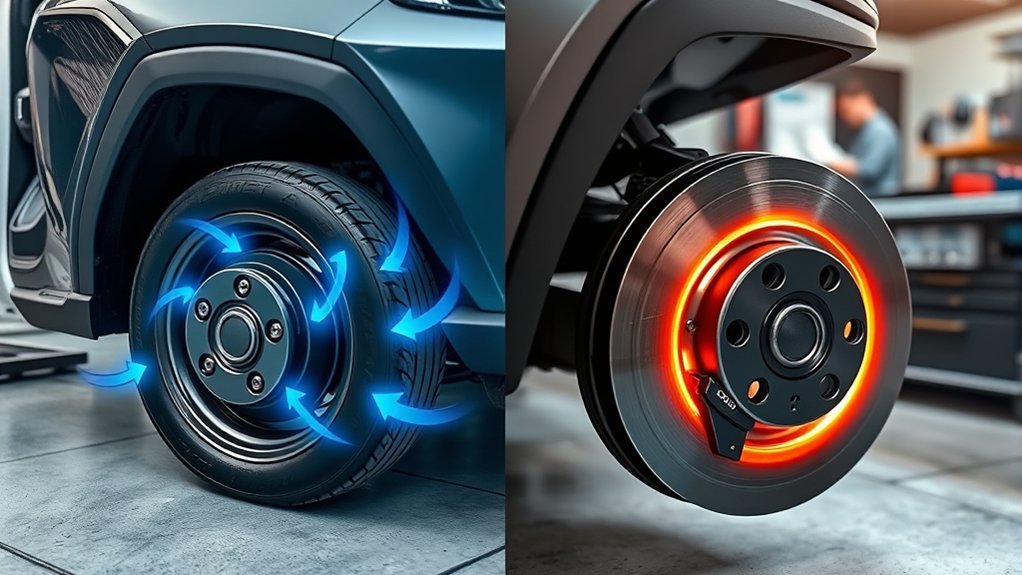
Regenerative braking can reduce how often the brake pads and rotors do the heavy work, especially in city driving. That can mean less brake wear than a similar gas-only vehicle. Still, “less wear” does not mean “no maintenance.”
Brake parts can age even when they are not used hard. Rotors can corrode, calipers can stick, slide pins can dry out, brake fluid can absorb moisture, and parking-brake components still need attention. Follow the maintenance schedule in your owner’s manual and have the braking system inspected if you notice noise, vibration, pulling, longer stopping distance, warning lights, or a sudden change in pedal feel.
The traction battery also affects regen performance. As conditions change, the battery may accept more or less charge. A very full battery, very cold battery, or system protection strategy can reduce regenerative braking. That is normal, and the friction brakes are there to maintain stopping performance.
Warning: Never coast in neutral to “save energy.” In many hybrids, neutral can prevent the system from charging the traction battery during deceleration. Keep the vehicle in the proper drive range and follow Toyota’s owner’s manual.
When to Rely on Regen: Choosing the Right Braking Approach
Use regenerative braking as a normal efficiency tool, not as your only braking plan. In daily driving, the RAV4’s blended braking system will decide how to divide work between regen and friction brakes. Your job is to drive smoothly and leave enough space.
When Regen Is Effective
Regenerative braking is most useful when you can slow gradually. Good examples include city traffic, rolling up to a red light, descending a moderate hill, slowing for a turn, or easing down from cruising speed with plenty of distance.
These situations let the motor-generator provide deceleration without asking the friction brakes to handle everything at once. The result is smoother driving, better energy recovery, and often less wear on brake pads and rotors.
When Friction Brakes Are Needed
Friction brakes are still required for safety and control. They take over or add braking force whenever regenerative braking is not enough.
| Situation | What Happens |
|---|---|
| Emergency stop | Hydraulic brakes provide the high stopping force needed |
| Very low speed | Friction brakes finish the stop |
| Battery near full | Regen may be reduced because the battery has limited room for more charge |
| Slippery road or stability-control event | The brake-control system prioritizes traction and vehicle stability |
| Hard braking | The system blends in more friction braking for immediate deceleration |
Balancing Regen and Safety
The right approach is to let regen help when conditions are calm and predictable, while trusting the friction brakes whenever stopping demand rises. Do not chase maximum regeneration at the expense of safe following distance or smooth traffic flow.
- Anticipate stops: Look ahead and begin slowing early when it is safe.
- Keep space: More following distance gives you more time for gentle deceleration.
- Brake normally in emergencies: Press the brake pedal firmly when you need to stop quickly. Do not try to “save regen” during a safety event.
Common Myths About RAV4 Regenerative Braking
Myth: Regen Means You Never Use Brake Pads
False. Regenerative braking can reduce friction-brake use, but your pads and rotors still work every time the system needs more stopping power than regen can provide. They also finish low-speed stops.
Myth: Hard Braking Recovers More Energy
Not usually. Hard braking asks for fast, high-force deceleration. The vehicle may have to use more friction braking, which turns energy into heat. Smooth, planned braking is usually better for energy recovery.
Myth: A Full Battery Means Stronger Regen
False. A battery needs room to accept recovered energy. If the traction battery is near full, the system may reduce regen and rely more on conventional braking.
Myth: Regen Replaces Safe Driving
False. Regenerative braking is an efficiency feature. It does not change the need for safe speed, proper tire condition, enough following distance, and regular brake service.
Frequently Asked Questions
Is regenerative braking better than traditional braking?
Regenerative braking is better for efficiency during normal, gentle slowing because it can recover some energy. Traditional friction braking is better for immediate stopping force and remains essential for emergency stops, very low-speed stops, and situations where regen is limited.
What are the downsides of regenerative braking?
The main downsides are variable braking feel, reduced effectiveness when the traction battery is full or cold, limited benefit at very low speeds, and less usefulness during hard braking. The RAV4 solves this by blending regenerative braking with hydraulic friction brakes.
Does RAV4 regenerative braking charge the battery?
Yes. In RAV4 Hybrid and RAV4 Prime models, the motor-generator can charge the traction battery during braking or coasting. It does not replace plug-in charging for a RAV4 Prime, but it helps recover some energy while driving.
Do RAV4 brake pads last longer because of regen?
They can last longer because regenerative braking reduces how often the pads and rotors handle the full slowing load. Actual brake life still depends on driving style, climate, terrain, road salt, maintenance, and inspection habits.
Why does my RAV4 sometimes feel like it has less regen?
Regen can feel weaker when the battery is near full, the battery is cold, the road is slippery, the vehicle is nearly stopped, or the system needs more friction braking for safety. A sudden or severe change in braking feel should be inspected by a qualified technician.
Conclusion
RAV4 regenerative braking is best understood as an efficiency helper, not a replacement for traditional brakes. In RAV4 Hybrid and RAV4 Prime models, it recovers some energy during normal slowing and can reduce brake wear. Traditional friction brakes still provide the strong, predictable stopping force needed for hard stops, low-speed stopping, and safety-control situations.
To get the most from the system, drive smoothly, leave space, coast early, brake gently when traffic allows, and keep up with scheduled brake maintenance. That balance gives you the real benefit of RAV4 regenerative braking without sacrificing safety.
Sources
- Toyota Owners: 2024 RAV4 Hybrid System Features — confirms Toyota’s description of the hybrid system and regenerative braking behavior.
- Toyota Owners: 2024 RAV4 Prime Plug-in Hybrid Driving Tips — supports economical plug-in hybrid driving guidance and mode awareness.
- FuelEconomy.gov: How Hybrids Work — explains how hybrid regenerative braking recaptures energy normally lost during braking or coasting.
- FuelEconomy.gov: Where the Energy Goes in Electric Cars — supports the explanation that regenerative braking helps most in stop-and-go driving and less on steady highway trips.
- Alternative Fuels Data Center: Hybrid Electric Vehicles — provides U.S. Department of Energy background on hybrid vehicles and regenerative braking.