Presta and Schrader valves have distinct designs and performance traits. Presta valves, thinner and longer, handle higher pressures and offer better sealing, ideal for competitive cycling. However, they require specific pumps. Schrader valves, wider and simpler, are more user-friendly, compatible with various pumps, but may leak more and lack precise pressure control. Understanding these differences helps you choose the best option for your bike. Explore further to discover more about inflation techniques and maintenance tips for each valve type.
Understanding Presta and Schrader Valves: Key Differences
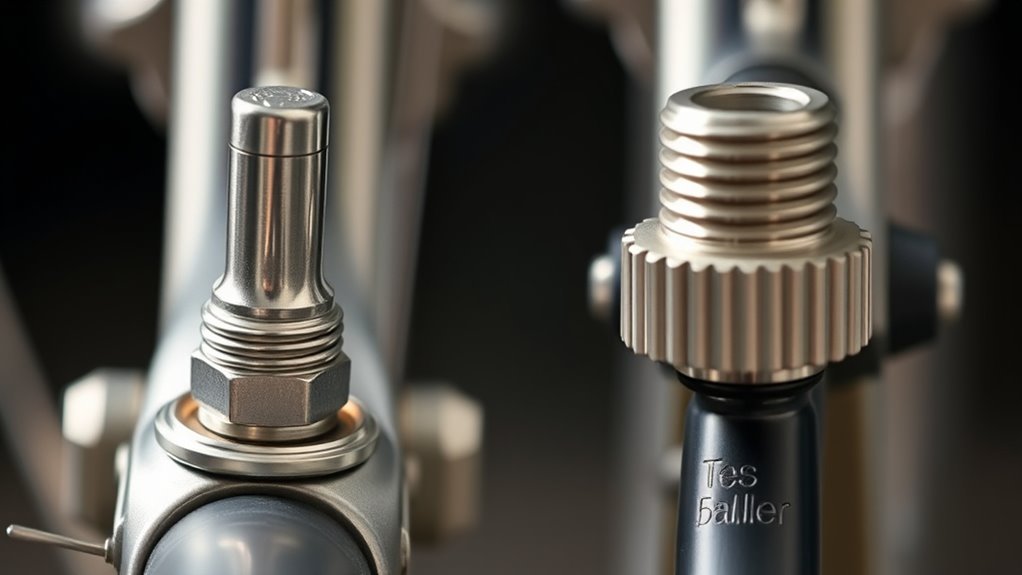
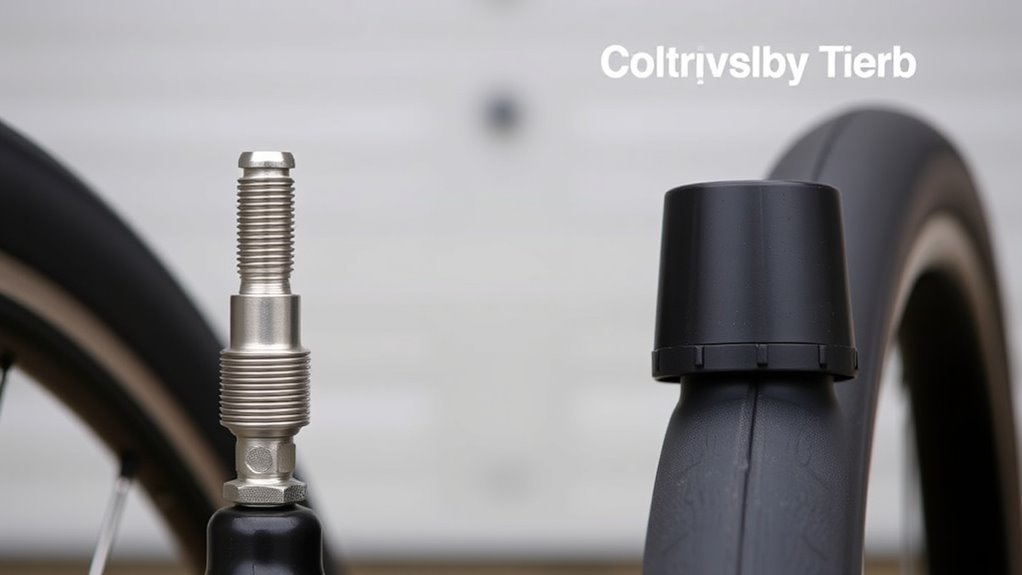
When you’re choosing between Presta and Schrader valves, it’s essential to understand their key differences. Presta valves are thinner and longer, making them ideal for high-pressure applications, while Schrader valves are shorter and wider, commonly used on lower-end bikes and cars. The removable core and locking mechanism of Presta valves provide a secure seal, in contrast to the spring-loaded core of Schrader valves, which allows for easier inflation. Additionally, Presta valves require a smaller rim hole, preserving rim strength, while Schrader valves need a larger hole, which can compromise it. Compatibility is vital, as these valve types can’t be interchanged without an adapter, and your choice impacts the type of bike pump required for inflation.
What Are the Advantages of Presta Valves for High-Performance Cycling?
Presta valves offer several key advantages for high-performance cycling that set them apart from other valve types. Designed to handle higher air pressures—up to 125 psi—they’re essential for maintaining ideal performance where tire pressure is critical. Their narrower diameter allows for smaller valve holes, enhancing wheel structural integrity and reducing weight. The removable core simplifies maintenance and lets you add tire sealants quickly, which is significant for competitive cyclists needing swift repairs. Additionally, the tapered design provides a secure seal, minimizing air leaks during high-speed rides. Presta valves enable precise air pressure adjustments, allowing you to fine-tune your tire pressure for varying terrains and conditions, ensuring you achieve the best achievable ride every time.
What Are the Drawbacks of Presta Valves?
Although Presta valves excel in high-performance cycling, they come with several drawbacks that can affect usability. First, you’ll need a Presta-specific pump for inflation, limiting compatibility with standard bicycle pumps and gas station air compressors. The smaller diameter can cause complications, often requiring an adapter. Additionally, Presta valve caps are easily lost, leading to air loss if not replaced promptly. Their thinner, longer structure makes them more prone to damage from impacts, reducing durability in rough terrain. Finally, improper pump attachment can bend or damage these valves, while Schrader valves are generally more forgiving. These factors make Presta valves less versatile and sometimes more challenging to maintain than their counterparts.
What Are the Benefits of Schrader Valves Compared to Presta?
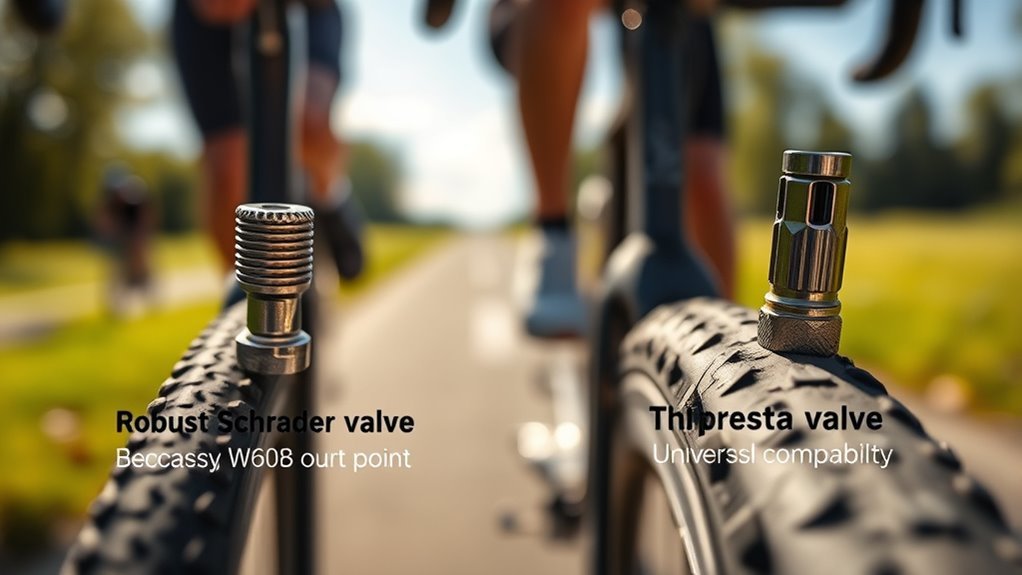
Schrader valves offer several advantages over Presta valves, particularly with regard to ease of use and compatibility. With a wider range of pump options and a straightforward inflation process, you’ll find it simpler to inflate your tires. Additionally, the cost-effective replacement parts make Schrader valves a practical choice for casual cyclists.
Easier Inflation Process
When it comes to inflating tires, Schrader valves offer significant advantages over their Presta counterparts. The wider diameter of Schrader valves makes for an easier inflation process, allowing quick air additions with most standard air pumps and gas station compressors. Unlike Presta valves, which often require specific pumps or adapters, Schrader valves are compatible with a broader range of inflation devices, enhancing convenience for users. Their spring-loaded pin mechanism simplifies air release and inflating, eliminating the need to unscrew a cap. This design is particularly forgiving of user errors, reducing the risk of damage during inflation. For casual riders or those prioritizing ease of use, Schrader valves are clearly the more practical choice for maintaining ideal tire pressure.
Wider Pump Compatibility
For cyclists seeking convenience and efficiency, the wider pump compatibility of Schrader valves presents a clear advantage over Presta valves. Schrader valves work with various bike pumps and even air compressors at gas stations, making quick tire inflation easier. Their larger diameter allows for faster air addition, an essential feature for those frequently adjusting tire pressure. This universal design means you’ll find compatible pumps or gauges more easily, whether at home or on the road. Additionally, Schrader valves are the standard on many lower-end and city bikes, leading to cheaper replacement inner tubes and greater availability of parts. Their simplicity makes them easier to use, especially for beginners, compared to the more specialized Presta valves.
Cost-Effective Replacement Options
The cost-effectiveness of Schrader valves becomes evident when considering their widespread use in budget-friendly bicycles. Unlike Presta valves, replacement inner tubes with Schrader valves are generally cheaper and easier to find, making maintenance and repairs more economical for casual cyclists. Their universal use means you can easily access compatible pumps and tools, even at gas stations. The design simplifies inflation, allowing quicker air additions without unscrewing a locknut, which is especially handy for less experienced riders. Additionally, Schrader valves feature a removable core, making cleaning straightforward if clogged, enhancing longevity and reliability. Overall, choosing Schrader valves fosters liberation through affordability and ease of use in your biking experience.
What Are the Disadvantages of Schrader Valves?
While Schrader valves are convenient, they come with specific drawbacks you should consider. They tend to leak air more frequently, which means you’ll be adding air to your tires often. Additionally, achieving precise pressure control can be challenging, making it harder to maintain ideal tire performance.
Air Leakage Issues
Although Schrader valves are widely used, they come with notable disadvantages regarding air leakage issues. Here are the key points to evaluate:
- Increased Air Leakage: Their simpler design and reliance on a spring-loaded valve core can lead to more frequent leaks over time, especially in lower-end bikes lacking quality control.
- Less Secure Seal: The larger diameter can cause a less secure seal, especially if the valve cap is missing or damaged, increasing the likelihood of air loss.
- Maintenance Challenges: The non-removable valve core complicates repairs, making maintenance difficult if it becomes clogged or defective, leading to potential performance issues.
In contrast, Presta valves often provide a more reliable solution for maintaining proper tire pressure.
Precision Pressure Control
Precision in air pressure control is essential for ideal cycling performance, and Schrader valves fall short in this regard. Their larger diameter can compromise the seal, increasing air leakage, which means you’ll often struggle to maintain optimal tire pressure. Unlike Presta valves, adjusting air pressure in Schrader valves often requires extra tools, complicating what should be a straightforward task. You might find yourself adding air more frequently, which is inconvenient for cyclists who value minimal maintenance. Additionally, the lack of removable cores in Schrader valves complicates cleaning and can hinder performance reliability if they become clogged. For precise pressure control, Presta valves clearly hold the advantage, ensuring a more consistent, reliable cycling experience.
How to Choose Between Presta and Schrader Valves for Your Bike
How do you decide between Presta and Schrader valves for your bike? Consider these factors to make the best choice:
- Performance Needs: If you ride high-end bikes or focus on road cycling, go for Presta valves. They offer lightweight performance and handle tire pressures up to 125 psi. For casual rides, Schrader valves are convenient and compatible with most bike pumps and air compressors.
- Rim Hole Size: Remember, Presta valves require a smaller hole, enhancing rim integrity, while Schrader valves need a larger one, which may compromise structural strength.
- Tire Pressure Adjustments: Presta valves allow for finer control and easy adjustments, perfect for competitive cycling. Assess these pros and cons to find your ideal valve.
How to Inflate and Maintain Presta and Schrader Valves?
When you’re ready to inflate your bike tires, understanding the differences between Presta and Schrader valves is crucial for efficiency and maintenance.
| Valve Type | Inflation Process | Maintenance Tips |
|---|---|---|
| Presta Valves | Unscrew the locknut, press to release air, attach the pump head securely to prevent air loss. | Check valve core tightness regularly to avoid air leaks. |
| Schrader Valves | Press the inner pin to release air, attach the pump head directly. | Use valve caps to protect from dirt and debris. |
Presta valves may need a compatible pump or adapter, while Schrader valves work with most pumps. Regular maintenance guarantees ideal tire pressure and performance, giving you the freedom to ride without worry.
Tips for Prolonging the Life of Your Bike Valves
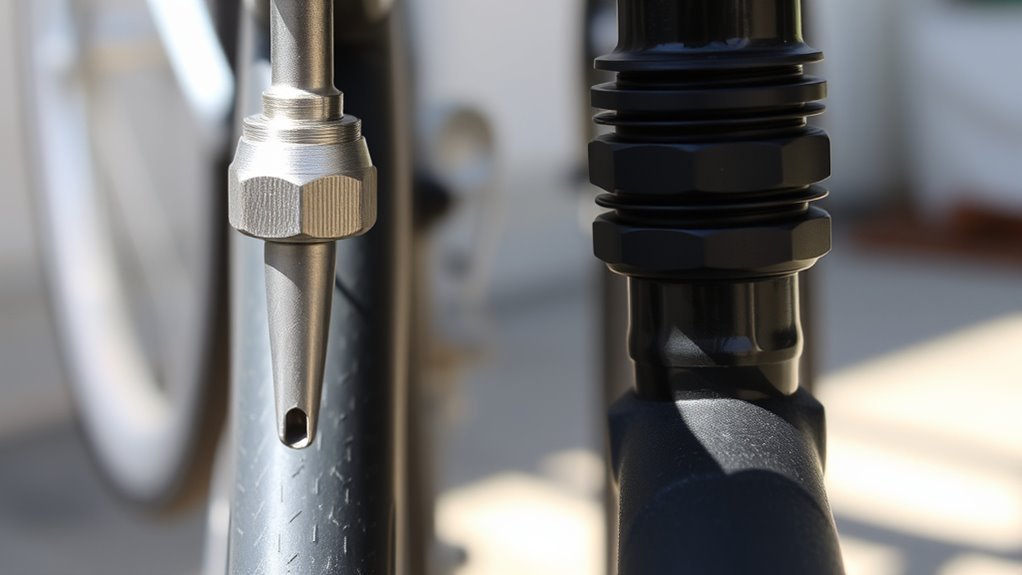
To extend the life of your bike valves, regularly inspect and maintain them to prevent issues that could compromise performance. Here are some essential tips:
- Check valve cores: Tighten the valve cores on Presta valves to prevent air leaks and guarantee a secure fit during inflation.
- Use valve caps: Protect both Presta and Schrader valves with valve caps to keep dirt and debris out, which can damage the valve and lead to air loss.
- Inspect valve stems: Periodically examine valve stems for signs of wear or damage, replacing them as needed to maintain ideal performance and tire pressure.
Frequently Asked Questions
What Is the Advantage of a Presta Valve Vs Schrader Valve?
Presta valve benefits include superior air retention efficiency and fine tire pressure management, while Schrader valve drawbacks involve compatibility issues and less precise inflation. Proper valve maintenance guarantees peak performance, enhancing your bicycle tire inflation experience.
What Are the Disadvantages of Presta Valves?
Presta valve disadvantages include inflation challenges due to specific pump requirements, valve compatibility issues, air retention problems, and maintenance difficulties. Their limited availability and installation complexity may also lead to higher replacement costs, affecting user preference factors.
Can I Inflate a Presta Valve With a Schrader Pump?
You can’t inflate a Presta valve directly with a Schrader pump; they’re incompatible. Use a pump adapter for smooth inflation. Mastering valve types enhances your cycling experience, ensuring proper tire pressure and minimizing air loss.
What Are the Advantages of a Schrader Valve?
Schrader valve benefits include universal compatibility, ease of use, and inflation speed. Its durable construction guarantees pressure retention, while low maintenance requirements and cost efficiency make it a reliable choice for novice and seasoned cyclists alike.
Conclusion
In conclusion, understanding the differences between Presta and Schrader valves can enhance your cycling experience. Did you know that approximately 75% of high-performance bikes use Presta valves for their lightweight design and ability to handle higher pressures? Choosing the right valve type depends on your riding style and bike compatibility. By knowing the pros and cons of each, you can make an informed decision to optimize your bike’s performance and maintenance.