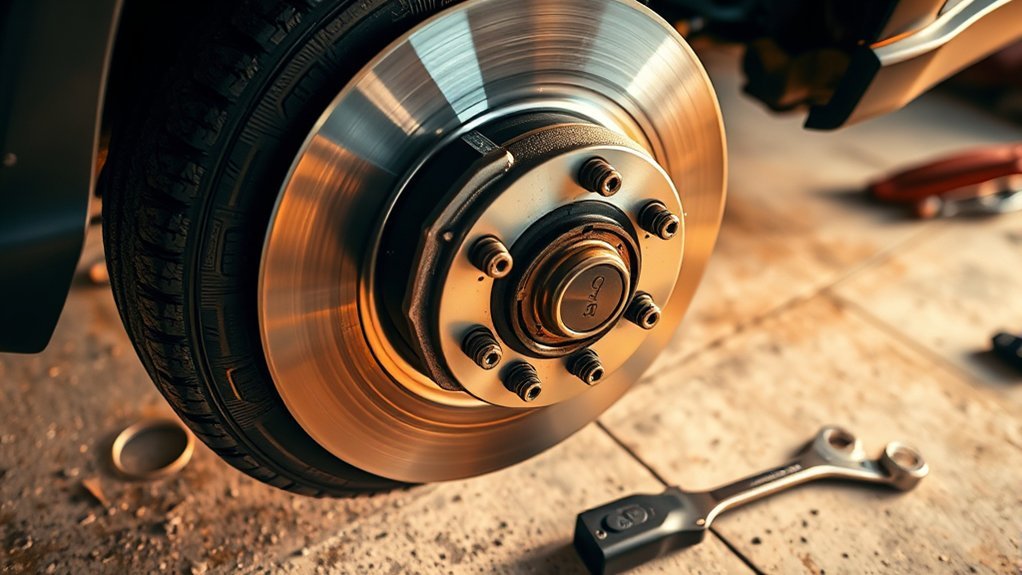
Replacing brake rotors on a Toyota RAV4 is a manageable DIY job if you work safely, use the correct service procedure, and verify torque specs for your exact model. The biggest mistake on newer RAV4s is treating the rear brakes like old manual-parking-brake systems. On 2019 and newer RAV4 models, the rear electronic parking brake must be placed into service mode before rear caliper work.
Quick Answer
To replace Toyota RAV4 brake rotors, safely lift the vehicle, remove the wheel, support the caliper, remove the bracket and old rotor, clean the hub, install the new rotor and pads, torque fasteners correctly, then pump the brake pedal and bed in the pads. For rear rotors, put the electronic parking brake into service mode first.
Key Takeaways
- Front rotor replacement is straightforward; rear rotor replacement requires electronic parking brake service mode on newer RAV4 models.
- Toyota lists the 2021 RAV4 wheel nut torque at 76 ft-lbf / 103 N·m, not 100 ft-lbf.
- Do not hang the caliper from the brake hose, force an EPB rear piston, or blow brake dust with compressed air.
- Use Toyota service data or a repair manual for caliper and bracket torque specs because they vary by axle, trim, and hardware design.
- Always clean the hub face before installing the new rotor to reduce brake pulsation and uneven rotor runout.
At a Glance
| Time Required | About 1–2 hours per axle for an experienced DIYer |
| Difficulty | Intermediate; rear brakes are more advanced because of the electronic parking brake |
| Tools Needed | Floor jack, jack stands, wheel chocks, lug socket, metric sockets, torque wrench, brake cleaner, wire brush, caliper hanger, brake spreader, and EPB-capable scan tool for rear service |
| Cost | Varies by rotor/pad brand and whether you replace one axle or all four corners; verify parts by VIN before buying |
Essential Tools for Brake Rotor Replacement
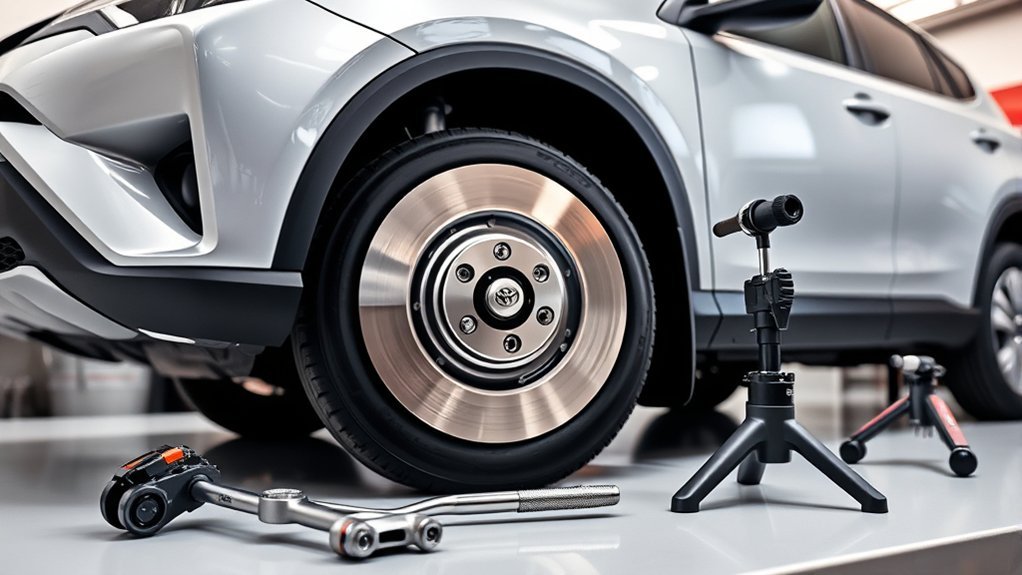
Before replacing brake rotors on your Toyota RAV4, gather everything you need so the vehicle is not left apart while you search for tools. A basic tool list includes a floor jack, jack stands, wheel chocks, a lug wrench or impact-rated lug socket, a metric socket set, a ratchet, a breaker bar, a torque wrench, brake cleaner, a wire brush, a caliper hanger, high-temperature brake lubricant, and new brake hardware.
Most factory Toyota lug nuts use a 21 mm socket, but do not assume every brake fastener is the same size. Caliper slide pin bolts, caliper bracket bolts, and rotor retaining hardware can vary by axle and model year. Use the Toyota owner manual and service information or a repair manual for your exact RAV4 before loosening safety-critical hardware.
Warning: Never work under a vehicle supported only by a jack. Lift on approved jacking points, lower the RAV4 onto properly rated jack stands, chock the wheels that remain on the ground, and keep the vehicle on a flat surface.
You should also wear eye protection, nitrile gloves, and a dust mask or respirator suitable for brake work. The EPA warns that brake and clutch dust can contain hazardous particles, so do not use compressed air to clean brake assemblies. Use brake cleaner and wet-wipe methods instead.
Benefits of Replacing Brake Rotors on Your RAV4
Fresh, properly installed rotors help restore smooth braking, reduce vibration, and give new pads a clean friction surface. If your old rotors are below minimum thickness, cracked, heavily grooved, heat-spotted, or badly rusted, replacement is safer than trying to reuse them.
Replacing rotors can also prevent new brake pads from wearing unevenly. New pads installed on a deeply scored or warped rotor may make noise, pulse through the pedal, or fail to seat correctly. For best results, replace pads and hardware at the same time as rotors unless the pads are nearly new and still meet service specifications.
A brake rotor should be replaced when it is below its minimum thickness, cracked, deeply scored, badly corroded, or causing vibration that cannot be corrected safely.
How to Tell If Your RAV4 Rotors Need Replacement
Do not replace rotors by mileage alone. Driving habits, road salt, towing, mountain driving, and stop-and-go traffic all affect rotor life. Inspect the rotors and compare measurements against the minimum thickness stamped on the rotor or listed in Toyota service data.
| Symptom | What It May Mean | What to Check |
|---|---|---|
| Brake pedal pulsation | Rotor thickness variation or runout | Rotor runout, hub cleanliness, pad deposits |
| Steering wheel shake while braking | Often front rotor or front suspension related | Front rotors, wheel bearings, tire/wheel condition |
| Grinding or scraping | Pads may be worn down or rotor may be scored | Pad thickness, rotor grooves, caliper movement |
| Heavy rust on swept surface | Rotor may not clean up under normal braking | Surface pitting, edge flaking, pad contact pattern |
| Blue or dark heat spots | Possible overheating or stuck caliper | Slide pins, caliper piston, brake hose, pad drag |
Understanding Front vs. Rear Brake Service
The front and rear brake jobs are not identical on newer RAV4 models. Front brakes use a conventional caliper piston that can usually be compressed with a disc brake spreader or C-clamp after the brake fluid reservoir is checked. Rear brakes use an electronic parking brake actuator, so the rear caliper must be put into service mode before the piston is retracted.
Note: If you are replacing only the front rotors, the electronic parking brake service step does not apply. If you are replacing rear rotors or rear pads, do not skip EPB service mode.
Hybrid and plug-in hybrid RAV4 models still use friction brakes, but they also use regenerative braking. Do not place the vehicle in READY mode during brake service, and do not open or service high-voltage hybrid components. This rotor replacement guide only covers the mechanical brake components at the wheels.
Disengaging the Electronic Parking Brake
For rear brake work, the electronic parking brake should be placed into maintenance or service mode before the rear caliper is removed. Toyota service information and many professional scan tools support this function. A Toyota Techstream-compatible tool or another EPB-capable scan tool is the safest method because it retracts or releases the actuator according to the vehicle’s service procedure.
Some RAV4 owners use manual switch procedures to enter brake service mode, but the exact sequence can vary by model and market. Because mistakes can damage the rear caliper actuator, the cleanest approach is to follow the repair manual or use a scan tool that specifically supports EPB service mode for your RAV4.
Warning: Do not force, twist, or clamp a rear EPB caliper piston unless the electronic parking brake is in service mode and the repair procedure confirms how the piston should be retracted. Forcing it can damage the actuator or caliper.
Using the Scan Tool
Connect the scan tool to the OBD-II port, turn the ignition on without starting the vehicle, and select the EPB or brake maintenance function. Follow the prompts until the tool confirms the rear parking brake is in service mode. Keep the key fob away from accidental button presses, and do not operate the parking brake switch while the caliper is removed.
After the new rotors and pads are installed, use the scan tool again to exit service mode or initialize the EPB. Confirm the parking brake warning light behaves normally before driving.
Safety Precautions Required
- Park on a flat surface and chock the wheels.
- Turn the vehicle off and keep it out of READY mode.
- Release the parking brake only after the vehicle is safely supported.
- Enter EPB service mode before rear caliper removal.
- Keep fingers clear of caliper pistons and parking brake mechanisms.
- Stop and seek professional help if the EPB light flashes abnormally or the scan tool reports a fault.
Removing Old Rotors: A Step-by-Step Guide
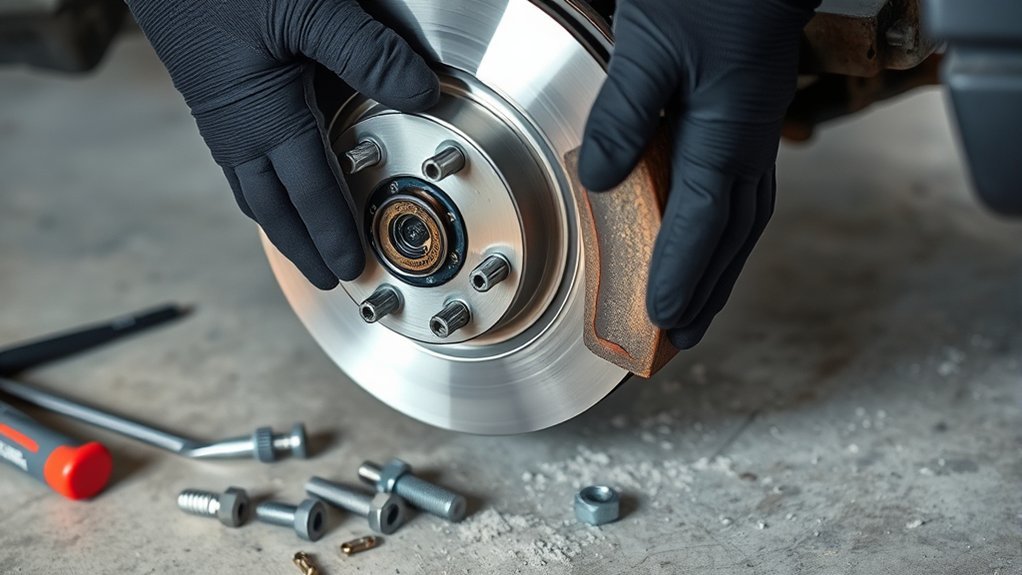
Once the RAV4 is safely supported and the wheel is off, take a photo of the brake assembly before disassembly. This gives you a reference for hardware clip direction, pad orientation, and sensor routing.
Step 1: Loosen and Lift Safely
Slightly loosen the wheel nuts while the tire is still on the ground. Lift the vehicle at the proper jacking point, place it on jack stands, and remove the wheel. Keep the wheel under the rocker area as an added backup, but never rely on it as the main support.
Step 2: Inspect Before Disassembly
Look for uneven pad wear, fluid leaks, torn caliper boots, damaged brake hoses, and rust buildup around the hub. Uneven inner and outer pad wear can indicate sticky slide pins or a caliper problem. Fixing only the rotor will not solve a stuck caliper.
Step 3: Remove the Caliper
Remove the caliper slide pin bolts, then lift the caliper off the bracket. Hang it from the strut or suspension with a caliper hook or strong wire. Do not let the caliper hang by the rubber brake hose or any electronic parking brake wiring.
For front brakes, compress the piston slowly only after checking that the brake fluid reservoir will not overflow. For rear EPB brakes, retract the piston only according to the EPB service procedure.
Step 4: Remove Pads, Hardware, and Bracket
Remove the old brake pads and hardware clips. If the rotor cannot clear the caliper bracket, remove the caliper bracket bolts and set the bracket aside. These bolts are usually tight and may use thread-locking compound, so use a properly fitting socket and a breaker bar if needed.
Step 5: Remove the Old Rotor
If the rotor slides off easily, remove it by hand. If it is stuck from corrosion, check for threaded removal holes in the rotor hat. Thread the correct bolts into those holes evenly to push the rotor off the hub. If you must tap the rotor, strike the rotor hat carefully and avoid hitting the wheel studs, dust shield, ABS wiring, or hub face.
Pro Tip: If the rotor fights you, rotate it and apply steady pressure instead of hammering one spot repeatedly. Uneven hammering can damage nearby parts and make the job harder.
Step 6: Clean the Hub
Clean the wheel hub face with a wire brush or abrasive pad until it is flat and free of rust flakes. A dirty hub is one of the most common causes of rotor runout and pedal pulsation after a brake job. Wipe the surface clean before installing the new rotor.
Best Practices for Installing New Rotors and Brake Pads
Clean new rotors with brake cleaner before installation. Many rotors ship with an anti-corrosion coating or oil film that must be removed from the braking surface unless the rotor manufacturer specifically says the coating is ready to install.
| Step | Best Practice |
|---|---|
| Rotor installation | Clean the rotor, seat it fully against the hub, and temporarily hold it with a lug nut while assembling the brakes. |
| Brake hardware | Use new abutment clips when supplied. Match the orientation to your reference photo or the opposite side. |
| Lubrication | Apply brake lubricant only to metal contact points and slide pins where specified. Keep grease off pads and rotors. |
| Pads | Install pads in the correct inner/outer position and transfer any wear indicator hardware correctly. |
| Parts selection | Use VIN-matched parts. The Toyota Genuine Parts catalog is a good reference for OEM fitment. |
Properly Reassembling Brake Components
Reassembly is where brake jobs are won or lost. Clean the caliper bracket, install new hardware, lubricate the proper contact points, and make sure the pads move freely in the bracket without binding.
- Install the rotor: Seat it flush against the clean hub and hold it with a lug nut if needed.
- Reinstall the caliper bracket: Torque bracket bolts to the specification in Toyota service data for your exact axle and model.
- Install pads and hardware: Confirm the wear indicator, shims, and clips match the original orientation.
- Reinstall the caliper: Make sure the slide pins move smoothly and the rubber boots are seated.
- Torque slide pin bolts: Use the correct factory torque specification. Do not guess.
- Repeat on the other side: Brake rotors and pads should normally be replaced in axle pairs.
Note: The only torque value in this guide that comes directly from the Toyota owner manual is the wheel nut torque: 76 ft-lbf / 103 N·m. Use factory service data for caliper bracket and slide pin bolts.
Torque and Wheel Installation
Reinstall the wheel and hand-thread all wheel nuts first. Lower the vehicle until the tire just contacts the ground and cannot spin, then torque the wheel nuts in a crisscross pattern. For the 2021 Toyota RAV4, Toyota specifies 76 ft-lbf / 103 N·m.
Do not use an impact wrench for final tightening. Over-torqued lug nuts can stretch studs or distort parts, while under-torqued lug nuts can loosen during driving. Recheck wheel nut torque after a short drive if your wheel or rotor manufacturer recommends it.
Final Checks for Brake Performance
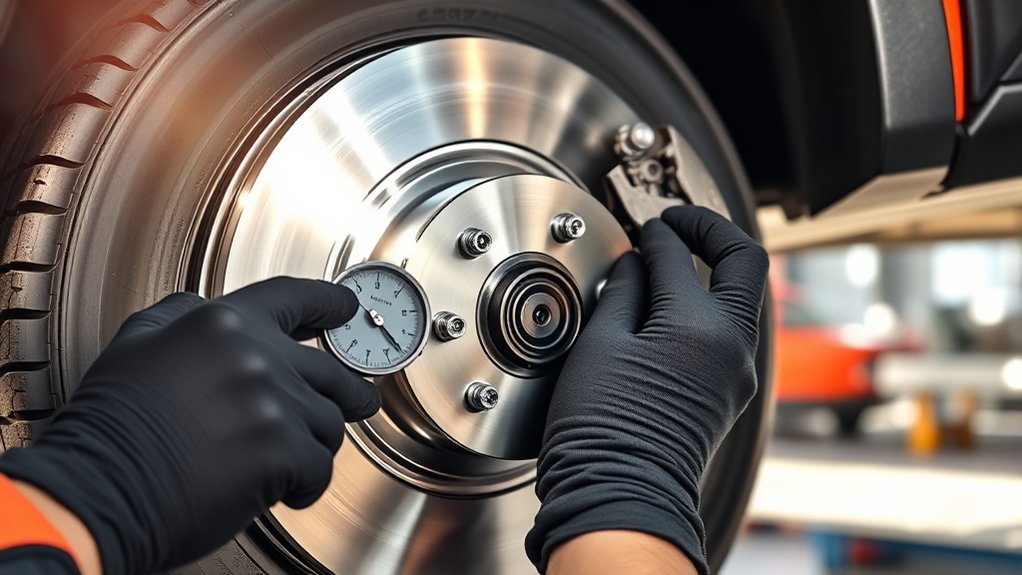
Before moving the RAV4, pump the brake pedal several times until it feels firm. This seats the pads against the rotors. If the pedal sinks, feels spongy, or does not firm up, do not drive the vehicle until the problem is found.
| Task | Why It Matters |
|---|---|
| Pump the brake pedal | Moves caliper pistons back into normal operating position. |
| Check brake fluid level | Confirms the reservoir is within the MIN/MAX range after piston movement. |
| Exit EPB service mode | Restores normal electronic parking brake operation after rear brake work. |
| Verify wheel torque | Helps prevent loose wheels or stud damage. |
| Road test carefully | Confirms quiet, straight, smooth braking before normal driving. |
For the road test, start at low speed in a safe area. Listen for scraping, clunking, grinding, or warning lights. Follow the brake pad manufacturer’s bedding procedure. If no bedding procedure is supplied, avoid hard repeated stops for the first 100–200 miles unless traffic safety requires it.
Common Mistakes to Avoid
- Skipping rear EPB service mode: This can damage the rear caliper actuator.
- Using compressed air on brake dust: Use brake cleaner and wet-wipe methods instead, consistent with OSHA brake and clutch work-practice guidance.
- Not cleaning the hub face: Rust between the hub and rotor can cause pedal pulsation.
- Guessing torque specs: Always verify brake fastener torque from Toyota service data.
- Letting the caliper hang: Support it so the brake hose and wiring are not stressed.
- Greasing the wrong surfaces: Grease on pads or rotors can reduce braking performance.
Troubleshooting After Rotor Replacement
| Problem | Likely Cause | Next Step |
|---|---|---|
| Soft brake pedal | Pistons not seated, air in system, or fluid issue | Pump pedal again; inspect for leaks; do not drive if it remains soft. |
| Grinding noise | Misinstalled pad, backing plate contact, or trapped debris | Reinspect pad position, dust shield clearance, and hardware. |
| Burning smell | Pad drag, stuck caliper, or fresh coating burning off | Check wheel temperature carefully and inspect for dragging brakes. |
| EPB warning light | Service mode not exited or EPB fault detected | Use a scan tool to read faults and initialize the system if required. |
| Brake vibration remains | Hub rust, rotor runout, uneven pad deposits, or suspension issue | Measure runout and inspect hub, tires, bearings, and front-end parts. |
Frequently Asked Questions
How many miles should rotors be changed on a Toyota RAV4?
There is no single mileage that fits every RAV4. Many rotors last tens of thousands of miles, but road salt, towing, mountain driving, heavy traffic, and driving style can shorten rotor life. Replace rotors when they are below minimum thickness, cracked, badly scored, heavily rusted, or causing confirmed brake pulsation.
How can I tell which rotors need to be replaced?
Inspect each rotor for grooves, cracks, rust pitting, heat spots, and uneven pad contact. Measure thickness with a micrometer and compare it with the minimum specification. Steering wheel shake often points to the front axle, while pedal or body vibration can come from either axle, so inspect all four corners.
Do I need a scan tool to replace rear RAV4 rotors?
For newer RAV4 models with an electronic parking brake, a scan tool or Toyota-approved EPB service procedure is strongly recommended for rear brake service. The rear caliper actuator must be released correctly before the piston is retracted.
Should I replace brake pads when replacing rotors?
In most cases, yes. New pads give the new rotor a clean, even friction surface. Reusing worn or uneven pads can create noise, vibration, and poor bedding. If the pads are nearly new, inspect them carefully and confirm they are flat, evenly worn, and compatible with the new rotors.
What is the wheel lug nut torque for a 2021 Toyota RAV4?
Toyota lists the 2021 RAV4 wheel nut torque as 76 ft-lbf, which is 103 N·m. Tighten in a crisscross pattern with a torque wrench after the wheel is seated.
Conclusion
Replacing Toyota RAV4 brake rotors can restore smooth, confident braking when the job is done carefully. The key points are simple: support the vehicle safely, use EPB service mode for rear brakes, clean the hub face, install pads and hardware correctly, and torque every fastener from reliable service data. If the brake pedal does not feel firm, the EPB light stays on, or anything seems uncertain, stop and have the system inspected before driving.
Sources
- Toyota Owners: 2021 RAV4 manuals and warranties — official owner manual and service information reference.
- Toyota Owners: 2021 RAV4 flat tire and wheel installation guidance — wheel nut torque and wheel installation warnings.
- Toyota Owners: Genuine Toyota Parts — OEM parts fitment and parts catalog reference.
- U.S. EPA: Preventing asbestos exposure among brake and clutch repair workers — brake dust safety practices for professional and home mechanics.
- OSHA 1910.1001 Appendix F — work practices and engineering controls for automotive brake and clutch work.