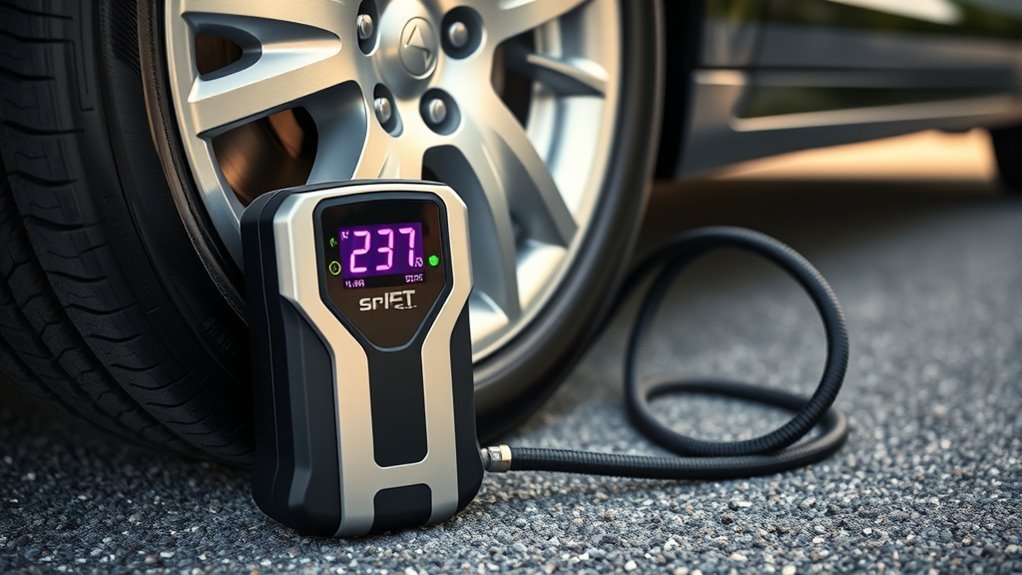
A Schrader valve is a crucial component found in automotive and other tires, allowing you to inflate or release air pressure easily. It consists of a spring-loaded pin that keeps the valve sealed until you press it. Discovered by August Schrader in 1891, this valve has become essential in various applications, from bicycles to SCUBA tanks. Understanding its function and maintenance can help prolong your valve’s life and efficiency. There’s much more to explore about its history and applications.
What Is a Schrader Valve and How Does It Work?
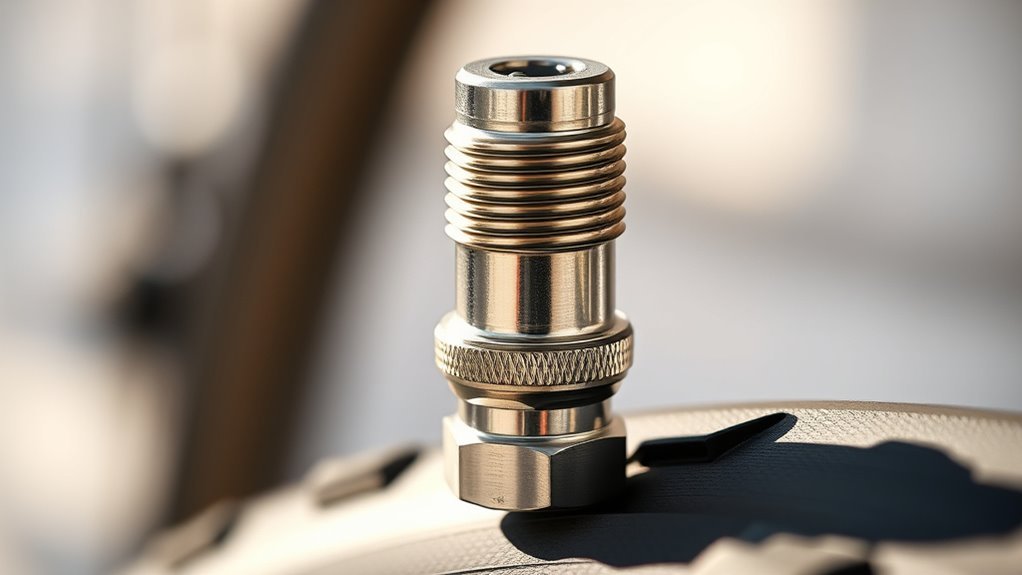
A Schrader valve is an essential component in tire inflation, making it easy for you to add or release air from your tires. This type of poppet valve operates with a spring-loaded pin that keeps the valve closed until you press it down with an air hose fitting during inflation. Its hollow cylindrical metal tube design includes a threaded outer section, allowing you to attach valve caps or tools effortlessly. Schrader valves are built to handle high-pressure environments, making them perfect for automotive tires and HVAC systems. Plus, the valve core can be removed and replaced with a specialized tool, enabling you to maintain and repair leaks or damage, ensuring your tires stay inflated and ready for the road ahead.
The History of the Schrader Valve
While you might take it for granted today, the Schrader valve’s origins date back to 1891 when inventor August Schrader introduced this innovative device. His work revolutionized tire technology, leading to widespread adoption in the early 1900s.
| Year | Event | Significance |
|---|---|---|
| 1844 | Schrader opens a rubber shop | Supplies fittings and valves |
| 1891 | Introduction of the Schrader valve | Innovation in tire technology |
| 1893 | Valve patented | Legal protection of the design |
| 1895 | Patent for valve cap | Enhances functionality |
The Schrader valve played a significant role in advancing pneumatic tire design, ensuring durability and ease of use. Its historical significance continues today across various applications, including automotive and HVAC systems.
Common Applications: Where You Find Schrader Valves
Schrader valves are everywhere, seamlessly integrating into various applications that rely on reliable pressure management. You’ll find these versatile components in a range of devices that enhance your daily life, including:
- Automobile tires – Ensuring ideal air pressure in your vehicle.
- Pneumatic tires – Common in bicycles and motorcycles for easy inflation and maintenance.
- Air conditioning systems – Acting as service ports for efficient refrigerant management.
- SCUBA diving – Integral to pressure systems, delivering air from tanks to divers.
Their role in fuel-injected engines and even domestic fire extinguishers showcases their adaptability. By understanding these common applications, you can appreciate how Schrader valves contribute to safety, efficiency, and performance in everyday situations.
Essential Components of a Schrader Valve: What You Need to Know
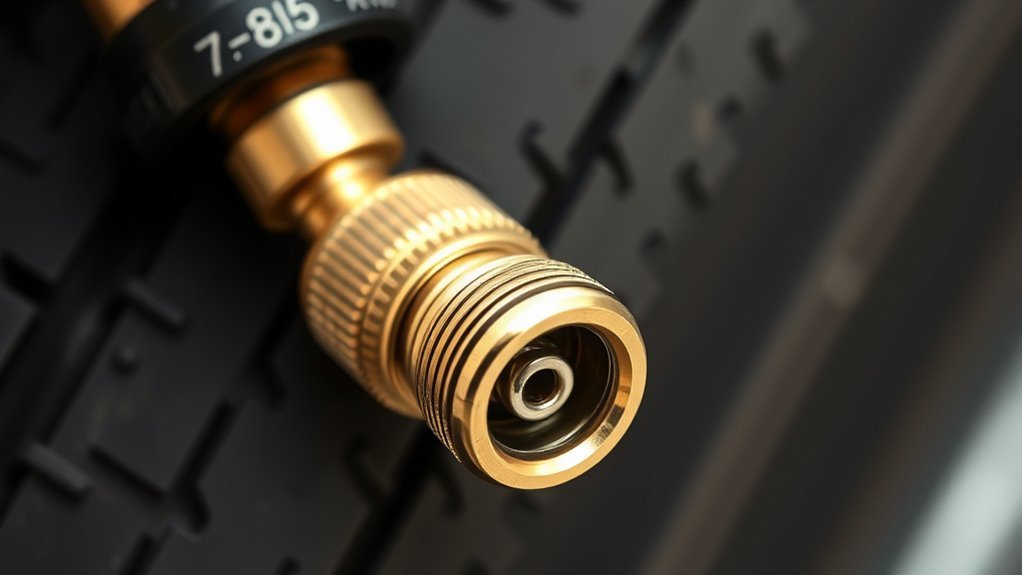
Understanding the function of Schrader valves begins with recognizing their key components. At the heart of the valve, you’ll find a valve core, which can be easily removed or tightened with a specialized tool. This feature allows for quick repairs without replacing the entire valve. The cylindrical metal tube is typically nickel-plated brass, equipped with external threads for attaching a valve cap. This design not only enhances durability but also guarantees compatibility across various vehicles and devices. The metal pin inside acts as a poppet valve, sealing off air pressure when not in use. Schrader valves are built to handle high-pressure environments, making them essential for tire pressure monitoring and more.
Comparing Schrader Valves to Other Tire Valve Types
When it comes to tire valves, choosing the right type can make a significant difference in your experience and convenience. Here’s how Schrader valves stack up against other types like Presta valves:
- Ease of Inflation: Schrader valves are larger and simpler to inflate, while Presta valves require unscrewing a captive nut.
- Universal Compatibility: Schrader valves work with standard air pumps, unlike Presta valves that may need an adapter.
- Applications: Schrader valves are found in a range of vehicles, from cars to motorcycles, while Presta valves are usually on high-end bicycle tires.
- Design Weight: Schrader valves are heavier and more complex, offering robustness compared to the lightweight Presta design.
Choosing wisely can enhance your air pressure management and overall tire maintenance!
Dimensions and Specs of Schrader Valves
The dimensions and specifications of Schrader valves are essential for ensuring compatibility and performance in various applications. With a standard valve stem diameter of 8 mm, Schrader valves are larger than Presta valves, which have a diameter of 6 mm. Typically, the length of the valve stem remains consistent, while Presta valves vary between 48 mm and 80 mm. Made from durable nickel-plated brass, the outer shell of Schrader valves provides excellent corrosion resistance. These valves excel in high-pressure environments, capable of withstanding pressures up to 2000 PSI in specific applications. Additionally, the valve core is removable and replaceable with a specialized tool, enabling you to maintain and repair the valve without needing to replace the entire unit.
Maintenance Tips to Prevent Schrader Valve Leaks

To keep your Schrader valves functioning properly and leak-free, regular cleaning is crucial. Always use a valve cap to protect against dirt and debris, and remember to address any leaks promptly. By following these simple maintenance tips, you can extend the lifespan of your valves and guarantee peak performance.
Regular Valve Cleaning
Maintaining your Schrader valve is essential for preventing leaks and guaranteeing peak performance. Regular valve cleaning helps keep your system running smoothly. Here are some maintenance tips you should follow:
- Wipe the valve with a towel to remove dirt and grime.
- Verify the valve cap is securely in place to protect against contaminants.
- Inspect seals and o-rings for signs of wear that could lead to air leaks.
- Check for leaks using soapy water; bubbles indicate issues that need attention.
Proper Cap Usage
A well-fitted valve cap is your first line of defense against dirt and debris that can compromise the performance of your Schrader valve. Always verify the valve cap is securely tightened after inflation to maintain a tight seal and protect against moisture. Regularly inspect the condition of the valve cap—if it’s damaged or missing, replace it immediately. A faulty cap is often a common cause of leaks, leading to premature wear. Additionally, make it a habit to clean the valve area frequently to eliminate grime and buildup, which can interfere with the valve’s operation and create leak points. Staying proactive with these small maintenance tasks will help you enjoy a smoother ride and extend the life of your tires.
Timely Leak Repairs
Timely leak repairs are essential for keeping your Schrader valve functioning properly. Regular maintenance prevents leaks and guarantees you maintain peak pressure inside your tires. Here’s how to stay ahead of potential issues:
- Inspect Valve Cores: Regularly check for dirt and debris that can cause leaks.
- Clean the Valve Area: Use a towel to wipe down the valve threads, keeping them free from grime.
- Perform a Soapy Water Test: If you suspect a leak, apply soapy water; bubbles reveal the source, guiding you to tighten or replace.
- Replaceable Valve Care: Swap out worn rubber o-rings as they often lead to leaks; this is a simple fix with the right tools.
Stay vigilant, and your Schrader valve will serve you well!
Signs You Need a Schrader Valve Replacement
If you notice oily residue or frost around your Schrader valve, it’s a clear sign of refrigerant leaks that need attention. A loose or damaged valve core can cause air loss, which means it’s time for a replacement. Keep an ear out for any hissing sounds when you press the valve; this could indicate a faulty seal that needs fixing to avoid further issues.
Refrigerant Leaks Detection
When you notice a drop in your air conditioning’s cooling efficiency or hear hissing sounds near the valve, it might be time to check your Schrader valve for leaks. Here are some signs to look for:
- Decreased cooling – Your AC isn’t performing as it should.
- Hissing or bubbling noises – Sounds near the valve can indicate escaping refrigerant.
- Visible oil spots – Check around the valve area for any oily residue.
- Bubbles during the soapy water test – Applying soapy water can reveal leaks if bubbles form.
If you detect any of these signs, consult a professional HVAC technician for a Schrader valve replacement. Regular maintenance of these valves can prevent refrigerant leaks and keep your system running efficiently.
Valve Core Damage Signs
While regular maintenance can help extend the life of your Schrader valves, there are clear signs of valve core damage that you shouldn’t ignore. Look for visible leaks where air escapes, often detected through a soapy water test that reveals bubbles. A loose valve core can lead to air loss; if tightening doesn’t fix the issue, it’s time to replace the valve core. Deteriorated rubber o-rings may also indicate leaks, as they can become brittle over time. If the valve core fails to seal properly during inflation or deflation, replacement is crucial for maintaining ideal tire pressure. Conduct regular inspections for dirt, grime, and physical damage to catch problems early and guarantee your valves function effectively.
Frequently Asked Questions About Schrader Valves?
What do you need to know about Schrader valves? These essential tire valves are vital for maintaining air pressure in your vehicle. Here are some key points:
- Spring-loaded pin: This mechanism keeps the valve closed, only opening when pressed.
- Threaded valve core: It can be replaced if damaged, ensuring longevity.
- Standardized design: With an 8 mm stem, they fit most inflators and tools effortlessly.
- Regular maintenance: Keeping the valve clean and ensuring the cap is on prevents leaks and boosts performance.
Understanding these aspects of Schrader valves empowers you to manage your tire maintenance effectively, ensuring a smoother, safer ride. Remember, a well-maintained valve is key to ideal air pressure and tire longevity!
Frequently Asked Questions
What Is the Difference Between a Schrader Valve and a Regular Valve?
A Schrader valve’s larger size and robust design offer easy inflation and compatibility with most pumps, while regular valves excel in high-pressure situations. Maintenance involves keeping the core clean, highlighting the Schrader valve’s practical advantages.
What Is the Purpose of the Schrader Valve?
The Schrader valve’s purpose is to control air flow for tire inflation, making it essential for proper pressure. Mastering tire maintenance tips, understanding valve types comparison, and recognizing common valve issues can liberate your driving experience.
How Do I Know if I Have Schrader or Presta?
Check the valve’s diameter and design for identification tips: Schrader valves are wider and straight, while Presta valves taper. Use appropriate tire inflation methods, and guarantee valve compatibility for effective pressure gauge usage and maintenance.
Is AC Schrader Valve the Same as a Tire?
No, AC Schrader valves differ from tire types. While they share components, their applications and maintenance requirements vary. Understanding these differences enhances your knowledge of Schrader valve history and advantages in specific systems, empowering your decisions.
Conclusion
In conclusion, Schrader valves are essential components in tire maintenance and performance. Imagine you’re on a road trip when suddenly your tire pressure light flashes. By knowing how to check and replace a Schrader valve, you can easily avoid a roadside crisis. With proper care, these valves can last for years, keeping your tires inflated and your journeys smooth. Stay informed and proactive, and you’ll guarantee your vehicle runs safely and efficiently!