A tire inflator chuck connects securely to your tire’s valve stem, allowing for efficient air inflation, which is essential for safety and performance. There are two main types: open flow, which allows unrestricted airflow, and closed flow, which prevents leaks by only allowing air through when engaged. To avoid air leaks, confirm proper fit by checking compatibility and inspecting for wear. Stay tuned to discover common issues and how to maintain your tire inflator chuck effectively.
What Is a Tire Inflator Chuck and Why Is It Important?

A tire inflator chuck is an essential component that connects securely to your tire’s valve stem, allowing air to flow in during inflation and pressure checks. This device plays a significant role in maintaining proper tire pressure, which is imperative for your vehicle’s safety, fuel efficiency, and tire longevity. An effective air chuck prevents leaks through reliable sealing mechanisms, ensuring efficient inflation and minimizing air loss. Compatibility between the air chuck and your inflator or compressor is important for peak performance; mismatched equipment can lead to inefficiency or damage. By understanding the importance of your tire inflator chuck, you empower yourself to maintain your vehicle’s health and enhance your driving experience.
Types of Tire Inflator Chucks: Open Flow vs. Closed Flow
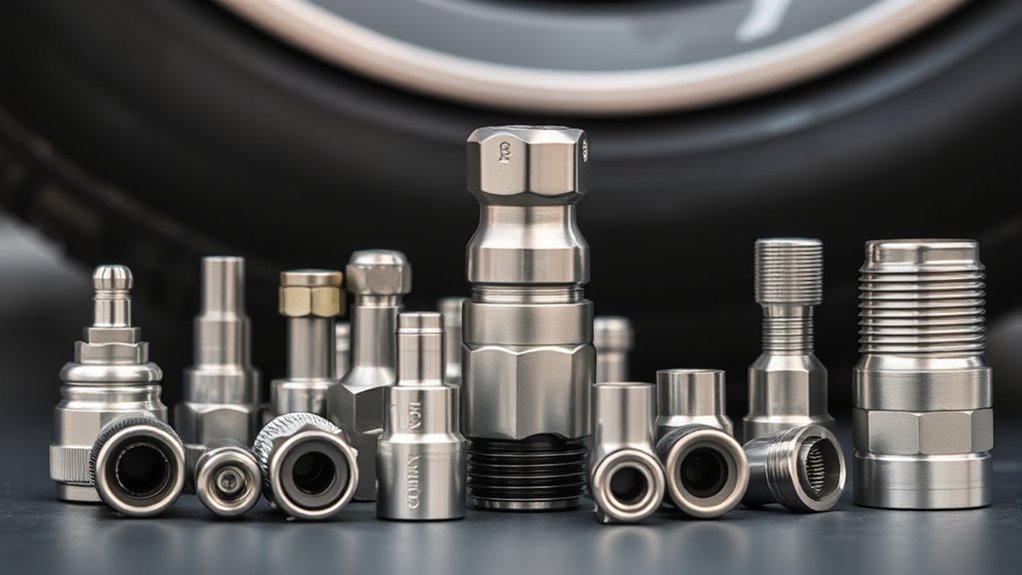
Two main types of tire inflator chucks—open flow and closed flow—serve distinct purposes in tire inflation and pressure management. Open flow chucks allow air to pass freely, even when not engaged. This design makes them ideal for hand-operated tools like tire gauges and inflators, providing convenience during use. In contrast, closed flow chucks incorporate internal check valves, ensuring air only flows when connected to the tire valve stem. This feature conserves compressed air, making closed flow chucks better suited for compressors with storage tanks. Choosing between open flow and closed flow depends on your compressor type; open flow works best for tankless compressors, while closed flow enhances efficiency and prevents air leaks, essential for maintaining ideal tire pressure.
Choosing the Right Tire Inflator Chuck for Your Needs
How can you guarantee you choose the right tire inflator chuck for your specific needs? Start by determining whether an open flow or closed flow design suits your tire inflation tool requirements. Open flow chucks are great for tankless 12-volt inflators, while closed flow chucks prevent air leakage until engaged, making them ideal for compressors with storage tanks. If you often deal with hard-to-reach valve stems, consider a dual foot air chuck for better accessibility. Look for features like anti-leak designs to enhance efficiency during inflation. Finally, evaluate your application frequency; durable models are essential for professional use, while basic designs work for occasional DIY tasks. The right air chuck can greatly impact your tire inflation experience.
How to Ensure a Proper Fit to Prevent Air Leaks

Ensuring a proper fit for your tire inflator chuck is essential to preventing air leaks during inflation. To achieve effective leak prevention, follow these steps:
- Choose the right air chuck compatible with Schrader valves, typical for most vehicles.
- Inspect the rubber O-ring or seal regularly; replace it if it’s worn or damaged to maintain an airtight connection.
- Securely attach the air chuck to the valve stem before inflating, avoiding gaps that could let air escape.
- Utilize a chuck with a locking mechanism, like a double teeth lock design, to grip the valve stem firmly and minimize leak risks.
Top Problems With Tire Inflator Chucks and Practical Solutions
While using a tire inflator chuck, you might encounter several common problems that can disrupt efficient inflation. Here’s a breakdown of issues and solutions:
| Problem | Cause | Solution |
|---|---|---|
| Air leaks | Poor-quality chuck | Upgrade to a reliable model like C1 |
| Incompatible fittings | Mismatched valve and compressor | Verify compatibility |
| Rapid air depletion | Open flow chuck with storage tank | Switch to closed flow chuck |
| Clogged valve stems | Dirt or damage | Regularly inspect and maintain |
| Accessibility issues | Hard-to-reach valve stems | Use dual foot chucks for better access |
Maintenance Tips to Keep Your Tire Inflator Chuck in Top Shape
To keep your tire inflator chuck in top shape, regular maintenance is essential. Follow these tips for effective upkeep and leak prevention:
Regular maintenance of your tire inflator chuck is crucial for optimal performance and leak prevention.
- Inspect the chuck regularly for wear and tear; replace it if you see cracks or damage to guarantee a proper seal during inflation.
- Clean the connection points with a soft cloth to remove dirt and debris that could hinder performance and cause air leaks.
- Lubricate the moving parts with a small amount of lubricant to assure smooth operation and prevent rust or corrosion.
- Store the inflator chuck in a dry, cool place to protect it from moisture and extreme temperatures, enhancing its longevity.
Signs It’s Time to Replace Your Tire Inflator Chuck?

You should replace your tire inflator chuck if you notice visible wear, such as cracks or corrosion, which can compromise its effectiveness. Frequent air leaks during inflation, indicated by a hissing sound or pressure loss, are also strong signs that it’s time for a new chuck. Addressing these issues promptly guarantees safe and efficient tire maintenance.
Visible Wear And Tear
When evaluating the condition of your tire inflator chuck, visible wear and tear can be a clear indicator that it’s time for a replacement. Here are some signs to watch for:
- Cracks or Fraying: Any noticeable cracks or frayed edges on rubber or plastic components suggest degradation.
- Rust or Corrosion: This can compromise the chuck’s sealing ability, leading to potential air leaks during inflation.
- Malfunctioning Locking Mechanism: If the locking mechanism isn’t securing properly, it indicates an insecure connection to the tire valve.
- Decreased Inflation Efficiency: If it takes longer to inflate a tire, the chuck may no longer be performing effectively.
Addressing these visible wear and tear signs can help guarantee a reliable inflation experience.
Frequent Air Leaks
Frequent air leaks from a tire inflator chuck can considerably hinder the tire inflation process, often manifesting as a hissing sound or a noticeable drop in air pressure while inflating. If you notice a persistent need to reattach the inflator chuck to maintain airflow, it’s a clear sign that replacement is necessary. Additionally, inspect the chuck’s sealing surface for dirt, debris, or corrosion, as these can compromise the connection and lead to leaks. Don’t overlook the valve stem; damage or wear here can mimic leaking symptoms, causing confusion. Regular maintenance and cleaning can minimize leaks, but when persistent issues arise, replacing the chuck is usually the most effective solution to guarantee efficient tire inflation.
How the Right Chuck Can Boost Your Tire Performance
Choosing the right tire inflator chuck can greatly enhance air flow efficiency, ensuring you inflate your tires quickly and accurately. This precision helps maintain ideal tire pressure, which is essential for vehicle handling and fuel efficiency. Additionally, an easy-to-use chuck simplifies the inflation process, making routine tire maintenance more manageable.
Air Flow Efficiency
To maximize tire performance, selecting the right air chuck for your inflator is essential, as it directly influences air flow efficiency. Here’s how the right choice can enhance your experience:
- Open flow chucks allow unrestricted air passage, ensuring continuous air flow during inflation—ideal for hand-operated tools.
- Closed flow chucks, equipped with internal check valves, prevent air loss when disengaged, conserving air and ensuring controlled inflation.
- Compatibility matters; use open flow for tankless inflators and closed flow for tanked compressors to boost air delivery efficiency.
- Reliable seals in air chucks minimize leaks, vital for maintaining consistent tire pressure and extending tire life.
Optimizing air flow through the correct chuck can lead to better fuel economy and improved vehicle handling.
Tire Pressure Accuracy
Accurate tire pressure is essential for maximizing vehicle performance and safety. Using the right air chuck type can greatly enhance your driving experience. By ensuring precise inflation, you can improve fuel efficiency by up to 3% and reduce the risk of blowouts.
| Benefit | Impact on Performance | Importance |
|---|---|---|
| Enhanced Fuel Efficiency | Up to 3% Improvement | Cost Savings |
| Improved Handling | Better Control | Safety |
| Extended Tire Lifespan | Up to 25% Increase | Longevity |
| Reduced Blowout Risk | Increased Safety | Peace of Mind |
| Consistent Inflation | Ideal Pressure | Performance Boost |
Choose a well-designed air chuck to minimize leaks, maintain accurate tire pressure, and liberate your vehicle’s true potential on the road.
Ease of Use
A well-designed tire inflator chuck not only enhances tire pressure accuracy but also greatly boosts ease of use during inflation. With the right air chucks, you’ll experience efficient inflation, making your tire maintenance straightforward. Here’s how:
- Secure Connection: A quality chuck guarantees a tight fit to the valve, minimizing air loss.
- Open Flow Advantage: Open flow air chucks allow continuous airflow, letting you inflate multiple tires quickly without reattaching.
- Closed Flow Benefits: These prevent air escape when not engaged, conserving compressed air.
- Precision Control: A properly fitted air chuck gives you precise inflation control, improving handling and fuel efficiency.
Frequently Asked Questions
What Is an Air Compressor Chuck?
An air compressor chuck connects your air hose to the tire valve. Understanding air chuck types is essential for effective air chuck maintenance, as choosing the right one guarantees efficient inflation and minimizes potential air leaks.
How to Use a Tire Air Chuck?
Ever wondered how to keep your tires in top shape? To use a tire air chuck, securely attach it to the valve stem, following air pressure guidelines, and guarantee proper tire maintenance tips to avoid leaks.
Can You Put Air in a Tire Without an Air Chuck?
You can’t effectively inflate a tire without an air chuck. While tire inflation alternatives like manual air pumps exist, they often lead to air leaks, making them impractical for achieving proper tire pressure and safety.
What Are the Different Types of Air Chucks?
You’ll find two main types of air chucks: manual chucks, which require your engagement for air flow, and valve chucks, allowing automatic operation. Each serves specific needs to enhance your tire inflation experience efficiently.
Conclusion
In summary, selecting the right tire inflator chuck is essential for peak tire performance and safety. By understanding the types available and guaranteeing a proper fit, you can effectively prevent leaks that may deflate your driving experience. Just like a well-tuned engine, a reliable chuck keeps the air flowing smoothly, enhancing your vehicle’s efficiency. Regular maintenance and timely replacements further guarantee your chuck remains in prime condition, helping you hit the road with confidence.