If your RAV4 grinds when you brake, you’re likely dealing with worn pads, scored or warped rotors, or a sticking caliper causing uneven contact and heat. Check pad thickness, rotor surface, wheel temperature, and for debris or fluid contamination; ABS or bearings can mimic grinding but show different patterns. You can do basic inspections and pad/rotor replacements yourself, but seized calipers or ambiguous symptoms need a pro—keep going to uncover specific checks, causes, and fixes.
Quick Diagnosis: Why Your RAV4 Grinds When Braking
Hear a grinding when you brake? You need a quick, objective assessment. Start by isolating the noise frequency and when it occurs—constant, only at low speed, or under heavy braking. High-frequency squeal progressing to grinding usually means worn brake pads; the wear indicators or metal-on-metal contact have engaged and you’re reducing stopping power. Lower-frequency vibration paired with grinding often points to warped rotors; you’ll also feel pulsation in the brake pedal or steering wheel. If the vehicle pulls to one side with grinding, suspect a sticking caliper creating uneven pad contact. Check brake fluid level and condition—contaminated or low fluid can worsen caliper function and mask other symptoms. Don’t ignore initial squealers: delays let damage escalate, increasing parts and labor costs. You deserve control and safety; act decisively with inspections and repairs so you can reclaim reliable braking performance.
How to Tell If It’s Brakes or Suspension?
Check the noise timing pattern first: if the grinding happens only when you brake and stays constant with speed, it’s likely the pads or rotors. Note directional pull or vibration—pulling to one side or steering-wheel shudder during braking can also indicate brake problems, while noises that vary with vehicle speed or when turning point to suspension. Finish with visual and physical checks: inspect pads/rotors for scoring and check for loose, worn, or damaged suspension components, and get a professional inspection if you’re unsure.
Noise Timing Pattern
When you track when the noise shows up, you can often pinpoint whether it’s the brakes or something in the suspension: listen for brake noise patterns and suspension indicators. Grinding that happens only when you apply the brakes at low speeds (2–3 mph) usually means worn pads or their wear indicators; a high-pitched squeal before grinding confirms pad wear and needs immediate action. If grinding intensifies while turning, suspect suspension or caliper movement. Warped rotors create grinding plus pedal vibration, differing from simple pad wear.
- Grinding only on braking at low speed → worn pads.
- Squeal then grind → pads at wear indicators.
- Grinding that worsens while turning → suspension indicators.
- Grinding with pedal vibration → warped rotors.
Directional Pull Or Vibration
Notice whether the car pulls to one side only during braking or vibrates through the pedal—those patterns tell you where to look. If braking causes directional pull, you’re likely facing uneven wear or a sticking caliper on that wheel; that directly degrades brake performance and demands attention. If vibration is confined to the pedal under braking, warped rotors are the probable culprit, producing rhythmic feedback and reduced stopping efficiency. Suspension faults tend to present at speed, not solely during deceleration, so correlate symptoms with driving conditions. You’ll free yourself from uncertainty by isolating when the issue appears: braking-only faults point to the brake system, while persistent high-speed pull or shake suggests suspension intervention is needed.
Visual And Physical Checks
After you’ve noted whether the car pulls or the pedal vibrates, perform a focused visual and hands-on inspection to identify brakes versus suspension faults. You’ll use sight, touch, and simple tests for effective noise identification during brake maintenance. Look and feel for these key signs:
- Grinding only when braking — inspect pads for thin material or exposed backing plate.
- Grooved or warped rotors and a pulsating pedal — rotor damage, not suspension.
- Debris between caliper and rotor — remove foreign objects that mimic grinding.
- Sticking or seized caliper slides — limited caliper movement causes uneven wear and noise.
If pads, rotors, or slides fail these checks, prioritize brake repairs. Suspension faults usually arise as clunks over bumps, not under braking.
RAV4 Brake Pad Signs and Quick Inspection
If you hear a high-pitched squeal or grinding from your RAV4, inspect the brake pads immediately because those noises often mean the pad material is low or metal wear indicators are contacting the rotor. You’ll perform quick, decisive checks for brake pad wear and noise identification to preserve safety and freedom on the road. Remove the wheel, look for uneven wear, grooves, or exposed metal. Check for oil or debris contamination and replace contaminated pads. Regular inspections during maintenance catch issues early and prevent costly rotor damage.
| Check | What to look for | Action |
|---|---|---|
| Visual thickness | Less than manufacturer spec | Replace pads |
| Wear pattern | Uneven or grooved | Inspect caliper |
| Metal exposure | Shiny metal visible | Replace immediately |
| Contamination | Oil, debris on surface | Replace and clean hub |
| Squeal test | Persistent high-pitch | Prioritize replacement |
Follow this concise routine; it’s pragmatic, technical, and liberating—keep control of your vehicle’s braking.
What the Pad Squealer Noises Mean
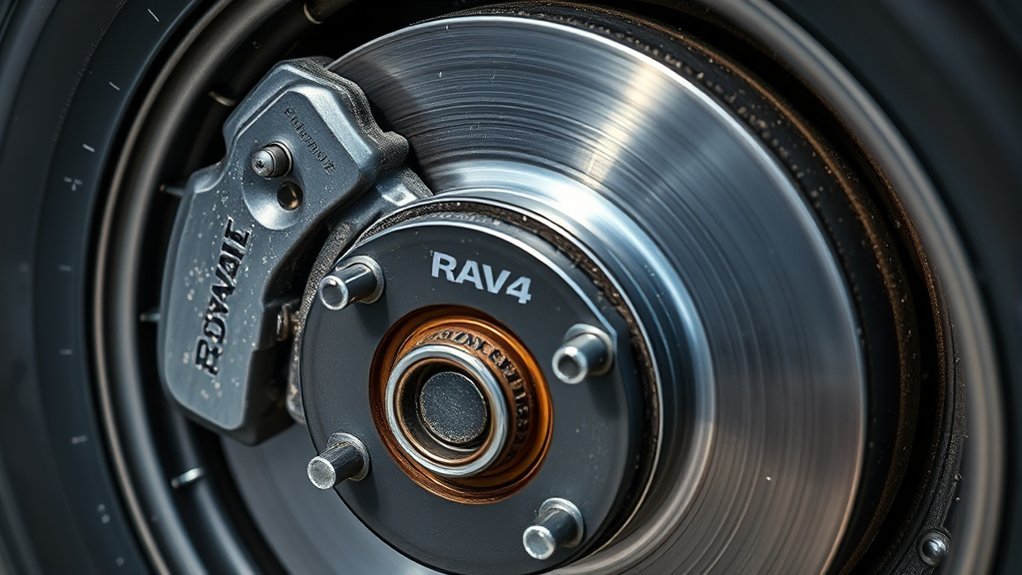
When you hear a high-pitched squeal from your RAV4’s brakes, the pad’s metal wear indicator is doing its job: it’s telling you the friction material is nearly gone and the pads need replacement. You’ll recognize the squealer function as an intentional alert, not a random noise. It’s a simple, reliable early warning that prevents metal-on-metal contact and costly rotor damage.
Act promptly to preserve stopping power and maintain control. Routine inspections catch brake wear before the squealer engages, letting you change pads on your schedule instead of under stress. If you ignore the sound, wear escalates and safety degrades.
Follow these practical steps:
- Schedule a pad inspection immediately.
- Replace pads when thickness reaches manufacturer spec.
- Inspect for uneven wear or contamination.
- Don’t drive extensively after squealers activate.
Treat the squeal as liberation from uncertainty—respond decisively to keep your RAV4 safe and mechanically free.
When Rotors Are Warped or Scored
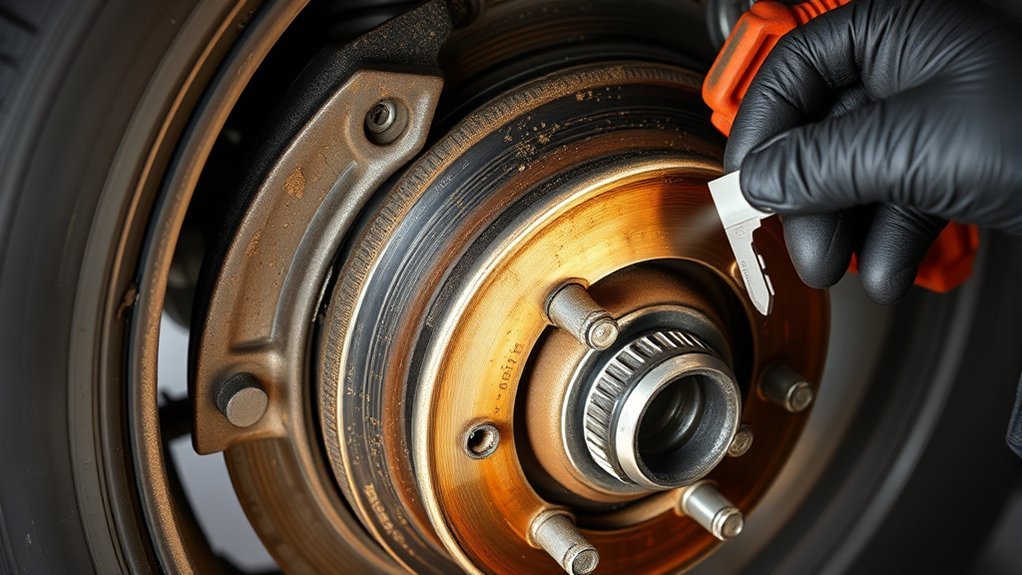
If you hear a deeper grinding or feel vibration through the steering wheel, check the rotor surface for scoring or uneven wear. Light scoring and slight thickness variation can often be corrected by resurfacing, but deep grooves or excessive runout mean replacement is safer. Have a professional measure rotor thickness and runout to determine whether resurfacing will restore proper braking or if new rotors are required.
Rotor Surface Damage
Rotor surface damage—warping or scoring—directly causes grinding noises and reduces braking efficiency by preventing consistent pad-to-rotor contact. You’ll notice pulsing pedals, steering vibrations, and uneven wear when excessive heat from aggressive braking alters rotor geometry. Different rotor types and brake materials react differently to heat; iron rotors may warp, while coated or composite designs resist scoring longer.
- Inspect for grooves, heat spots, and runout.
- Don’t just swap pads—address rotor condition.
- Monitor pedal feedback and steering vibration.
- Schedule professional evaluation promptly.
You deserve control and safety; act to identify damage early. Regular inspections and maintenance stop noise escalation and restore reliable stopping power without surrendering mobility.
Resurfacing Vs Replacement
Because resurfacing can restore a smooth braking surface at lower cost, you’ll want to weigh it against replacement based on rotor thickness, runout, and depth of scoring. If measurements stay within manufacturer limits and scoring is shallow, resurfacing can return proper friction and reduce vibration while preserving rotor lifespan—useful when you’re managing costs and reclaiming control over maintenance. Replace rotors when warp exceeds specs, scoring is deep, or thickness approaches the minimum; new rotors restore heat dissipation and long-term reliability for the brake system. Resurfaced rotors often wear faster under heavy use, so plan inspection intervals accordingly. Have a trained technician perform micrometer and runout checks; an improper decision compromises braking performance and your freedom to drive safely.
Sticking Calipers: Smells, Heat, and Pulls
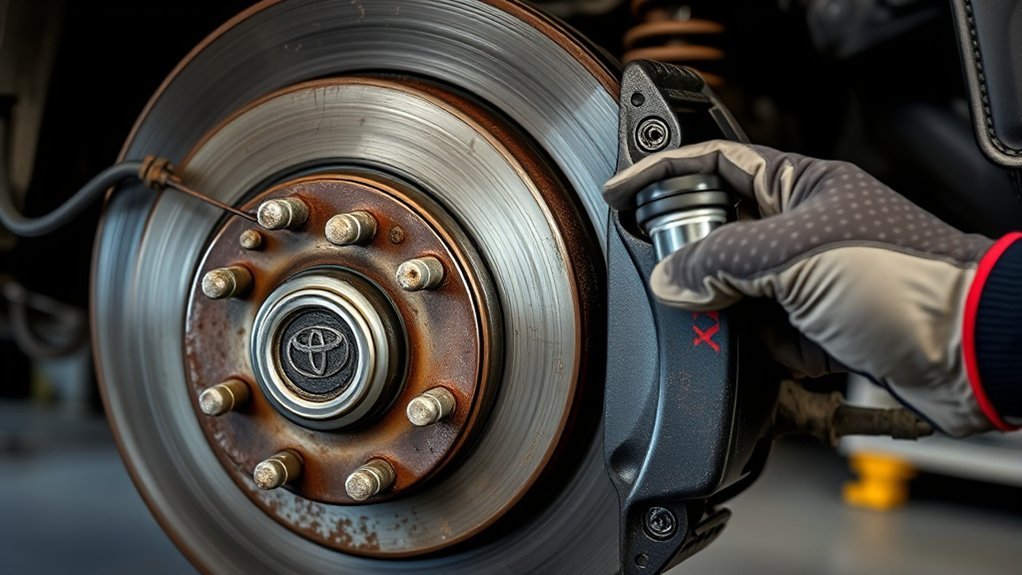
When a caliper sticks, it keeps the pad pressed against the rotor so you’ll hear grinding and feel continuous drag; you may also notice a distinct burning-rubber smell and a wheel that’s hotter than the others. You should treat this as a brake system emergency: continuous friction wears parts fast and reduces your control.
If a caliper sticks you’ll hear grinding, feel drag, smell burning rubber, and notice an unusually hot wheel — treat it as an emergency.
A sticking caliper often causes a pull to one side even without braking. You can check temperature by carefully comparing wheel heat after a short drive; elevated heat on one corner signals a seized piston or slider.
Act quickly to preserve safety and freedom on the road. Typical corrective actions include inspection, cleaning, lubrication, or replacement by a professional.
- Diagnose: compare wheel temperatures and ride pull.
- Inspect: caliper pistons, slide pins, hoses for restriction.
- Repair: clean and lubricate moving parts if serviceable.
- Replace: install new caliper and bleed system when seized.
Prioritize caliper maintenance to prevent further brake system damage and restore reliable braking.
Contamination, Debris, and Surface Rust Issues
If your RAV4 starts grinding after rain, a long park, or work under the hood, contamination, trapped debris, and surface rust are common culprits that reduce pad-to-rotor contact and cut braking effectiveness. You’ll want to assess brake contamination effects quickly: oil or grease on pads eliminates proper friction and usually means pad replacement. Surface rust often causes brief grinding after parking; it typically clears with a few firm stops, but persistent noise needs inspection.
Debris impact analysis: stones or metal shards lodged between rotor and caliper abrade surfaces and create continuous grinding. Cleanliness and routine inspection free you from escalating failures and mounting repair costs. Don’t ignore signs — contamination can progress to full brake failure.
| Symptom | Likely Cause | Action |
|---|---|---|
| Persistent grind | Contaminated pads | Replace pads, clean caliper |
| Intermittent grind | Surface rust | Test with stops |
| Harsh grinding | Trapped debris | Remove debris, inspect rotor |
When ABS or Wheel Bearings Mimic Grinding
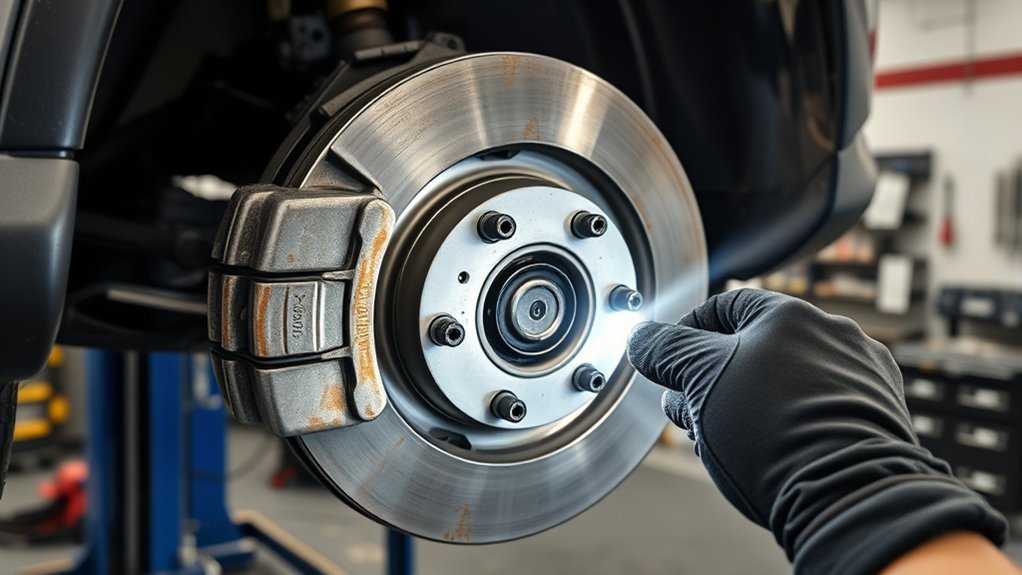
When you hear a grinding noise under braking, check whether the ABS pump activation is cycling rapidly on slippery surfaces, as that pulsating action can sound like scraping. Also inspect for worn wheel bearings, which produce a deeper, speed-correlated grind that worsens when turning and often transmits vibration to the steering. Inspecting ABS components and bearings together will pinpoint the source and prevent misdiagnosis.
ABS Pump Activation
Although it can sound like worn pads or rotors, an ABS pump activates under hard braking or wheel slip and produces a distinct grinding noise as the system modulates brake pressure to prevent lockup. You’ll feel a pulsating pedal; that’s the abs system functions working with brake engagement dynamics to maintain traction. This noise usually fades once control returns.
- Listen during emergency stops or on slick surfaces.
- Note pedal pulsation versus continuous rough grinding.
- Inspect ABS fault codes before brake component replacement.
- Schedule regular maintenance to confirm pump and related hardware integrity.
Trust system feedback; it’s protecting your freedom to control the vehicle. If noise persists without ABS activity, seek professional diagnostics promptly.
Worn Wheel Bearings
You might hear a grinding that sounds like brakes or ABS but actually comes from worn wheel bearings, and telling the difference matters for safety. You’ll notice wheel bearing symptoms as a deep, persistent grinding noise that grows with speed and doesn’t stop when you brake. The tone shifts when you turn or shift vehicle weight, unlike brake noise which shows up during braking. Ignore this and you risk complete bearing failure or wheel detachment. Inspect bearings regularly and replace them promptly to reclaim control and safety.
| Symptom | Cause | Action |
|---|---|---|
| Persistent rumble | Worn bearings | Inspect hub/axle |
| Changes when turning | Load shift | Test at low speed |
| Persists while braking | Not brakes/ABS | Replace promptly |
Five DIY Checks (Tools, Parts, and Costs)
Start with five practical checks you can do in your driveway using basic tools: a jack, jack stands, a lug wrench, a flashlight, and a mechanic’s pry bar or screwdriver. First, perform a visual inspection: remove the wheel and verify pad thickness—replace pads under 1/4 inch to avoid metal-on-metal wear. Second, check for debris trapped between rotor and caliper; remove pebbles or buildup that cause grinding. Third, inspect the brake rotor surface for scoring or warping; visible grooves or unevenness mean resurfacing or replacement. Fourth, do a caliper inspection and test movement; sticking calipers cause uneven wear and may need lubrication or replacement of seized parts. Fifth, check brake fluid level and condition—contamination can affect caliper operation. Budget guidance: pads typically run $100–$300 (parts & labor); rotor resurfacing adds $50–$150 depending on extent and local rates. These hands-on checks free you from doubt and focus repair decisions.
Preventive Maintenance Plan for Your RAV4
Because regular checks catch wear before it damages components, set up a preventive brake maintenance plan that schedules inspections at least once a year or every 12,000 miles, includes pad replacement before the lining reaches the metal backing, and mandates cleaning and lubrication of brake components to prevent debris-related grinding and sticking calipers. You’ll monitor pad thickness, caliper function, rotor surface condition, and brake fluid level during each visit. Use factory-matching pads and hardware to preserve modulation and reduce noise. At tire rotations or oil changes, verify brake response so small issues don’t escalate. Implement rotor maintenance: measure runout and thickness, resurface only when within spec, replace when warped or below minimum thickness. Flush and replace brake fluid per manufacturer intervals to prevent moisture-induced corrosion and compromised hydraulic performance. Log service dates, parts used, and measurements so you control timing and cost. This disciplined plan keeps your RAV4’s brakes reliable and frees you from avoidable breakdowns and expensive repairs.
Frequently Asked Questions
Why Does My RAV4 Make a Grinding Sound When I Brake?
Your RAV4 grinds when braking because brake pad wear has exposed metal, causing metal-on-metal contact and rotor damage; you should act fast, liberate yourself from risk, replace pads and resurface or replace rotors promptly.
What Is the Most Common Issue With the Toyota RAV4?
Like a worn coin scraping a slot, the most common issue you’ll face is worn-out brake pads. Owner experiences and common complaints show you’ll need timely inspections, quality parts, and regular maintenance to avoid grinding.
Conclusion
Your RAV4’s brakes are like a clock: when friction parts wear, the ticks turn to grinding, and the whole mechanism complains. Inspect pads, rotors, and sensors as you would gears — look for scoring, rust, or loose bearings — and replace the faulty teeth promptly. Clean contaminants, torque fasteners, bleed ABS lines if needed, and schedule regular checks. Treat the system like precise machinery, and the grinding will fade back into smooth, dependable motion.