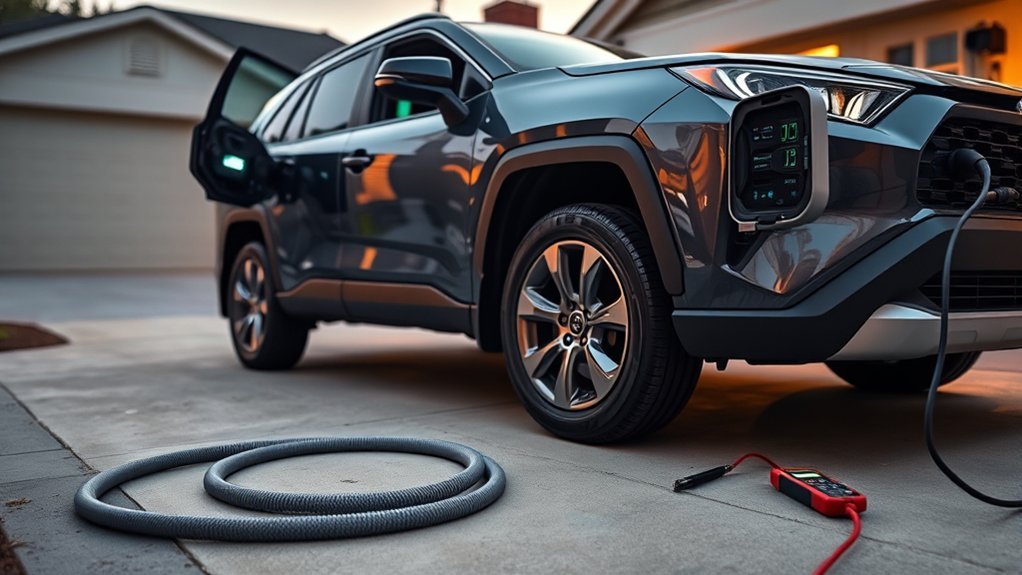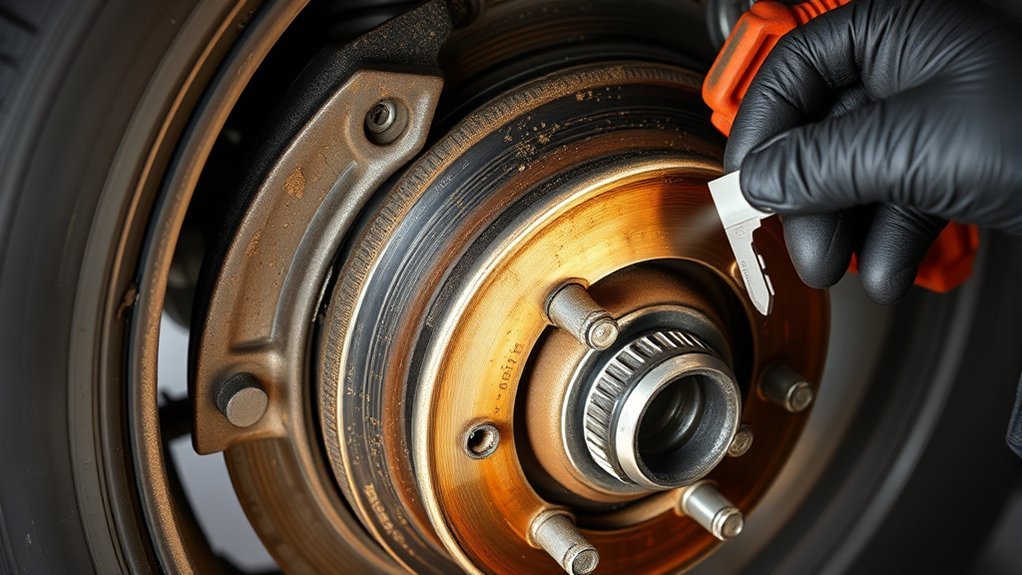
If your Toyota RAV4 grinds when braking, treat the noise as a brake-safety warning until you identify the cause. Grinding only when you press the pedal most often points to worn pads, damaged rotors, trapped debris, surface rust, a sticking caliper, or loose hardware. A growl that continues while coasting or changes during turns may come from a wheel bearing or tire instead. Stop driving and arrange towing if the pedal feels soft, the vehicle pulls hard, a warning light appears, or you notice smoke, fluid, or a burning smell.
Last updated: July 15, 2026 · Reviewed for accuracy by: Auto Review Nest Editorial Team
Evidence note: This guide uses Toyota maintenance guidance and symptom-based brake diagnosis. It cannot confirm the fault on your specific RAV4 without a physical inspection.
Quick Answer
Repeated RAV4 brake grinding is most often linked to worn pads, a damaged rotor, debris or dust-shield contact, or a dragging caliper. A brief scrape after rain may be light surface rust if it clears after a few gentle stops. If the noise is metallic or comes with a soft pedal, pulling, heat, smell, smoke, fluid leakage, or warning lights, stop driving and arrange inspection or towing.
Key Takeaways
- Grinding tied to brake-pedal input usually points to pads, rotors, calipers, hardware, rust, or debris; noise that continues while coasting may come from a bearing, tire, or shield.
- A squeal that becomes grinding can mean the wear indicator or pad backing plate is contacting the rotor.
- A brief scrape after rain may clear as light surface rust wears off, but repeated or one-wheel grinding needs inspection.
- Pulling, a burning smell, smoke, fluid leakage, or one wheel much hotter than the others makes the problem urgent.
- Toyota’s 2026 RAV4 Hybrid guide specifies visual brake-pad and disc inspection every 5,000 miles and thickness/runout inspection every 30,000 miles; confirm the schedule for your exact year and powertrain.
At a Glance
| Time Required | Varies by access and experience; allow the brakes to cool and never rush vehicle lifting |
| Difficulty | Beginner for visual checks; intermediate to advanced for brake repair |
| Tools Needed | Wheel chocks, a rated floor jack, jack stands, lug wrench, flashlight, gloves, inspection mirror, and optionally a brake pad gauge |
| Cost | Inspection can be free if you have tools; repair cost depends on pads, rotors, calipers, model year, and local labor rates |
Warning: If the brake pedal feels soft, the RAV4 pulls hard to one side, you smell burning, see smoke, hear metal-on-metal grinding, or a brake warning light appears, stop in a safe place and arrange professional inspection or towing.
Why Is Your RAV4 Grinding When You Brake?
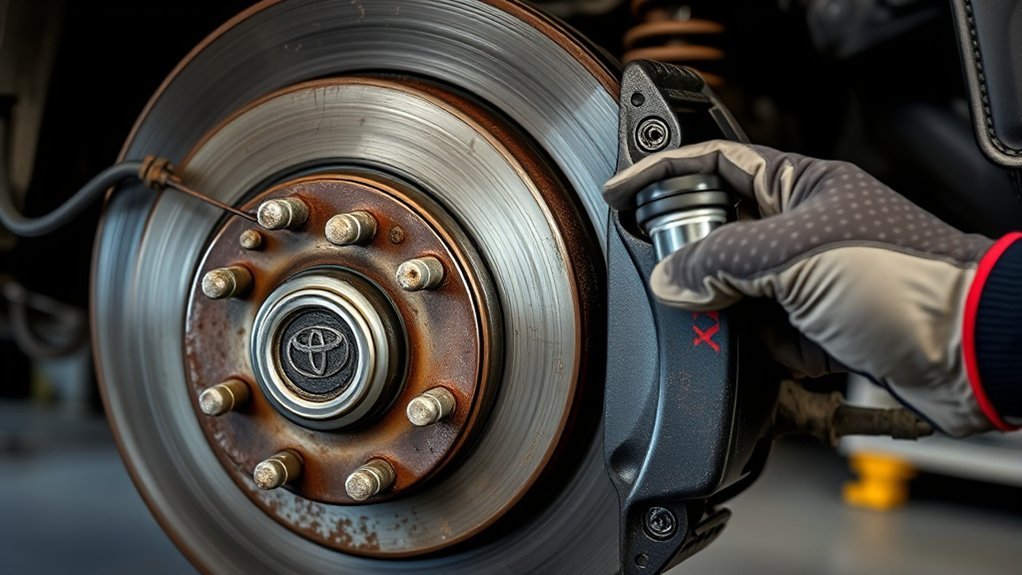
Start with when the grinding happens. A sound that appears only when you apply the brakes usually comes from the brake system. A grinding or roaring sound that changes with road speed, even when you are not braking, may come from a wheel bearing, tire, or suspension part instead.
The most common brake-related causes include worn brake pads, scored or heat-damaged rotors, debris near the rotor or dust shield, surface rust, sticking calipers, loose hardware, or contaminated pads. A high-pitched squeal before the grind can be a pad wear indicator. Pedal pulsation can accompany rotor runout or disc-thickness variation, but pulsation alone does not prove what is creating the grinding sound.
Use the symptoms below to narrow the search before you remove any parts:
| Symptom | Likely Area | What to Check First | Urgency |
|---|---|---|---|
| Squeal that becomes grinding | Brake pads and rotor | Inner and outer pad thickness, wear indicator, rotor face | High; avoid driving far |
| Grinding plus pedal pulsation | Rotor surface, runout, or thickness variation | Scoring, rust, heat marks, and measured runout/thickness | Prompt inspection |
| Grinding plus burning smell | Caliper, hose, or dragging pad | Wheel heat, uneven wear, smoke, and fluid leakage | Stop and arrange service |
| Brief scrape after rain or parking | Light surface rust | Whether it clears after a few gentle stops | Monitor; inspect if it persists |
| Deep rumble that changes while turning | Wheel bearing, tire, or shield | Noise while coasting, tire condition, hub play, and steering vibration | Prompt inspection |
[Products Worth Considering]
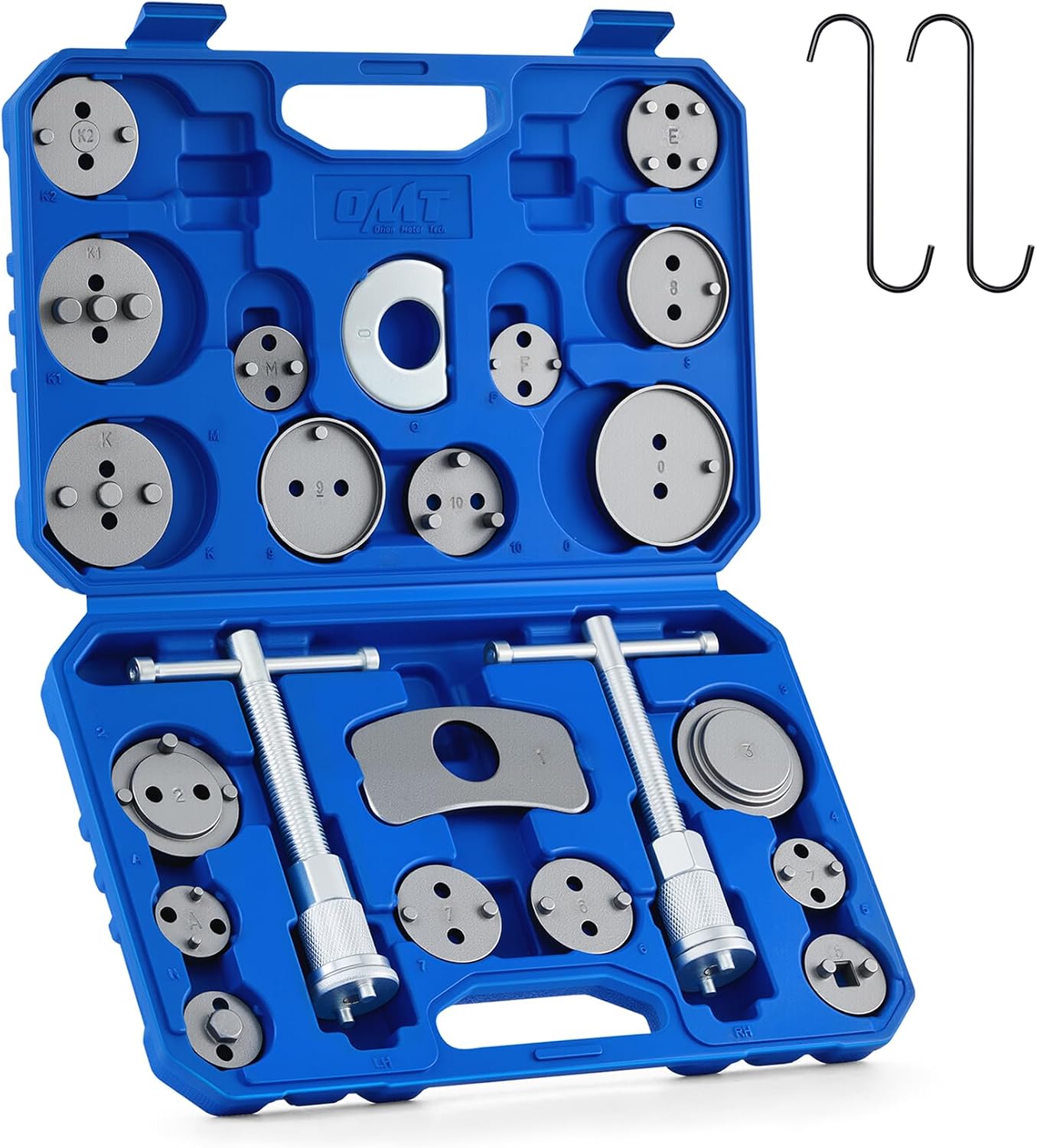
This 24-piece brake caliper compression tool set helps you quickly and safely rotate pistons back into the caliper during brake pad service. It includes multiple adapters, retaining plates, thrust bolt assemblies, and hangers for broad vehicle compatibility, while the heavy-duty steel construction and organized storage case make it ideal for reliable shop or home repairs.

This brake caliper compression tool helps make disc brake pad replacement and caliper servicing faster, safer, and more controlled. Its universal ratcheting design supports multi-angle operation in tight wheel spaces, while the sturdy steel build and widened contact plate help reduce slipping and uneven force during maintenance. Two caliper hooks are included to simplify solo brake work and keep components organized.

This brake caliper compression tool makes brake pad replacement faster by retracting single, dual, or quad pistons with minimal effort. Built for compatibility across many cars, trucks, ATVs, UTVs, and SUVs, it delivers strong pressing power for efficient maintenance. The durable aluminum alloy and steel construction, along with organized EPE foam storage, help keep it protected and ready for repeated use.
What the Noise Location Can Tell You
One hot or noisy wheel raises suspicion for trapped debris, a dragging caliper, damaged hardware, or a wheel bearing. Rear grinding can involve the rear service brakes or parking-brake hardware, depending on model year. Sound can travel through the body, so use location as a clue rather than proof.
Diagnostic rule: Do not buy parts from sound alone. Look for at least two matching signs, such as pedal timing plus visible wear, or one hot wheel plus uneven pad wear.
How to Tell If It’s Brakes or Suspension
Check the noise timing pattern first. If the grind happens only while pressing the brake pedal, focus on pads, rotors, calipers, brake clips, and dust shields. If the noise changes with speed, appears while coasting, or gets louder when turning, inspect the suspension, wheel bearings, tires, and hub area too.
Noise Timing Pattern
Brake noise usually follows pedal input. Suspension and bearing noise usually follows road speed, bumps, or steering load. Use this quick pattern check:
- Grinding only while braking at low speed: worn pads, rusty rotors, debris, or a pad hardware issue.
- Squeal before grinding: the pad wear indicator may be touching the rotor.
- Grinding that worsens while turning: wheel bearing, backing plate, suspension movement, or caliper movement.
- Grinding with pedal vibration: scored rotors, rotor runout, uneven pad deposits, or ABS activity on slick surfaces.
Directional Pull or Vibration
If the RAV4 pulls to one side while braking, one side may be applying more braking force than the other. Common causes include uneven pad wear, a sticking caliper, a restricted brake hose, rotor surface variation, tire problems, or alignment issues. If vibration is mainly in the brake pedal during braking, the rotors should be measured for thickness variation and runout.
Suspension faults usually show up over bumps, during cornering, or at speed even when you are not braking. Brake faults are more likely to appear during deceleration.
Visual and Physical Checks
After the RAV4 is parked on level ground, the brakes are cool, and the vehicle is supported by jack stands, use a careful visual inspection to separate brake issues from suspension issues. Do not touch the rotor, caliper, or wheel if overheating is possible.
- Look at pad thickness: if the friction material is very thin, uneven, cracked, glazed, or down to metal, replace the pads and inspect the rotors.
- Inspect rotor faces: heavy grooves, blue heat spots, cracks, or a deep lip at the rotor edge need professional measurement.
- Check for debris: small stones, rust flakes, or bent dust shields can scrape the rotor.
- Look for caliper-drag clues: uneven inner-to-outer pad wear, torn boots, heat discoloration, or one wheel much hotter than the others can point to seized slide pins, a stuck piston, or a restricted hose. Leave movement and hydraulic tests to a qualified technician.
- Check suspension and hub movement: looseness, clunks, torn boots, or a rough wheel bearing can mimic brake grinding.
How Can You Tell If RAV4 Brake Pads Are Worn?
If you hear a high-pitched squeal or a harsh grind, inspect the brake pads right away. Brake pads use friction material bonded to a backing plate. When that material wears too low, the backing plate or wear indicator can contact the rotor and create noise.
Do not rely on noise alone. Some pads wear without a clear warning sound. Hybrid and Prime models still require scheduled friction-brake inspections, and low apparent pad wear does not rule out rust, glazing, contamination, or uneven wear.
| Check | What to Look For | Action |
|---|---|---|
| Visual thickness | Pad material near the wear indicator or below service spec | Replace pads and inspect rotors |
| Wear pattern | One pad much thinner than the other | Inspect caliper, slide pins, and brake hose |
| Metal exposure | Shiny backing plate or metal contact marks | Stop driving far; repair immediately |
| Surface condition | Glazing, cracks, oil, grease, or crumbling edges | Replace pads and correct the source |
| Hardware | Missing clips, loose shims, bent dust shield | Replace hardware or reposition shield |
Note: Toyota’s 2026 RAV4 Hybrid maintenance guide specifies scheduled maintenance every 5,000 miles or six months, visual inspection of brake pads and discs every 5,000 miles, and thickness/disc-runout inspection every 30,000 miles. Confirm the schedule for your exact year and powertrain in the Toyota owner manuals and maintenance guides.
[Products Worth Considering]

TOVASTY rear brake pads are designed for a wide range of Toyota and Lexus models, delivering dependable braking performance with a carbon ceramic formula. They help reduce brake dust, promote quieter operation, and support consistent stopping power with improved heat resistance for everyday driving confidence.

Bendix Premium Ceramic Front Brake Pads are engineered to match original equipment fit, form, and function for a straightforward replacement. Built with durable materials to help resist wear and corrosion, they support consistent braking performance and reduced brake fade for everyday driving. These pads are a dependable choice for compatible Pontiac, Scion, Toyota, and related vehicles.

PowerStop Z17 Evolution Ceramic Brake Pad Set is an OE replacement solution built for dependable everyday braking and consistent value. Designed with chamfered, slotted surfaces and rubberized shims, it helps deliver quiet stopping performance with reduced brake dust and cleaner wheels. The kit includes stainless steel installation hardware for an easy bolt-on install and comes backed by a limited warranty.
What Does a RAV4 Brake-Pad Squealer Sound Like?
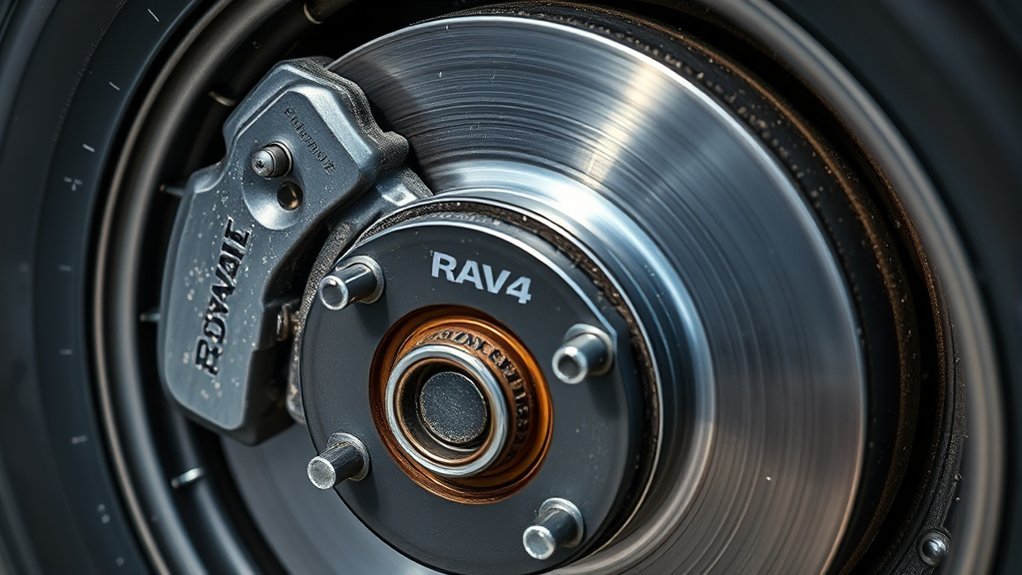
A pad squealer is a small metal wear indicator designed to contact the rotor as the friction material gets low. It can create a sharp, repeated squeal before a harsher grinding sound begins. Treat the squeal as an inspection signal, not proof that every other brake part is healthy.
If you continue driving after the squeal becomes grinding, the backing plate can cut into the rotor. That can turn a simple pad replacement into a pad-and-rotor repair.
- Schedule a pad inspection as soon as the squeal starts.
- Replace pads when they are at the wear indicator, below specification, unevenly worn, cracked, glazed, or contaminated.
- Inspect both sides of the rotor, not just the outside face.
- Do not drive extensively once the sound becomes harsh or metallic.
Can Scored or Heat-Damaged Rotors Cause Grinding?
Brake pulsation is often linked to rotor runout, disc-thickness variation, uneven pad deposits, rust, or heat damage rather than a rotor that is visibly bent. Heavy scoring or metal-to-metal pad contact can add a grinding sound, while runout or thickness variation is more closely associated with pedal pulsation.
[Products Worth Considering]
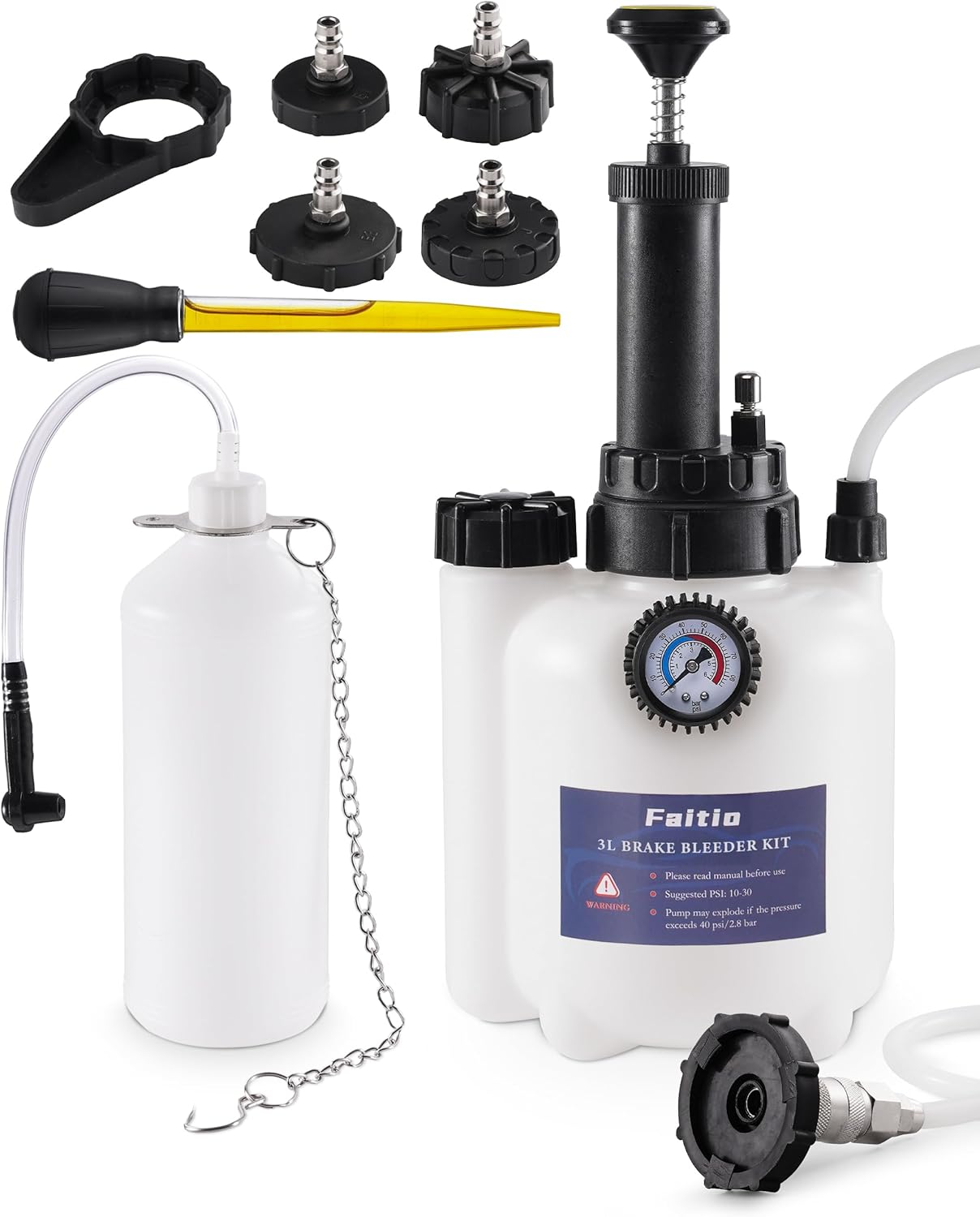
This one-man brake bleeding kit helps flush old brake fluid and remove trapped air for firmer, more responsive braking without the hassle of a second person. Its improved sealing and translucent catch bottle help prevent leaks while making fluid level checks easy during use. With multiple adapter sizes for many vehicle makes, it is a practical tool for clean, efficient brake system maintenance.

This brake caliper hanger set helps hold calipers securely during brake pad changes and other suspension or axle work, making brake service safer and more convenient. Built from durable steel with rust-resistant coating, it features rubber tips to help prevent scratches and protect brake hoses and surrounding components. Brightly colored and easy to spot, it is a practical mechanic tool for keeping calipers supported while you work.

This brake bleeder hose kit helps remove old brake fluid and air from motorcycle brake and clutch systems quickly and efficiently. Its one-way check valve prevents air from being drawn back into the system, while the easy-to-connect clips make bleeding simple for routine maintenance. Built for reliable use, it is a practical tool for keeping motorcycle braking performance responsive.
Rotor Surface Damage
Rotor surface damage prevents smooth pad-to-rotor contact. Look for deep grooves, rough rust patches, cracks, blue or purple heat marks, and a raised lip at the outer edge. If the steering wheel shakes or the pedal pulses during braking, a technician should measure rotor runout and thickness with the correct tools.
- Inspect both rotor faces for grooves and rust.
- Do not install new pads on a badly scored or below-spec rotor.
- Check caliper slide movement so the new parts do not wear unevenly.
- Use the rotor minimum thickness and runout specs for your exact RAV4 year.
Resurfacing vs. Replacement
A rotor may be resurfaced only if measurement shows it will remain above the minimum thickness after machining and within the applicable runout limit. Replace it if it is below specification, cracked, deeply grooved, heavily rust-pitted, or heat-damaged beyond service limits.
A shop should measure rotor thickness and runout before deciding. Installing new pads on an unverified damaged rotor can lead to vibration, poor bedding, short pad life, or repeat noise.
How Do You Spot a Sticking RAV4 Brake Caliper?
When a caliper sticks, it can hold the pad against the rotor even after you release the brake pedal. That constant friction creates heat, drag, uneven wear, burning smell, and sometimes smoke.
A sticking caliper can turn a small brake noise into overheated pads, a damaged rotor, and reduced stopping control.
Common sticking-caliper causes include seized slide pins, torn slide boots, a stuck piston, a restricted brake hose, corrosion, or incorrect hardware installation. After a short and gentle drive, an infrared thermometer can compare wheel temperatures from a safe distance. A hotter wheel is a clue, not a complete diagnosis, and you should never touch the rotor or caliper.
- Diagnose: note pulling, drag, smell, and one wheel hotter than the others.
- Inspect: check the caliper piston, slide pins, boots, pads, and brake hose.
- Service: clean and lubricate slide pins only with brake-safe lubricant where specified.
- Replace: install a caliper, hose, pads, or rotor when parts are seized, leaking, or heat-damaged.
Warning: Do not spray water on an overheated rotor or caliper. Sudden cooling can damage brake parts and may create steam or injury risk.
Can Rain, Rust, Debris, or Fluid Cause Brake Grinding?
If your RAV4 grinds after rain, a car wash, snow, long parking, or recent work near the brakes, the cause may be rust, debris, or contamination rather than worn-out pads. Light surface rust can sound rough for the first few stops, then fade. Continuous grinding needs inspection.
Oil, grease, brake fluid, or road chemicals on the pad friction surface can reduce braking performance and create noise. Contaminated pads usually should be replaced, not simply wiped clean.
| Symptom | Likely Cause | Action |
|---|---|---|
| Brief scrape after sitting | Light rotor surface rust | Drive gently and see if it clears after a few stops |
| Harsh grind at one wheel | Stone, rust chunk, or bent dust shield | Remove wheel, inspect shield and rotor area |
| Grinding with poor bite | Oil, grease, or fluid contamination | Replace pads and fix the leak or contamination source |
| Rough noise after new parts | Improper bedding, hardware, shield contact, or rotor finish | Recheck installation and break-in procedure |
Why Are the Brakes Grinding After a Recent Brake Job?
New brakes should not make harsh metal-on-metal grinding. A light smell or mild noise during bedding can happen, but loud grinding means something needs to be checked.
Common post-repair causes include a bent dust shield rubbing the rotor, old hardware reused with new pads, missing abutment clips, pads installed incorrectly, caliper slide pins left dry or seized, lug nuts torqued unevenly, or rotors not cleaned before installation.
Pro Tip: After brake work, ask the shop whether the rotors were measured, whether the hardware was replaced, and what pad bedding procedure they recommend for your specific parts.
Can ABS or a Wheel Bearing Sound Like Brake Grinding?
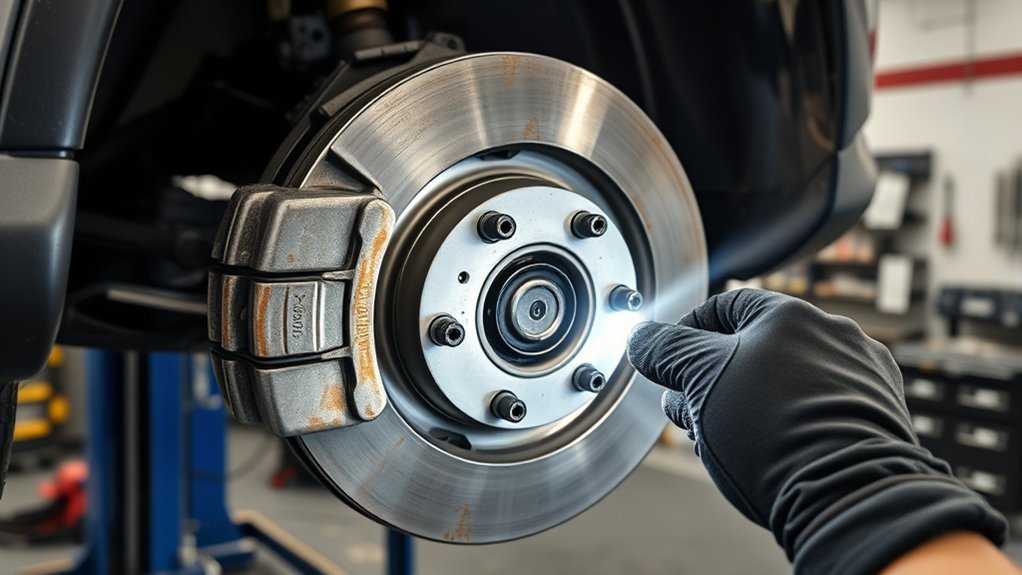
Not every grinding sound comes from worn pads. ABS operation and wheel bearings can feel or sound similar, especially during emergency braking, slick-road stops, or turning.
ABS Pump Activation
During hard braking or wheel slip, ABS can rapidly modulate brake pressure. You may feel pedal pulsation and hear a buzzing, scraping, or grinding-like sound. That can be normal during ABS activation, especially on wet, icy, gravel, or uneven roads.
However, ABS-like pulsing during gentle dry-road braking, warning lights, or grinding that continues after the stop should be diagnosed. A scan tool can check ABS wheel speed sensor faults and stored codes.
Worn Wheel Bearings
A worn wheel bearing often makes a deeper growl, rumble, or grind that increases with vehicle speed. It may change pitch when turning because the load shifts from one side of the vehicle to the other. Unlike brake pad grinding, bearing noise often continues when you are not pressing the brake pedal.
| Symptom | Possible Cause | Next Step |
|---|---|---|
| Deep rumble at speed | Wheel bearing or tire wear | Inspect hub, tire, and suspension |
| Noise changes when turning | Bearing load shift | Road test and hub inspection |
| Noise only while braking | Pads, rotors, calipers, or hardware | Inspect brake system first |
What Can You Safely Check at Home?
Use basic tools for a safe first inspection: wheel chocks, a rated floor jack, jack stands, a lug wrench, flashlight, gloves, an inspection mirror, and optionally a brake pad gauge. Never work under a vehicle supported only by a jack, and do not pry, disconnect, or open hydraulic brake parts during a visual check.
- Check pad thickness. Inspect both the inner and outer pads. If safe access requires wheel removal, follow the lifting points and procedures for your exact RAV4. Pads at the wear indicator, below specification, unevenly worn, cracked, glazed, or contaminated need service.
- Look for trapped debris. Pebbles, rust flakes, or metal fragments can lodge near the caliper or rotor and create harsh scraping.
- Inspect rotor faces. Look for deep grooves, rust pitting, cracks, blue heat spots, or a heavy lip at the edge.
- Check for caliper-drag clues. Uneven inner-to-outer pad thickness, heat discoloration, or one wheel much hotter than the others can point to sticking slide pins, a seized piston, or a restricted hose. A technician should confirm the cause.
- Check brake fluid level and visible leaks. Low fluid, wet calipers, wet hoses, or a soft pedal should be handled by a qualified technician. Do not open a bleeder screw or disconnect a hose.
For parts, use pads, rotors, and hardware that match your exact year, trim, drivetrain, and brake package. Toyota’s official parts catalog lets you search by VIN or vehicle to confirm fitment for brake pads and brake rotors.
When Should You Stop Driving a Grinding RAV4?
Some brake noises can be inspected at home, but several symptoms are not worth risking. Arrange professional service or towing if you notice any of these:
- Metal-on-metal grinding that does not go away after a short, gentle test.
- Brake pedal sinking, softness, or sudden change in pedal height.
- Brake warning light, ABS warning light, or multiple stability-control warnings.
- Fluid leaking near a wheel or under the brake master cylinder area.
- Smoke, burning smell, or one wheel much hotter than the rest.
- RAV4 pulling hard to one side while braking.
- Grinding after a brake repair that gets worse instead of better.
You can also check for open safety recalls by VIN through the NHTSA recall lookup. A recall check does not replace diagnosis, but it helps you catch model-specific safety issues.
How Can You Prevent RAV4 Brake Grinding?
Brake grinding is easier to prevent than repair. Build brake checks into your normal maintenance schedule instead of waiting for noise. Toyota’s 2026 RAV4 Hybrid guide calls for maintenance every 5,000 miles or six months, visual brake-pad and disc inspection every 5,000 miles, and thickness/disc-runout inspection every 30,000 miles. Use the guide for your exact model year and powertrain because schedules and procedures can differ.
- At tire rotations: look at pad thickness, rotor condition, caliper boots, and brake hose condition.
- At every oil change: note any squeal, grind, pull, pulsation, or burning smell.
- After winter or salty roads: inspect for rust buildup, seized hardware, and uneven wear.
- After towing, mountain driving, or heavy traffic: check for overheating signs and rotor vibration.
- After brake work: recheck for noise, even pad contact, proper hardware, and correct bedding.
- Keep records: log mileage, pad thickness, rotor measurements, parts used, and repair dates.
Frequently Asked Questions
Why does my RAV4 make a grinding sound when I brake?
The most common causes are worn brake pads, rotor scoring, trapped debris, surface rust, sticking calipers, loose brake hardware, or contaminated pads. If the grinding is harsh, metallic, repeated, or paired with pulling, vibration, heat, smell, or warning lights, have the brake system inspected immediately.
Can I drive my RAV4 if the brakes are grinding?
Only drive far enough to get to a safe place if the grind is severe. Metal-on-metal braking can reduce stopping performance and damage the rotors. If the pedal feels abnormal, the vehicle pulls, a warning light is on, or you smell burning, stop driving and arrange service or towing.
Is a short grinding noise after rain normal?
A brief scrape after rain, washing, snow, or overnight parking can be light rotor surface rust. It often clears after a few gentle stops. If the grinding continues, gets louder, or appears at one wheel, inspect the pads, rotors, dust shield, and caliper area.
Can ABS make a grinding sound?
Yes, ABS can create pedal pulsation and a buzzing or grinding-like sound during hard braking or slippery-road stops. That sound should stop when ABS stops cycling. If it happens during gentle braking on dry pavement or warning lights appear, scan the ABS system and inspect the brakes.
What is the most common RAV4 brake grinding cause?
Worn pads and rotor surface problems are the most common brake-related causes, but the exact answer depends on mileage, driving conditions, maintenance history, and whether the sound happens only while braking. Check for rust, debris, caliper drag, and wheel bearing noise before replacing parts.
Why does my RAV4 grind only at low speed?
Low-speed grinding can make light rust, a bent dust shield, trapped debris, worn pads, or loose hardware easier to hear. If the noise repeats after the brakes are warm, occurs at one wheel, or comes with pulling or heat, inspect the brakes instead of assuming it is harmless.
Why are my RAV4 brakes grinding after new pads or rotors?
Harsh grinding after brake work can come from a rubbing dust shield, incorrect or missing hardware, a pad installed out of position, seized slide pins, debris, an unclean rotor surface, or another installation problem. Stop and have the work rechecked if the sound is loud, metallic, or getting worse.
Conclusion
Your RAV4’s pads, rotors, calipers, fluid, hoses, bearings, and hardware work as one system. Start by matching the noise to pedal input, road speed, turning, wheel heat, and visible wear. If the grind is repeated, metallic, or paired with a soft pedal, pulling, warning lights, smoke, leakage, or burning smell, stop driving and arrange professional inspection or towing.
Sources
- Toyota Manuals and Warranties — model-specific RAV4 owner manuals and maintenance guides.
- Toyota 2026 RAV4 Hybrid Warranty & Maintenance Guide — scheduled maintenance intervals and brake inspection items.
- NHTSA Recall Lookup — VIN recall checks and safety-problem reporting guidance.
- Toyota Genuine Brake Pads — brake pad fitment and replacement reference.
- Toyota Genuine Brake Rotors — rotor fitment and brake disc reference.