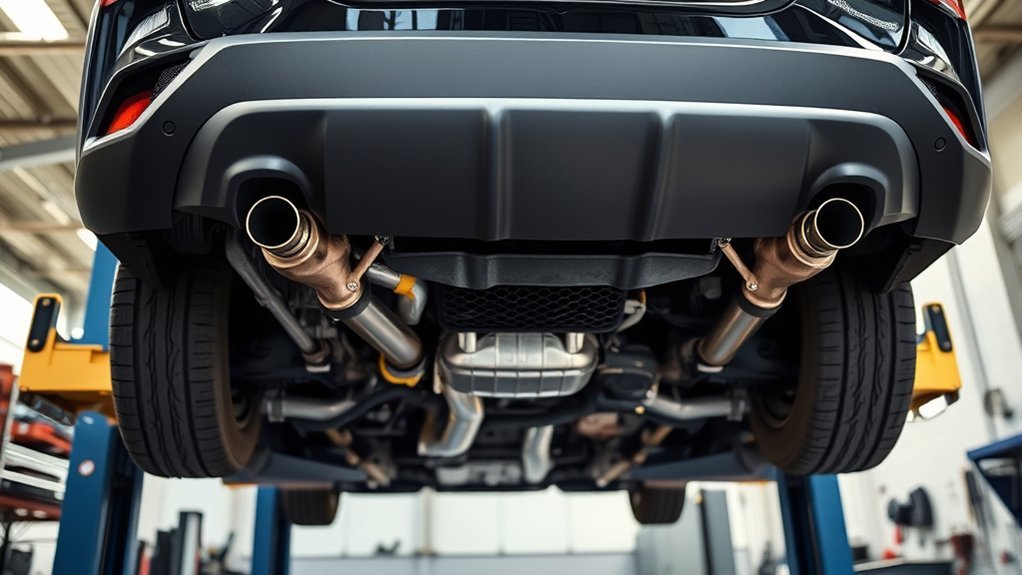
Your Toyota RAV4’s catalytic converter reduces harmful emissions by facilitating chemical reactions that convert toxic gases like carbon monoxide and nitrogen oxides into less harmful substances. It uses precious metals to promote these reactions, greatly improving air quality and minimizing greenhouse gases. Signs of issues include sluggish acceleration and unusual odors. Proper maintenance is essential to guarantee peak performance and prevent contamination. Learn more about how to diagnose and maintain your catalytic converter effectively.
What Is a Catalytic Converter and How Does It Work?
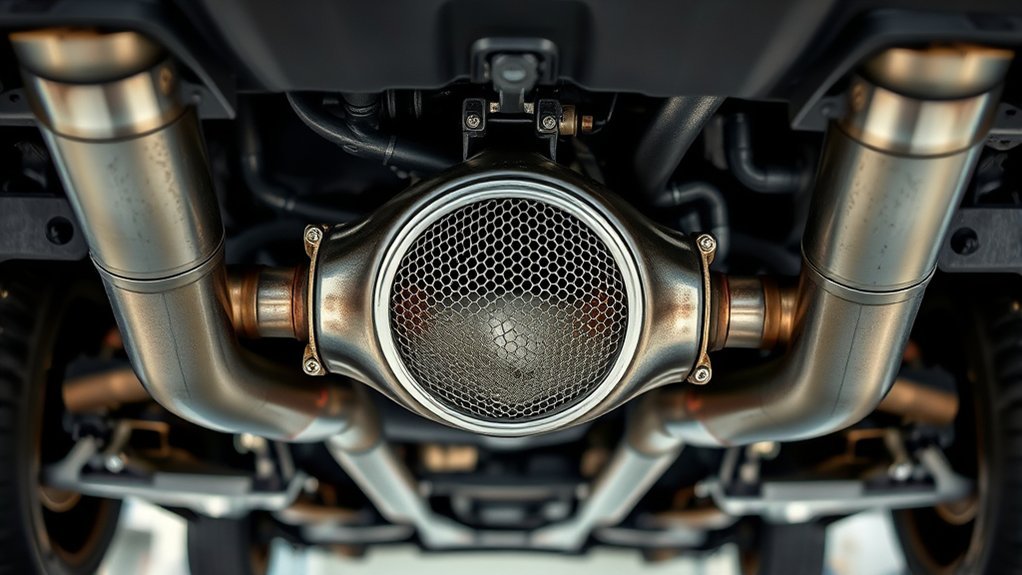
A catalytic converter is an important component of your vehicle’s exhaust system, designed to minimize harmful emissions. It operates through catalytic converter basics, utilizing precious metals like platinum, palladium, and rhodium to facilitate redox reactions. These reactions convert toxic gases—such as carbon monoxide and nitrogen oxides—into less harmful emissions, greatly improving air quality.
Understanding how it works is vital for maintaining catalytic converter longevity. A properly functioning converter guarantees peak vehicle performance and compliance with EPA regulations, which mandated its use in all gasoline-powered vehicles since 1975. If it fails, you risk increased emissions, diminished engine performance, and potential shutdown, underscoring the importance of regular maintenance.
The Importance of Catalytic Converters in Emission Control
Catalytic converters play a pivotal role in emission control, ensuring that your vehicle meets environmental standards while reducing harmful pollutants. These components transform toxic gases from your engine, such as carbon monoxide and nitrogen oxides, into less harmful emissions, greatly improving air quality. Since their introduction in the 1970s, they’ve become mandatory for gasoline-powered vehicles under stringent emission regulations.
Here’s a quick overview of the catalytic converter’s functions:
| Pollutant | Converted To | Environmental Impact |
|---|---|---|
| Carbon Monoxide | Carbon Dioxide | Reduces greenhouse gases |
| Nitrogen Oxides | Nitrogen | Improves air quality |
| Hydrocarbons | Carbon Dioxide | Mitigates smog formation |
| Unburned Fuel | Carbon Dioxide | Enhances fuel efficiency |
| Toxic Compounds | Less Harmful Compounds | Lowers overall toxicity |
Regular maintenance and prompt repairs of catalytic converters are essential for peak performance and compliance with emission regulations.
Common Signs of Catalytic Converter Issues in Your Toyota RAV4
If you notice your Toyota RAV4 struggling to accelerate, it might indicate reduced engine performance linked to a failing catalytic converter. You may also detect unpleasant exhaust odors, such as a sulfur-like smell, which can signify contamination issues. Additionally, increased emissions levels could lead to failing tests and thick smoke from the tailpipe, underscoring the need for immediate attention.
Reduced Engine Performance
When you notice sluggish acceleration in your Toyota RAV4, it might indicate a problem with the catalytic converter. A clogged catalytic converter restricts exhaust flow, leading to decreased power and efficiency. This restriction can particularly impact your acceleration, making your vehicle feel unresponsive. Engine misfires may also contribute to this issue, sending unburned fuel into the exhaust system and causing overheating, which further degrades the catalytic converter’s function. For ideal performance tuning, regular engine diagnostics are essential; they help identify these issues early, preventing significant drops in performance. Staying vigilant about potential warning signs can ultimately liberate your driving experience, ensuring your RAV4 runs smoothly and efficiently for years to come.
Unpleasant Exhaust Odors
Sluggish acceleration isn’t the only sign that your Toyota RAV4 may be experiencing catalytic converter issues. Unpleasant exhaust odors, particularly a sulfur-like or rotten egg smell, often indicate a failing converter. These exhaust smell causes can stem from overheating or contamination, typically due to unburned fuel entering the exhaust system. This signifies potential engine misfires that could damage the catalytic converter if left unaddressed. Employing odor detection methods is essential; if you notice unusual smells, it’s important to have your RAV4 inspected promptly. Regular maintenance and swift attention to these warning signs can help preserve your vehicle’s efficiency and extend the lifespan of the catalytic converter, ensuring compliance with environmental standards.
Increased Emissions Levels
Increased emissions levels often signal underlying issues with the catalytic converter in your Toyota RAV4. A failing catalytic converter can lead to thick, dark smoke from the tailpipe and may cause your vehicle to fail its emission test. You might also notice unusual sulfur-like odors, indicating overheating or contamination. Reduced engine performance, such as sluggish acceleration, often accompanies these elevated emissions. If the check engine light comes on, it’s a clear sign that the catalytic converter may be malfunctioning, exacerbating the problem. Regular inspections are essential, as unnoticed issues can shorten the catalytic converter lifespan and lead to further engine damage, ultimately increasing harmful emissions. Stay proactive to maintain your vehicle’s efficiency and compliance.
How to Diagnose Catalytic Converter Issues in Your RAV4
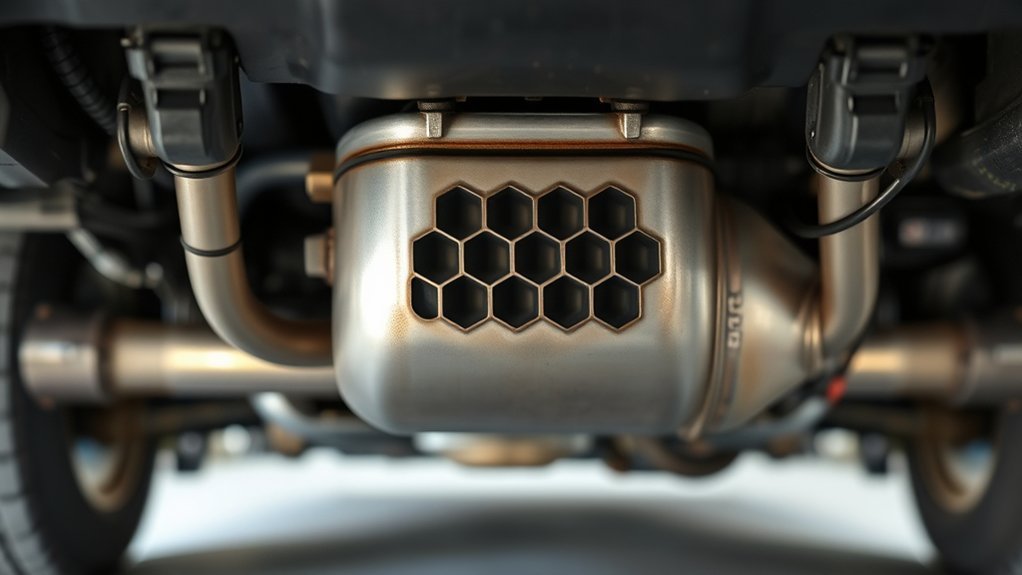
How can you tell if your RAV4’s catalytic converter is failing? Start with catalytic converter troubleshooting by observing your vehicle’s performance. If you notice sluggish acceleration or decreased power, it might indicate a clogged converter. Listen for unusual rattling noises during idling or starting, as these sounds could signal internal damage.
Next, monitor your exhaust for a sulfur-like or rotten egg smell, common signs of a failing catalytic converter. You should also inspect for dark or black smoke, which suggests improper functioning and excess pollutants escaping.
To further diagnose the issue, utilize diagnostic tools like an OBD-II scanner. This device will help you check for any engine codes related to the catalytic converter, providing critical insights into potential problems. By systematically evaluating these factors, you can effectively identify whether your RAV4’s catalytic converter needs attention.
How Your Engine Performance Affects Your Catalytic Converter
When your engine runs efficiently, it plays an essential role in protecting your catalytic converter from damage. A well-functioning engine minimizes unburned fuel entering the exhaust, reducing the risk of overheating and potential harm to the converter. Here are three important factors to take into account:
- Engine Misfires: These can lead to excess unburned fuel reaching the catalytic converter, increasing clogging risks.
- Regular Maintenance: Timely addressing of engine issues maintains peak combustion efficiency, safeguarding your catalytic converter’s longevity.
- Fuel Quality: Poor fuel can leave harmful deposits that clog the converter, adversely affecting both engine performance and fuel efficiency.
An efficient engine not only enhances your vehicle’s performance but also guarantees the catalytic converter effectively transforms harmful emissions into less harmful gases. Prioritizing engine efficiency and fuel quality is essential for your RAV4’s health and your driving experience.
Recognizing Clogging and Overheating Problems
Recognizing clogging and overheating in your Toyota RAV4’s catalytic converter is essential for maintaining performance. Common causes include engine misfires and oil leaks, which can lead to significant issues. By identifying symptoms early, you can implement prevention strategies and avoid costly repairs.
Common Clogging Causes
Clogging in a Toyota RAV4’s catalytic converter is primarily caused by untreated engine misfires, which lead to unburned fuel accumulating and obstructing exhaust flow. If you want to maintain peak performance, it’s essential to recognize other common causes of clogging:
- Oil or Coolant Leaks: These leaks can introduce contaminants that disrupt the exhaust system.
- Poor Fuel Quality: Low-quality fuel can leave harmful deposits that build up over time, affecting overall efficiency.
- Neglected Maintenance: Ignoring regular checks can allow issues to escalate, leading to significant clogging.
Addressing engine misfires and ensuring good fuel quality will help prevent the buildup of materials that cause clogging, ultimately prolonging the life of your catalytic converter.
Overheating Symptoms
Overheating can lead to serious issues in your Toyota RAV4’s catalytic converter, as unburned fuel entering the exhaust system raises internal temperatures beyond safe limits. You might notice excessive heat radiating from under the vehicle, detectable either by touch or through a temperature gauge. A clogged catalytic converter can exacerbate this problem, restricting exhaust flow and forcing your engine to work harder, thereby generating even more heat. Additionally, if you smell unusual sulfur-like or rotten egg odors from the exhaust, it’s a strong indicator of overheating and improper combustion, potentially damaging the catalytic converter. Addressing engine misfires promptly and maintaining regular service can mitigate these overheating symptoms and protect your vehicle’s performance.
Prevention Tips
Maintaining ideal performance in your Toyota RAV4 involves vigilance against potential issues that can lead to catalytic converter problems. To safeguard your catalytic converter lifespan and guarantee effective exhaust system maintenance, keep these tips in mind:
- Monitor Engine Performance: Address any misfires promptly to prevent unburned fuel from clogging the catalytic converter.
- Watch for Exhaust Smoke: Dark or black smoke may indicate clogging and potential overheating.
- Check for Odors: Unusual sulfur-like or rotten egg smells can signal overheating or contamination.
What Causes Catalytic Converter Contamination?
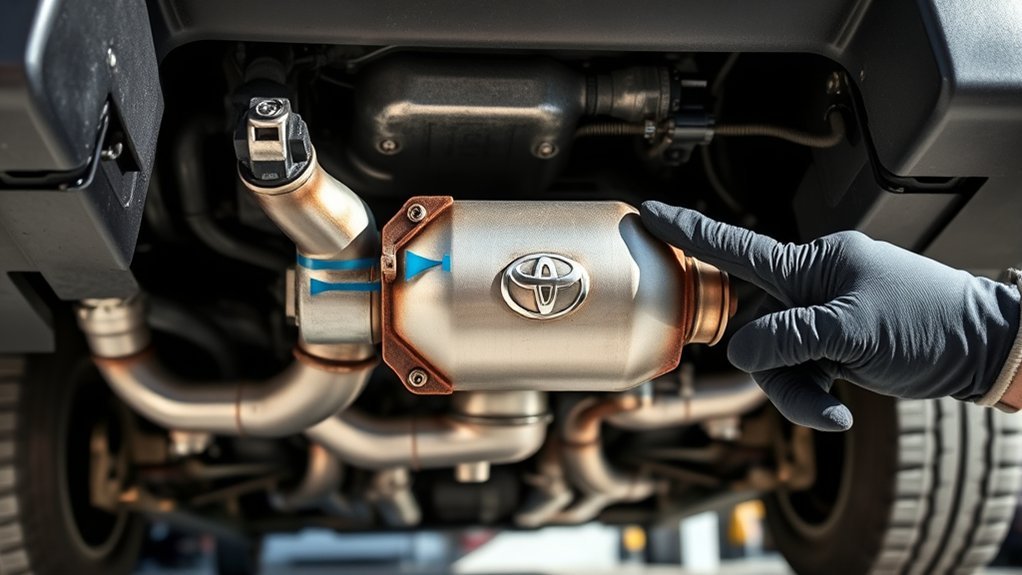
Catalytic converter contamination often arises when antifreeze or motor oil leaks into the exhaust system, triggering chemical reactions that hinder its performance. Engine oil leaks can lead to burning oil in the combustion chamber, allowing oil to enter the exhaust stream and contribute to contamination. Additionally, unburned fuel from engine misfires can overheat the converter and degrade the catalyst material. Poor fuel quality often leaves deposits that clog the converter, greatly reducing its efficiency and increasing emissions. These factors not only compromise the catalytic converter’s function but can also shorten its lifespan. Regular maintenance and prompt attention to engine issues are vital in preventing these problems. By addressing leaks and ensuring ideal fuel quality, you can help prolong your catalytic converter’s lifespan and maintain your RAV4’s performance. Understanding these causes empowers you to take proactive measures for better vehicle health.
Essential Maintenance Practices for Your RAV4’s Catalytic Converter
To guarantee your RAV4’s catalytic converter functions efficiently, regular maintenance is essential. Keeping it in top shape not only enhances performance but also extends the catalytic converter lifespan. Here are three vital maintenance practices:
Regular maintenance is key to ensuring your RAV4’s catalytic converter operates efficiently, enhancing performance and longevity.
- Inspect the Exhaust System: Regularly check for leaks or overheating signs, as these can lead to catalytic converter damage.
- Use High-Quality Fuel: Fuel quality impacts deposits that can clog the catalytic converter. Opt for premium fuel to minimize these risks.
- Address Engine Misfires Promptly: Unburned fuel can enter the exhaust, increasing the likelihood of catalytic converter failure.
Additionally, schedule routine checks, including emissions tests, to catch issues early. If you notice unusual sulfur odors, seek professional help immediately, as they may indicate contamination or malfunction. By following these practices, you’ll not only protect your RAV4 but also enjoy smoother, more efficient driving.
When to Seek Professional Help for Your Catalytic Converter?
When should you consider seeking professional help for your RAV4’s catalytic converter? If you experience reduced engine performance or your vehicle struggles to accelerate, it’s vital to get an inspection. Unusual sulfur-like odors from the exhaust can indicate contamination or overheating, requiring immediate attention. Additionally, a check engine light often signals a malfunctioning catalytic converter, demanding a technician’s diagnosis. Dark exhaust smoke and excessive heat from under your vehicle also warrant professional evaluation to prevent further damage.
| Symptoms | Possible Issue | Action Required |
|---|---|---|
| Reduced engine performance | Catalytic converter damage | Professional inspection |
| Sulfur-like odors | Contamination or overheating | Immediate attention |
| Check engine light | Malfunctioning catalytic converter | Consult technician |
| Dark exhaust smoke | Blockage or damage | Get evaluated |
| Excessive under-vehicle heat | Potential failure | Seek professional help |
Regular maintenance is essential, but any sudden changes should prompt immediate action to maintain your catalytic converter’s lifespan.
Cost of Catalytic Converter Repair and Replacement
Understanding the costs associated with catalytic converter repair and replacement is essential for RAV4 owners facing issues. A cost comparison of options can help you make informed decisions. Here are key considerations:
Understanding catalytic converter costs is crucial for RAV4 owners to make informed repair or replacement decisions.
- Replacement Costs: Expect to pay between $1,000 and $2,500 for a new catalytic converter, including labor.
- Repair Options: Repairing a damaged unit typically ranges from $200 to $600, depending on the severity of the issue.
- Labor Expenses: Labor rates vary widely, generally between $75 and $150 per hour, depending on the shop’s location and expertise.
OEM converters may cost more but guarantee better compatibility and fewer sensor issues compared to aftermarket parts. Additionally, regional emissions regulations can impact costs and part availability, so always check local requirements. By weighing these factors, you can better navigate the financial aspects of maintaining your RAV4’s catalytic converter.
Frequently Asked Questions
What Are the Three Functions of the Catalytic Converter?
The catalytic converter reduces emissions, enhances engine efficiency, and improves vehicle performance. By transforming harmful pollutants into less toxic substances, it markedly lowers your vehicle’s environmental impact and helps meet stringent emissions standards.
How Many Catalytic Converters Does a RAV4 Have?
Your RAV4 typically has one catalytic converter, but some hybrid models feature an additional one. Regular catalytic converter maintenance is essential to meet RAV4 specifications and guarantee peak performance and emissions control.
Can Thieves Cut Through Cat Shield?
Yes, thieves can cut through a cat shield. While cat shield effectiveness improves theft prevention, it’s not foolproof. Using durable materials and additional security measures greatly enhances your protection against catalytic converter theft.
Conclusion
At its core, your Toyota RAV4’s catalytic converter acts like the lungs of your vehicle, filtering out harmful emissions to keep the air clean. Just as a smoker’s lungs struggle under the weight of toxins, a compromised catalytic converter can hinder your engine’s performance. Regular maintenance and timely diagnostics can prevent deeper issues, ensuring your RAV4 runs smoothly and efficiently. Remember, a well-cared-for converter not only protects the environment but also enhances your driving experience.