Quick Answer
The fifth-generation Toyota GR Supra was assembled by Magna Steyr in Graz, Austria, from 2019 until production ended in March 2026. Toyota sold and developed the model through Toyota Gazoo Racing, while BMW contributed the shared sports-car architecture, BMW-sourced engines, and many underlying components. Calling the MkV Supra simply a Toyota-built car or a BMW-built car misses the full picture: Magna Steyr assembled it, BMW supplied much of its technical foundation, and Toyota shaped the Supra-specific design, development, tuning, and validation.
Last updated: September 1, 2026
The fifth-generation GR Supra was not built in a Toyota factory in Japan. Toyota and BMW developed the sports-car project together, Magna Steyr handled vehicle assembly in Austria, and Toyota Gazoo Racing gave the Supra its model-specific development and driving setup. Understanding those separate roles explains why the Supra carries Toyota badges while using extensive BMW-derived hardware.
Who Manufactured the Toyota GR Supra and Where Was It Built?
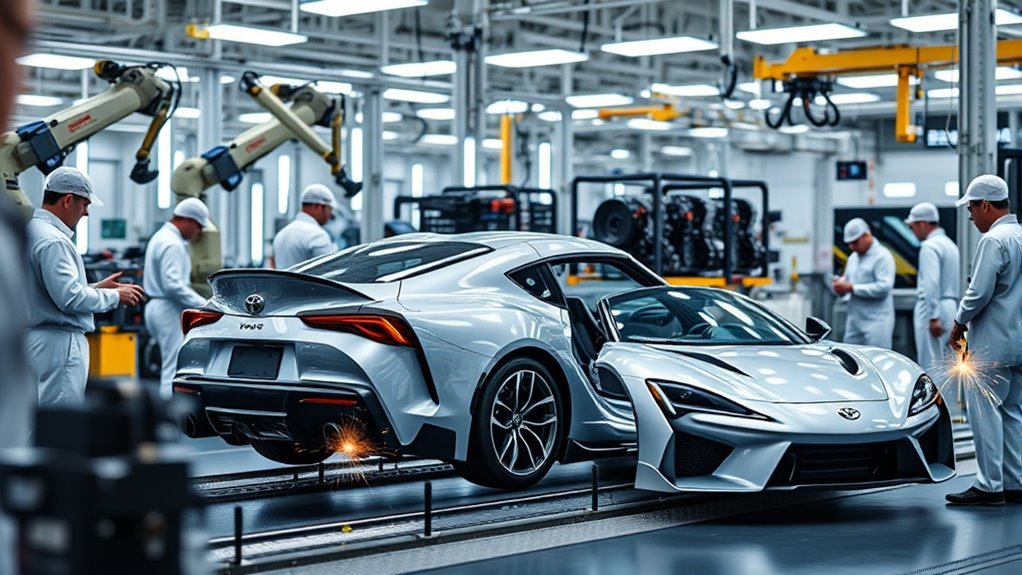
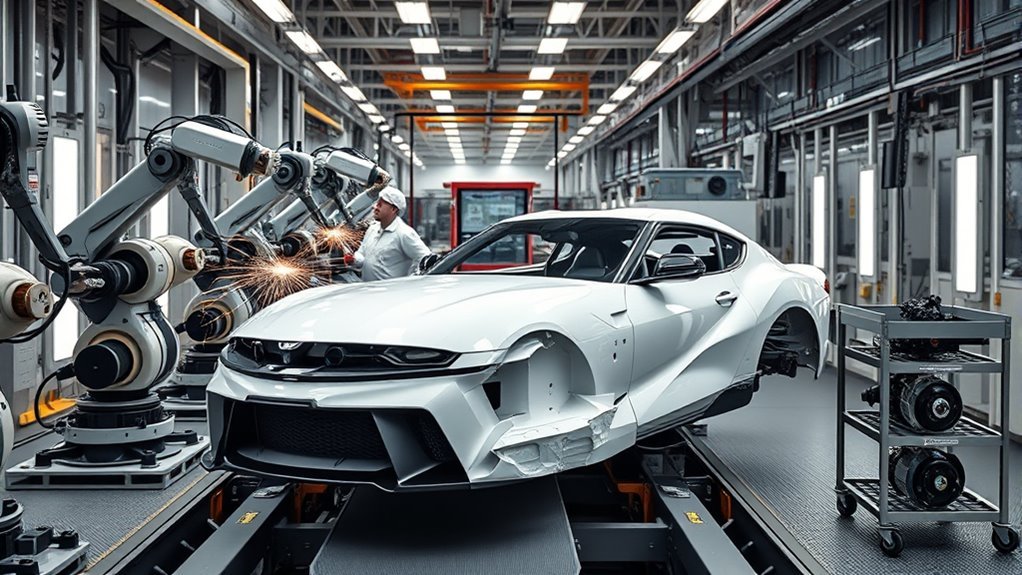
The fifth-generation GR Supra was assembled at the Magna Steyr facility in Graz, Austria. The first production version rolled off the Graz production line in March 2019, and MkV production ended in March 2026. Toyota Global Newsroom identified Magna Steyr’s Graz plant as the Supra’s production site when the model launched.
Toyota remained the automaker behind the GR Supra as a branded product, but Magna Steyr served as the contract assembler. BMW was Toyota’s engineering partner and supplied major shared technology. That distinction matters because the words manufacturer, assembler, and engineering partner describe different parts of the program.
| Organization | Main Role in the MkV GR Supra |
|---|---|
| Toyota / Toyota Gazoo Racing | Owned and sold the Supra model, set its performance direction, conducted vehicle development and testing, and applied Supra-specific chassis and control-system tuning. |
| BMW | Co-developed the sports-car architecture and supplied BMW-derived engines, electronics, and other major shared systems used by both the Supra and BMW Z4 programs. |
| Magna Steyr | Physically assembled the production GR Supra at its contract-manufacturing facility in Graz, Austria. |
Why Toyota Partnered With BMW
Toyota and BMW announced plans in 2012 to cooperate on several technologies, including the architecture and components for a future sports vehicle. The arrangement allowed both companies to share major development work while creating separate vehicles around the common engineering foundation.
- Shared Sports-Car Architecture: Toyota and BMW could develop a modern rear-wheel-drive sports-car foundation together instead of duplicating every underlying component.
- Inline-Six Access: BMW already had modern turbocharged inline-six technology suited to Toyota’s goal of preserving one of the Supra’s defining mechanical traits.
- Separate Vehicle Character: After the shared foundation was established, Toyota Gazoo Racing continued Supra-specific testing, tuning, and development.
The result was not a traditional Toyota-only development program, but it was also more involved than Toyota simply placing its badge on an existing BMW.
Toyota GR Supra Part Sourcing Breakdown
The MkV GR Supra used substantial BMW-derived mechanical and electronic hardware. Toyota’s contribution is best described as model development, vehicle-specific tuning, design direction, testing, and continued performance revisions rather than ownership of every software or chassis component.
[Products Worth Considering]

Front Drop Height: 30mm Front Spring Rate: 2.9 kg/mm (162 lb/in) Rear Drop Height: 30mm Rear Spring Rate: 3.6 kg/mm (201 lb/in)
BMW-Sourced Powertrain
The best-known BMW component in the MkV Supra is the B58 3.0-liter turbocharged inline-six. For the 2026 U.S. final model year, Toyota rated this engine at 382 horsepower and 368 lb-ft of torque.
Not every fifth-generation Supra used the six-cylinder engine. Earlier model years and other markets also offered BMW-derived 2.0-liter turbocharged four-cylinder versions. By the 2026 U.S. final production run, however, Toyota’s lineup centered on the 3.0-liter inline-six.
- Engine: The 3.0-liter turbocharged B58 inline-six is BMW-derived.
- Shared architecture: The GR Supra and G29 BMW Z4 were developed from the same joint sports-car architecture.
- Cabin technology: Many controls, electronics, and infotainment elements use BMW-derived systems.
Toyota-Specific Tuning and Development
Toyota Gazoo Racing did substantial work after the shared engineering foundation was established. Toyota’s own model updates document changes to Adaptive Variable Suspension control, shock-absorber damping, stabilizer bushings, electric power steering, Vehicle Stability Control, active differential calibration, body rigidity, camber settings, and other chassis components.
Those revisions show how Toyota continued to shape the Supra’s handling over its production life. It is therefore more accurate to describe the MkV as a jointly engineered car with Toyota-specific development than to say Toyota simply supplied the software or changed only a few settings.
Engineering and Validation Process
Toyota Gazoo Racing engineers conducted extensive road and track development for the GR Supra. Toyota documented testing on public roads in multiple countries as well as high-speed development at the Nürburgring. That work focused on steering response, chassis behavior, stability, ride quality, braking, and the overall balance expected from a GR-branded sports car.
The Supra also continued to evolve after launch. Toyota released revised steering, suspension, differential, chassis, and control-system calibrations during later model years rather than treating the original 2020 setup as final.
[Products Worth Considering]

Quality of material:The steering wheel is made of real carbon fiber 3K high-gloss carbon fiber with epoxy resin coating, carbon fiber, ultra-light and strong, with high heat and corrosion resistance. Uniform material and symmetrical shape. Nappa perforated leather parts on the steering wheel are expertly hand-stitched to absorb perspiration quickly and prevent slippage when steering,. Reduces vibration and pressure on your hands, making your driving experience more relaxing and enjoyable. Bring you a better driving experience

【Precision Fit for GR Supra A90/A91】Specially designed for 2019-2025 GR Supra A90/A91, this carbon fiber steering wheel offers a direct OEM replacement for your factory unit. It retains full compatibility with your vehicle’s original airbag, buttons, and paddle shifters, delivering a seamless factory integration with a premium upgrade feel.

CUSTOM FIT FOR TOYOTA SUPRA 2019-2024 – Designed for Toyota Supra A90/A91 2019-2024 and for Supra GR models, this hydro-dip carbon-fiber steering wheel upgrade matches the sporty cabin style with a precise vehicle-specific fit. A strong choice for drivers who want a cleaner, more aggressive interior look.
What Roles Did Magna Steyr and Toyota Gazoo Racing Play?
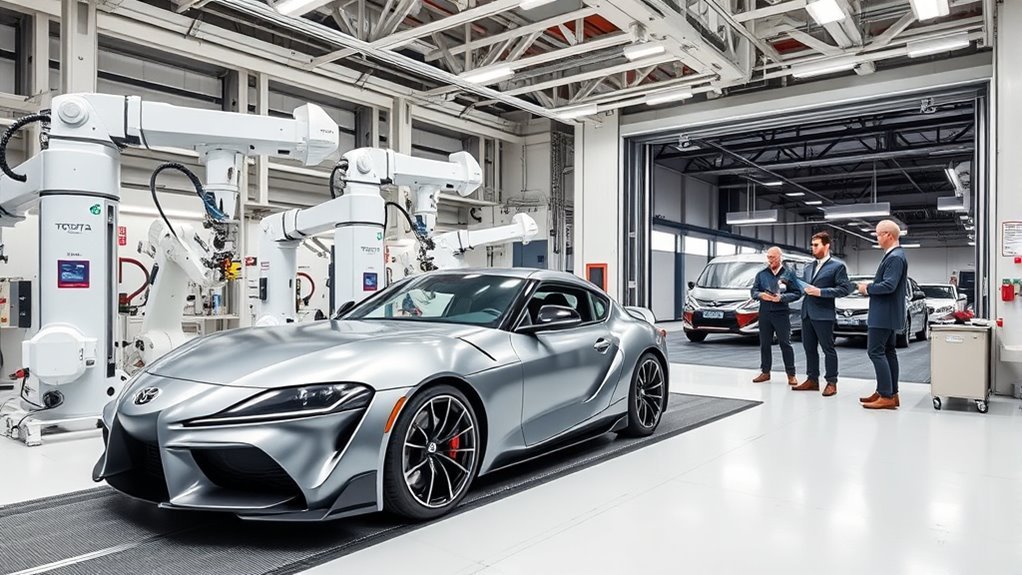
Magna Steyr’s role was production. Its Graz facility assembled the GR Supra under contract and also produced the related BMW Z4. This gave Toyota and BMW access to an established low-volume vehicle-production operation without either company creating a separate factory solely for the sports-car program.
Toyota Gazoo Racing’s role was different. TGR worked on the Supra as a Toyota performance model, testing and revising its chassis behavior, steering, suspension, differential control, braking, and other performance characteristics. Separating these jobs explains how a Toyota-developed sports car could be assembled by an independent Austrian company while using extensive BMW technology.
Were Older Toyota Supras Built in Japan?
Yes. The Austrian production arrangement applies to the fifth-generation GR Supra, not the Supra’s entire history. Earlier generations were Japanese-built. Toyota’s own historical material, for example, lists the fourth-generation Supra as being built at the Motomachi Plant in Toyota City, Japan.
This is why both statements you may see online can appear contradictory: classic Supras came from Japan, while the 2019-2026 MkV GR Supra came from Graz, Austria.
Warranty and Maintenance Information
Toyota’s 2026 warranty information lists 36 months/36,000 miles of basic new-vehicle coverage and 60 months/60,000 miles of powertrain coverage. For warranty work and factory-scheduled maintenance, an authorized Toyota service center is the appropriate first point of contact.
Toyota’s owner system lists scheduled service every 5,000 miles or six months, although the actual inspections, fluid services, and replacement items depend on mileage and operating conditions. Follow the schedule for your specific vehicle rather than using one maintenance task for every 5,000-mile visit. Regular maintenance also helps identify problems before they become larger repairs. Check your warranty terms before making performance modifications because coverage of a later failure can depend on what caused the damage.
[Products Worth Considering]


Reliable Function: The hour meter starts tracking as soon as the equipment is powered on, accurately recording the total running time of the machine. By monitoring real usage data, it helps schedule service intervals, assess equipment performance, and maintain engines in proper working condition

Frequently Asked Questions
Who actually made the Toyota GR Supra?
The fifth-generation GR Supra was a Toyota model developed through Toyota Gazoo Racing in cooperation with BMW. Magna Steyr physically assembled the car at its factory in Graz, Austria. BMW supplied much of the shared engineering foundation and key components.
Is the Toyota Supra made by BMW?
Not exactly. BMW was Toyota’s engineering partner and supplied major BMW-derived technology, but BMW did not assemble the production Supra. Magna Steyr built the cars in Austria, while Toyota Gazoo Racing developed and tuned the Supra as a Toyota performance model.
Why does the GR Supra have a BMW engine?
Toyota and BMW jointly developed the foundation for a new sports-car program. BMW already had modern turbocharged inline-six technology, allowing the MkV Supra to retain an inline-six layout without Toyota creating an entirely new six-cylinder engine specifically for a relatively low-volume sports car.
Is the GR Supra the same as a BMW Z4?
No. The GR Supra and G29 BMW Z4 share architecture, engines, electronics, and other hardware, and both were assembled in Graz. However, they have different body styles, designs, model positioning, and vehicle-specific tuning. The Supra is a fixed-roof Toyota sports coupe, while the Z4 is a BMW roadster.
Are all Supras made in Japan?
No. Earlier Supra generations were built in Japan, including the fourth-generation model produced at Toyota’s Motomachi Plant. The fifth-generation GR Supra was assembled by Magna Steyr in Graz, Austria.
Is the MkV GR Supra still in production?
No. Production of the fifth-generation GR Supra ended in March 2026. The 2026 model year was the final production run of the MkV generation.
Final Takeaways
The simplest way to understand the MkV GR Supra is to separate the three companies involved. Toyota owned and developed the Supra as a GR performance model. BMW provided much of the shared engineering foundation, including its well-known turbocharged engines. Magna Steyr assembled the cars in Graz, Austria, from 2019 until production ended in March 2026.
So, the MkV was neither a traditionally Toyota-built Japanese Supra nor merely a rebadged BMW Z4. It was a jointly engineered sports car assembled by an independent contract manufacturer and given its own Toyota Gazoo Racing development path.