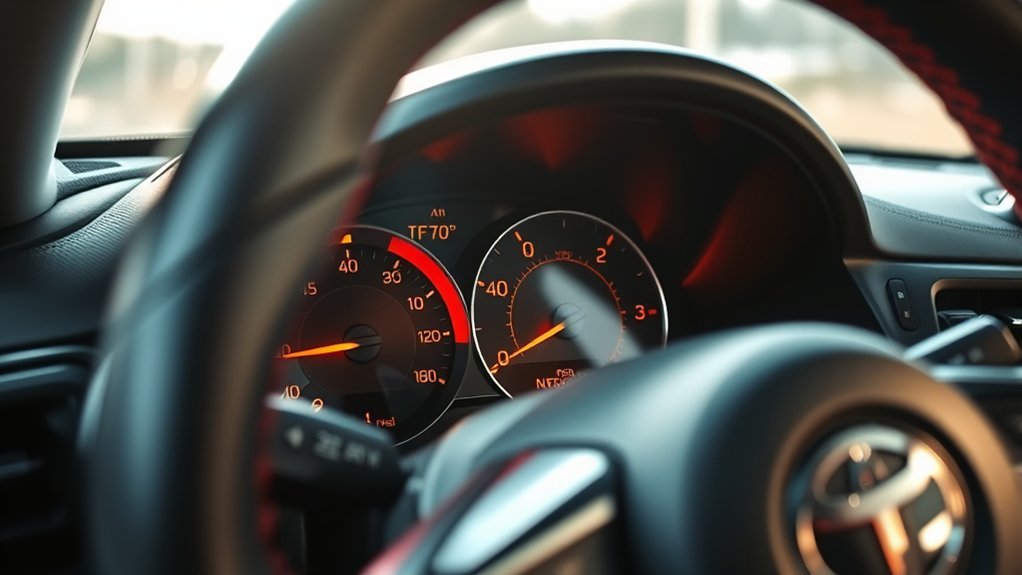
If your Toyota Supra’s oil level warning light activates, acting quickly protects your turbocharged or naturally aspirated engine from expensive internal damage. First, check the color of the dashboard icon: an amber or yellow light means you need to verify and top off your oil soon, while a red light demands shutting the engine off immediately. Below, you will learn how to check your oil properly on both classic dipstick-equipped Supras and modern dipstick-less GR Supras, test a faulty sensor, and clear false alerts.
Quick Answer
When your Toyota Supra’s yellow oil warning light turns on, your engine oil level is low or the level sensor is faulty, so check and top off the oil soon. If the oil light is red, you have critically low oil pressure; pull over safely and shut off the engine immediately to prevent severe internal damage.
Understanding Your Toyota Supra’s Oil Level Warning Light

When the oil level warning light appears on your Toyota Supra’s dashboard, the color and icon design tell you how urgent the problem is. A yellow or amber oil warning light (often paired with a wavy line under the oil can or a “Engine oil at minimum” message on 2020–2026 GR Supras) indicates that the oil level in the sump has dropped near the minimum mark or that the oil level sensor is malfunctioning. A red oil can icon, by contrast, is the low engine oil pressure warning, meaning the oil pump can no longer circulate enough lubricant to protect your crankshaft bearings, camshafts, and turbocharger.
Never rely on the dashboard sensor alone until a warning appears. Checking your oil manually with the dipstick on older MK3 (A70) and MK4 (A80) models, or running the electronic level check on MK5 (A90/A91) GR Supra models, helps you catch normal oil consumption early. If your oil level measures full but the amber warning light stays illuminated, you are likely dealing with a stuck float switch, contaminated thermal sensor, or damaged wiring harness near the oil pan.
Immediate Steps When Your Oil Level Warning Light Activates
When an oil warning light illuminates in your Toyota Supra, your first move depends on whether the indicator is red or yellow. Follow a strict diagnostic sequence to protect your engine before driving any further.
- React to the light color: If the light is red (low oil pressure), pull over safely and turn off the engine right away. If the light is yellow or amber (low oil level), reduce engine load and stop at the next safe, level spot to check the oil.
- Measure the current oil level: On MK3 and MK4 Supras, shut off the engine, wait 5 to 10 minutes for oil to drain back into the pan, and check the physical dipstick. On 2020–2026 GR Supras, park on a level surface with the engine running at operating temperature and run the electronic measurement through the Supra Command screen.
- Top off with the exact oil specification: If the reading is at or below the minimum mark, add up to 1 quart (about 1 liter) of the manufacturer-specified oil grade—such as 0W-20 (BMW LL-17 FE+) for stock 3.0L B58 GR Supras or 5W-30/10W-30 for 2JZ-powered MK4 Supras.
- Inspect the oil level sensor and wiring: If the oil level is full, look underneath the oil pan for oil seepage, road debris, or a loose electrical connector on the oil level sensor.
- Re-run measurement to clear the warning: On GR Supra models, completing a fresh electronic oil level check resets the low-oil message automatically once the level registers within range.
How to Check Your Oil Level Properly
How you check the engine oil in a Toyota Supra depends on which generation you drive. Classic MK3 (1986–1992) and MK4 (1993–2002) Supras use a traditional metal dipstick on the side of the engine block, whereas fifth-generation MK5 GR Supras (2020–2026) have no physical dipstick and measure oil electronically through the infotainment screen.
| Supra Generation | Engine Code | Oil Check Method | Oil Capacity (with Filter) | Factory Oil Viscosity |
|---|---|---|---|---|
| MK3 (A70, 1986–1992) | 7M-GE / 7M-GTE (3.0L I6) | Physical dipstick | 5.0 quarts (4.7 liters) | 10W-30 or 5W-30 |
| MK4 (A80, 1993–2002) | 2JZ-GE / 2JZ-GTE (3.0L I6) | Physical dipstick | 5.3–5.7 quarts (5.0–5.4 liters) | 5W-30 or 10W-30 |
| MK5 GR Supra 2.0 (2021–2024) | B48 (2.0L Turbo I4) | Electronic (Supra Command) | 6.1 quarts (5.75 liters) | 0W-20 Full Synthetic |
| MK5 GR Supra 3.0 (2020–2026) | B58 (3.0L Turbo I6) | Electronic (Supra Command) | 6.9 quarts (6.5 liters) | 0W-20 Full Synthetic |
Proper Dipstick Usage
On MK3 and MK4 Toyota Supras, checking the dipstick on flat ground gives you the most reliable reading of how much oil is in the pan. Park on a level surface, shut off the engine, and wait 5 to 10 minutes so oil in the cylinder head drains back into the sump. Pull the dipstick out, wipe the blade clean with a lint-free cloth, push it all the way back into the tube, and pull it out again. The oil film should sit between the Low (L) and Full (F) marks, which represent roughly 1 quart (1 liter) of volume difference.
If you drive a 2020–2026 Toyota GR Supra, do not look for a dipstick under the hood. Instead, warm the engine to full operating temperature, park on a flat surface with the engine idling in Park (or Neutral with the parking brake engaged on manual transmission models), and navigate to My Vehicle – Vehicle Status – Engine Oil Level on the center display. Select Measure engine oil level; the engine will raise its idle slightly for about 1 minute and display a digital bar from Minimum to Maximum.
Here is a quick reference for checking and topping off your oil:
| Step | Details |
|---|---|
| Clean the Dipstick (MK3/MK4) or Warm Engine (GR Supra) | Wipe dipstick with a lint-free cloth after a 10-minute settle, or warm GR Supra to operating temperature on level ground |
| Check Oil Level | Confirm oil sits between the minimum and maximum marks on the dipstick blade or Supra Command screen |
| Add Oil if Necessary | Add small increments of the factory-specified viscosity until the level reaches the upper half of the safe zone |
Pro Tip: When topping off a 2020–2026 GR Supra without a dipstick, add oil in 0.25-quart (250 ml) increments rather than pouring a full quart at once, then re-run the electronic check so you do not accidentally overfill the crankcase.
Oil Level Inspection Tips
Inspecting the condition of your oil is just as important as checking the volume. When examining oil on a dipstick (or on a clean paper towel wiped inside the oil filler neck of a GR Supra), healthy synthetic motor oil should look clear to dark amber and feel smooth between your fingers. Dark black oil with a strong burnt odor indicates heat breakdown, while a milky, frothy tan appearance points to coolant mixing with the oil from a failing head gasket or oil cooler.
Check your Supra’s oil level every 1,000 to 2,500 miles—and before and after any track day or spirited mountain drive. Turbocharged inline-six engines like the 2JZ-GTE and BMW-sourced B58 can consume oil under sustained high boost and high RPM, so catching a 0.5-quart drop early prevents oil starvation during hard cornering.
Common Causes of Oil Level Warning Light Issues
An illuminated oil warning light in your Toyota Supra usually stems from actual oil consumption, an external leak, a contaminated sensor, or an overfilled crankcase. Identifying which symptom matches your dashboard alert prevents unnecessary part replacements:
| Cause | Description |
|---|---|
| Low Oil From Consumption or Leaks | Worn valve stem seals, turbocharger seals, valve cover gaskets, or oil pan gaskets let oil drop below the sensor threshold. |
| Sensor Malfunction | A stuck float switch (MK4) or sludged ultrasonic/thermal level sensor (GR Supra) triggers a false low-level alert even when full. |
| Oil Overfill Condition | Adding too much oil causes crankshaft aeration (foaming) and triggers a “Engine oil level too high” warning on GR Supra displays. |
| Intermittent Activation on Corners | Oil sloshing away from the pickup or corroded sensor harness pins underneath the car can cause the light to flicker under braking or cornering. |
| Yellow vs. Red Oil Light Confusion | A yellow/amber oil light indicates a level or sensor issue, whereas a red oil light warns of dangerous low oil pressure. |
Keeping your oil strictly between the minimum and maximum thresholds protects both your catalytic converters and your engine bearings. Regularly inspect the underbody splash shield for fresh oil drips and clean the external sensor connector during oil changes.
How to Diagnose and Replace Your Oil Pressure Sender
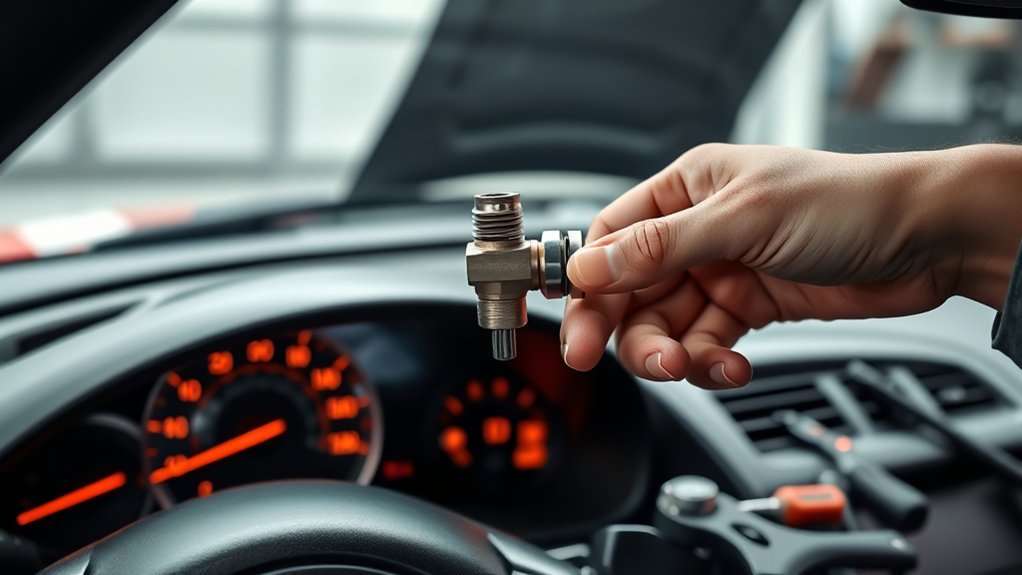
If your red low oil pressure warning light flickers at idle or stays on despite a full oil level, the culprit is either a failing oil pressure sender (switch) or a genuine loss of mechanical oil pressure. Before condemning the engine’s oil pump, test the sender electrically and mechanically.
Warning: Never ignore a red oil pressure light assuming it is just a bad sensor, and always let the engine cool completely before loosening an oil pressure switch or drain plug to prevent severe hot-oil burns.
To test the oil pressure switch (such as Toyota OEM part family 83530 on 2JZ engines), disconnect the single-wire harness plug and use a digital multimeter set to continuity. On a standard normally-closed pressure switch, you should see continuity to ground with the engine off and an open circuit (infinite resistance) once the engine starts and builds pressure. For complete certainty, thread a mechanical oil pressure gauge into the sender port to verify actual psi against factory specifications. When replacing the sender, use a deep socket (typically 24 mm or 27 mm depending on the generation), apply thread sealant if required by the service manual, and install a genuine Toyota OEM switch so the warning threshold stays accurate.
When to Replace the Oil Level Sensor
You should replace your Toyota Supra’s oil level sensor when the yellow low-oil light stays illuminated with a verified full crankcase, or when the electronic oil measurement repeatedly fails to complete on a GR Supra. Because the sensor sits bathed in hot oil at the bottom or side of the oil pan, internal floats and thermal elements eventually wear out.
Signs of Malfunctioning Sensor
A failing oil level sensor produces distinct patterns that differ from real oil loss. Watch for these common symptoms before ordering a replacement part:
- Warning light turns on after 10–30 seconds of driving, then resets on restart: On older MK3 and MK4 Supras, the oil level relay triggers the light if the float switch stays open for a set duration, even when the dipstick reads full.
- Electronic measurement aborts at 15%–20% on GR Supras: While a failing oil pump housingon early 2020–2021 B58 engines can also interrupt measurement, a faulty ultrasonic oil condition/level sensor or stored fault code will prevent the screen from reaching 100%.
- Oil seepage through the sensor’s electrical pins: Aged O-rings or cracked plastic housings let oil wick into the wiring connector, skewing resistance readings.
Replacement Process Overview
Replacing the oil level sensor is easiest to schedule alongside a routine oil change since the engine oil must be drained first. Raise and support the car safely on jack stands or a lift, remove the lower engine undertray, and drain the crankcase completely. Locate the oil level sensor—mounted on the side of the upper oil pan on MK4 2JZ engines (Toyota OEM part prefix 89491) or bolted into the bottom of the lower oil sump on MK5 GR Supras.
Unplug the wiring harness, inspect the pins for corrosion, and remove the retaining bolts or nuts holding the sensor assembly. Clean the mating surface on the oil pan carefully without dropping old gasket material into the sump, install the new sensor with a fresh OEM O-ring or gasket, and torque the fasteners evenly to specification. After refilling the engine with fresh oil, run the electronic level check (on GR Supras) or clear stored diagnostic trouble codes with an OBD-II scanner so your dashboard warnings stay accurate.
Why Regular Oil Maintenance Is Crucial for Your Supra
Staying ahead of scheduled oil changes protects your Supra’s turbochargers, variable valve timing actuators (VVTi or VANOS), and rod bearings from heat-induced breakdown. While factory intervals on modern GR Supras list up to 10,000 miles or 12 months under normal conditions, most Supra specialists and track drivers change full-synthetic oil every 3,000 to 5,000 miles (or every 6 months) to prevent fuel dilution and sludge buildup.
Always verify the exact viscosity grade and specification in the official Toyota Warranty and Owner’s Manuals portal for your model year. Using an unapproved oil grade can alter hydraulic cam phaser response and affect how electronic oil condition sensors calculate oil level and service life.
How to Tap Into Community Wisdom for Help
Owner communities and model-specific technical forums can save you hours of guesswork when diagnosing stubborn Toyota Supra oil warnings. Dedicated MK4 communities (such as SupraForums) and MK5 GR Supra boards (such as SupraMKV) maintain detailed threads covering everything from 2JZ oil pan sensor resistor bypass tests to early 2020–2021 B58 oil pump plastic rotor revisions that cause electronic oil level measurements to stall.
When asking for troubleshooting help in enthusiast groups or at local Toyota and GR club meetups, include your exact model year, engine code (7M, 2JZ, B48, or B58), oil viscosity currently in the sump, and any OBD-II fault codes pulled from the ECU. Providing concrete details helps experienced mechanics and owners pinpoint whether you are facing a simple harness fault or a known mechanical bulletin.
Frequently Asked Questions
Can I Drive My Car With the Oil Warning On?
You must never drive with a red oil warning light on, as it signals critically low oil pressure that can destroy your engine bearings within minutes. If the oil light is yellow or amber, it indicates a low oil level or sensor issue; you can drive a short distance cautiously to a safe, flat spot to check and top off the oil immediately.
Why does my Toyota GR Supra not have an oil dipstick?
The 2020–2026 Toyota GR Supra (A90/A91) uses BMW-sourced B58 and B48 turbocharged engines designed around an electronic ultrasonic oil sensor instead of a physical dipstick tube. To check the oil level, warm the engine to operating temperature, park on level ground with the engine idling, and select My Vehicle, Vehicle Status, and Engine Oil Level on the center screen.
How much oil should I add when the Supra low oil level light comes on?
When the yellow low oil level light or minimum oil message activates, the crankcase is typically down by about 1 quart (1 liter). Add oil in 0.25-quart to 0.5-quart increments and recheck the dipstick or electronic display until the level reaches the upper safe zone without exceeding the maximum mark.
Why is my Toyota Supra oil level light still on after adding oil?
If the oil level warning light stays on after topping up, the oil level sensor inside the oil pan may be stuck with sludge, its underbody wiring connector may be corroded, or (on GR Supra models) you still need to run a complete electronic oil level measurement cycle at operating temperature to update the computer reading.
Conclusion
Staying on top of your Toyota Supra’s oil level warning light protects your engine from premature wear and catastrophic oil starvation. Know the difference between an amber low-level alert and a red low-pressure emergency, check your oil every 1,000 to 2,500 miles using the dipstick (MK3/MK4) or Supra Command screen (MK5 GR Supra), and inspect the oil pan sensor during routine oil changes. Check your Supra’s oil level before your next drive and keep a spare quart of factory-spec synthetic oil in the trunk so you are always prepared.
Sources
- RAC Drive: Oil Warning Light Causes and Solutions: Supports the distinction between yellow/amber low oil level warnings and red low oil pressure alerts.
- Toyota GR Supra Quick Reference Guide: Confirms instrument cluster low engine oil pressure warning indicators and under-hood filler locations.
- AAA: How to Read Your Dashboard Lights: Supports immediate safety steps when the oil pressure warning light activates while driving.
- Toyota Warranty and Owner’s Manuals Portal: Official source for model-year-specific Toyota Supra oil capacities, viscosity grades, and maintenance intervals.