Quick Answer
Start with the 12-volt battery, terminals, and the correct start procedure. If the engine does not crank, focus on battery power, key recognition, start interlocks, wiring, and the starter circuit. If it cranks normally but will not start, move to fuel delivery, ignition, fault codes, and engine sensors.
At a Glance
| Difficulty | Basic checks are simple; fuel, starter, and control-system diagnosis may require a technician. |
| Tools Needed | None for the first visual checks; jumper cables or a compatible booster for a discharged battery; a scan tool for deeper diagnosis. |
Top Causes for Toyota Supra Starting Issues
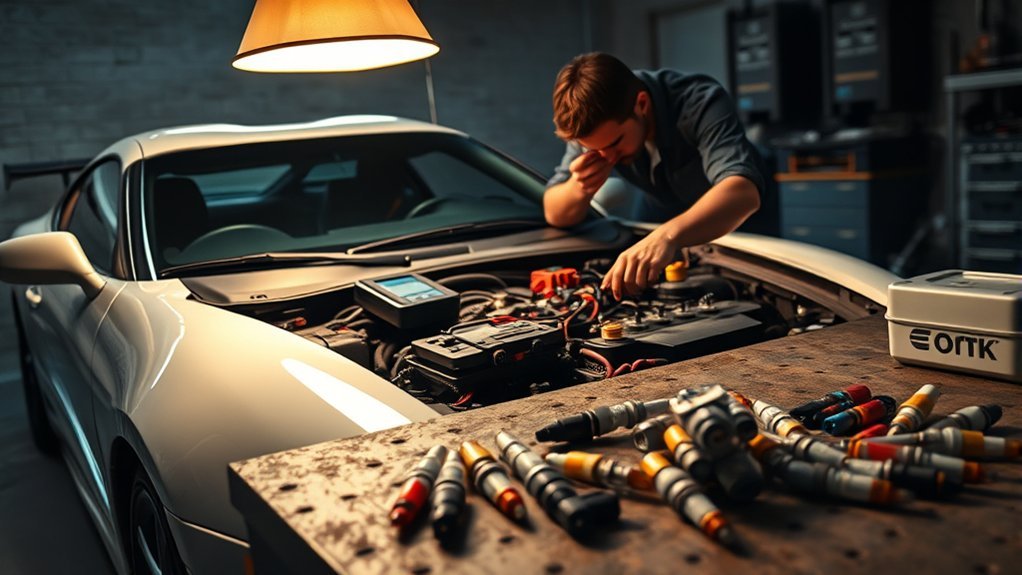
The likely cause depends on the symptom. A Supra that is silent or cranks slowly needs a different diagnostic path from one that cranks at normal speed but never fires.
| What Happens | Likely Area | First Check |
|---|---|---|
| No crank, little or no response | Battery power, key recognition, start interlock, wiring, or starter circuit | Dash brightness, battery connections, brake/clutch input, key detection |
| Slow crank or rapid clicking | Weak battery or high-resistance connection | Battery condition, terminals, grounds, and jump-start response |
| Normal cranking but engine will not start | Fuel, ignition, immobilizer, or engine-management fault | Fuel level, warning messages, fault codes, spark and fuel-pressure diagnosis |
Loose or corroded battery terminals can interrupt current even when the battery itself is usable. A failed starter or poor starter-circuit connection can also cause a no-crank condition. If the engine cranks normally, a fuel-pump problem, ignition-coil or spark-plug fault, immobilizer issue, or engine-management sensor fault becomes more relevant.
Step-by-Step Troubleshooting for Starting Problems
Work from the easiest checks to the harder ones. This prevents unnecessary parts replacement and helps you separate a power problem from a crank-no-start problem.
- Identify the symptom. Listen carefully when you press Start. Note whether you hear silence, one click, rapid clicking, slow cranking, or normal-speed cranking.
- Confirm the start conditions. On push-button GR Supra models, an automatic transmission requires the brake pedal while starting, while a manual transmission uses the clutch pedal. The current Toyota GR Supra Owner’s Manual also explains the backup key-detection procedure if the remote is not recognized.
- Check 12-volt power and connections. Look for dim or flickering lights, a weak horn, slow cranking, corrosion, loose terminals, or an obviously poor ground connection. A connection can look acceptable yet still fail under starter load.
- Jump-start only through the specified points. The GR Supra manual identifies dedicated positive and negative starting-aid connections in the engine compartment. Follow the manual’s cable order, keep the vehicles from touching, and disconnect the cables in reverse order after the engine starts.
- If it still does not crank, check the starter circuit. With a known-good power supply and secure connections, the next suspects include the starter, starter control circuit, interlock input, wiring, or related power distribution. DENSO’s starter-system diagnosis guidance also begins with clean, secure battery, ground, and starter connections before condemning the starter.
- If it cranks normally, switch to fuel and ignition diagnosis. Confirm there is fuel in the tank. Then test fuel delivery and fuel pressure, check for spark, and inspect ignition coils and spark plugs rather than replacing them on suspicion.
- Scan for faults and review vehicle messages. Crankshaft or camshaft position faults, throttle-related faults, immobilizer problems, and other control-system issues should be diagnosed from warning messages, diagnostic trouble codes, live data, and circuit tests.
Warning: Do not keep repeating start attempts if you smell fuel, see smoke, find damaged battery cables, suspect the wrong fuel was added, or notice a swollen or leaking battery. Stop and have the vehicle inspected.
Must-Do Checks Before You Call a Mechanic
Before arranging a tow, rule out the simple conditions that can block a normal start. These checks do not replace electrical or fuel-system testing, but they can prevent an unnecessary repair visit.
| Check | Action Needed | Importance |
|---|---|---|
| Start Interlock | Automatic: firmly depress brake; manual: firmly depress clutch | Allows the start request to be accepted |
| Key Fob | Confirm the key is detected; use the steering-column backup detection method if needed | Rules out a key-recognition problem |
| Battery Condition | Look for dim lights, clicking, slow cranking, corrosion, or repeated need for a jump | Identifies common low-power symptoms |
| Smart Key Activation | Check for a key or start-related warning message | Helps separate key detection from battery or starter faults |
| Electrical Connections | Inspect accessible battery and ground connections for looseness or corrosion | Poor connections can mimic a weak battery or failed starter |
If a no-start keeps returning, write down the exact warning message and whether a jump-start changes the symptom. That information can save diagnostic time because intermittent electrical faults often disappear after the car is moved, charged, or restarted.
Signs Your Battery or Components Need Replacement
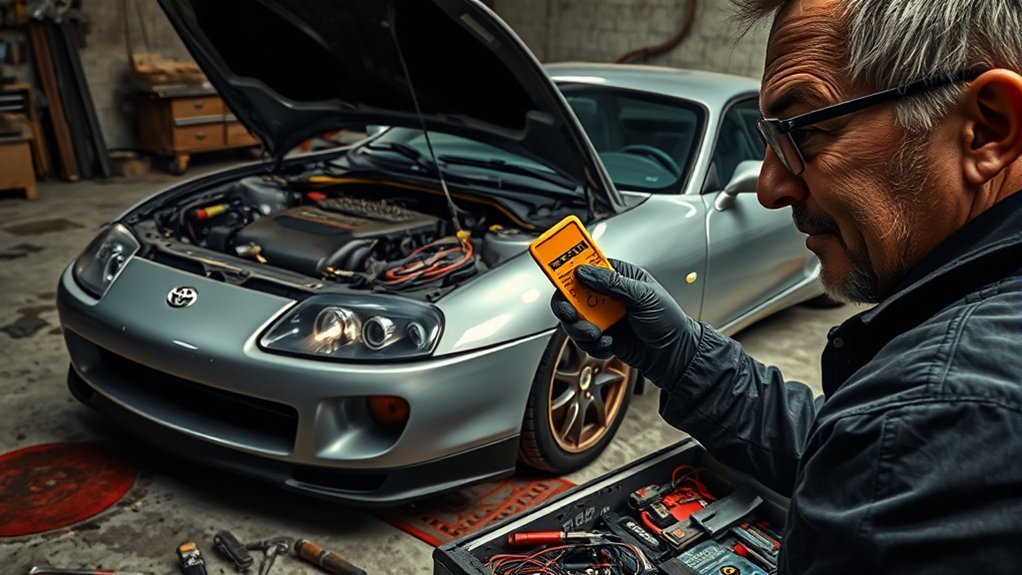
A battery should be tested before it is replaced, but several symptoms justify immediate attention. Slow cranking, clicking, dim or flickering lights, corrosion, or repeated jump-starts all point toward the battery, its connections, or the charging system.
- Dim or flickering dashboard or exterior lights
- Slow cranking or a no-crank condition
- Rapid clicking when you try to start
- Repeated need for jump-starts
- Corrosion, looseness, or damage at battery connections
- A battery that is several years old and no longer passes a proper load or conductance test
AAA lists slow starting, clicking, dim or flickering lights, and repeated jump-starts among common battery warning signs. Battery age matters, but a test is more useful than age alone because climate, storage, short trips, and electrical load all affect service life.
On the GR Supra, battery replacement is not just a matter of swapping in any 12-volt unit. Toyota’s manual says the installed battery is designed for the vehicle and recommends registering a replacement battery to the vehicle, so use the correct battery specification and follow the model-specific service procedure.
Community Insights and Shared Experiences
Owner reports can help you notice patterns, but they should not replace testing. Intermittent no-start complaints often lead people to suspect the battery, a poor power or ground connection, the starter, or fuel delivery because those faults can appear and disappear between attempts.
Also confirm that the correct fuel was added. If the car began acting up immediately after refueling and misfueling is possible, stop trying to start it and arrange proper inspection rather than repeatedly cranking the engine.
When It Is Time for Professional Diagnosis
Get professional help if the battery and connections test good but the Supra still will not crank, if it cranks normally with no start, or if the problem is intermittent and leaves stored fault codes. Fuel-pressure testing, starter-circuit voltage-drop testing, immobilizer diagnosis, and control-module communication checks require the right equipment and service information.
Before paying for repairs, you can also check the vehicle’s VIN on Toyota’s Safety Recalls and Service Campaigns lookup to see whether an open campaign applies to your specific car.
Frequently Asked Questions
What Are the Common Problems With Supras?
Common no-start causes include a weak battery, poor electrical connections, starter-circuit faults, fuel-delivery problems, ignition faults, and engine-management or key-recognition issues. The symptom matters: no crank usually points toward power or the starter circuit, while normal cranking shifts attention toward fuel, spark, immobilizer, or sensor faults.
Why Does My Supra Click but Not Crank?
Clicking without cranking often points to low battery power, excessive resistance in a battery or ground connection, or a starter-circuit problem. Rapid clicking commonly fits low voltage, while a single click with a properly tested battery makes the starter circuit more suspicious. Test before replacing parts.
Why Does My Supra Crank but Not Start?
If the engine cranks at normal speed but will not start, the battery and starter have already done much of their job. Check fuel supply, fuel pressure, spark, ignition coils, warning messages, immobilizer status, and diagnostic trouble codes. Sensor or control-system faults should be confirmed with scan data and circuit tests.
Can a Dead Key Fob Battery Keep a GR Supra From Starting?
A depleted key-fob battery can prevent normal remote detection, but the GR Supra has an emergency detection method. Hold the back of the remote against the marked area on the steering column, watch the instrument display, and switch on the drive-ready state within the manual’s stated window after the key is detected.
Conclusion
If your Toyota Supra won’t start, diagnose the symptom before replacing parts. Start with battery power, connections, start conditions, and key recognition; then move to the starter circuit if there is no crank, or to fuel, ignition, codes, and engine management if it cranks normally. A methodical check is faster and safer than guessing.
Sources
- Toyota GR Supra Owner’s Manual: Start/Stop operation, emergency key detection, battery replacement guidance, and jump-starting procedure.
- AAA: Common warning signs of a weak or failing automotive battery.
- DENSO Auto Parts: Starter-system diagnostic sequence and connection checks.
- Toyota Safety Recalls & Service Campaigns: VIN-based recall and service-campaign lookup.
”’
import re
text = re.sub(r’
text = re.sub(r’<[^>]+>