
Last updated: July 31, 2026. Reviewed against Toyota’s 2026 Tundra specifications, Toyota’s i-FORCE MAX technical description, federal fuel-economy data, and Toyota hybrid warranty guidance.
The Toyota Tundra Hybrid, sold as the Tundra i-FORCE MAX, uses a one-motor parallel-hybrid layout. A 3.4-liter twin-turbo V6 and an electric motor generator send power through a conventional 10-speed automatic transmission. A clutch can separate the engine from the motor, while a sealed 288-volt nickel-metal hydride battery under the rear passenger seats stores recovered energy. The system is designed mainly to add immediate low-rpm torque, smoother towing response, limited low-speed EV operation, and regenerative braking. It is not a plug-in hybrid, a Prius-style planetary power-split system, or an electric-rear-axle AWD setup.
Quick Answer
The engine and motor generator share the same mechanical path through the 10-speed transmission. At low speed, the motor can do much of the initial work. During acceleration or towing, the engine and motor add torque together. During deceleration, the motor becomes a generator and returns energy to the 288-volt Ni-MH battery. Toyota says the gasoline engine remains in operation above 18 mph.
Key Takeaways
- The Tundra i-FORCE MAX uses a one-motor parallel hybrid layout, not a planetary power-split system.
- Its electric motor generator sits between the twin-turbo V6 and the 10-speed automatic transmission.
- The sealed 288-volt nickel-metal hydride battery sits under the rear passenger seats and charges automatically.
- Toyota says the motor does much of the work at low speeds, while the gasoline engine remains on above 18 mph.
- Four-wheel-drive models use Toyota’s part-time 4WD hardware, not a separate rear electric motor.
Editorial method: This guide explains published Toyota system behavior and verified specifications. It does not claim an independent teardown, dynamometer test, or long-term ownership test.
Model-year status: Toyota announced the 2027 Tundra on July 21, 2026 and confirmed that gas and i-FORCE MAX hybrid choices continue, but it said full 2027 specifications and pricing will arrive in fall 2026. The output, MPG, towing, and warranty figures below therefore use Toyota’s complete 2026 data.
Toyota Tundra Hybrid: Quick Overview
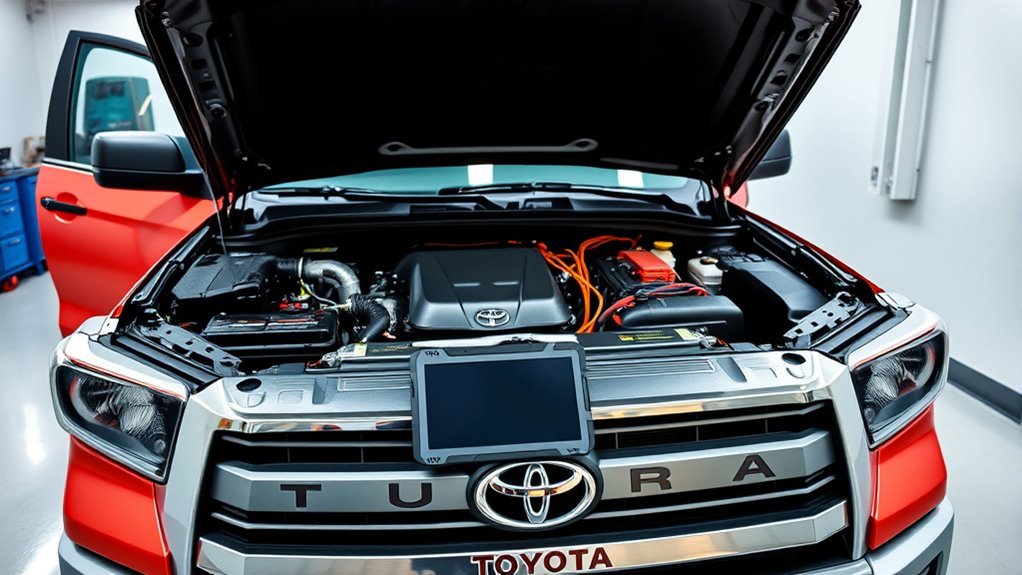
The Toyota Tundra Hybrid is officially the Tundra i-FORCE MAX. Toyota rates the standard hybrid system at 437 net combined horsepower at 5,200 rpm and 583 lb-ft of torque at 2,400 rpm. Toyota advertises up to 12,000 pounds of towing for the Tundra lineup, but the rating for an individual hybrid truck depends on its cab, bed, drivetrain, trim, equipment, payload, passengers, and hitch setup.
The system has three main jobs. The gasoline engine supplies sustained power. The motor generator adds torque quickly and can propel the truck in limited low-speed conditions. During deceleration, the same motor generator recovers energy that would otherwise be lost as brake heat.
The defining feature is the mechanical layout. The motor generator and clutch sit in the bell housing between the engine and the 10-speed automatic transmission. Engine power and electric power therefore travel through the same transmission, driveshaft, transfer case on 4WD models, and axles.
| Driving Situation | What the Hybrid System Does |
|---|---|
| Start and very low speed | The truck may be READY with the engine off, and the motor can provide initial propulsion when charge, temperature, and load allow. |
| Acceleration | The motor adds immediate torque while the twin-turbo V6 builds and sustains power. |
| Above 18 mph | Toyota says the gasoline engine remains in operation for mid- and high-speed performance. |
| Towing | The hybrid system provides added response and torque; in Tow/Haul operation, Toyota says the system stays active to support performance. |
| Deceleration and braking | The motor generator recovers part of the truck’s kinetic energy and sends it back to the high-voltage battery. |
Toyota’s 2026 Tundra i-FORCE MAX is rated at 437 net combined horsepower and 583 lb-ft of torque, giving the hybrid its biggest advantage in low-rpm response and towing confidence.
How Is the Tundra i-FORCE MAX Different From a Prius Hybrid?
The Tundra i-FORCE MAX is a one-motor parallel hybrid. Toyota places a motor generator and clutch in the bell housing between the twin-turbo V6 and the 10-speed automatic transmission. A Society of Automotive Engineers technical paper identifies the unit as Toyota’s L4A0 hybrid module and describes a motor generator plus K0 clutch ahead of a torque-converter automatic.
A Prius-style Toyota hybrid uses a planetary power-split device and multiple motor generators to divide engine and electric power. The Tundra keeps a direct mechanical path through a conventional geared transmission. When the clutch is closed, engine torque can travel mechanically through the motor module and transmission. When operating conditions allow the engine to stop, the motor can still send torque through the transmission.
[Products Worth Considering]

This ALLWELL engine air filter is designed to help maintain clean airflow for compatible Toyota, Lexus, and Subaru vehicles, supporting engine performance and efficient operation. It serves as a direct replacement for multiple OE part numbers and fits a wide range of hybrid and standard models across several years. Built for broad compatibility, it is a practical maintenance part for keeping your vehicle’s intake system protected.

This engine air filter is designed to fit select Lexus and Toyota hybrid models, helping maintain clean airflow to the engine for reliable performance. Built with high-fiber filter paper and a fine filtration layer, it offers strong dust capture while minimizing airflow resistance. It is a direct replacement for multiple OEM part numbers and is backed by warranty support.

This replacement filter set is designed for a range of Toyota hybrid vehicles, including popular models like RAV4 Hybrid, Camry Hybrid, Highlander Hybrid, Sienna, Venza, and more. It combines cabin and engine filtration to help support cleaner airflow, reduce dust and odors, and protect your HVAC and engine systems. Built for easy installation and extended service life, it offers a convenient maintenance upgrade for compatible hybrid and gas-only Corolla models.
What the Tundra Hybrid System Is Not
- It is not a plug-in hybrid. You do not charge it from a wall outlet.
- It is not a full EV truck. It may move under electric power in limited conditions, but the gasoline engine is still the main power source.
- It is not a Prius-style power-split system. The Tundra does not use the same MG1/MG2 planetary layout commonly associated with Toyota Hybrid Synergy Drive cars.
- It is not electric-motor AWD. Four-wheel-drive Tundra Hybrid models use mechanical 4WD hardware.
Why Toyota Uses This Layout
A full-size truck has different priorities than a compact hybrid car. The Tundra needs strong towing response, predictable throttle feel, cooling capacity, and durability under heavy load. Placing the electric motor generator between the engine and transmission gives Toyota a way to add torque without changing the basic truck-like driving feel.
Note: The hybrid system improves response and can help fuel economy, but the Tundra i-FORCE MAX is still a large full-size pickup. Tires, trim, 4WD hardware, speed, weather, payload, and trailer weight can all change real-world MPG.
What Parts Make Up the Toyota Tundra Hybrid System?
| Component | What It Does |
|---|---|
| 3.4-liter twin-turbo V6 | Provides the main power for cruising, towing, climbing, and sustained highway speed. |
| Motor generator | Adds electric torque, helps restart the engine, assists propulsion, and recovers energy during braking. |
| Clutch assembly | Helps blend engine and electric motor operation through the driveline. |
| 10-speed automatic transmission | Routes combined engine and electric power to the wheels and provides towing-friendly gear ratios. |
| Power Control Unit and inverter/converter | Controls high-voltage power flow between the battery and motor generator and manages electrical conversion. |
| 288-volt sealed Ni-MH hybrid battery | Sits under the rear passenger seats, stores recovered energy, and supplies electric assist. |
| 4WDemand part-time 4WD, when equipped | Uses mechanical four-wheel-drive hardware for added traction instead of a separate rear electric motor. |
What Happens When You Press Start?
Press the brake pedal and power button, then confirm the READY indicator before moving. A hybrid truck can be ready to drive even when the gasoline engine is silent, so engine noise is not a reliable on/off check.
The V6 may remain off briefly when battery charge, temperature, climate demand, and requested power allow. The motor generator handles engine start-up and can provide limited low-speed propulsion. A stronger accelerator input, low battery charge, cabin heating or cooling demand, or higher vehicle speed can bring the engine online. Toyota says the gasoline engine remains in operation once the truck is above 18 mph.
Warning: Do not touch orange high-voltage cables, the inverter, the hybrid battery, or the service plug. Hybrid components can remain dangerous even when the truck appears to be off. Use Toyota service information and qualified hybrid-trained repair procedures.
How Does Power Flow Through the Tundra Hybrid Drivetrain?
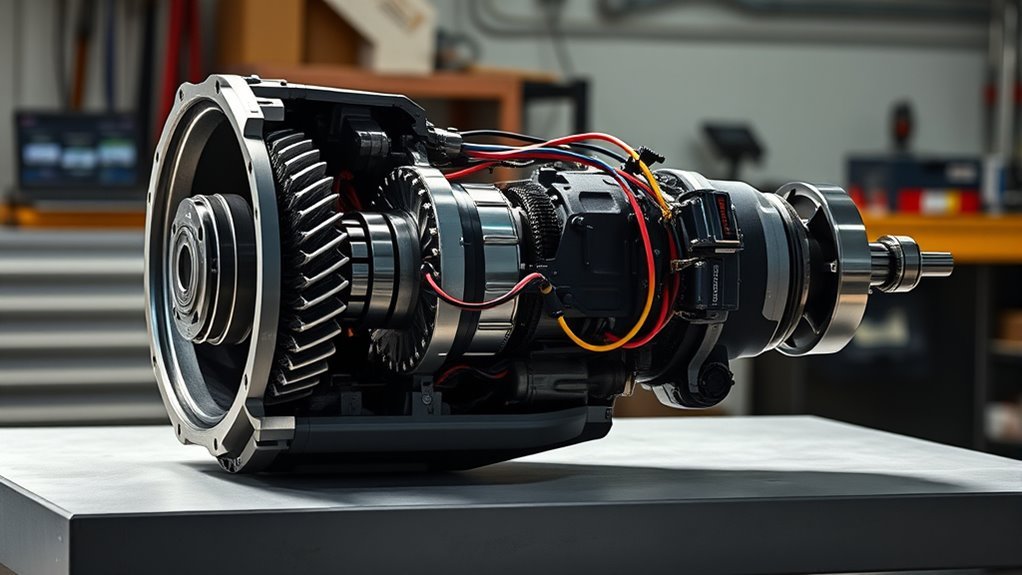
Power flow changes automatically, but every propulsion mode uses the same transmission path. The control system decides whether to open or close the engine-side clutch, how much motor torque to request, when to run the V6, and when to recover energy. Driver demand, battery charge, speed, drive mode, towing mode, traction settings, and temperature all affect that decision.
Low-Speed Driving
At low speed and light load, the motor can do much of the initial work and the truck may move with the V6 off. Electric-only operation is automatic, brief, and condition-dependent. Toyota does not provide a driver-selectable long-range EV mode, and it says the gasoline engine remains on above 18 mph.
Acceleration and Merging
During acceleration, the electric motor generator adds torque while the turbocharged V6 builds power. This is where the hybrid system feels most obvious. The truck can respond quickly before the engine reaches higher rpm, which helps when merging, passing, or pulling away with a trailer.
Steady Cruising
At steady road speed, the gasoline engine provides the main propulsion. The motor may assist during a grade or load change, and the system may use engine power to maintain the battery’s working charge range. The design prioritizes predictable truck performance rather than extended electric-only cruising.
Towing and Heavy Loads
When towing, the motor generator adds torque before the V6 reaches its peak output, while the 10-speed automatic keeps the engine in a useful range. Toyota says the i-FORCE MAX system stays active in Tow/Haul operation to support acceleration and response. The advertised 12,000-pound figure is a lineup maximum, not a universal rating for every hybrid configuration. Check the truck’s configuration-specific tow rating, payload label, hitch limits, passengers, cargo, and trailer tongue weight before towing.
How Does the Tundra Hybrid Recharge Its Battery?
Regenerative braking lets the motor generator act like a generator during deceleration. Instead of turning all motion into heat through the brake pads and rotors, the system converts some of that motion into electricity and sends it back to the hybrid battery.
Regeneration Energy Flow
- The driver lifts off the accelerator or applies the brake pedal.
- The motor generator creates electrical resistance through the driveline.
- The inverter/converter routes recovered energy into the hybrid battery.
- The brake system blends regenerative braking with friction braking.
- The stored energy is later used for electric assist.
Regeneration has more opportunity during repeated deceleration and downhill driving. Available regenerative braking can decrease when the battery cannot accept more charge, component temperatures are outside their preferred range, vehicle stability systems intervene, or stronger friction braking is required. The brake pedal remains the driver’s normal control; the truck manages the blend automatically.
Battery Charge Management
The driver does not manually charge the Tundra Hybrid. The truck manages charge automatically through regenerative braking and engine-driven generation. The battery management system keeps the pack within a working charge range instead of filling it from empty to full like a plug-in EV.
Pro Tip: Lift early and brake smoothly when traffic allows. That gives the system more time to recover energy. In an emergency, brake firmly and let stopping safety take priority over regeneration.
How Much Fuel Does the 2026 Tundra Hybrid Use?
The Tundra Hybrid saves fuel through electric assist, regenerative braking, automatic engine stop/start behavior, and reduced engine load in some conditions. The gain is modest because i-FORCE MAX is tuned for a full-size truck’s torque and capability rather than maximum hybrid efficiency.
| 2026 Hybrid Trim Listing | EPA-Estimated MPG |
|---|---|
| Limited i-FORCE MAX | 20 city / 24 highway / 22 combined |
| Platinum, 1794 Edition, or Capstone i-FORCE MAX | 19 city / 22 highway / 20 combined |
| TRD Pro | 18 city / 20 highway / 19 combined |
Real-world mileage can fall with towing, high speed, headwinds, cold weather, idling, all-terrain tires, lift kits, heavy cargo, or frequent short trips. Compare trucks by the exact drivetrain, bed, and trim because Toyota’s displayed ratings vary by configuration.
Does the Tundra Hybrid Use an Electric Rear Motor?
Four-wheel-drive Tundra Hybrid models use Toyota’s truck-style 4WD hardware. That means traction is handled through a mechanical four-wheel-drive system rather than a separate electric motor at the rear axle.
On the TRD Pro and Tundras equipped with the TRD Off-Road Package, Toyota lists support features such as Multi-Terrain Select, Crawl Control, Downhill Assist Control, a Multi-Terrain Monitor, and an electronically locking rear differential for 4WD Low applications. See the Tundra 4WD system guide for 2H, 4H, 4L, and traction-system context, or the Tundra Downhill Assist Control guide for the model-specific procedure.
The hybrid system still matters off-road because electric torque arrives quickly. That can help with controlled low-speed movement, but the truck’s traction comes from tires, suspension, gearing, transfer-case settings, differential hardware, and driver inputs.
Where Does i-FORCE MAX Help Most in Daily Driving?
The system’s clearest benefit appears when torque demand changes quickly. Electric assist can respond before the engine reaches peak torque, while the V6 and 10-speed transmission provide sustained power. That combination matters more during launch, merging, grades, and towing than during steady highway cruising.
- Towing: Electric assist helps low-speed response, while the V6 and 10-speed automatic handle sustained power.
- City driving: Regenerative braking can recover energy during repeated stops.
- Highway driving: The engine does most of the work, so speed, wind, tires, and load have a major effect on MPG.
- Off-road driving: Available TRD systems and 4WD hardware are more important than electric-only operation.
- Daily driving: The system is automatic. There is no charging routine, and electric-only operation is not a driver-selected long-range mode.
[Products Worth Considering]
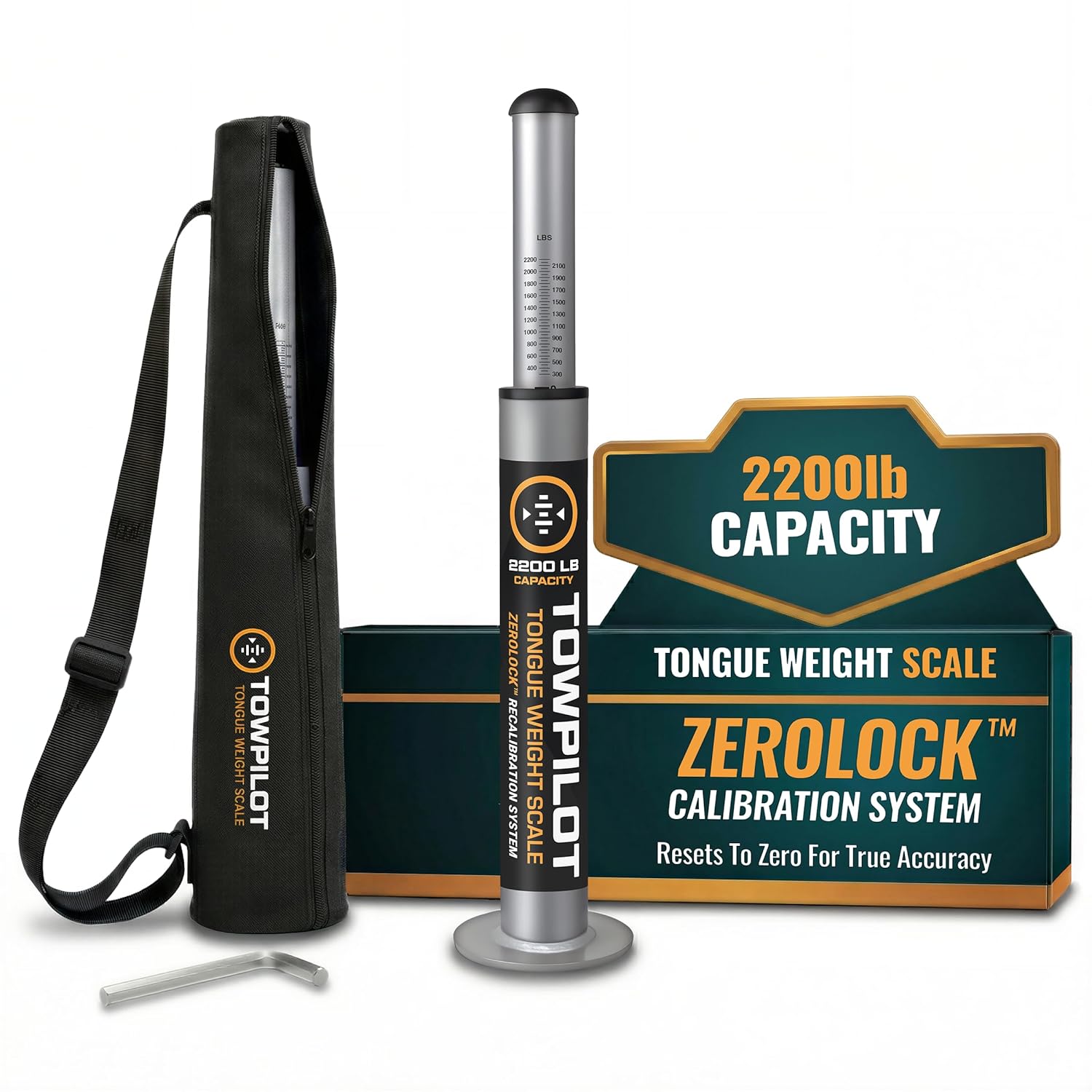
This trailer tongue weight scale helps you check hitch weight quickly and accurately before towing, reducing sway and improving overall safety. Built with durable steel and a spring mechanism, it works without batteries and includes a recalibration feature to maintain true-zero accuracy over time. It is designed for RVs, campers, and utility trailers, with a top plate that helps protect your coupler during use.
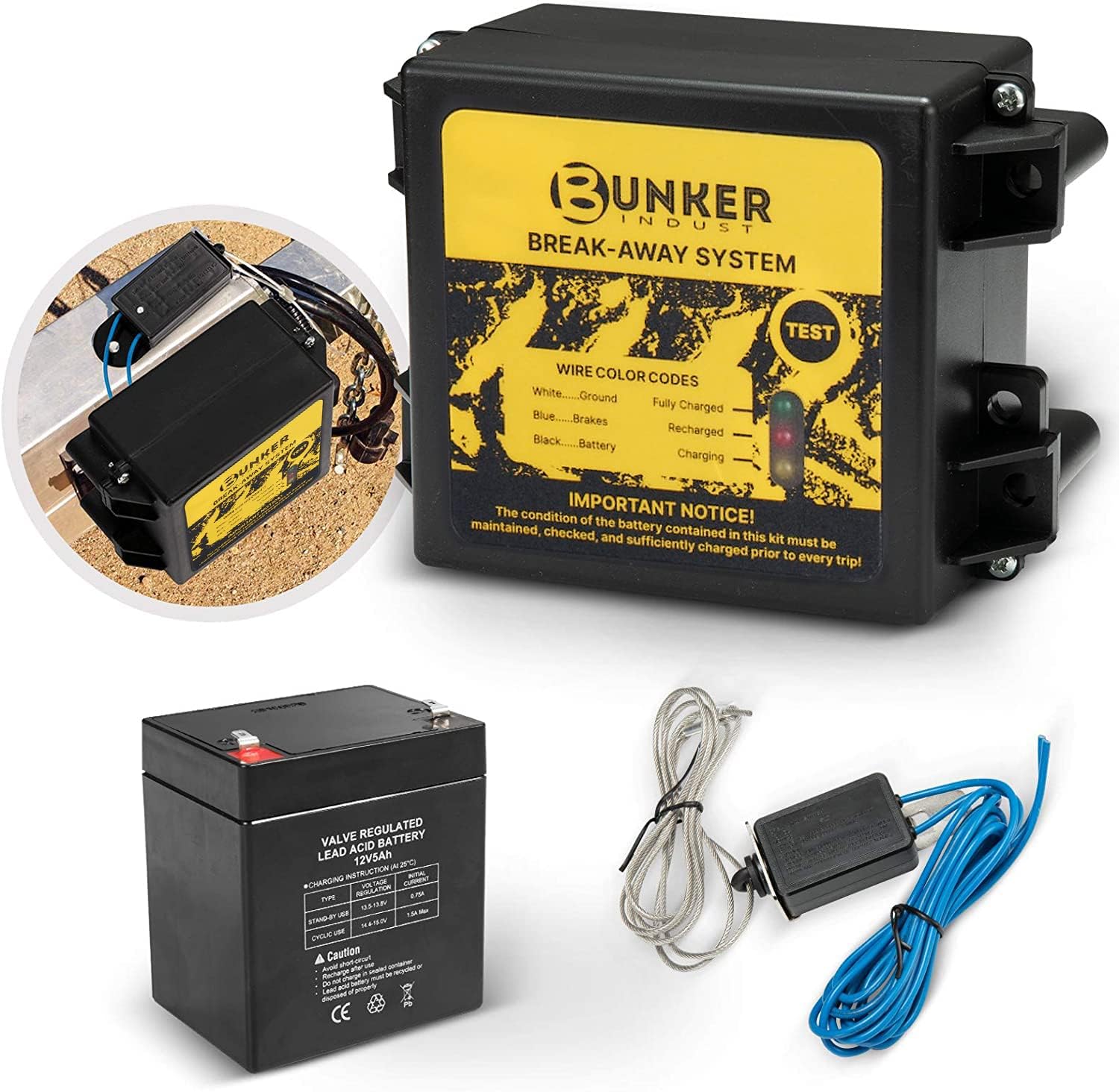
This trailer breakaway kit is designed for trailers with an existing electric brake system, helping activate the brakes if the trailer separates from the tow vehicle. It includes a battery, breakaway switch, and charger with an LED display for easy status checks, making it a practical safety upgrade for caravans and trailers. The side-mount design supports quick installation, while weather and corrosion resistance help it stand up to outdoor use.

This KAX combo kit includes both an engine air filter and a cabin air filter for compatible Toyota and Lexus hybrid models, making routine maintenance simple and convenient. It helps support cleaner cabin air and reliable engine airflow with multi-layer filtration and activated charcoal odor control. Designed for easy installation, it offers a practical all-in-one replacement solution for scheduled upkeep.
What Maintenance and Warranty Coverage Apply?
The Tundra Hybrid still needs normal truck maintenance: oil and filter changes, tire rotations, brake inspections, coolant checks, differential/transfer-case service when applicable, and towing-related inspections. The hybrid system adds parts such as the inverter/converter, motor generator, high-voltage battery, cooling paths, and control modules, so maintenance should follow Toyota’s official schedule rather than generic truck advice.
Toyota’s 2026 Tundra i-FORCE MAX warranty guide lists the Hybrid System Warranty at 8 years or 100,000 miles for components such as the hybrid control module, battery control module, and inverter with converter. The Hybrid Battery Warranty is listed at 10 years or 150,000 miles from the vehicle’s in-service date, whichever comes first.
Regenerative braking can reduce some friction-brake use, but it does not eliminate brake inspections or fluid checks. Toyota also includes hybrid-specific attention to the traction-battery cooling intake. Keep the intake area clear and follow the model-year maintenance guide; see the Tundra hybrid battery cooling guide for safe cleaning boundaries.
For a fuller explanation of what falls under each term, see the Toyota Tundra warranty coverage guide. Warranty eligibility depends on the in-service date, mileage, component, failure cause, and the terms in the applicable guide.
Note: Before buying a used Tundra Hybrid, check service records and run the VIN through Toyota’s recall lookup. Recalls and service campaigns are VIN-specific, so model-year generalizations are not enough.
[Products Worth Considering]

This steering clock spring is designed to restore reliable steering wheel controls across a wide range of Toyota models. It supports audio, cruise control, and other multifunction commands while matching OEM part numbers for confident replacement fitment. Built for dependable signal transfer and straightforward installation, it is an effective solution for repairing steering column control issues.
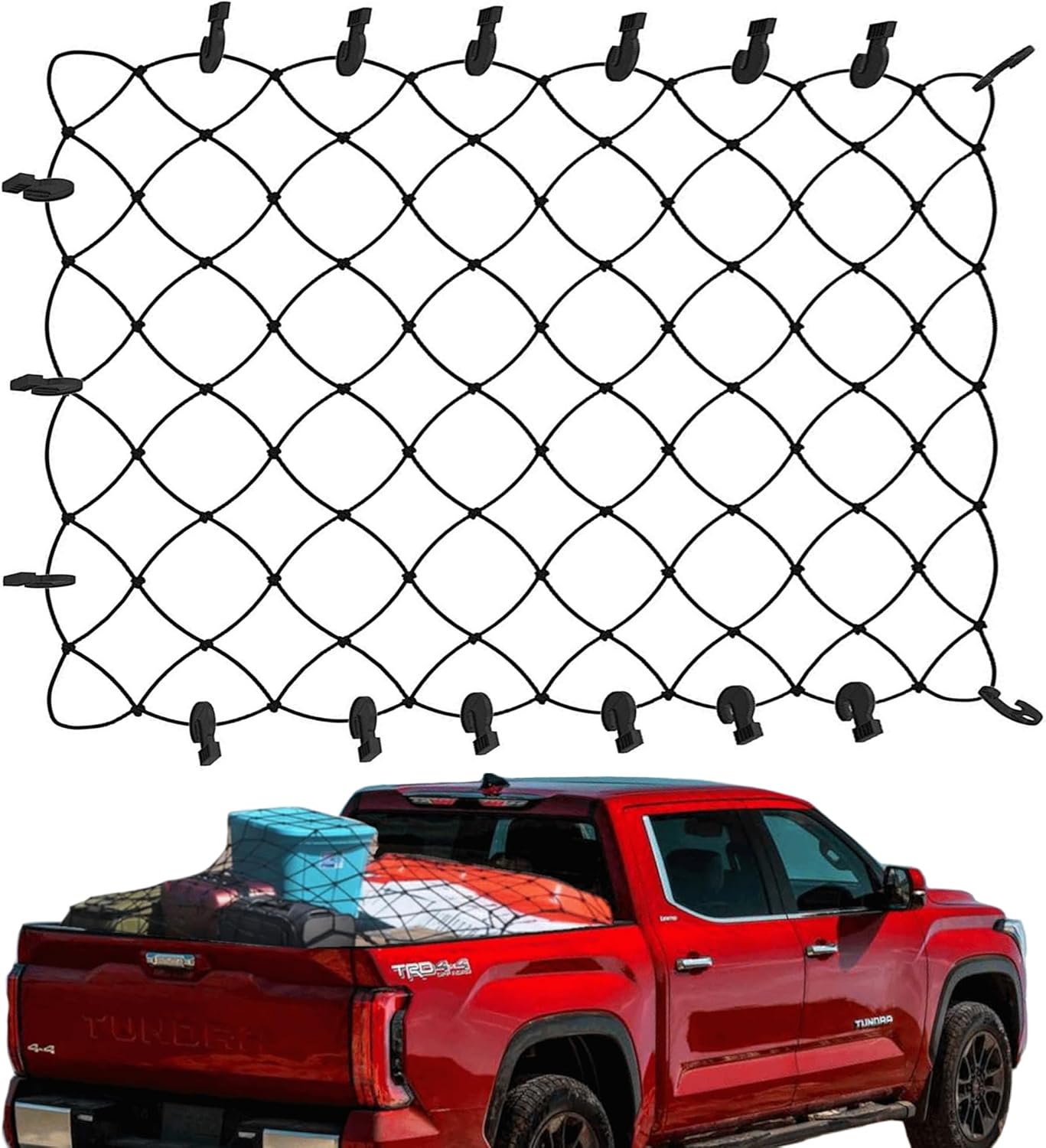
Keep cargo secure in your Toyota Tundra with this Essentials Series cargo net designed for 2007-2026 models equipped with factory deck rails. It features a 6mm premium latex bungee, a 6-inch grid system, upgraded carabiners, and patented bed rail integration for quick, dependable hauling. Built for everyday use, it installs directly to the factory bed rails without extra hardware and is backed by a lifetime warranty.

This replacement bed cleat tie down anchor kit restores secure cargo management for compatible Toyota truck bed rail systems. Designed to match OEM dimensions and fit, these anchors help keep gear, tools, and luggage firmly in place during daily hauling. Built for dependable use in demanding pickup truck conditions, the kit offers a practical replacement for worn factory tie-downs.
Common Myths About the Toyota Tundra Hybrid
| Myth | Reality |
|---|---|
| You have to plug it in. | No. It charges itself through regenerative braking and engine operation. |
| It uses the same hybrid layout as a Prius. | No. The Tundra i-FORCE MAX uses a truck-focused one-motor parallel hybrid layout. |
| The rear axle is electric. | No. 4WD models use mechanical part-time four-wheel drive hardware. |
| The hybrid is only for MPG. | No. Its biggest benefit is added torque and smoother power delivery under load. |
Frequently Asked Questions
What is the real-world MPG for the Toyota Tundra Hybrid?
Toyota lists the 2026 Limited i-FORCE MAX at 20 city, 24 highway, and 22 combined MPG; the Platinum, 1794 Edition, and Capstone i-FORCE MAX at 19 city, 22 highway, and 20 combined; and the TRD Pro at 18 city, 20 highway, and 19 combined. Towing, aggressive tires, high speeds, cold weather, idling, lift kits, and heavy cargo can reduce those figures.
Does the Tundra Hybrid use a lithium-ion battery?
No. Toyota’s i-FORCE MAX system uses a sealed 288-volt nickel-metal hydride hybrid battery under the rear passenger seats. It charges automatically through regenerative braking and engine operation, so there is no plug-in charging routine.
Can the Toyota Tundra Hybrid drive on electric power alone?
Yes, but only in limited low-speed, low-load conditions selected automatically by the truck. Toyota says the electric motor does much of the work at lower speeds and the gasoline engine remains in operation above 18 mph. Battery charge, temperature, throttle input, and climate demand can make the engine start earlier.
Is the Tundra Hybrid better for towing than the gas-only Tundra?
The hybrid’s main advantage is torque. With 583 lb-ft of torque and electric assist at low rpm, the i-FORCE MAX can feel stronger and smoother when pulling away, merging, or climbing with a trailer. Always check the exact tow rating for the truck’s cab, bed, drivetrain, trim, and equipment.
How long is the Toyota Tundra Hybrid battery warranty?
Toyota’s 2026 Tundra i-FORCE MAX warranty guide lists the hybrid battery warranty at 10 years or 150,000 miles from the vehicle’s in-service date, whichever comes first. Other hybrid system components are covered under separate warranty terms.
Does the Tundra Hybrid have an electric rear motor?
No. Four-wheel-drive Tundra Hybrid models use mechanical part-time 4WD hardware. The electric motor generator is integrated into the powertrain between the engine and transmission, not mounted as a separate rear axle motor.
Where is the Toyota Tundra Hybrid battery located?
Toyota places the sealed 288-volt nickel-metal hydride battery under the rear passenger seats. Airflow around the battery cooling intake should remain unobstructed, and high-voltage battery service should be left to trained technicians.
Does the Tundra Hybrid engine stay off at highway speed?
No. Toyota says the gasoline engine remains in operation above 18 mph for mid- and high-speed performance. The motor can still assist the engine, recover energy during deceleration, and help manage power delivery, but the system is not designed for highway-speed electric-only cruising.
Conclusion
The Toyota Tundra i-FORCE MAX is a one-motor parallel hybrid built around a conventional 10-speed automatic transmission. Its clutch-mounted motor generator adds immediate torque, starts the engine, enables limited low-speed EV operation, and recovers braking energy for a sealed 288-volt Ni-MH battery under the rear seats. Above 18 mph, Toyota says the gasoline engine remains in operation. For an owner or buyer, the practical next steps are to compare the exact trim’s MPG and tow rating, keep the battery cooling intake clear, follow Toyota’s hybrid maintenance schedule, and verify warranty or recall coverage by model year and VIN.
Sources
- Toyota 2026 Tundra official page — power, torque, towing, trims, and MPG estimates.
- Toyota USA Newsroom: 2026 Toyota Tundra — 2026 output, torque rpm, motor-generator layout, transmission, towing, and off-road features.
- Toyota USA Newsroom: i-FORCE MAX technical overview — 288-volt Ni-MH battery location, low-speed motor operation, 18-mph engine behavior, and Tow/Haul operation.
- SAE Technical Paper 2022-01-0656: Toyota’s New Hybrid Unit “L4A0” — motor-generator, K0 clutch, torque converter, and transmission-module architecture.
- FuelEconomy.gov: 2026 Toyota Tundra Hybrid 4WD — official EPA fuel economy data.
- Toyota 2026 Tundra i-FORCE MAX Warranty & Maintenance Guide — hybrid battery warranty, hybrid system warranty, and maintenance notes.
- Toyota USA Newsroom: 2027 Tundra announcement — confirms continued gas and i-FORCE MAX availability and states that full 2027 specifications are due in fall 2026.
- Toyota Recall Lookup — VIN-specific recall and service campaign checks.


[…] but adds an electric motor generator and clutch inside the bell housing. You can read the separate Tundra i-FORCE MAX hybrid system guide for a deeper explanation of electric assist and […]
[…] engine, and powertrain. Conventional starter-circuit tests may not apply in the same way to an i-FORCE MAX hybrid. Do not probe, disconnect, or service orange high-voltage cables or hybrid components without the […]