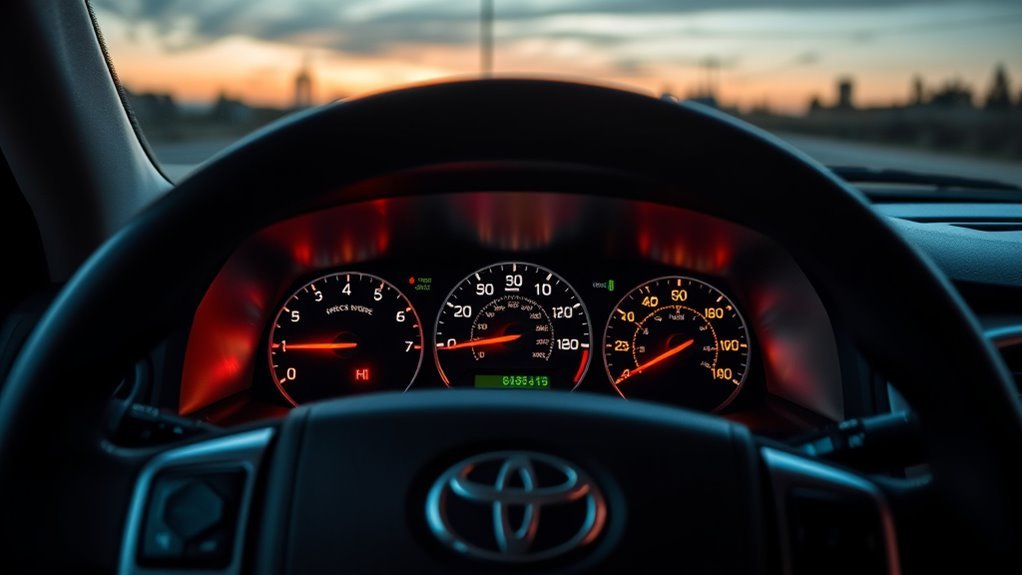
Your Toyota Tundra dashboard uses colors and icons to tell you what’s wrong: red lights like brake, low oil pressure, SRS, or battery mean stop safely and get a tow or technician immediately; amber/yellow lights such as TPMS, maintenance required, check engine, or ABS signal you should address soon but aren’t always emergencies. Follow the step actions—pull over for red, inflate tires for TPMS, run diagnostics for check engine—and keep routine checks to avoid surprises. Keep going to learn specific icon meanings and fixes.
Red Warning Lights That Need Immediate Action
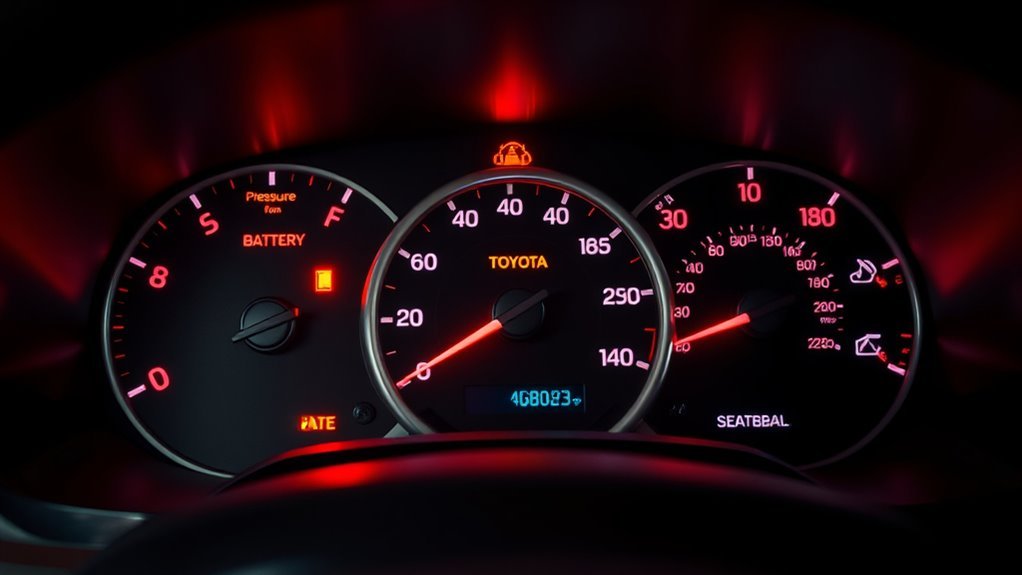
If a red warning light comes on in your Toyota Tundra, don’t ignore it—these indicators show critical problems that need immediate action to protect you and your vehicle. You should stop safely at once when the Brake System Warning Light illuminates; it often means low brake fluid or a system malfunction that can cost you control. If the Low Engine Oil Pressure Light appears, shut down the engine promptly—running with insufficient engine oil pressure can seize the motor. The SRS Warning Light signals an airbag or restraint fault; you’ll want inspection before risking passengers. A Battery/Charging System Light warns that the charging circuit may fail, risking power loss while you’re driving. Don’t rationalize or delay; these red lights demand quick, decisive responses to preserve freedom of movement and safety. Call roadside service or tow if needed, and have a qualified technician diagnose and repair the specific fault immediately.
Tundra Amber/Yellow Warning Lights: Meanings & When to Service
When an amber or yellow light appears on your Tundra’s dash, it’s telling you there’s an issue that needs timely attention but usually isn’t an immediate emergency; think underinflated tires, routine maintenance due, or a system that should be diagnosed soon. You should treat these warnings as opportunities to stay free from bigger problems—address them promptly to keep mobility and confidence.
Amber dash lights mean timely attention is needed—tackle tire, maintenance, or system alerts early to avoid bigger problems.
- TPMS/tire pressure: If the TPMS lights, check and inflate tires to the recommended PSI; don’t ignore recurring alerts.
- Maintenance Required: Illuminates near 5,000 miles to remind you to schedule routine service for longevity and safety.
- Check Engine Light: Amber engine symbol calls for engine diagnostics; it can indicate minor faults or issues needing technician attention.
- ABS/Cruise Control: Yellow ABS or cruise indicators point to system malfunctions that should be inspected soon.
You’ll preserve independence by acting early—diagnose, service, and reclaim control of your Tundra.
Respond Now: Step-by-Step Actions for the Top 6 Lights
Start by treating any illuminated warning light as an instruction to act—this section gives clear, prioritized steps for the six most common dashboard warnings so you can respond quickly and correctly. You’ll move from immediate safety to diagnostic follow-up, reclaiming control of your drive.
| Light | Immediate Action | Next Step |
|---|---|---|
| Check Engine (amber) | Don’t ignore; drive cautiously | Get engine diagnostics ASAP |
| Oil Pressure (red) | Pull over, shut off engine | Add oil only if safe; tow to shop |
| Brake System (red) | Stop immediately in a safe place | Inspect fluid, call a technician |
| TPMS (horseshoe) | Reduce speed, check tires | Inflate/repair and recheck pressure |
| SRS (airbag) | Continue cautiously; avoid passengers in affected seats if possible | Schedule airbag system inspection |
Treat each light as a clear command. Know the light meanings, act first to protect people, then pursue engine diagnostics or repairs. You’re freeing yourself from uncertainty—act deliberately and get professional help when needed.
Routine Reminders vs. Fault Codes: Maintenance Required, Check Engine, TPMS
Although they all light up on your dash, the Maintenance Required, Check Engine, and TPMS indicators mean different things and demand different responses: you’ll treat routine reminders and fault codes distinctly so you stay safe and free on the road. The Maintenance Required light flashes around every 5,000 miles as a reminder for routine maintenance—typically an oil change—not a vehicle fault. The Check Engine light is amber and flags possible diagnostic issues; don’t ignore it, since problems can worsen and reduce fuel efficiency or cause engine damage. TPMS warns of under-inflated tires; check pressures to restore safety and economy.
- Maintenance Required — scheduled service reminder, no fault.
- Check Engine — potential faults needing diagnostics.
- TPMS — low tire pressure; quick manual check.
- Response — follow reminder, inspect tires, and seek diagnostics when amber warnings persist.
You’ll act differently depending on the alert: simple upkeep, immediate tire attention, or timely diagnostic inspection to protect performance.
How Technicians Diagnose Tundra Warning Lights (What to Expect)
You’ve learned how to interpret the common indicators; now see how a technician figures out what’s behind them. When you bring a Tundra in, technicians connect diagnostic tools to the onboard system to pull error codes and watch live data. That code read gives direction, but they don’t stop there.
Expect targeted visual inspections of the engine bay, brake components, and electrical connections to catch leaks, corrosion, or loose wiring that codes can’t show. Technicians then run focused tests — fluid level checks, pressure tests, and system-specific trials — to verify whether symptoms match the fault. Specialized equipment lets them monitor real-time performance so they can pinpoint intermittent or sensor-driven issues.
Technicians consult the service manual and manufacturer guidelines to decide the correct fix and next steps. You’ll get a clear explanation of the findings, proposed repairs, and confidence that diagnosis was methodical, evidence-based, and aimed at restoring your freedom to drive without guesswork.
Preventing Warning Lights: Easy Checks to Avoid Surprises
When you keep a few simple checks on your Tundra—tire pressure, oil and brake fluid levels, battery health, and fuel—you’ll cut the chance of surprise dashboard warnings and catch small issues before they become costly. Take control with routine, freeing habits that stop lights before they start.
- Check tire pressure monthly and after large temperature shifts — tire maintenance tips matter because TPMS reacts to pressure changes.
- Verify engine oil level on the dipstick; low oil pressure lights mean act now to avoid engine damage.
- Use a fluid inspection checklist for brake fluid: low levels can trigger the Brake System Warning Light and compromise safety.
- Inspect battery terminals and voltage, and keep at least a quarter tank of fuel to prevent the Low Fuel Level Warning Light from distracting you.
These quick checks give you autonomy over vehicle health, reduce mechanic visits, and keep the dashboard calm so you can drive confidently and free.
Quick Reference: Icons, Colors, and What They Signal
Keeping up with those routine checks makes reading your Tundra’s dash a lot easier — now let’s look at what the lights and colors actually mean so you can respond correctly. Use icon identification first: symbols point you to systems—engine, brakes, TPMS, SRS—so you know what to check. Learn color significance: red means stop and act now; yellow/amber means address soon but don’t panic.
If the red Brake System Warning Light comes on, pull over safely, check for an engaged parking brake and low brake fluid, and get it inspected immediately. The amber Check Engine Light covers engine control faults; run a diagnostic to pinpoint the issue. The TPMS icon warns of under-inflated tires—inflate to spec for safety and efficiency. The SRS Warning Light signals airbag or seatbelt pretensioner faults and needs prompt professional attention. Recognize icons, respect colors, and take decisive, liberating action to keep control of your Tundra.
Frequently Asked Questions
Can a Dashboard Light Reset Itself After a Repair?
Yes — you’ll often see the light indicator go off after the repair process completes, but sometimes it won’t reset automatically; you’ll need a manual reset or scan tool to clear codes and reclaim full dashboard freedom.
Do Aftermarket Parts Affect Warning Light Behavior?
Yes—you can expect aftermarket sensors to change warning light behavior; they’ll sometimes trigger false alerts or hide faults, so you’ll need thorough warning light diagnostics and careful sourcing to reclaim reliable, independent vehicle control and freedom.
Will Extreme Temperatures Cause False Warnings?
Yes — extreme conditions can trigger temperature sensitivity and cause false alarms; you should run warning light diagnostics, avoid exposure when possible, and insist on repairs or shielding so your vehicle stays reliable and you remain free.
Is Towing a Tundra With a Warning Light Safe?
You shouldn’t tow a Tundra with an active warning light unless you’ve confirmed towing safety via prompt warning light diagnosis; get the fault scanned, address critical systems, then tow only when diagnostics and repairs protect you and fellow road users.
Can Software Updates Fix Recurring Warning Lights?
Yes — you can often fix recurring warning lights with a software update; you’ll need warning light troubleshooting to confirm, since software update benefits include corrected logic and false alerts, but persistent faults may still need hardware repairs.
Conclusion
You’ve now got the essentials to act fast when your Tundra’s dashboard warns you. Remember: red lights demand immediate stops; amber ones need timely service. Fun fact — drivers who ignore tire-pressure lights see 20% worse fuel economy on average, so that yellow TPMS icon isn’t just annoying. Stay proactive with simple checks and regular service, and you’ll avoid most surprises, keep repairs smaller, and drive safer.