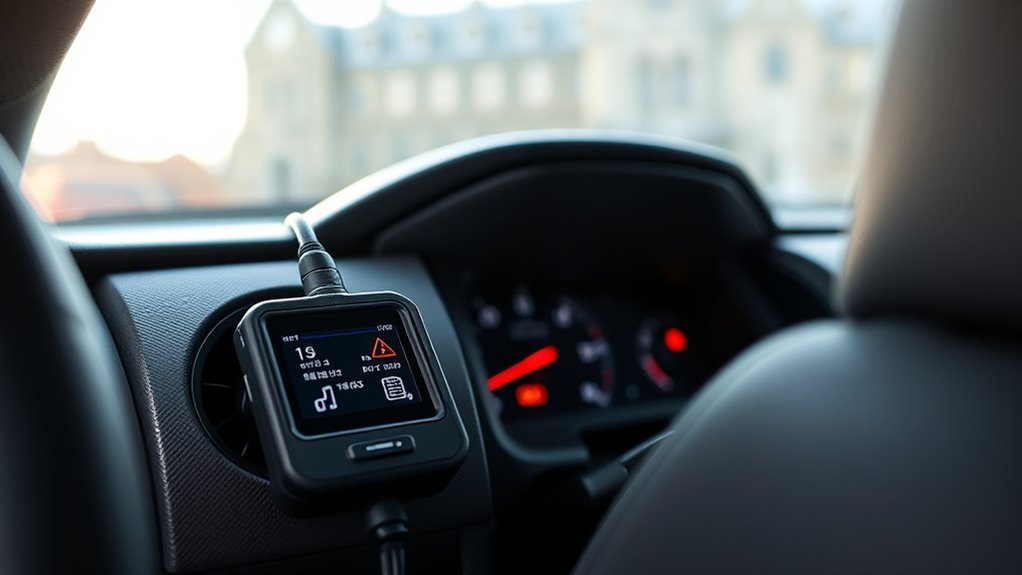
You’ll plug an OBD2 scanner into the Tundra’s under‑dash port, turn the key to ON, and capture codes plus live data. Common fault codes include P0300 (random misfires), P0420/P0430 (catalyst efficiency), P0171/P0174 (system lean), P0101 (MAF performance), and P0340 (cam sensor). Troubleshooting follows methodical checks: sensors, vacuum/intake leaks, wiring, exhaust leaks, and coils/plugs. You’ll learn targeted tests, likely fixes, and when to DIY versus visit a shop if you keep going.
How to Read OBD2 Codes on a Tundra

When you need to pull codes from a Toyota Tundra, sit in the driver’s seat and locate the OBD2 port under the dashboard in the footwell, then plug in a scanner that supports Toyota-specific codes. Turn the ignition to ON without starting the engine to power the reader. Use an OBD2 scanner with Toyota protocol support and pair it to the app; tap “Connect” to initiate OBD2 scanning. The scanner queries ECUs, retrieves fault codes, and displays brief descriptions. You’ll see a list of codes; select an entry to reveal detailed data, freeze-frame values, and possible causes. For disciplined code interpretation, record the code identifier, note the description, and capture live data where available. Prioritize repairs that restore control and mobility; reject ambiguity. You’ll repeat scans after fixes to confirm resolution. This methodical, technical sequence gives you clarity and agency, turning opaque fault indicators into actionable diagnostics without dependence on external gatekeepers.
Most Common Tundra OBD2 Codes and Symptom Checklist (P0300, P0420, P0171, P0101, P0340)
If your Tundra triggers one of these common OBD2 codes—P0300, P0420, P0171, P0101, or P0340—you’ll want to quickly map each code to its typical symptom and probable cause so you can prioritize diagnostics and repairs. Use diagnostic tools to read freeze frames and live data, then match code to common symptoms.
When your Tundra throws P0300, P0420, P0171, P0101, or P0340, match codes to symptoms with freeze-frame and live data for fast, focused repairs.
P0300: Random/multiple misfires — rough idle, loss of power; likely spark plugs, ignition coils, or fuel delivery faults.
P0420: Catalytic efficiency below threshold — persistent CEL, reduced performance; suspect exhaust leaks, fuel mixture issues, or failing converter.
P0171: System too lean (bank 1) — poor fuel economy, hesitation; commonly caused by vacuum leaks, MAF sensor faults, or weak fuel pressure.
P0101: MAF sensor performance — poor acceleration, stalling; indicates MAF contamination or circuit errors.
P0340: Camshaft position sensor circuit — misfires, rough running; check sensor circuit, timing components, or connector faults.
This checklist lets you act decisively and reclaim control of your vehicle.
Fixes and DIY Diagnostics for Each Common Tundra Code
Because OBD2 codes narrow the fault area, you can follow a targeted, step-by-step diagnostic and repair process for each Tundra code to save time and money. Use an OBD2 scanner to read and log codes, then prioritize reproducible faults. For P0420/P0430 inspect oxygen sensors, exhaust leaks, and catalytic converter substrate damage; measure upstream/downstream O2 voltages and replace the converter only after ruling out sensors and leaks. For P0171/P0174 (lean conditions) check for vacuum leaks, cracked intake boots, and faulty MAF readings; clean or replace the MAF, perform smoke testing, and verify fuel pressure to rule out delivery issues. For P0441 inspect the purge valve and EVAP hoses for blockages or stuck operation, bench-test the valve and replace if intermittent. For P0500 examine the vehicle speed sensor and wiring for corrosion or physical damage, confirm signal with a multimeter. After repairs, clear codes and perform a drive cycle to confirm resolution.
Repair Yourself vs. a Shop: Costs, Tools, and Risks for Tundra Fixes
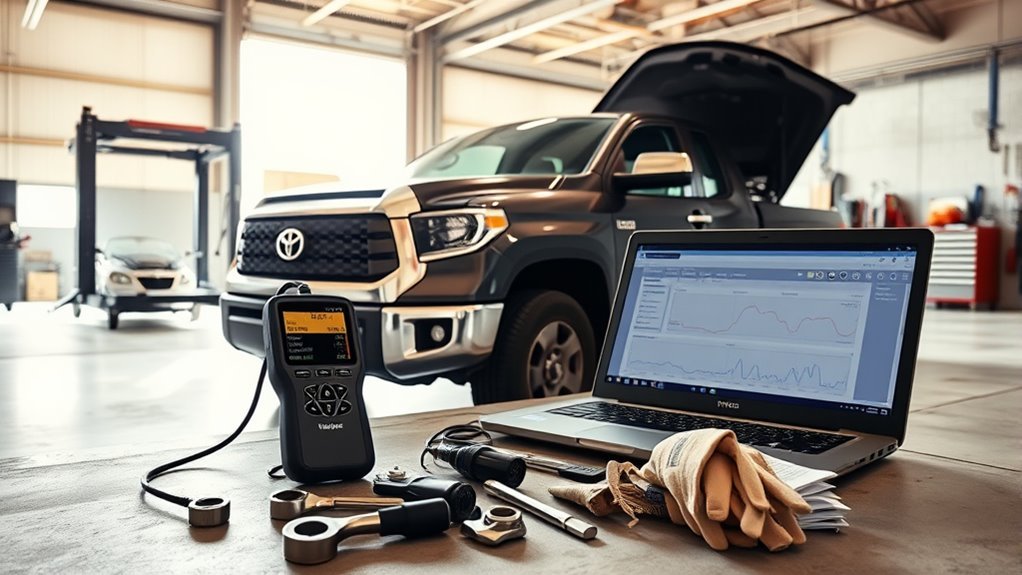
Although you can save substantial labor costs by tackling many Tundra repairs yourself, you’ll need the right tools, diagnostics, and a clear plan to avoid costly mistakes. You’ll perform a straightforward cost comparison: shop labor typically runs $75–$150 per hour, while DIY expenses are mainly parts and tools. Tool selection is critical — an OBD2 scanner (~$30), basic hand tools, and a repair manual (~$20) are minimums. Small sensor or exhaust jobs often cost under $200 in parts DIY; the same job at a shop can exceed $500 once labor and markup are included.
You’ll weigh risks: misdiagnosis can lead to unnecessary parts replacement and extended downtime that negate savings. For complex systems such as transmissions, shops provide specialized equipment and expertise you probably won’t have. Decide by coupling objective cost comparison with your confidence in diagnostics, access to proper tools, and tolerance for risk. If freedom matters, prepare methodically and undertake only tasks within your verified competence.
Maintenance Checks to Prevent Repeat Tundra OBD2 Codes
When you perform targeted maintenance checks on a regular schedule, you cut the chance of repeat OBD2 codes by addressing the root causes before they escalate. You’ll adopt preventive maintenance and routine inspections that free you from recurring faults. Inspect and replace air filters to maintain airflow and prevent MAF-related P0101 triggers. Monitor coolant level and verify thermostat operation so the engine shifts from open-loop to closed-loop fuel control, avoiding P0125. Scan the exhaust system for leaks, broken hangers, and substrate damage to stop catalytic efficiency faults like P0420/P0430. Secure and clean sensor connectors and wiring harnesses to prevent CAN-bus communication errors such as U0073. Test coils, plugs, and leads regularly and replace worn items to eliminate misfire codes like P0300. Use diagnostic scans after each check to confirm code clearance. Follow a documented schedule, record findings, and act decisively — that disciplined approach liberates you from repeat diagnostic cycles.
Frequently Asked Questions
How to Read Toyota OBD-II Fault Code?
Use an OBD II scanner: plug into the port, turn ignition on, scan, and capture codes. You’ll get fault code definitions; interpret them, research fixes, and reclaim control by methodically diagnosing and prioritizing repairs for liberation.
What Is the Most Common OBD2 Code?
Think of it as your emissions system whispering: the most common OBD2 code is P0420. You’ll use Toyota diagnostics and OBD2 troubleshooting methods to methodically verify catalytic efficiency, freeing performance and compliance through targeted repair.
How to Interpret OBD2 Codes?
You interpret OBD2 codes by using an OBD2 functionality overview, reading the code with a diagnostic tool, researching its meaning, testing suspected components, and confirming repairs; choose Diagnostic tool selection wisely to empower your independent troubleshooting.
What Are Common Toyota Warning Lights?
Ye olde alert: you’ll see Check Engine, Oil Pressure, Battery/Charging, ABS, and TPMS icons—learn warning light meanings and dashboard symbols methodically so you can diagnose, act decisively, reclaim control, and avoid mechanical oppression.
Conclusion
You’ve now got a clear roadmap to read codes, diagnose the usual Tundra faults, and choose fixes. Trust the code as your compass, but verify with methodical testing — sensors, wiring, and fuel/ignition systems — before swapping parts. Pick DIY for low-cost, low-risk jobs when you’ve got the right tools and procedures; send complex or safety-critical repairs to a shop. Regular maintenance closes the loop and keeps codes from coming back.