Understanding OBD-II readiness monitors in your Toyota Tacoma is essential for emissions compliance and engine efficiency. These monitors check key components like catalytic converters and oxygen sensors. A “Ready” status means diagnostics passed, while “Not Ready” indicates more driving is needed to meet the conditions. Short trips or recent battery disconnects often hinder readiness. To optimize performance, follow effective drive cycles that include steady speeds and maintaining engine temperature. You’ll discover more about achieving and maintaining readiness.
Understanding OBD-II Readiness Monitors in Your Toyota Tacoma
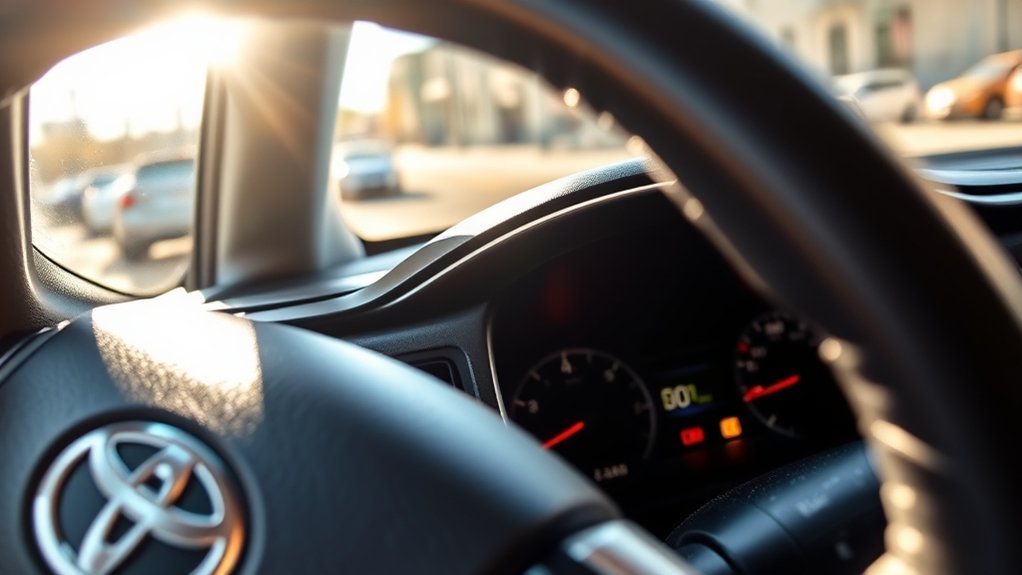
Understanding the intricacies of OBD-II readiness monitors in your Toyota Tacoma is important for maintaining peak emissions performance. These monitors assess important components, like the catalytic converter and oxygen sensors, guaranteeing they function correctly before an emissions test. Each monitor’s status reveals significant information: “Ready” indicates successful diagnostics, “Not Ready” means tests haven’t completed, and “Incomplete” shows conditions weren’t met.
To activate these monitors, implement effective readiness strategies, including specific drive cycles that involve steady speeds and idling. It’s essential to maintain engine temperatures between 180°F and 183°F, so check your thermostat and confirm your vehicle is fully warmed up. Engaging with community feedback can also provide valuable insights into overcoming any challenges you face with monitor diagnostics, empowering you to optimize your Tacoma’s emissions system and comply with regulations efficiently.
Using Your OBD-II Scanner: Checking Monitor Status Made Easy
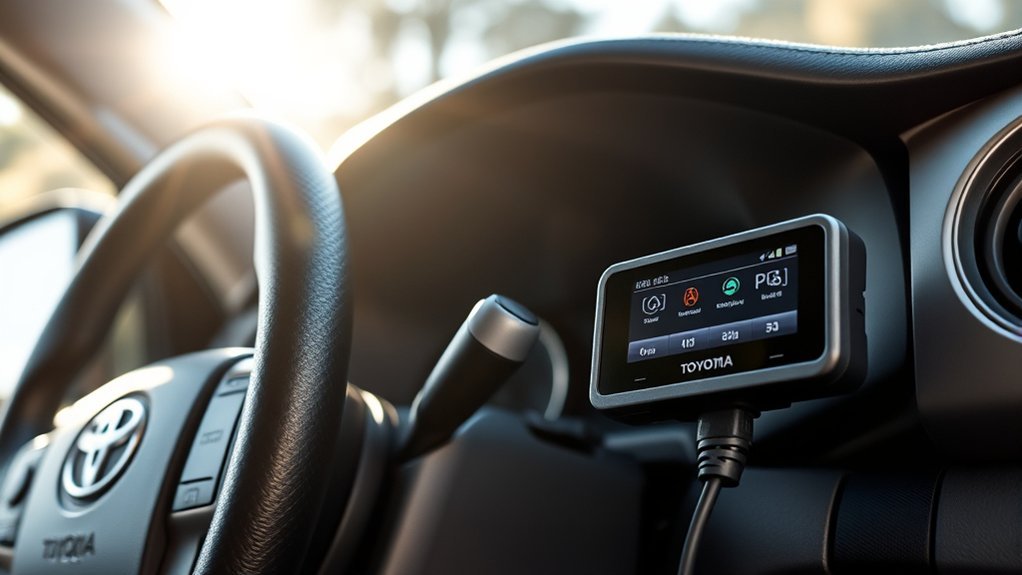
When you need to check the status of your Toyota Tacoma’s OBD-II readiness monitors, using an OBD-II scanner simplifies the process. Start by connecting your scanner to the vehicle’s diagnostic port, usually located under the dashboard near the steering column. Verify the connector aligns properly with the port. Next, select the “Readiness Monitor” function to view the emissions system status, which will indicate “Ready,” “Not Ready,” or “Incomplete.” A “Ready” status means your system has passed its self-diagnostic checks. If it shows “Not Ready,” more driving is needed to meet the required conditions. An “Incomplete” status suggests that the vehicle hasn’t completed the necessary driving cycles, often requiring 20-30 minutes of mixed driving. Regularly checking these monitors not only helps you prepare for emissions testing but can also provide valuable troubleshooting tips, guaranteeing your Tacoma remains in prime condition.
Common Causes for ‘Not Ready’ Status
Several factors can lead to a ‘Not Ready’ status for your Toyota Tacoma’s OBD-II readiness monitors. Understanding these causes can help you achieve monitor readiness more effectively.
- Battery disconnection effects: A recent battery disconnect resets the engine control module (ECM), requiring time for self-checks.
- Driving habits impact: Short trips or frequent idling can prevent necessary driving cycles, leaving monitors incomplete.
- Faulty components: Issues with oxygen sensors or catalytic converters can hinder emissions system readiness.
- Poor vehicle maintenance: Neglected oil changes and filter replacements can result in system malfunctions.
Effective Drive Cycles for Achieving Monitor Readiness

To effectively achieve OBD-II monitor readiness in your Toyota Tacoma, it’s essential to follow specific drive cycle protocols. Start with a fully warmed-up engine, ideally reaching an engine temperature of 180°F to 183°F. This ideal temperature guarantees efficient monitor activation. For effective drive cycle tips, maintain a steady speed between 40 and 70 MPH, ideally around 55 MPH, for at least 10 minutes. This helps complete the catalyst monitor’s self-checks. Incorporate a mix of city and highway driving, as short trips alone may not provide the necessary conditions for all monitors to finish their tests. Avoid turning off the ignition during the drive cycle, as this interrupts the monitor’s testing sequence. Depending on your engine condition and driving habits, you might need multiple cycles, especially in cold weather. Following these steps will enhance your Tacoma’s OBD-II readiness status effectively.
Essential Components Impacting Emissions Readiness: Catalytic Converters and Sensors
Achieving OBD-II monitor readiness isn’t just about following drive cycles; it’s also about understanding the components that influence emissions readiness. Key components like the catalytic converter and oxygen sensors play crucial roles in ensuring your Toyota Tacoma meets emissions standards.
- Catalytic converter performance: This unit converts harmful emissions into less toxic substances, essential for passing tests.
- Oxygen sensor function: These sensors adjust the air-fuel mixture for maximum combustion efficiency.
- Sensor placement: Upstream sensors gauge exhaust before it hits the converter, while downstream sensors monitor the converter’s effectiveness.
- Regular maintenance: Checking for exhaust leaks and ensuring proper thermostat function can prevent issues with both the catalytic converter and oxygen sensors.
If your readiness monitor shows incomplete status, inspect these components. Understanding their functions and maintaining them is critical for maximum emissions performance and compliance.
Frequently Asked Questions
What Are OBD2 Readiness Monitors?
OBD-II readiness monitors are diagnostic tools that check emissions control systems’ functionality. They include three types: “Ready,” “Not Ready,” and “Incomplete,” ensuring your vehicle meets environmental regulations and operates efficiently.
What Is the OBD-II Protocol for Toyota?
The OBD-II protocol for Toyota, introduced in 1996, features real-time diagnostics and standardized 16-pin connectors, ensuring efficient troubleshooting. This system greatly enhances Toyota diagnostics and helps maintain compliance with emissions regulations, benefiting both you and the environment.
Conclusion
In conclusion, understanding OBD-II readiness monitors in your Toyota Tacoma is essential for passing emissions tests and ensuring peak performance. By using an OBD-II scanner, you can easily check monitor status and identify any issues. Remember, driving through effective cycles is key to achieving readiness. Don’t let your Tacoma become a relic of the past; stay proactive about your vehicle’s health and emissions compliance for a smoother ride and a greener future.