
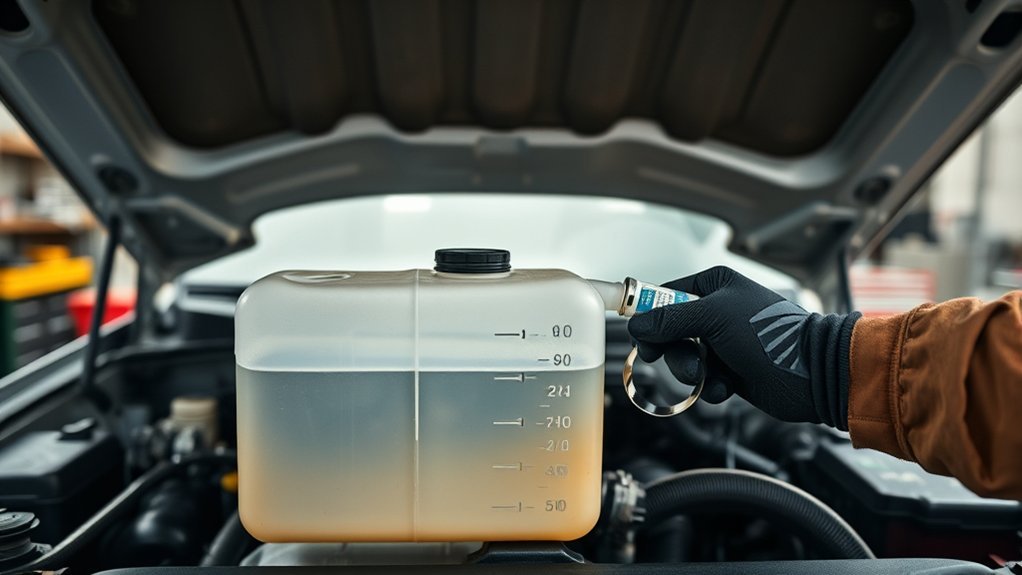
Last updated: July 31, 2026
Source and experience note: Capacity, coolant chemistry and service-interval claims are based on Toyota’s 2004 Tacoma owner and scheduled-maintenance documents. The service steps are general guidance and do not replace the repair manual for the exact truck. The editorial team does not claim first-hand testing on every configuration.
What’s in This Article
- How Much Coolant a 2004 Tacoma 3.4L Takes
- How Much Coolant to Buy
- How to Confirm the Right Capacity
- What Coolant a 2004 Tacoma 3.4L Uses
- Tools and Supplies You’ll Need
- How to Perform a Routine Drain and Fill
- When to Drain and Fill, Flush or Diagnose
- How to Refill and Bleed the System
- How to Verify the Level and Concentration
- Troubleshooting After Coolant Service
- Frequently Asked Questions
The Toyota Tacoma 3.4L coolant capacity is 9.7–10.1 liters (10.3–10.7 US quarts) for the 2004 U.S.-market 5VZ-FE configurations listed in Toyota’s owner manual. A 2WD manual is listed at 9.7 L, a 4WD or PreRunner automatic at 10.0 L, and a 4WD or PreRunner manual at 10.1 L.
These are total system capacities. A routine radiator drain-and-fill normally accepts less because coolant remains in the engine block, heater core, hoses and passages. Confirm the model year, 5VZ-FE engine, drivetrain and transmission before buying coolant or opening the system.
Quick Answer
For the listed 2004 U.S.-market Tacoma 3.4L 5VZ-FE configurations, total coolant capacity ranges from 9.7 L (10.3 US qt) to 10.1 L (10.7 US qt). Three one-gallon containers of ready-to-use 50/50 coolant cover the largest published total, but a routine drain-and-fill usually uses less. Toyota’s 2004 manual specifies Toyota Super Long Life Coolant or an equivalent meeting its chemistry requirements. Toyota SLLC is already a 50/50 premix, so do not add water.
Key Takeaways
- The 3.4L 5VZ-FE belongs to the first-generation Tacoma, not the 2005–2015 second generation.
- The documented total capacity ranges from 9.7 L to 10.1 L for the configurations listed below.
- A routine drain-and-fill normally takes less fluid than the total system capacity.
- Toyota Super Long Life Coolant is supplied as a 50/50 premix. Do not dilute a bottle labeled pre-mixed or ready to use.
- Toyota’s 2004 maintenance guide lists the first coolant replacement at 100,000 miles or 120 months, followed by replacement every 50,000 miles or 60 months.
How Much Coolant Does a 2004 Toyota Tacoma 3.4L Take?
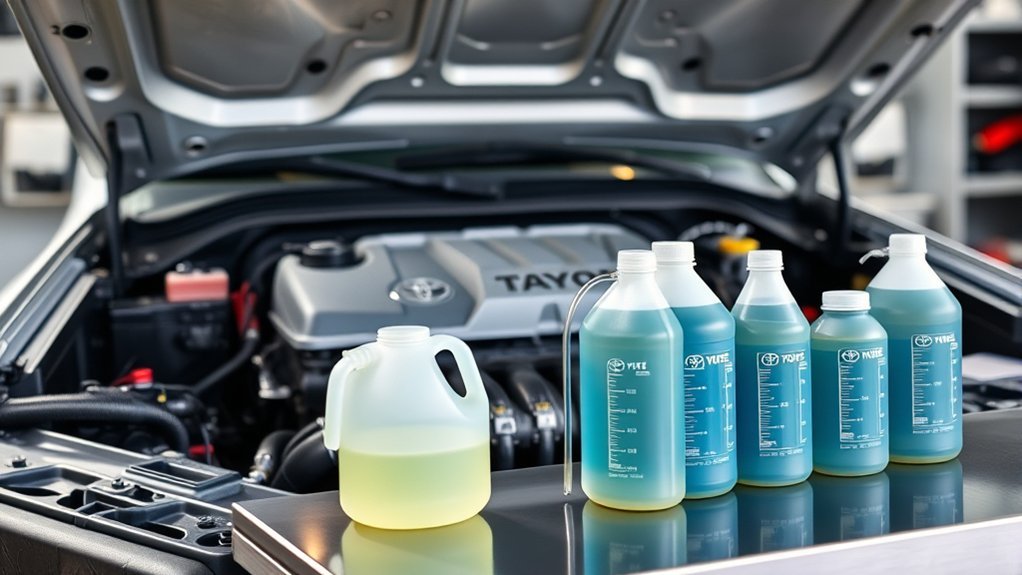
The table below reproduces 2004 U.S.-market capacity data for the listed Tacoma 5VZ-FE configurations. Treat these values as total cooling-system capacities. They do not guarantee how much coolant will drain out or fit during routine service.
| Configuration | Total capacity | What to know |
|---|---|---|
| 2WD with manual transmission | 9.7 L (10.3 US qt) | Use only for a truck matching this listed configuration. |
| 4WD or PreRunner with automatic transmission | 10.0 L (10.5 US qt) | This is total system capacity, not a guaranteed drain-and-fill quantity. |
| 4WD or PreRunner with manual transmission | 10.1 L (10.7 US qt) | Confirm the drivetrain and transmission before using this figure. |
Toyota’s 2004 table does not list a non-PreRunner 2WD automatic 5VZ-FE configuration. Do not copy the four-cylinder automatic capacity or infer a V6 figure from another row.
How Much Coolant Should You Buy?
The largest listed capacity is 10.7 US quarts, so three one-gallon containers of ready-to-use 50/50 coolant provide enough fluid for a completely empty stock system and leave a small reserve. Do not pour in all 12 quarts automatically. A routine drain-and-fill normally takes less, and the correct final quantity is the amount needed to fill, bleed and stabilize the system at the specified cold level.
- Routine radiator drain-and-fill: Measure what drains out and keep extra compatible coolant available for bleeding and the cold recheck.
- Radiator-and-block drain: Expect a refill closer to the total capacity, but retained coolant can still reduce the amount accepted.
- Water flush: Do not rely on premix alone unless the final concentration can be verified and corrected for retained water.
Important: If your drivetrain and transmission are not represented in the table, do not infer a capacity from the nearest row. Use the owner or repair manual for your exact model year or VIN-specific Toyota service information.
A radiator-only drain leaves coolant in the engine block, heater core and hoses. Even opening an engine drain may not recover every ounce. Measure the amount removed, refill slowly and use the cold-level marks and bleeding procedure rather than trying to force the entire published capacity into the system.
How Do You Confirm the Right Coolant Capacity?
Confirm four details before buying coolant: model year, engine code, drivetrain and transmission. The 3.4L engine covered here is the 5VZ-FE used in the first-generation Tacoma. This article does not provide capacities for the 2.4L, 2.7L, 4.0L or newer Tacoma engines.
- Confirm the model year: Use the registration, VIN information or owner documentation.
- Confirm the engine: Verify that the truck has the 3.4L 5VZ-FE rather than a four-cylinder or later V6.
- Confirm the drivetrain: Identify whether the truck is 2WD, 4WD or a PreRunner.
- Confirm the transmission: Match manual or automatic transmission to the appropriate capacity row.
- Check for modifications: A replacement radiator, auxiliary heater or other non-stock cooling component can change the practical fill amount.
Use the model-year owner or repair manual as the final source. Capacity tables can differ by engine, market and configuration.
What Coolant Does a 2004 Toyota Tacoma 3.4L Use?
For a 2004 U.S.-market Tacoma, Toyota specifies Toyota Super Long Life Coolant or a similar high-quality ethylene-glycol coolant that is non-silicate, non-amine, non-nitrite and non-borate, with long-life hybrid organic acid technology.
Toyota Super Long Life Coolant is supplied as a 50/50 premix with deionized water. Pour it as supplied. Do not add water to a bottle labeled pre-mixed, pre-diluted or ready to use.
Earlier first-generation model years may have different factory coolant and replacement schedules. This page owns the 2004 3.4L capacity and service decision. For model-year chemistry, red-versus-pink context and broader Tacoma coverage, review this site’s guide to Toyota Tacoma coolant types, then confirm the requirement in the exact model-year manual.
[Products Worth Considering]

Specifically designed to match the needs of your car, OEM fluids keep your vehicle performing at its best. Drive with confidence. Drive with OEM.
Factory-Engineered Coolant: Genuine extended life coolant for Polaris snowmobiles, UTVs, and off-road vehicles. Exact OEM part ensures proper fit and OEM performance.

Aftermarket Replacement Coolant Reservoir Compatible with 1995-2004 Toyota Tacoma
Recommended Coolant Specification
- Use the coolant specification stated in the owner’s manual for the exact model year.
- For a 2004 U.S. Tacoma, use Toyota SLLC or a product whose label explicitly matches Toyota’s stated chemistry.
- Do not choose coolant by dye color alone.
- Do not add water to a product already labeled 50/50 or ready to use.
- If the existing fluid cannot be identified, avoid mixing products based only on appearance.
Warning: Coolant color is not a compatibility standard. Two products can look similar while using different additive packages. Verify the specification and label before topping off or switching products.
Premixed Coolant Versus Concentrate
| Product label | How to use it |
|---|---|
| 50/50, pre-mixed, pre-diluted or ready to use | Pour it as supplied. Do not add water. |
| Concentrate | Dilute only as directed by the model-year manual and product label, using distilled or deionized water. |
| Unknown product or unknown existing coolant | Do not mix based on color. Confirm compatibility or arrange a controlled drain and refill. |
Do not reduce the coolant percentage based only on warm weather. Follow the specified concentration and verify it after any procedure that introduces water into the cooling system.
Tools and Supplies You’ll Need
Estimated time: About one to two hours for a routine drain, refill and bleeding process. A corrective flush or leak diagnosis can take longer.
Gather the correct coolant, safety equipment and collection supplies before opening the system.
Warning: Never remove the radiator cap from a hot or pressurized system. Coolant containing ethylene glycol is dangerous if swallowed. Keep it away from children, pets and wildlife, clean spills immediately and recycle used coolant through an approved collection service.
- Chemical splash goggles and coolant-resistant gloves
- Wheel chocks
- A sealable drain pan large enough to hold the listed system capacity
- A spill-free cooling-system funnel or clean radiator funnel
- Metric hand tools sized to the skid plate and drain hardware installed on the truck
- Clean tubing if needed to direct fluid from an accessible drain
- The correct pre-mixed coolant or a manual-approved concentrate
- Distilled or deionized water only when a corrective flush or concentrate requires it
- An ethylene-glycol coolant refractometer for checking the final concentration
Confirm block-drain access and tightening specifications in the correct repair manual. Do not assume every truck still has its factory skid plate, radiator or fasteners.
[Products Worth Considering]
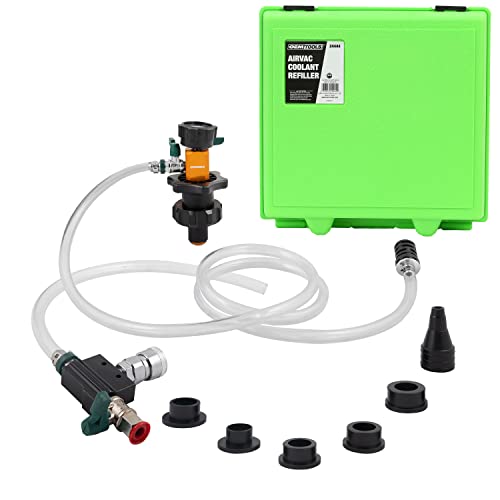
Efficient Cooling System Refill: The OEMTOOLS 24444 cooling system pressure tester kit quickly refills your vehicle's cooling system while eliminating trapped air, preventing engine damage.

2026 UPGRADE - Enhanced Compatibility: Added 2 new vehicle-specific threaded caps (Ford & VW/Audi) for expanded fitment compatibility, with 0 price increase

Coolant Filling Kit: 5 direct fit radiator adapters, 4 caps, 2 45 degree elbows, 1 5 inch straight extension, 1 fluid stopper, 1 fluid tester, and 1 clear funnel
How Do You Perform a Routine Coolant Drain and Fill?
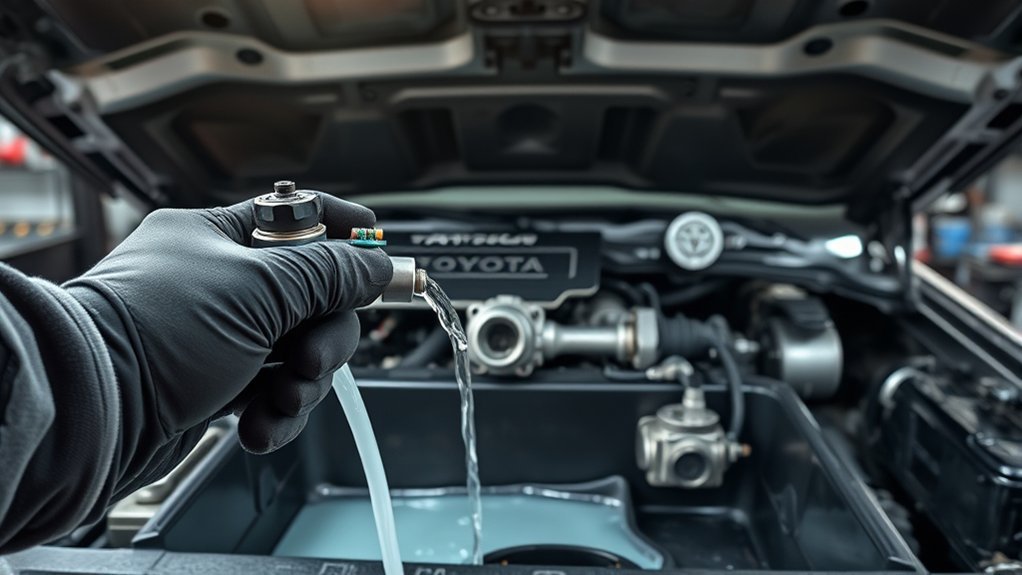
A routine drain-and-fill is appropriate when the existing coolant is known, compatible, reasonably clean and being serviced on schedule. It replaces part or most of the old coolant without repeatedly filling the system with water.
[Products Worth Considering]
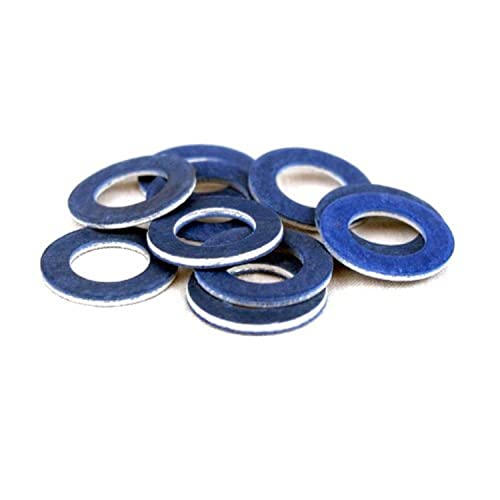
Genuine Toyota - Oil Drain Plug Gaskets (QTY10)

And Vehicle Specific
Preparation and Safety
- Park on a level surface, set the parking brake and chock the wheels.
- Let the engine cool completely. The upper radiator hose should feel cool and should not feel pressurized.
- Put on splash goggles and gloves.
- Position the drain pan before loosening any cap, drain or hose.
- Keep children and animals away from the work area.
Drain the Cooling System
- Remove the lower shield only when it blocks access. Support it before removing the final fastener.
- With the engine completely cold, loosen the radiator cap slowly. Stop if any pressure escapes.
- Open the radiator drain carefully and direct the coolant into the collection pan.
- If you intend to use an engine-block drain, confirm its location and procedure in the appropriate repair manual. Do not force a corroded drain or guess at its tightening specification.
- Allow the coolant to finish draining, then inspect the recovered fluid for oil, heavy rust, sludge or debris.
- Close the drains correctly. Do not overtighten a plastic radiator drain.
Measure or estimate the amount recovered. That quantity provides a useful starting point for the refill, but the final level and bleeding results remain more important than matching the drained volume exactly.
Initial Refill
- Confirm that every opened drain is closed and every disconnected hose is secure.
- Install a spill-free funnel at the cold radiator filler neck when the design permits.
- Add the correct coolant slowly to reduce trapped air.
- Fill the reservoir to the appropriate cold mark.
- Inspect underneath the truck before starting the engine.
Should You Drain and Fill, Flush or Diagnose First?
Do not perform repeated water-flush cycles automatically at every service. Choose the procedure from the coolant’s condition and the symptoms, not from the word “flush” on a generic maintenance checklist.
| Condition | Best next step | Reason |
|---|---|---|
| Known, compatible coolant that looks reasonably clean | Routine drain-and-fill | Replaces aged coolant without adding unnecessary water or disturbing old drains. |
| Rusty, heavily contaminated, incompatible or unknown coolant | Controlled corrective flush or professional exchange | The old mixture needs removal, and the final concentration must be verified. |
| Oil in coolant, recurring overheating, repeated coolant loss or unexplained pressure | Diagnose before flushing | A mechanical fault can remain after repeated flushing and may worsen if the truck is driven. |
A corrective flush may be appropriate when the coolant is rusty, heavily contaminated, mixed with an incompatible product or of unknown history. Oil in the coolant, recurring overheating or unexplained pressure requires diagnosis rather than repeated home flushing.
Concentration warning: Repeated distilled-water flushing leaves water inside the engine, heater core and other passages. Refilling only with 50/50 premix can leave the final mixture too weak. Verify the final concentration with an ethylene-glycol refractometer. If you cannot account for retained water with a compatible concentrate, use a professional coolant-exchange service.
If a corrective flush is suitable, use distilled or deionized water rather than tap water. Drain each cycle into an approved container, and stop when the removed fluid no longer shows the contamination being addressed. Do not assume clear-looking water proves that every deposit or incompatible chemical has been removed.
How Do You Refill and Bleed the Cooling System?
Bleeding removes air that can interrupt coolant flow through the engine and heater core. Begin only after the drains and hoses are secure and the engine is cold.
- Fill the radiator slowly with the correct coolant. Use a spill-free funnel when possible.
- Set the cabin temperature control to hot.
- Start the engine and let it idle. Do not stand directly over the open filler neck.
- Watch the coolant level, temperature gauge and funnel. Add small amounts as the level falls.
- As the engine warms, confirm that cabin heat becomes steady and the upper radiator hose warms as circulation begins.
- Do not rev the engine to force air out. Let the system circulate at idle.
- Shut the engine off immediately if coolant boils or surges, the temperature rises above normal or the heater suddenly turns cold.
- When bubbling has stopped and the temperature remains stable, shut off the engine and let it cool completely.
- Remove the funnel, install the radiator cap securely and set the reservoir to the correct cold mark.
Recheck the cold reservoir level after the next full heat-and-cool cycle. A small initial adjustment can occur as remaining air moves into the reservoir. Continuing loss requires a leak inspection.
How Do You Verify Coolant Level and Concentration?
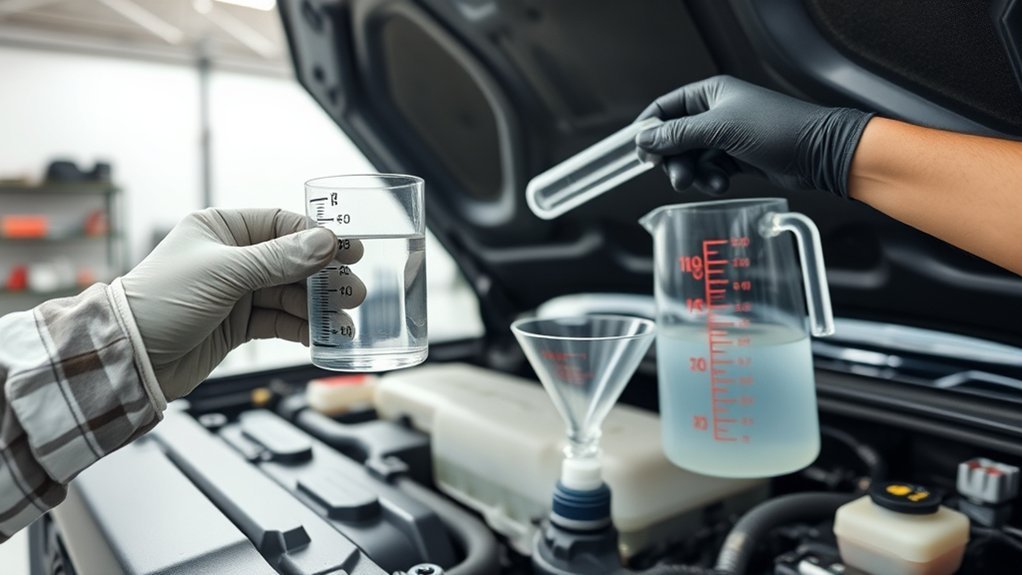
Check the reservoir only after the engine has cooled fully. The coolant should sit at the model’s specified cold or full mark rather than above it.
Pro tip: Use an ethylene-glycol refractometer after a water flush or when the existing mixture is uncertain. A visual level check cannot confirm coolant concentration.
- Confirm that the cold reservoir level remains stable.
- Check the radiator, drains, hose connections and surrounding surfaces for wetness or dried residue.
- Confirm that the heater produces steady heat after the engine warms.
- Watch the temperature gauge during a short test drive.
- Recheck the system only after it has cooled completely.
Record the service date, odometer reading, coolant product and procedure used. Also note whether the service was a radiator drain, radiator-and-block drain or corrective flush.
What Problems Can Happen After a Coolant Change?
If the temperature gauge rises above its normal position, the heater suddenly turns cold, coolant boils or an overheating warning appears, stop driving as soon as it is safe. Shut off the engine and let it cool completely before inspecting the system.
| Symptom | Possible cause | Next action |
|---|---|---|
| Temperature rises and heater blows cold | Low coolant, trapped air or interrupted circulation | Stop the engine, let it cool fully and recheck the fill and bleeding process. |
| Reservoir level drops after every drive | External leak, faulty cap, remaining air or an internal leak | Inspect for wetness and dried residue. Arrange a pressure test if the loss continues. |
| Sweet coolant odor | Coolant leaking or vapor escaping | Inspect the radiator, cap, hoses, heater connections, water-pump area and drains. |
| Cabin heat remains weak | Air in the heater core, restricted flow or a temperature-control problem | Recheck the cold level and bleeding process, then review heater-core coolant flow. |
| Continuous bubbling after proper bleeding | Leak, cap fault, thermostat problem or combustion gas entering the cooling system | Stop repeated bleeding attempts and arrange professional diagnosis. |
Symptoms that continue after one careful cold-level correction and bleeding attempt need diagnosis. Do not keep driving an engine that overheats or repeatedly loses coolant.
Frequently Asked Questions
How much coolant does a Toyota Tacoma 3.4L take?
For the configurations listed in Toyota’s 2004 5VZ-FE data, total capacity ranges from 9.7 L (10.3 US qt) for a 2WD manual to 10.1 L (10.7 US qt) for a 4WD or PreRunner manual. A 4WD or PreRunner automatic is listed at 10.0 L (10.5 US qt). Confirm your exact model year and configuration before using these figures.
Why did my Tacoma take less coolant than the listed capacity?
The published figure is total system capacity. A normal drain-and-fill leaves coolant in the engine, heater core, hoses and other passages, so the refill amount is usually lower. Do not force the full listed quantity into the system. Refill slowly, bleed the air and use the cold-level marks.
How many gallons of coolant should I buy for a 2004 Tacoma 3.4L?
Three one-gallon containers of ready-to-use 50/50 coolant cover the largest listed total capacity of 10.7 US quarts and leave a small reserve. A routine drain-and-fill usually accepts less, so refill by level and bleeding results rather than trying to use every container.
What type of coolant does a 2004 Toyota Tacoma 3.4L take?
Toyota’s 2004 owner documentation specifies Toyota Super Long Life Coolant or a similar ethylene-glycol coolant that is non-silicate, non-amine, non-nitrite and non-borate, with long-life hybrid organic acid technology. Earlier model years should follow their own manuals rather than assuming the 2004 specification applies.
Is Toyota Super Long Life Coolant already mixed?
Yes. Toyota Super Long Life Coolant is supplied as a 50/50 mixture with deionized water in the cited U.S. documentation. Do not add water to a bottle labeled 50/50, pre-mixed, pre-diluted or ready to use.
How often should the coolant be replaced in a 2004 Tacoma 5VZ-FE?
Toyota’s 2004 scheduled maintenance guide lists the first replacement at 100,000 miles or 120 months, followed by replacement every 50,000 miles or 60 months. Owners of earlier 3.4L Tacomas should use the schedule published for their exact model year and current coolant.
Should I drain and fill or completely flush the coolant?
Use a routine drain-and-fill when the existing coolant is known, compatible and reasonably clean. Consider a corrective flush when the coolant is contaminated, badly mixed or of unknown history. Oil in the coolant, repeated overheating or unexplained pressure requires diagnosis rather than repeated flushing.
Can I use a different brand of coolant?
A different brand is acceptable only when its label explicitly matches the coolant chemistry required by the model-year owner’s manual. Do not judge compatibility by color or by a broad “universal” claim alone.
Can I flush a Tacoma cooling system with tap water?
Use distilled or deionized water when water is required. Tap water can introduce minerals. After any water flush, verify the final coolant concentration because retained water can weaken a premixed refill.
Why is the heater cold after a coolant change?
A cold heater after service can indicate low coolant, trapped air or restricted heater-core flow. If the temperature gauge also rises, stop the engine and let it cool completely. Recheck the cold level and bleeding process before driving again.
Safety Disclaimer: This article provides general information and does not replace the owner or repair manual for your exact truck. A hot cooling system can release pressurized coolant and cause severe burns. Coolant containing ethylene glycol is dangerous if swallowed. Keep it away from children and animals, collect every drain safely and use an approved recycling or disposal service. Consult a qualified technician when the system overheats, loses coolant repeatedly or contains oil or heavy contamination.
Before service, confirm that the truck is a 2004 U.S.-market Tacoma with the 3.4L 5VZ-FE, then match its drivetrain and transmission to the capacity table. Buy enough compatible coolant for the listed total, but remember that a routine drain-and-fill normally accepts less.
After refilling, bleed the system at idle, let the engine cool completely and recheck the reservoir. Stop driving and diagnose the system if coolant loss continues, cabin heat turns cold or the temperature rises above normal.
References
- 2004 Toyota Tacoma Owner’s Manual — Toyota
- 2004 Toyota Scheduled Maintenance Guide — Toyota
- 2004 Tacoma Manuals and Warranties — Toyota Owners
- How to Dispose of Used Antifreeze — U.S. Environmental Protection Agency


[…] your Toyota Camry defroster is not working, check the settings, fan speed, fuse, airflow, coolant level, rear window grid, switch, relay, and wiring first. Use outside air instead of recirculation for […]
[…] Cooling-system capacity varies by engine, drivetrain, transmission, market, and service procedure. Do not buy or mix coolant from a generic capacity estimate. Use the owner’s manual, repair manual, or VIN-based Toyota service information for the exact amount. For first-generation 3.4L figures, see the separate Tacoma 3.4L coolant-capacity guide. […]
[…] and coolant service when […]