You need a battery with the right cold‑cranking amps (CCA) so your Tacoma starts reliably in all conditions; factory guidance is typically 600–750 CCA (4‑cyl near 600, V6 closer to 730), and colder climates or heavy electronics call for 700+ CCA. Match group size (24F/27F), terminal orientation, and aim for high reserve capacity and Ah for accessory loads. Test batteries over three years and maintain charge; keep going to learn specific picks, installation steps, and maintenance tips.
Factory CCA for the Toyota Tacoma (Quick Answer)
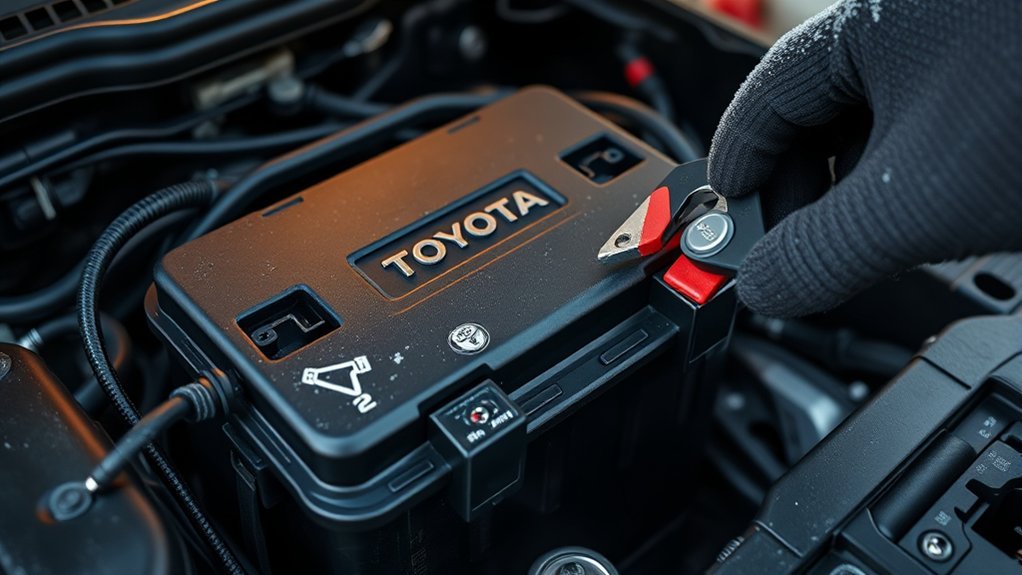
For most Toyota Tacomas, the factory-recommended cold cranking amps (CCA) fall between about 600 and 750 CCA, with 4‑cylinder models generally needing ~600 CCA and V6s often specified closer to 730 CCA on newer trucks like the 2022 Tacoma. You’ll rely on that CCA range to secure reliable cold starts and preserve battery lifespan; undersized CCA risks hard starts and reduced life, while oversized CCA rarely harms but can waste cost. You should confirm the exact spec in your owner’s manual or OEM documentation for your model year and engine. Choose a battery that meets or slightly exceeds the factory CCA to maintain peak performance across temperature swings without overpaying. When you match CCA to the factory guidance, you’re freeing yourself from surprise failures and minimizing maintenance downtime. This pragmatic approach keeps your Tacoma ready, minimizes replacements, and protects vehicle dependability.
How to Pick the Right CCA for Your Tacoma by Climate & Engine
When choosing CCA for your Tacoma, match the rating to your climate first—aim for ~700+ in extreme cold, ~600 for typical cold regions, and ~500 if you’re in a warm area. Then factor in engine size and model year, since larger or newer engines and extra electronics usually need higher CCA. Finally, consider if your truck is garaged or used for short trips, because sheltered storage and light use can let you get by with a slightly lower rating.
Climate-Based CCA Needs
Although climate and engine size both dictate your Tacoma’s starting needs, cold-weather drivers should aim higher to avoid no-starts, aiming for at least 600 CCA in frigid regions. You’ll manage weather impacts and performance reliability by matching CCA to typical lows: choose ~600+ CCA where freezes are frequent. In moderate climates, ~500 CCA usually suffices since extreme cold won’t sap cranking power. If you’ve got extra electronics or start‑stop systems, step up to 700–880 CCA to preserve longevity and reduce strain. Don’t overspend: weigh freezing frequency against added capacity. Select the lowest CCA that still covers your coldest conditions while giving you rugged, dependable starts so you stay free to move without battery anxiety.
Engine Size Guidelines
You’ve matched CCA to your climate; now factor in engine displacement to fine‑tune your choice. Use a simple CCA relationship: roughly one amp of CCA per cubic inch of displacement. Measure your Tacoma’s engine size, apply that ratio, then compare with climate needs—don’t undersize. For many Tacomas that means at least 600 CCA overall; warmer regions can accept ~500 CCA but verify against displacement. If your model has extra electronics or a larger engine, push CCA toward 750 for reliable starts and system stability. Always cross‑check the owner’s manual or manufacturer specs; they override rules of thumb. This approach gives you control: match climate, respect engine displacement, and select a battery that frees you from cold‑start failure.
Garage And Usage Effects
If you keep your Tacoma in a heated or insulated garage, you can safely lean toward lower CCA ratings than if it sits fully exposed to winter air, since higher ambient temperatures reduce the battery’s internal resistance and cold-start demand. Use garage insulation and controlled storage to cut cold-cranking requirements — in mild climates 600 CCA is usually sufficient. If you face frequent sub-zero nights or your Tacoma has a larger engine and extra electronics, choose 700 CCA or more. Factor in temperature fluctuations between day/night and occasional cold snaps when sizing CCA. Maintain charge, test periodically, and match CCA to both climate and engine load. That lets you free yourself from unnecessary cost while retaining reliable starts.
Why Reserve Capacity and Amp‑Hours Matter More Than CCA
You’ll find that reserve capacity (RC) matters more than cold cranking amps for a Tacoma because it quantifies how long the battery can power critical electronics if the alternator fails. Amp‑hour (Ah) ratings, not CCA, tell you the total usable energy for accessories and start‑stop cycling, so they determine real-world runtime and durability. Balance RC and Ah with sufficient CCA to guarantee reliable starts while preserving electrical functionality.
Reserve Capacity Importance
Think of reserve capacity (RC) as the battery’s usable energy bank: it tells you how long your Tacoma can power accessories and electronics with the engine off before voltage falls below a safe threshold. You rely on RC more than CCA for daily resilience because it sustains navigation, infotainment, and auxiliary systems when the engine’s idle or off. Higher RC and amp‑hour figures directly address electronic demands and influence battery longevity factors by reducing deep discharge stress and buffering start‑stop cycles. In variable climates RC preserves functionality despite temperature swings, preventing unexpected shutdowns. Choose a battery with sufficient reserve capacity to match your accessory load and driving habits; that decision frees you from frequent replacements and keeps your Tacoma ready for independent, uninterrupted use.
Amp‑Hour vs CCA
Because modern Tacomas draw steady power for electronics and accessories, amp‑hours and reserve capacity tell you more about real‑world performance than CCA alone. You’ll prioritize amp hour benefits when your truck runs navigation, audio, and accessories between starts; Ah measures total energy over time, so a higher rating means longer sustained power and less risk of a drained battery during stop‑start driving. CCA misconceptions arise when people equate a high cold‑cranking number with overall endurance — CCA only gauges short‑duration starting ability in cold conditions. If you don’t face extreme cold regularly, focus on reserve capacity and Ah to match your Tacoma’s electrical load. Maintain the battery and match ratings to your usage for reliable, liberated mobility.
CCA vs CA vs MCA : What Tacoma Owners Should Know
While CCAs tell you how well a Tacoma battery will turn the engine over in extreme cold, CA and MCA are measured at milder temperatures and can give higher numbers that don’t directly translate to cold-weather starting performance. You need CCA Importance up front: Tacoma CCAs typically run 600–750, so pick a battery that matches your model and engine for reliable cold starts. Use CA Comparison to interpret manufacturer specs—CA (0°C) will look stronger than CCA but won’t guarantee winter performance.
MCA Overview matters only if you’re comparing marine versus automotive batteries; MCA is measured at 0°C and is mostly irrelevant unless you’ve repurposed a marine unit. Focus on the metric that reflects your climate.
Also consider Battery Lifespan: higher starting stress and extreme temps shorten life, so balance a slightly higher CCA with quality and maintenance. Choose deliberately to free yourself from roadside failure and keep your Tacoma dependable.
Six Signs Your Tacoma Battery Is Losing CCA (When to Test)
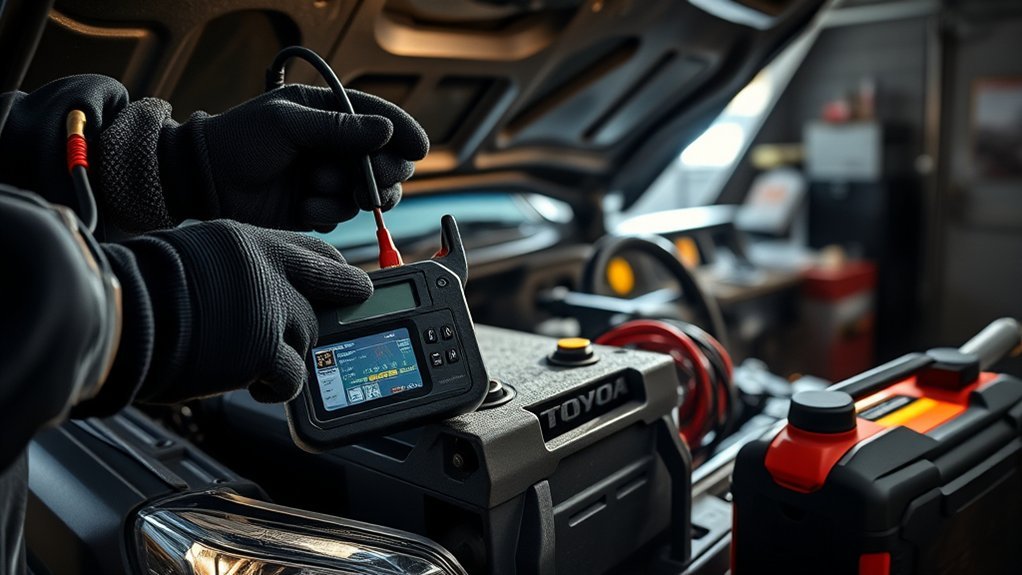
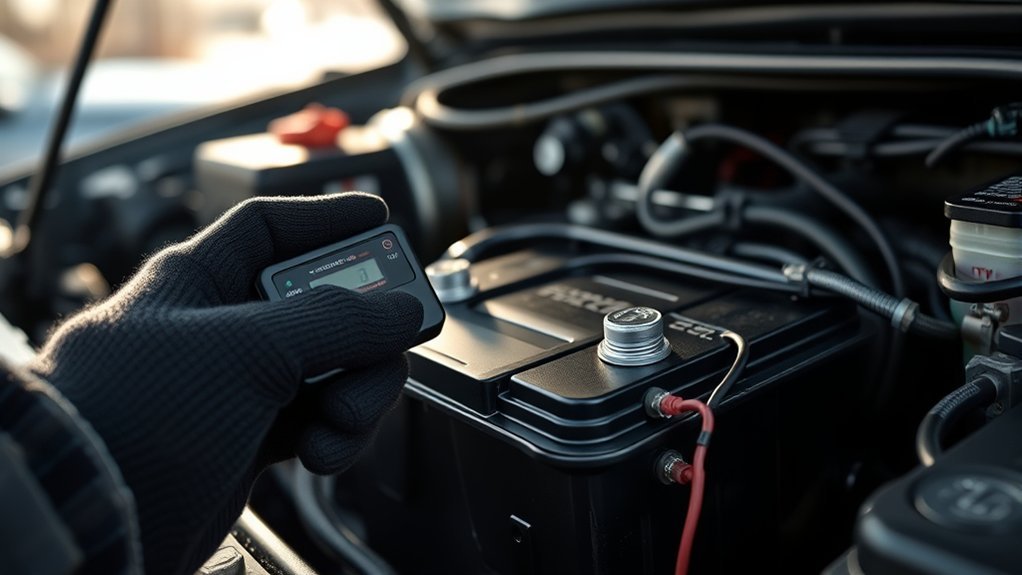
You’ve learned why CCA matters for Tacoma starting performance; now watch for signs your battery is losing its cold-cranking ability so you’ll know when to test. First, slow engine cranking at startup—especially in cold weather—signals diminished CCA and needs immediate testing. Second, frequent hard starts or needing multiple attempts indicates reduced reserve power. Third, dimming interior or accessory lights while cranking points to voltage sag under load. Fourth, visible corrosion or electrolyte leakage on terminals often accompanies internal degradation that lowers CCA. Fifth, if your battery is over three years old, its battery lifespan typically declines—schedule regular CCA checks. Sixth, inconsistent starts after short drives imply the battery isn’t recharging efficiently and may have reduced cold-cranking capacity. These six indicators let you act before a cold-morning failure. Test the battery with a proper CCA-capable tester when you see any of these signs to preserve mobility and autonomy.
How to Replace Your Tacoma Battery: Match CCA, Size & Terminals
Start by matching your replacement battery to three critical specs: Cold Cranking Amps (CCA), physical group size, and terminal orientation. Choose a battery rated about 600–700 CCA for reliable starts, especially if you face cold weather; this preserves starting power and autonomy. Verify group size — most Tacomas take Group 24F or 27F — so the battery fits the tray and hold‑down without modification. Use a terminal configuration guide to confirm the positive post sits on the left when installed; reversing terminals forces awkward cable rerouting and can risk electronics.
Follow practical battery installation tips: disconnect negative first, then positive; secure the battery with the proper clamp torque; clean and protect terminals with dielectric grease; and tighten connections to manufacturer specs. Check reserve capacity as a secondary criterion for longer electronics run time. Always reference your owner’s manual for model‑specific requirements to guarantee safe, liberated control over your Tacoma’s power system.
Charging, Storage & Maintenance to Preserve CCA and Lifespan
Because battery chemistry degrades rapidly when allowed to sit discharged, keep your Tacoma’s battery at or above 50% state of charge and use a smart charger for long-term storage or infrequent use. You’ll preserve Cold Cranking Amps (CCA) and extend service life by following a disciplined battery care routine: monitor state of charge regularly, top off with a smart charger that delivers maintenance and desulfation modes, and prioritize peak charging in cold weather to prevent CCA loss.
Store the battery in a cool, dry place to minimize thermal stress and slow capacity fade. Clean terminals and clamps periodically with a noncorrosive brush and protective coating to guarantee low-resistance connections and stable voltage under load. Track age and plan replacement every 3–5 years, since wear reduces CCA even with good maintenance. These steps give you control—maintain charge, control environment, and keep connections sound—to maximize reliability and autonomy from roadside failure.
Quick Tacoma Battery Selector Checklist (What to Buy Now)
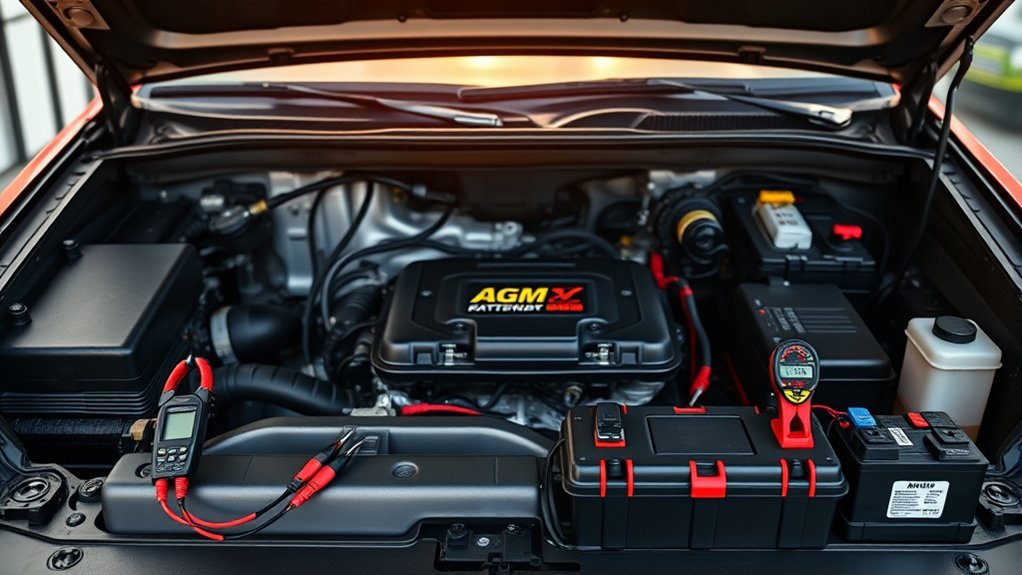
When choosing a battery for your 2025 Tacoma, match CCA, reserve capacity, and physical size to your trim and climate: aim for at least 600–800 CCA (700+ CCA if you run extra electronics or cold-weather driving). Use this quick selector checklist to buy smart and stay independent.
1) Confirm OEM CCA and group size in the owner’s manual—don’t guess.
2) Target 700+ CCA if you have accessories, winch, or cold climates; make sure reserve capacity supports infotainment and short-trip drains.
3) Compare reputable battery brands for warranty terms, cold-start performance, and build quality.
4) Prefer maintenance-free AGM or premium flooded types per vehicle requirements; weigh weight versus durability.
5) Verify terminal orientation and hold-down compatibility for proper fit and safety.
6) Follow simple installation tips: disconnect ground first, clean terminals, apply dielectric grease, torque to spec, then reconnect ground.
7) Schedule periodic checks to preserve CCA and extend service life.
Frequently Asked Questions
What Is a Good Amount of Cold Cranking Amps?
A good amount is typically 600–800 CCA, though newer models may need 880 CCA; you’ll improve battery performance and winter readiness by matching manufacturer specs, considering engine size, electronics, and reserve capacity for reliable starts.
How Many Cranking Amps Do I Need for a V6?
Think of your V6 like a winter stallion: you’ll need about 600–800 CCA. Match battery size to engine specs, prioritize higher CCA for newer or feature-rich models, and keep maintenance tight for freedom.
Is It Better to Get a Higher CCA Battery?
Yes — you’ll get better battery performance and CCA advantages in cold weather, boosting reliability for cold starts; you shouldn’t overspend if you’re in warm climates, but choose CCA aligned with manufacturer specs.
How to Explain Cold Cranking Amps?
Birds of a feather flock together; you’ll explain CCA as the amps a battery delivers for 30 seconds at 0°F to start an engine, so you’ll boost battery performance and preserve engine efficiency in cold conditions.
Conclusion
Keep the Tacoma’s CCA matched to factory specs or higher for cold starts, but prioritize reserve capacity and amp‑hours for real‑world reliability. For example, a Colorado owner swapped a 600 CCA battery for a 700 CCA/120 RC unit and stopped hard starts during winter while maintaining adequate cranking and longer accessory runtime. Test CCA periodically, match group size and terminals when replacing, and follow proper charging and storage routines to preserve CCA and extend battery life.