Last updated: August 8, 2026
To clean a Toyota Supra interior safely, match each cleaner to the material in front of you: Alcantara® and leather on the seats, a dry antistatic microfiber cloth on the 8.8-inch screen, and mild soap solution on the safety belts. Nothing else should touch those surfaces. This guide follows the MkV/A90 GR Supra owner’s manual (2020–2026 cars), and most of it applies to earlier Supras too, with one exception noted below.
The MkV GR Supra left production in March 2026, so for most owners this is now long-term care of a car that will not be replaced. That raises the cost of a cleaning mistake. Work from dry cleaning to light, surface-specific cleaning, use less product rather than more, and keep moisture away from electronics.
Quick Answer
Vacuum loose dirt first. Then wipe each surface with a clean microfiber cloth and a cleaner approved for that specific material: an automotive leather cleaner on leather, an Alcantara-safe product or plain water on Alcantara®, and a lightly dampened cloth on plastics. Use a dry antistatic microfiber cloth on the instrument and infotainment displays, but clean Head-Up Display glass with a microfiber cloth and dish-washing soap. Use mild soap solution only on safety belts and let them dry before they retract. Reinstall floor mats on their fasteners before driving.
Key Takeaways
- Identify your grade first: 3.0 and MkV Final Edition seats are Alcantara® and leather; 3.0 Premium is all leather, in black or hazelnut.
- Alcantara® is not leather and cannot be conditioned. Dust it, wipe it with a damp undyed cloth, and brush the nap back up when dry.
- Apply cleaner to the cloth, not directly to screens, switches, seams, or perforated upholstery.
- Displays get a dry antistatic microfiber cloth. Head-Up Display glass is the documented exception and takes microfiber plus dish-washing soap.
- Clean safety belts with mild soap solution only, and let them dry before they retract. That includes the red belts on the Final Edition.
- Disinfect only when there is a clear reason, and check that the label allows the product on that surface type.
At a Glance
| Time Required | 30 to 60 minutes for routine cleaning; longer for stains, Alcantara nap restoration, or a full deep clean |
| Difficulty | Easy, with extra care needed around Alcantara, displays, gloss console trim, and seat seams |
| Tools Needed | Vacuum with brush and crevice tools, microfiber cloths, an undyed white cotton cloth, soft-bristle brush, mild soap, material-specific cleaner, and nonabrasive glass cleaner |
| Cost | Low if you already own the tools; otherwise it depends on the surface-specific products you need |
Which Toyota Supra Interior Do You Have?
Start here. Choosing a cleaner before you know the material is how Alcantara gets ruined. Toyota’s published interior information for the 2026 GR Supra sets out three grades with two different seat materials.
| Grade | Seat Material | What That Changes |
|---|---|---|
| GR Supra 3.0 | Black Alcantara® and leather-trimmed sport seats | Two materials on one seat. Never let a leather product cross onto the Alcantara panels. |
| GR Supra 3.0 Premium | All-leather trim, black or hazelnut | Hazelnut is light-coloured leather, so it needs cleaning more often than black. |
| MkV Final Edition | Leather-trimmed black Alcantara® sport seats, GR-embroidered headrests, red seat belts | Same two-material rule as the 3.0, plus coloured belt webbing that still takes mild soap only. |
Two things follow from this table. First, no MkV GR Supra was sold with cloth seats, so any advice built around fabric upholstery does not apply to your seats. Second, Alcantara® is a specific branded material made by Alcantara S.p.A., not a generic suede-look trim, and it has its own published care instructions that differ from leather care in an important way: it cannot be conditioned.
Earlier Supras are a different story. The A80 (MkIV) and earlier generations were offered with cloth interiors as well as leather, so if you own one, confirm your material before using anything here beyond the vacuuming steps. `[VERIFY: confirm upholstery options for the US-market MkV 2.0 grade, discontinued after 2024, and for A80/A70 trim levels before publishing generation-specific advice]`
Essential Supplies for Cleaning Your Toyota Supra
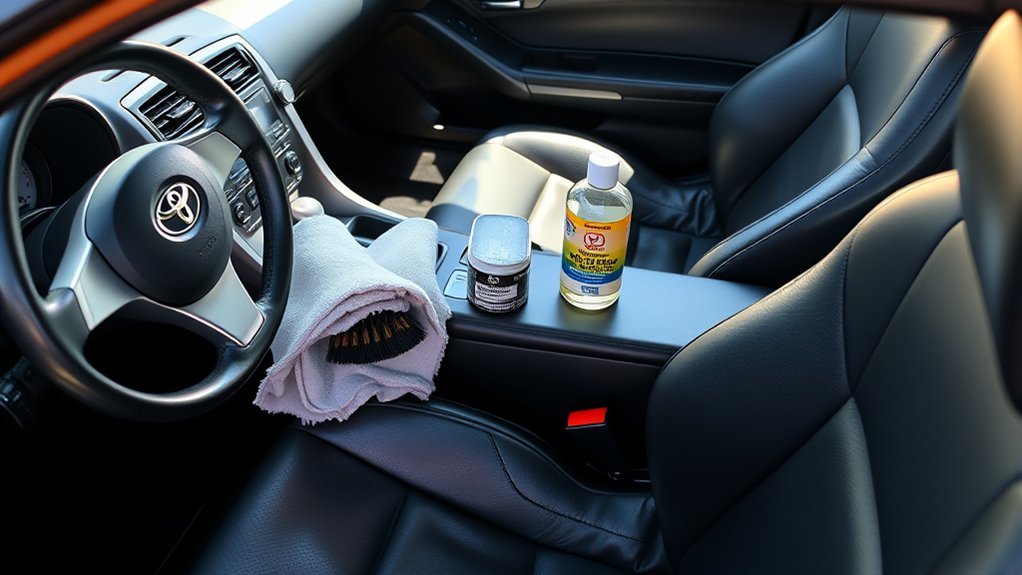
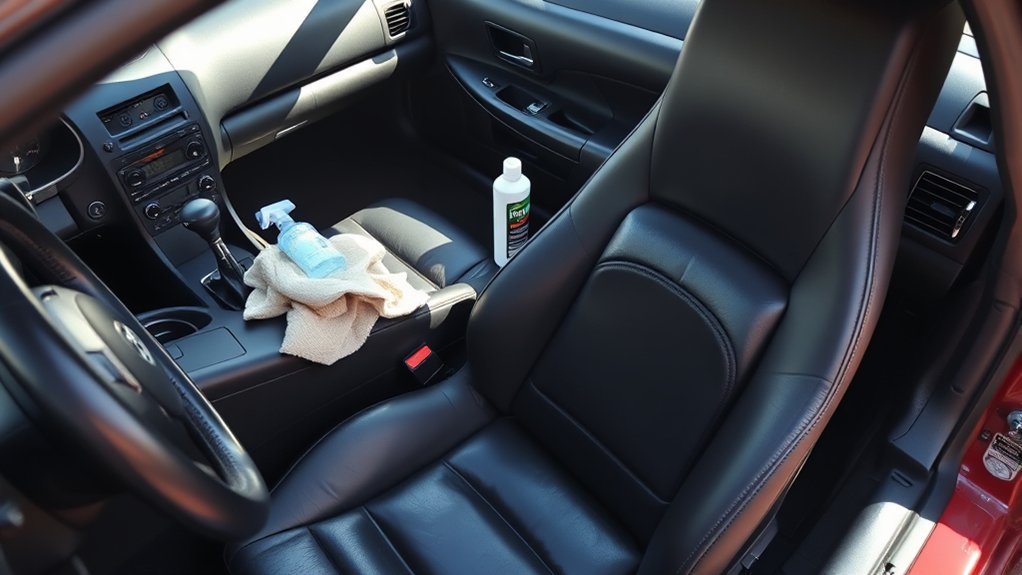
Start with tools that remove dirt without scratching or soaking the cabin. You do not need a large collection of chemicals. You need a few clean tools and products matched to the material you are cleaning.
- Several clean microfiber cloths: Keep separate cloths for screens, general trim, glass, and final drying.
- An undyed white cotton cloth: Reserve this for Alcantara®. Alcantara S.p.A. warns against printed or dyed absorbent cloths and papers, because they can release ink into the fabric.
- Vacuum with a soft brush and crevice tool: Use it on carpets, seat seams, under the seats, around the console, and in the hatch area.
- Soft detailing brush: Use light pressure around vents, seams, and textured trim.
- Soft-bristle brush for Alcantara: Used dry, after cleaning, to lift the nap back up.
- Material-specific interior cleaner: Choose a product labelled for the exact surface, such as automotive leather, Alcantara, or automotive plastic.
- Mild soap solution: Reserve it for safety belts and other areas where the owner’s manual allows it.
- Nonabrasive glass cleaner: Check the label and any aftermarket window-film instructions before use.
Warning: Do not assume an all-purpose cleaner is safe for every Supra surface. Toyota warns that alcohol, solvents, lacquer thinners, heavy-duty grease removers, fuel, and similar chemicals can damage plastic parts. The manual also instructs owners to open the doors or windows while cleaning the interior, because cleaning products can contain substances that are harmful to breathe in an enclosed cabin. Always test a product on a hidden area first.
[Products Worth Considering]

This all-in-one car detailing kit provides a complete set of cleaning tools for interior and exterior vehicle care, including brushes for dashboards, vents, wheels, tires, glass, and tight spaces. Designed for cars, trucks, SUVs, motorcycles, RVs, and more, it helps remove dust, grime, brake dust, and stubborn dirt while protecting delicate surfaces from scratches. The included storage box keeps everything organized for easy use at home or on the go.

This car interior detailing brush is designed to gently remove dust from vents, dashboards, consoles, and other hard-to-reach areas without scratching surfaces. Its soft bristles and comfortable grip make routine interior cleaning easier, while the compact size allows convenient storage in your glove box. It also works well for household cleaning tasks like keyboards, fans, and window tracks.

This two-piece horsehair brush set is designed for gentle yet effective cleaning of leather and interior surfaces. The soft bristles help lift dirt from seams, tight spaces, upholstery, carpets, and shoes without scratching, while the two sizes support both broad cleaning and detailed polishing. A comfortable wooden handle improves grip and control for easier daily care.
Step-by-Step Guide to Dashboard and Steering Wheel Cleaning
Clean the dashboard and steering wheel with the vehicle parked, the ignition off, and the cabin cool. This reduces accidental button presses and slows product evaporation.
What You Need for the Dashboard and Steering Wheel
- A dry microfiber cloth for loose dust.
- A second microfiber cloth lightly dampened with water for plastic trim.
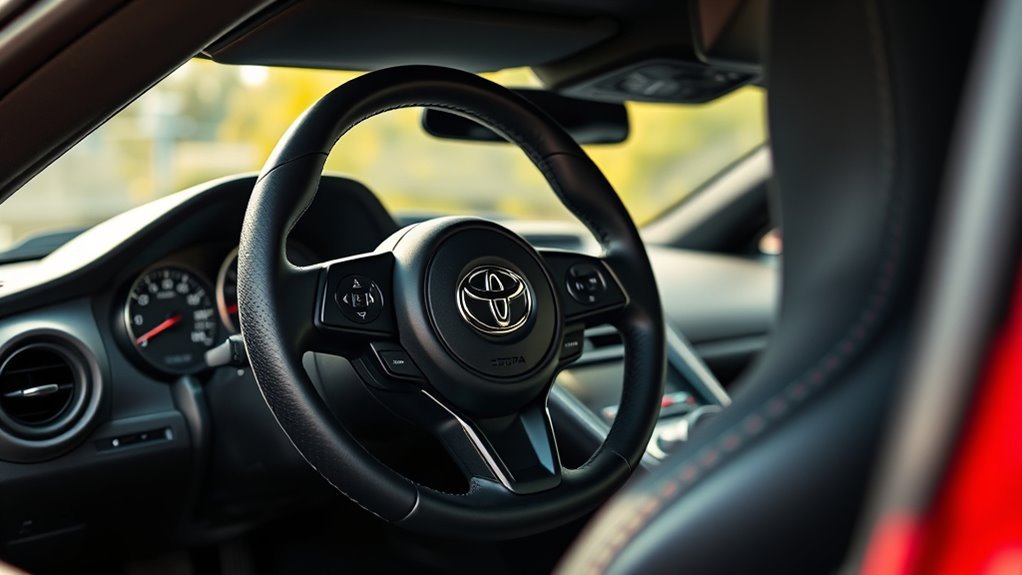
- A cleaner approved for the steering-wheel material. On the Supra this is leather on most grades, so use an automotive leather cleaner, not a dash dressing.
- A soft brush for vents and seams.
- A dry cloth for the final wipe.
How to Clean the Supra Dashboard Without Leaving Residue
- Remove loose dust first. Use a dry cloth or a vacuum brush so grit does not drag across the surface.
- Clean from top to bottom. Wipe the upper dashboard, vents, trim, steering wheel, stalks, and lower panels.
- Apply product to the cloth. Do not spray directly into switches, speaker openings, seams, or the steering column.
- Skip the gloss dressing on the upper dash. Toyota’s own method for plastic parts is a microfiber cloth lightly dampened with water, and there is a practical reason to stick to it in this car: the Supra seats you low behind a steeply raked windshield, so a high-gloss upper dash reflects straight into your sightline in bright sun. A matte, residue-free finish is the safer result here.
- Use light pressure. A slippery steering wheel means residue remains. Wipe again with a clean, slightly damp cloth, then dry it.
- Leave controls dry. Before driving, make sure the steering wheel, pedals, shift knob, and switches are free of moisture and dressing.
Pro Tip: Fold each microfiber cloth into quarters. Turn to a clean side often instead of spreading dirt and cleaner residue across the cabin.
How Do You Clean Alcantara in a Toyota Supra?
Alcantara® appears on the seat centres of the 3.0 and MkV Final Edition, and on other high-contact trim depending on build. It is a non-woven synthetic material, not suede and not leather, and the single most important rule is that it cannot be conditioned. Leather conditioner applied to Alcantara mats the fibres and leaves a shine that does not come back out.
Alcantara S.p.A. publishes its own care guidance, and it is simpler than most detailing advice suggests.
- Daily: dust it with a soft brush, a dry cloth, or a vacuum on a soft setting.
- Regular cleaning: run a slightly moistened white cotton cloth over the surface. Wring the cloth thoroughly first. Do not soak the material.
- Never pour product directly onto it. If you use a dedicated Alcantara cleaner, apply it to the cloth or sponge.
- Treat stains from the outside edge inward so the mark does not spread, and act quickly rather than letting it set.
- Let it dry fully, then brush the surface delicately with a soft-bristle brush to lift the nap back up. Skipping this step is why cleaned Alcantara often looks flat and darker than the panels around it.
On a steering wheel, the wear pattern is predictable: hand oils transfer at the positions you grip most, compress the fibres, and leave a matted, shiny patch. That is a cleaning-frequency problem rather than a product problem. Light, regular attention keeps it even; waiting until the patch is obvious means a much more involved recovery.
Note: On 3.0 and Final Edition seats, the Alcantara centre panels sit directly alongside leather bolsters. Work one material at a time and keep the two cloths separate, so leather cleaner never migrates onto the Alcantara.
[Products Worth Considering]

This complete car detailing kit provides a versatile solution for cleaning both interior and exterior surfaces, including vents, wheels, tires, dashboards, and tight crevices. With multiple brush types, drill attachments, a wheel brush, cleaning cloths, a spray bottle, and storage bag, it helps tackle everyday dust, grime, and hard-to-reach areas with ease. It is designed for car enthusiasts, daily drivers, and anyone looking for a more thorough auto cleaning routine.

This all-in-one car detailing kit brings together a wide range of cleaning tools for interior, exterior, wheel, and glass care. It includes brushes, polishing pads, a vacuum, a foam gun, a collapsible bucket, and other useful accessories to help tackle dust, dirt, stains, and hard-to-reach areas with ease. Designed for versatile vehicle cleaning, it also comes with a storage bag for convenient organization at home or on the go.

This steering clock spring is designed to restore reliable steering wheel controls across a wide range of Toyota models. It supports audio, cruise control, and other multifunction commands while matching OEM part numbers for confident replacement fitment. Built for dependable signal transfer and straightforward installation, it is an effective solution for repairing steering column control issues.
How Can You Clean Your Touch Screen Safely?
The safest method is simpler than most advice suggests. Toyota’s manual states that chemical cleaners, moisture, and fluids of any kind can damage displays and screens. It directs owners to use a dry, clean antistatic microfiber cloth and to avoid heavy pressure or scratching materials.
- Turn off the display and let it cool.
- Use a dedicated, clean antistatic microfiber cloth.
- Wipe gently in straight passes without pressing hard.
- For marks that do not lift, stop and check the owner’s manual or ask a Toyota dealer before adding liquid.
- Never spray cleaner directly on the screen or let moisture collect around the edges.
There is a Supra-specific habit that makes this easier. The 8.8-inch Supra Command display is designed to be driven from the rotary controller on the centre console, not only by touch. Using the controller for menu navigation keeps fingerprint oil off the panel in the first place, which matters when the approved cleaning method is a dry cloth with no solvent behind it. The trade-off is that the controller and its surround then become the dirtiest hard surface in the car, so wipe them with a lightly dampened microfiber cloth instead.
Cleaning the Head-Up Display Glass
This is the one documented exception to the dry-cloth rule, and it is easy to miss. The same manual section that forbids moisture on displays and screens specifies a different method for the protective glass of the Head-Up Display: clean it with a microfiber cloth and commercially available dish-washing soap.
Treat these as two separate jobs. The instrument and infotainment panels get a dry antistatic cloth. The Head-Up Display glass, which sits in the dash recess below the windshield and collects an oily film that dry-wiping will not shift, gets the microfiber-and-dish-soap method. Apply to the cloth, never into the recess.
Note: Keep the screen cloth separate from cloths used with dashboard dressing, glass cleaner, or disinfectant. Residue from those products can smear or damage a display coating.
Deep Cleaning Your Console, Cupholders, and Charging Tray
Remove loose items before cleaning the centre console. Vacuum crumbs first, then use a lightly dampened cloth and a product approved for the surface. Work around switches and seams with the cloth rather than flooding the area.
Three areas of the Supra console need more care than a generic wipe-down:
- The Qi wireless charging tray. It is a shallow, flat trap for sand, grit, and keys. Anything left in there gets pressed between the tray and the back of your phone every time you set it down. Vacuum it out with the crevice tool before wiping.
- Gloss and carbon-fibre console inserts. Piano-black and clear-coated carbon trim swirl under dry wiping, exactly like paint. Lift the dust off with a damp cloth rather than pushing it around with a dry one.
- The rotary controller and touchpad. High-contact, textured, and surrounded by seams. Use a soft brush and a barely damp cloth; never spray around it.
- Empty the console, cupholders, charging tray, and door pockets.
- Vacuum loose dirt with a crevice tool.
- Blot sticky spills with a damp microfiber cloth.
- Use a soft brush only where needed, with light pressure.
- Wipe again with a clean damp cloth if product residue remains.
- Dry the area before replacing stored items.
| Task | Tool Needed | When to Do It |
|---|---|---|
| Remove loose items | None | Before each clean |
| Clear the wireless charging tray | Crevice tool | Every clean, before grit builds up |
| Vacuum crumbs and grit | Crevice tool | When visible |
| Wipe surfaces | Microfiber cloth | Every few weeks or after spills |
| Dust gloss and carbon trim | Damp microfiber cloth only | Whenever dusty, never dry-wiped |
| Lift stubborn residue | Soft brush and approved cleaner | As needed |
| Dry all surfaces | Clean microfiber cloth | After every wet-cleaning step |
How to Care for Supra Leather and Alcantara Seats
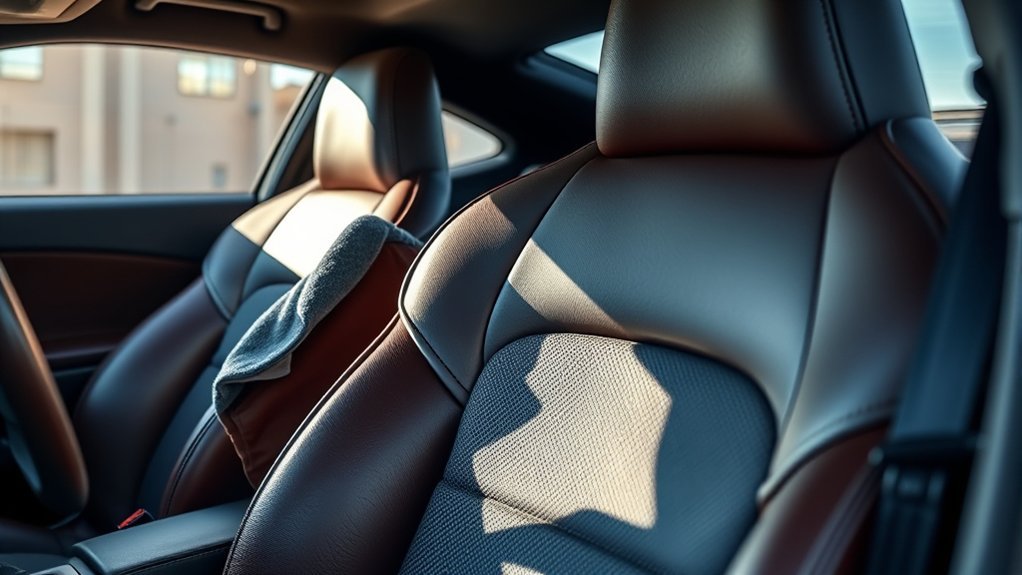
Use the grade table above to identify what you are working with. On the 3.0 and Final Edition you are cleaning two materials on a single seat, which means two cloths and two products.
[Products Worth Considering]

This cordless handheld cleaner combines vacuuming, blowing, inflating, and suction in one compact tool for cars, home, electronics, and outdoor use. Its brushless motor delivers strong performance with multiple power levels, while the rechargeable battery and included accessories make cleaning, dusting, and inflating quick and convenient.

This dash clock spring replacement is designed for a wide range of Toyota vehicles and helps restore reliable steering wheel control functions. It supports audio controls, cruise control, and other multi-function commands while using vehicle-specific connectors for easier installation. Built with durable materials and OEM-referenced part compatibility, it is a practical solution for repairing steering wheel signal issues.

AstroAI’s extra-long windshield cleaner kit makes interior and exterior glass cleaning easier with an extendable handle and 180° rotating head that reaches tight corners without strain. It includes reusable microfiber pads, a spray bottle, and a storage bag for streak-free, lint-free results at home or on the road. Designed for cars, SUVs, RVs, and household windows, it helps deliver clearer visibility with less effort.
Leather Seats
- Vacuum dust from seams and folds with a soft attachment. Toyota’s manual is explicit that dust and road grime left in pores and folds chafe the surface and cause premature wear, so this step is not optional.
- Apply an automotive leather cleaner to a cloth, not directly to the seat.
- Wipe a small section at a time without soaking perforations or seams.
- Remove residue with a clean cloth and let the seat dry naturally.
- Use a leather-care product made for automotive coated leather. The manual recommends cleaning and leather care roughly every two months.
If your car is a 3.0 Premium in hazelnut, that frequency is a floor, not a target. The manual specifically instructs owners to clean light-coloured leather more often, because contamination shows far more on those surfaces. Dye transfer from dark denim is the usual culprit on light seats, and it is much easier to remove before it sets.
Alcantara® Seat Panels
Follow the Alcantara method described earlier: dust it, wipe with a wrung-out undyed cloth, treat stains from the edge inward, never pour product onto it, and brush the nap back up once dry. Do not use leather cleaner or conditioner on these panels, and do not scrub. If a panel has flattened over time, brushing after cleaning does more to restore the look than any product will.
Some Supra builds use a soft synthetic-leather covering on the upper dash and door tops rather than hard plastic. Where that is the case, a damp microfiber cloth is sufficient, and sunscreen or hand sanitiser should be removed promptly because both can haze synthetic surfaces permanently. `[VERIFY: confirm dash and door-top covering material by grade and model year from the window sticker or build sheet before stating it as universal]`
Warning: Toyota’s manual warns that open hook-and-loop (Velcro) fasteners on clothing can damage seat covers and upholstery. On Alcantara this is a real risk, because the fastener pulls the nap out rather than just scuffing it. Close any Velcro before getting in.
Tips for Refreshing Your Car’s Carpet, Mats, and Cargo Area
Remove the mats before cleaning. Vacuum both the mats and the carpet beneath them. If the carpet is heavily soiled, Toyota allows a microfiber cloth with water or a textile cleaner, and specifies rubbing back and forth in the direction of travel only, to reduce matting.
- Shake or vacuum loose dirt outdoors.
- Spot-clean stains with a textile cleaner after testing a hidden area.
- Use as little liquid as possible.
- Allow mats and carpet to dry completely.
- Reinstall each mat with its correct fasteners.
Do not skip the hatch area. The Supra’s cargo space and parcel shelf collect grit that migrates forward into the cabin, and the shelf edges are easy to overlook with a standard vacuum head. Use the crevice tool along the trim seams.
Warning: Never stack floor mats or use a loose mat that can move into the pedal area. Toyota’s manual is direct about this: use only mats designed for the vehicle, secure them with the provided fasteners, and never layer them. After cleaning, confirm the driver’s mat is securely attached and that the accelerator and brake pedals move freely.
How to Achieve Spotless Interior Car Windows
Use a clean, lint-free microfiber cloth and a nonabrasive glass cleaner. Apply the cleaner to the cloth to control overspray near the dashboard and door trim.
- Wipe once to loosen haze and fingerprints.
- Use a second dry cloth for the final polish.
- Clean the windshield in vertical passes and side windows in horizontal passes so you can identify which side still has streaks.
- Use light pressure around defroster lines and window-film edges.
Cleaning Tinted Windows and Aftermarket Film
There is no single ammonia rule that applies to every film product, and this is a case where following your specific film maker’s bulletin genuinely matters. 3M’s own care and cleaning guidance permits common washing solutions, including ammonia-based products, once the film has cured, while many installers and other film lines specify ammonia-free cleaners only.
The rule every manufacturer does agree on is the cure window: **do not wash newly installed film for about 30 days**, and expect some haze or small water pockets during that period. 3M’s bulletin also advises using a soft cotton or microfiber towel only, avoiding bristle brushes, and cleaning along any splice rather than across it.
Cleaning the Camera Lens Behind the Mirror
The forward camera for Toyota Supra Safety sits behind the windshield near the interior mirror, and the manual instructs owners to keep that area of glass clean and clear. Camera and sensor lenses get a different treatment from the rest of the interior: a cloth moistened with a small amount of glass detergent, not a dry cloth and not an interior dressing. A smeared or filmed camera view is a system-limit condition, not just a cosmetic one.
How to Clean Seat Belts and the Headliner
Seat belts are safety equipment, not ordinary upholstery. Toyota warns that chemical solvent cleaners can destroy belt webbing and compromise its protective effect.
- Pull the belt out and hold it extended.
- Wipe it with a cloth and mild soap solution only.
- Do not bleach, dye, pressure-wash, or soak the belt.
- Let it dry completely before allowing it to retract.
The red seat belts on the MkV Final Edition are no exception. Coloured webbing is not more delicate, but it shows soiling and any attempt at aggressive cleaning far more visibly than black webbing does, and the same solvent warning applies. Mild soap solution, extended, dried fully, then allowed to retract. The manual also notes a practical reason to keep belts clean beyond appearance: dirty webbing impedes the reeling action, which itself affects safety.
For the headliner, remove dust gently with a dry microfiber cloth or soft vacuum brush. The manual’s instruction is short and absolute: do not soak the headliner. Excess moisture can loosen the backing or leave a ring.
How to Handle Spills, Stains, and Odors
Fast action matters more than strong chemicals. Blot liquid with an absorbent cloth, remove solids carefully, and then clean with the mildest product approved for the surface.
- Drink spill: Blot from the outside edge toward the centre so the mark does not spread, then clean the full affected panel lightly.
- Spill on Alcantara: Act within the first half hour if you can, lift any solid material off first, and never pour a cleaning product directly onto the material.
- Greasy mark: Use a cleaner specifically labelled for the material. Do not use a heavy-duty household degreaser.
- Sunscreen: Remove it promptly because it can discolour synthetic surfaces and light leather.
- Persistent odour: Check under seats, mats, the cargo area, and cupholders for the source. Clean the source and dry the area instead of masking it with a strong air freshener.
Regular Cleaning Tips for Long-Lasting Cleanliness
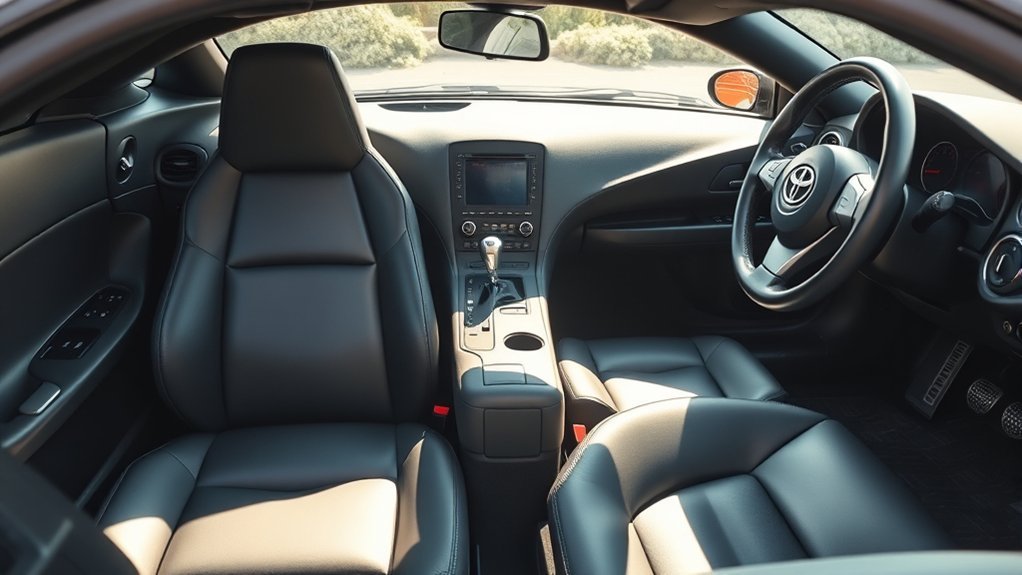
A fixed daily or weekly deep-clean schedule is not necessary for every owner. Base the frequency on use, weather, passengers, pets, food, and visible dirt. Many Supras are weekend cars that need far less than a daily driver.
Daily Maintenance Routine
- Remove trash and wet items when you leave the car.
- Blot spills immediately.
- Shake off loose sand or mud before it spreads.
- Keep the driver’s floor area clear.
Weekly Deep Clean
For a heavily used car, a weekly light clean may help. For occasional use, clean when dust or soil becomes visible. A full deep clean is usually needed less often.
| Task | Suggested Frequency | Purpose |
|---|---|---|
| Remove trash and wipe fresh spills | After use | Prevent stains and odors |
| Vacuum seats and floors | Every 1 to 4 weeks, based on use | Remove abrasive grit |
| Dust Alcantara panels and wheel | Little and often, before matting shows | Stop hand oils compressing the nap |
| Lightly wipe dashboard and controls | When dusty or marked | Maintain a clean, residue-free surface |
| Clean and care for leather | Roughly every two months; more often for hazelnut | Reduce embedded dirt and wear |
| Deep-clean carpet or textiles | As needed | Treat stains without over-wetting |
Best Order for Cleaning Your Toyota Supra’s Interior
- Park in shade, switch off the vehicle, and open the doors or windows for ventilation.
- Remove trash, personal items, and floor mats.
- Vacuum from the upper seats and seams down to the carpet, then the cargo area.
- Dust the dashboard, vents, console, charging tray, and door trim.
- Clean the steering wheel and hard surfaces with material-safe products.
- Clean the instrument and infotainment displays with a dry antistatic microfiber cloth.
- Clean the Head-Up Display glass with a microfiber cloth and dish-washing soap.
- Clean seats according to their material, working leather and Alcantara separately.
- Brush the Alcantara nap back up once it is dry.
- Spot-clean carpet and mats, then let them dry.
- Clean interior glass and the camera area behind the mirror.
- Reinstall dry floor mats securely and check pedal clearance.
The safest interior-cleaning rule is to start dry, use the mildest product that works, and keep liquids away from screens, switches, seams, and safety equipment.
How to Disinfect High-Touch Areas in Your Vehicle
Routine cleaning is usually enough when no one has been ill. The CDC’s position is that in most situations cleaning alone with soap and water removes most germs, and that disinfecting is needed mainly when someone is sick or at higher risk of getting sick. In a vehicle, product compatibility matters on top of that, because a disinfectant approved for a hard nonporous surface may still damage leather, Alcantara, coated plastic, or a display.
When Disinfection Is Actually Needed
Choose an EPA-registered product only when disinfection is needed, and read the full label before use. Note that EPA List N products are evaluated for **hard, nonporous surfaces**, which is precisely why they are not a blanket answer in a car cabin: most of what you touch in a Supra is leather, Alcantara, or a coated display. Confirm that the label allows the product on the surface type, follow the stated contact time, ventilate the cabin, and never mix cleaning chemicals.
High-Touch Areas Focus
- Steering wheel and shift knob
- Interior and exterior door handles
- Seat-belt buckle release buttons
- Window, mirror, audio, and climate controls
- The Supra Command rotary controller and surround
- Frequently used console and trunk-release buttons
| Area | Routine Care |
|---|---|
| Steering wheel and shift knob | Clean when visibly dirty; disinfect only when needed with a compatible product. Not applicable to Alcantara surfaces. |
| Alcantara trim | Do not disinfect. Dust and wipe with a wrung-out undyed cloth only. |
| Door handles and switches | Wipe based on use and visible soil |
| Seat-belt buckles | Wipe the hard buckle surface without soaking the belt webbing |
| Audio and climate controls | Use a lightly dampened cloth; do not spray openings |
| Displays | Use a dry antistatic microfiber cloth, not disinfectant |
| Head-Up Display glass | Microfiber cloth with dish-washing soap, applied to the cloth |
How to Disinfect Without Damaging the Surface
- Clean visible dirt first.
- Apply the approved product to a cloth if the label permits, rather than spraying the cabin.
- Keep the surface wet for the label’s required contact time.
- Prevent liquid from entering seams, switches, vents, or electronics.
- Wipe away residue if the label requires it, then let the surface dry.
- Wash your hands after cleaning.
Frequently Asked Questions
What material are Toyota Supra seats made of?
On the 2026 GR Supra, the 3.0 and MkV Final Edition have black Alcantara® and leather-trimmed sport seats, and the 3.0 Premium has all-leather trim in black or hazelnut. No MkV GR Supra was sold with cloth seats. Earlier Supra generations were offered with cloth as well as leather, so confirm your material before choosing a product.
How do you clean Alcantara in a Toyota Supra?
Dust it with a soft brush or dry cloth, then wipe with a thoroughly wrung-out undyed white cotton cloth. Never pour product directly onto it, treat stains from the outside edge inward, and brush the nap back up with a soft-bristle brush once it is dry. Alcantara cannot be conditioned, so never use leather conditioner on it.
What does Toyota recommend for cleaning the dashboard?
Use a clean microfiber cloth and a product intended for the specific dashboard material. For plastic parts, the manual advises a microfiber cloth lightly dampened with water and warns against alcohol, solvents, lacquer thinners, heavy-duty grease removers, fuel, and similar chemicals.
In what order should I clean the interior of my car?
Remove items and mats, vacuum from top to bottom, dust and clean hard surfaces, clean the displays dry, clean Head-Up Display glass with microfiber and dish soap, treat seats by material, spot-clean carpets, clean the glass, dry everything, and reinstall the floor mats securely.
How do I clean a Toyota Supra touch screen?
Turn the display off and wipe it gently with a dry, clean antistatic microfiber cloth. Do not spray cleaner on it, use a wet cloth, press hard, or use abrasive material. Using the rotary controller instead of touch input keeps fingerprint oil off the panel in the first place.
How do you clean the Head-Up Display glass?
This is the exception to the dry-cloth rule for screens. The manual specifies cleaning Head-Up Display protective glass with a microfiber cloth and commercially available dish-washing soap. Apply it to the cloth, never into the dash recess.
Can I use alcohol or disinfecting wipes inside a Supra?
Do not use them as a universal interior cleaner. Toyota warns that alcohol and solvents can damage plastic parts, and disinfectants may harm leather, Alcantara, coated trim, or displays. EPA-registered disinfectants are evaluated for hard nonporous surfaces, which most of a Supra cabin is not. Use a product only when its label and the vehicle instructions both allow it on that surface.
How often should I clean and condition Supra leather?
Vacuum or dust it regularly. The manual recommends cleaning and leather care roughly every two months, and instructs owners to clean light-coloured leather more often. If your 3.0 Premium has hazelnut leather, treat two months as the minimum rather than the target.
Can I steam-clean Supra carpets and seats?
A home steam cleaner is not the safest default because heat and excess moisture can affect adhesives, electronics, seat materials, and drying time, and it should never be used on Alcantara. Use a low-moisture automotive textile-cleaning method or a professional detailer familiar with the Supra’s materials.
Conclusion
A clean Toyota Supra interior does not require aggressive chemicals or constant deep cleaning. Remove grit early, use separate cloths, match each cleaner to the surface, and keep moisture away from electronics. The parts most people get wrong are the ones specific to this car: Alcantara that cannot be conditioned, a Head-Up Display that is the exception to the dry-cloth screen rule, and light hazelnut leather that needs attention more often than the two-month baseline.
Before you buy a single product, do one thing: check your window sticker or build sheet and write down what your seats actually are. Every decision in this guide follows from that. When in doubt, follow the owner’s manual or ask a Toyota dealer before using a stronger product.
Sources
- Toyota 2026 Supra Manuals and Warranties — owner-manual access and current vehicle-care guidance.
[VERIFY: confirm this deep link still resolves at publish time] - Toyota 2026 GR Supra Interior Tour — grade-by-grade upholstery and interior material confirmation.
- Toyota USA Newsroom: GR Supra MkV Final Edition — Alcantara seating, GR headrests, and red seat belts.
- Motor1: Toyota confirms Supra production ends March 2026 — end-of-production date for the MkV.
- Alcantara S.p.A. Cleaning and Maintenance Guide — official care protocol for Alcantara® surfaces.
- 3M Window Film Care and Cleaning Bulletin — 30-day cure window and approved cleaners.
- CDC Cleaning and Disinfecting Guidance — when routine cleaning is enough and when disinfection may be needed.
- EPA List N and Contact-Time Guidance — label directions, hard nonporous surface types, and required wet contact time.
- XPEL Product Care — an example showing that window-film cleaning instructions vary by manufacturer.