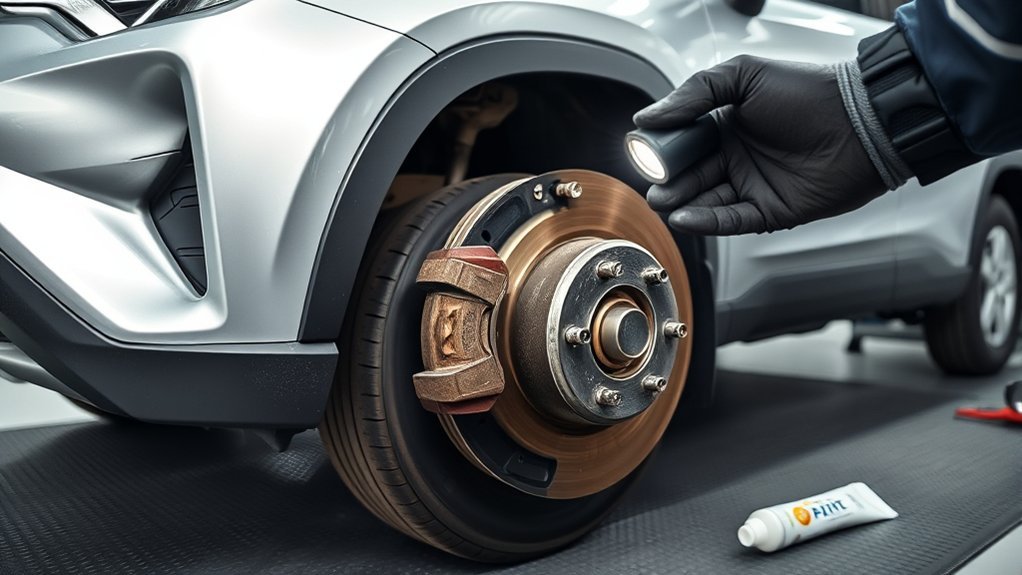
If your RAV4 squeals during slow stops, start by lifting the car, removing the wheel, and inspecting pads, rotors, and hardware for glazing, uneven wear, or missing shims. Value‑line TCMC pads often transmit vibration and squeal; swap to OEM/ceramic or add precision shims and anti‑squeal compound. Clean rotors, bed new pads with moderate stops, torque to spec, and document noises with video for warranty claims. Continue for step‑by‑step fixes and warranty tips.
Quick Diagnosis: Is Your RAV4 Brake Squeaking?
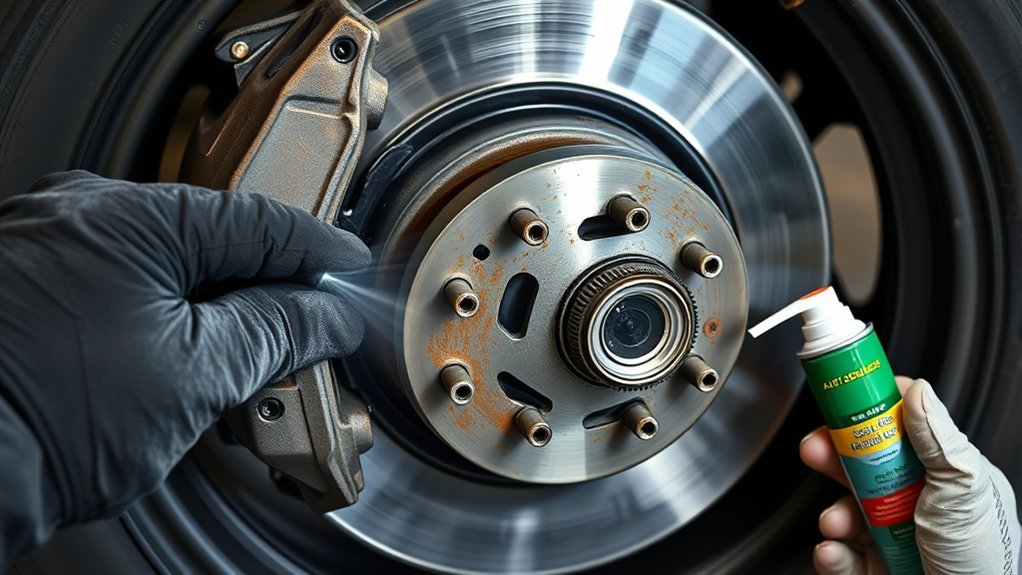
Notice a squeal when you roll to a stop? You’ll start by confirming conditions: low mileage under 15,000 and squeal during slow forward or reverse roll stops point to common RAV4 cases (2019–2021) with TCMC pads. Use targeted brake inspection techniques: safely lift the vehicle, remove the wheel, and visually check pad surface, rotor glazing, and hardware for wear or contamination. Perform a quick noise frequency analysis by recording audio during a controlled slow stop and comparing dominant frequencies to baseline brake sounds; high-frequency peaks often indicate pad vibration rather than hydraulic issues. Clean components with Brake Buster or equivalent if the vehicle’s been stored or lightly used—retest immediately. If noise persists, note whether shims or OEM/ceramic pads were previously installed; document current setup with video for dealer discussions and potential warranty claims. You’ll proceed to parts replacement only after these diagnostic steps confirm pad-induced vibration.
Find the Noisy Wheel Fast
After you’ve confirmed pad-related causes and cleaned components, isolate the noisy wheel quickly by rolling the vehicle at walking speed and listening for the squeal during both forward and reverse motion—this helps tell direction-specific pad vibration from wheel-bearing or drivetrain sounds. Move slowly with one person inside the cabin and a spotter outside, or record video while you walk around to capture sound identification evidence for dealership visits and TAS cases. Focus initial wheel inspection on the left front wheel; many RAV4 reports point there. Perform a targeted wheel removal: inspect brake components, rotor surface, and pad edge for glazing or uneven wear. Use brake cleaning and compressed air to clear dust before concluding. For pad evaluation, note pad thickness, backing-plate movement, and any absent shims. Apply maintenance tips: try shims or reinstall with OEM pads if symptoms persist. Deliver video and findings to the dealer to accelerate effective service and reclaim control over your vehicle.
Why TCMC (Value Line) Pads Cause Squeaks
You’ll notice TCMC (Value Line) pads use harder friction material that transmits more vibration into the caliper and rotor, increasing the chance of audible squeaks. They also omit premium anti-squeal features like multi-layer shims and damping plates, so there’s nothing to interrupt the vibration path. When diagnosing, prioritize checking pad compound and presence/condition of any shim or anti-squeal hardware.
Harder Friction Material
Because TCMC (Toyota Value Line) pads use a harder, less engineered friction compound than OEM pads, you’ll often hear squeaks and groans during light braking and in cold conditions. You need clear material comparison to assess brake performance: the harder compound transmits more vibration, lacks premium shims, and offers minimal damping. Follow procedure to confirm cause and liberate yourself from persistent noise.
- Inspect pad surface and backing for glazing and uneven wear.
- Verify installation meets Toyota torque and hardware specs.
- Compare decibel and pedal feel against OEM or ceramic replacements.
- Replace TCMC pads with OEM/ceramic if noise persists and performance declines.
These steps prioritize measurable checks and decisive action to restore quiet, reliable braking.
Lack Of Anti-Squeal
Having ruled out glazing and fitment issues, look next at the pads’ damping system: TCMC Value Line pads omit the premium anti-squeal shims and use a stiffer backing plate, so they transmit more vibration into the caliper and rotor. You’ll notice increased vibration and noise during gentle stops and in cold weather because the harder compound and lack of shims reduce sound dampening. For squeal reduction, inspect pad backing and replace pads lacking anti-squeal layers.
| Component | Effect |
|---|---|
| Shim absent | Direct vibration transfer |
| Stiff backing | Amplified resonance |
| Hard friction | Persistent squeak/groan |
Procedure: remove TCMC pads, fit OEM or ceramic alternatives, verify noise eliminated. Free your drive from avoidable noise.
Quick DIY Checks Before the Dealer
Want to rule out simple causes before scheduling a dealer visit? Start with focused checks that free you from unnecessary service trips. Inspect brake pad materials visually and note if pads are TCMC—harder compounds and missing anti-squeal shims often cause noise. Record clear video of the squeal from inside and outside the car to document conditions and timing for warranty discussions.
- Visually inspect pads for TCMC markings, uneven wear, or glazing.
- Use a blast of brake cleaner to remove dust and debris from rotors and pad faces.
- Check backing plates and hardware for missing shims or loose clips.
- Record multiple videos at different speeds and braking intensities.
You’ll apply simple noise reduction techniques only as diagnostics: cleaning, documenting, and hardware checks. Don’t perform bedding, solvents beyond cleaner, or apply compounds here—those belong in the next section. These steps empower you to present clear evidence and request targeted dealer action without guesswork.
At-Home Fixes: Bedding, Cleaning, and Brake Lube
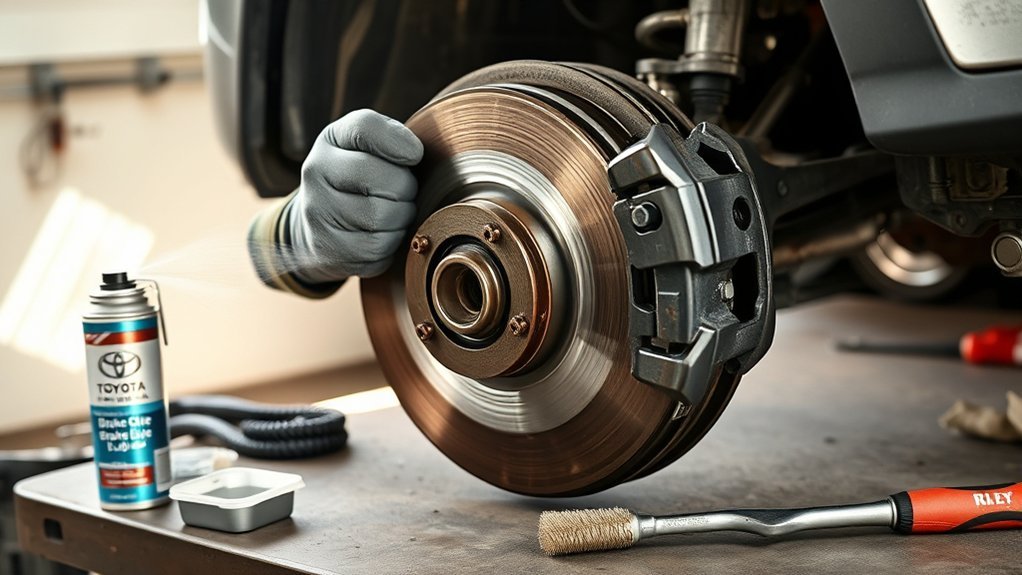
If your RAV4’s squeak isn’t caused by worn hardware or TCMC pads, you can often quiet it at home with a focused sequence: You’ll perform bedding, cleaning, and targeted lubrication as practical brake maintenance tips and noise reduction techniques. Begin with a bedding run: make 8–10 moderate stops from 40 to 10 mph to transfer pad material evenly. Park, cool, then safely remove the wheel. Clean caliper faces, slides, and rotor hats with Brake Buster or equivalent; remove dust and debris that fuel noise. Inspect pad backs; apply a thin layer of anti-squeal brake lube to the metal contact points only. Reassemble, torque lug nuts, and test for residual squeal. If noise persists, verify pad type—TCMC pads may still require replacement. These steps free you from needless dealer trips while keeping control, safety, and measurable noise reduction.
| Action | Benefit | Feeling |
|---|---|---|
| Bedding | Smoother contact | Relief |
| Cleaning | Removes debris | Control |
| Lubing | Dampens vibration | Freedom |
When to Swap Pads: OEM vs. Ceramic Aftermarket
After you’ve tried bedding, cleaning, and targeted lubrication, decide whether pad replacement will better solve persistent squeal: OEM Toyota pads are engineered to match caliper geometry and often include factory anti-squeal shims for better noise control and warranty alignment, while ceramic aftermarket pads typically yield quieter operation and less dust at a lower cost.
Choose based on clear criteria: compatibility, cost, and expected outcome. Use this checklist to act decisively and free yourself from recurring noise.
Choose by compatibility, cost, and results—use this checklist to decisively stop recurring brake noise.
- OEM Benefits: retains factory fit, addresses Compatibility Issues, aligns with warranty, cleaner Performance Comparison to stock.
- Ceramic Longevity: typically reduced wear and dust; many owners report lasting Noise Reduction and elimination of squeal in TCMC cases.
- Performance Comparison: OEM may feel more predictable under heavy duty; ceramics favor daily comfort and lower maintenance.
- Cost Analysis: OEM $150–$400/axle vs ceramic lower upfront cost; weigh warranty coverage against long-term savings.
Make the swap when noise persists after procedures and when your priorities favor warranty or quiet liberation.
Dealer Solutions: Shims, STOP SQUEAL, and Pad Replacement
When you bring your RAV4 in, ask the dealer to inspect and fit anti‑squeal shims between the pad backing plate and caliper to reduce vibration and high‑frequency noise. If shims aren’t sufficient they’ll often apply a STOP SQUEAL compound to the pad backs or perform a pad swap to OEM or treated aftermarket materials; request the specific procedure and parts used. Keep video or written documentation and confirm warranty coverage so you can push for rework or replacement if noise persists.
Shim Installation Benefits
Because vibration transmission through the pad-to-caliper interface causes most squeal, installing precision-fit shims on your RAV4’s brake pads provides a direct, repeatable reduction in noise and resonance. You get measurable shim effectiveness when dealers follow prescribed installation techniques and torque specs, cutting harmonic paths that amplify squeal. Use documentation and video to demand correct service.
- Confirm shim fitment to pad/backing plate; misalignment defeats isolation.
- Clean mating surfaces; apply bonding compound per spec, not excess STOP SQUEAL as primary fix.
- Torque caliper bolts to sequence and values; validate free hardware movement.
- Retest under varied speeds; log results for persistent-issue escalation.
These steps free you from recurring noise with a durable, dealer-verifiable solution.
Pad Swap And Treatments
Start by having the dealer evaluate whether a targeted pad swap, shim installation, or application of a STOP SQUEAL compound is the most appropriate fix for your RAV4’s noise; each treatment addresses different causes and has distinct longevity and cost profiles. You’ll want documented noise samples and service history to push warranty coverage if eligible. Dealers report STOP SQUEAL gives temporary relief; shims often stop vibration-driven squeal; swapping TCMC pads to OEM pad materials frequently yields lasting noise reduction. Expect dealer pad replacement costs of $150–$400 per axle. Proceed: collect video, request diagnosis, authorize least invasive treatment first, escalate to pad replacement if noise persists. Stay firm—your evidence liberates better service outcomes.
| Treatment | Effect |
|---|---|
| STOP SQUEAL | Temporary |
| Shims | Vibration control |
| Pad swap | Long-term |
| Cost | $150–$400 |
Warranty, Tech Tips (TSB), and How to Document Your Case
If your RAV4 squeals, document everything and open a TAS case so technicians can link complaints to repairs and TSBs; include clear videos of the noise, mileage, VIN, pedal/vehicle speed when it happens, and any prior service records. You’ll want strict documentation methods and to confirm warranty coverage eligibility before asking for parts or pad swaps. TSBs target low-mileage examples and require VIN-specific diagnosis; reference bulletin IDs when you talk to service writers. Persistently log contacts and outcomes.
- Record high-quality video with timestamps and captions for speed, pedal input, and ambient conditions.
- Note pad type (Value Line TCMC vs OEM), dates, and shop invoices in a single, chronological file.
- Create and update a TAS case; attach media and TSB references for technician review.
- Insist on documented test drives with a technician present and get written next steps.
These steps free you from ambiguity and force accountable action from the dealer.
Typical Costs and What Independent Shops Will Do
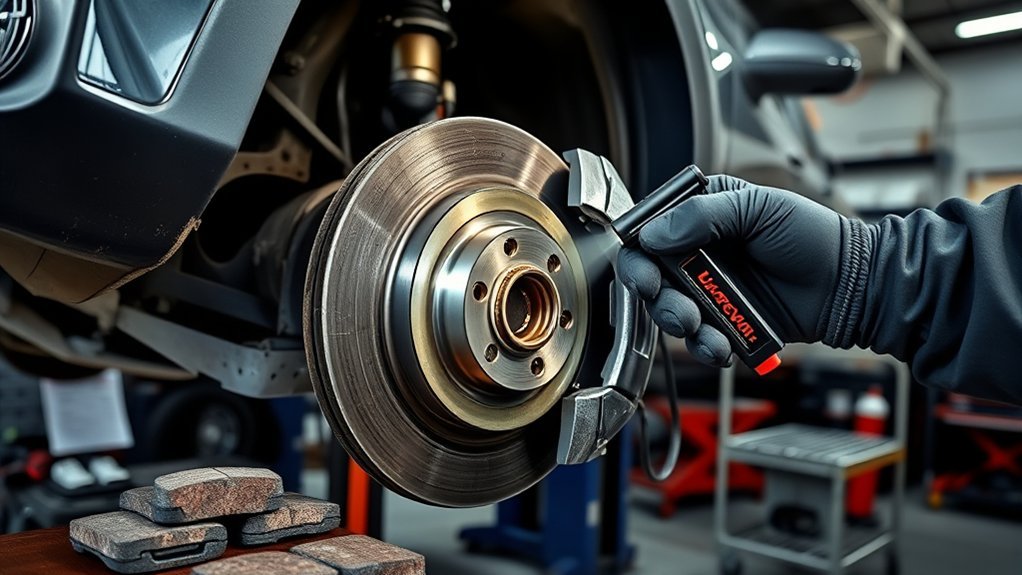
One common variable you’ll encounter is cost: expect independent shops to quote roughly $150–$400 per axle for pad replacement, with labor and pad type (OEM vs aftermarket/TCMC) driving the price. You’ll perform a quick cost comparison: ask shops for a written parts/labor breakdown, confirm pad brand, and note warranty terms. Service expectations should include rotor inspection, pad bedding, and hardware replacement; insist on anti-squeal compound if noise is the complaint. Independent shops often offer lower labor rates but may fit TCMC or aftermarket pads unless you specify OEM.
| Item | Typical Outcome |
|---|---|
| Pad type | OEM reduces noise; TCMC may squeak |
| Price | $150–$400/axle varies by pads/labor |
| Service | Rotor check, hardware, bedding, anti-squeal |
You’ll document receipts and pad part numbers to preserve leverage. If noise persists after independent work, escalate with evidence to pursue dealer or warranty remedies.
Preventing Future Squeaks: Driving and Maintenance Tips
While regular driving habits and simple upkeep won’t guarantee silence, they’ll drastically cut the chance of future squeaks: adopt a disciplined maintenance schedule and control driving conditions to minimize brake wear and noise. Bed new pad materials by doing moderate stops from 40 to 10 mph in safe areas; that bedding process equalizes transfer films and improves noise reduction. Clean components with a brake-specific cleaner (e.g., Brake Buster) and perform routine component inspection to remove buildup and debris. Use quality OEM pads over cheap TCMC options; better pad materials and proper installation techniques reduce vibration and squeal. Apply anti-squeal compounds to pad backs and contact points, and lubricate slide pins and caliper interfaces per service specs.
- Follow a strict maintenance schedule: inspect pads, rotors, hardware every 6–12 months.
- After pad replacement, perform bedding stops and recheck torque and hardware.
- Clean seldom-used vehicles before seasonal driving to prevent corrosion.
- Prefer OEM pads and follow torque and installation techniques for lasting noise reduction.
Frequently Asked Questions
Why Do Toyota RAV4 Brakes Squeak?
They squeak because cheaper TCMC pads and debris cause vibration when stopping; you’ll perform brake maintenance to remove buildup, install shims or OEM pads, and apply STOP SQUEAL for effective noise reduction and liberated driving.
What Is the Number One Cause of Squeaky Brakes?
It’s hard brake compound: harder, low-quality pads cause squeak. Coincidentally, you’ll notice vibration, noise; you’ll perform brake maintenance, apply anti-squeal, bed pads, or swap to better pads for decisive noise reduction and renewed driving freedom.
What Is the Toyota Lawsuit About Brakes?
The Toyota lawsuit claims brake noise from TCMC pads harms safety, resale, and maintenance costs; you should document brake maintenance, assess lawsuit implications, pursue remedies, demand material transparency, and push for durable, accountable repair procedures.
Conclusion
You’ve got the tools now to silence that squeal—think of your RAV4 like a musical instrument that needs tuning. Start by pinpointing the noisy wheel, run quick DIY checks, and try bedding, cleaning, or lubricant before escalating. If pads or hardware are the culprit, insist on shims or replacement at the dealer, document everything, and weigh costs. Follow maintenance and driving tips to keep brakes performing clean, quiet, and reliable.