A P0441 on your Toyota RAV4 means the EVAP system’s purge flow is incorrect, so fuel vapors aren’t being routed to the engine properly. Start by checking the gas cap, then inspect the purge valve, vent solenoid, and EVAP hoses for cracks or blockages. Use a smoke test for hidden leaks and test valve resistance/operation. Parts are inexpensive but can be tricky; follow a step‑by‑step approach below to diagnose and fix it yourself or know when to seek help.
Quick Fix Summary: 3 Steps to Clear P0441 on a RAV4

Start with three focused checks to clear a P0441 on your RAV4: confirm the gas cap seals and seats correctly, test the purge valve and its wiring in the engine bay, then inspect EVAP hoses and fittings for cracks or blockages. You’ll start with the gas cap—verify the rubber seal isn’t torn and the cap threads fully engage; a loose or damaged cap is the simplest fix and restores proper fuel-system sealing affecting engine performance. Next, probe the purge valve: apply power or use a hand vacuum to confirm operation, and check connectors for corrosion or broken wires; replace the valve if it won’t actuate. Then trace EVAP hoses for splits, hardening, or obstructions; pressurize or use a smoke test if visual checks aren’t conclusive. If those steps don’t clear the code, expand to charcoal canister and vent solenoid checks and use calibrated diagnostic tools to quantify faults before replacing parts.
What P0441 Means on a Toyota RAV4
The P0441 code means your RAV4’s EVAP system isn’t getting the correct purge flow, so fuel vapors aren’t being routed into the engine as intended. You’ll want to understand the EVAP circuit — tank, charcoal canister, purge valve, vent solenoid and associated hoses — because any restriction or leak alters purge flow. Start by checking the gas cap and purge valve, then inspect hoses and the canister if the fault persists.
EVAP System Overview
Although it’s often shown as a single diagnostic code, P0441 on your Toyota RAV4 specifically flags incorrect purge flow in the evaporative emission (EVAP) system, which is responsible for capturing fuel vapors and routing them back to the engine for combustion. You need to understand EVAP function and how it enforces emission regulations so you can act decisively. The vehicle computer watches pressure and flow, then sets P0441 when readings deviate, prompting troubleshooting.
- Realize a faulty gas cap can break the seal and trigger failures.
- Check the purge valve for sticking or electrical faults that obstruct flow.
- Inspect the charcoal canister for damage; it stores vapors until purge.
- Verify the vent solenoid and lines for leaks or blockages before replacing parts.
Purge Flow Failure
Now that you understand how the EVAP system monitors vapor capture and flow, purged vapors must reach the engine at a measured rate — P0441 tells you that rate is off. You’ll first verify the gas cap seal and then test the purge valve, since a stuck or leaking valve prevents correct metering and routes vapors improperly. Use diagnostic tools to command the valve and monitor flow; if readings deviate from spec, replace the valve. Inspect for vapor leaks: cracked hoses, faulty vent solenoids, or a saturated charcoal canister can all cause failures. Follow repair techniques that restore compliance with emission standards, and adopt maintenance tips—regular EVAP inspections and prompt cap replacement—to reclaim control and freedom from recurring codes.
Quick Pre-Check Checklist Before You Start Repairs
Before you start swapping parts, confirm a few quick items that commonly trigger P0441 so you don’t chase false leads: make sure the gas cap seats properly and its rubber seal isn’t damaged, verify the purge valve and its wiring are intact and operating, inspect EVAP hoses for cracks or blockages, and be ready to run a smoke test to pinpoint hidden leaks before evaluating the charcoal canister or vent solenoid. You want clear EVAP diagnostics and to pass emissions testing without wasting parts or time. Work methodically: verify visual condition, test electrical continuity, and pressure-check hose runs. Stay focused on eliminating obvious causes first so you reclaim control over the repair process.
Confirm cap seal, purge valve, and EVAP hoses; run a smoke test before swapping parts.
- Confirm gas cap seating and seal condition.
- Inspect purge valve operation and wiring integrity.
- Trace EVAP hoses for cracks, kinks, or blockages.
- Plan a smoke test to locate concealed leaks.
This checklist keeps you efficient, empowered, and ready for precise follow-up diagnostics.
How to Inspect and Test the Gas Cap (Tips and OEM Guidance)
Start by confirming the cap seats correctly—twist until you hear the click to guarantee a vapor-tight fit. Inspect the rubber gasket for cracks, hardening, or deformities that can compromise the seal. If anything looks off, replace it with an OEM cap to preserve EVAP integrity and avoid repeat P0441 triggers.
Check Cap Fitment
Although a loose or damaged gas cap is a small part, it’s a common cause of a P0441 EVAP fault, so check it first by hand and visually inspect the rubber seal for cuts, hardening, or debris that would prevent a tight seal. You want freedom from false codes—confirm gas cap fitment, seal integrity, and OEM compatibility. Turn the cap until it clicks, ensuring threads align and the cap sits flush. If you can, perform a simple pressure test to verify it holds pressure; a failed test means replace with an OEM unit.
- Feel for play—no wobble, no cross-threading.
- Watch the seating—flush and even across the flange.
- Verify clicks—multiple audible seals confirm engagement.
- Choose OEM—fit that frees you from repeat faults.
Inspect Rubber Seal
Check the gas cap’s rubber seal visually and by feel to confirm it’s intact and able to form an airtight EVAP connection. Remove the cap, inspect the O-ring for cuts, glazing, compression set, or embedded debris that breaks seal integrity. Run your thumb around the seal to detect hard spots or cracks you might miss visually. Re-seat the cap and tighten until it clicks to verify proper engagement; a misaligned or floppy seal defeats gas cap maintenance. If damage is present, replace the cap promptly—this simple step often clears a P0441 fault and restores system confidence. Regularly include this check in your maintenance routine to prevent EVAP leaks and keep your vehicle operating free from avoidable restrictions.
Use OEM Replacements
With the rubber seal inspected, next focus on verifying the cap itself and choosing the right replacement when needed. You’ll guarantee the cap seats fully; a loose or misaligned cap can trigger P0441 by allowing EVAP vapors to escape. Check for cracks, deformities, or hardening that impair sealing. Replacement Importance is clear: a damaged cap compromises emissions control and freedom from repeat faults. Prioritize OEM parts—OEM Benefits include correct fit, compatible materials, and restored system integrity. If you find damage, replace immediately with an OEM cap to eliminate doubt and regain control.
- Choose OEM for guaranteed fit and material compatibility.
- Inspect seating every fill-up; don’t assume it’s tight.
- Replace at first sign of wear.
- Treat the cap as critical to emissions freedom.
How to Find and Test the Purge Valve on a RAV4
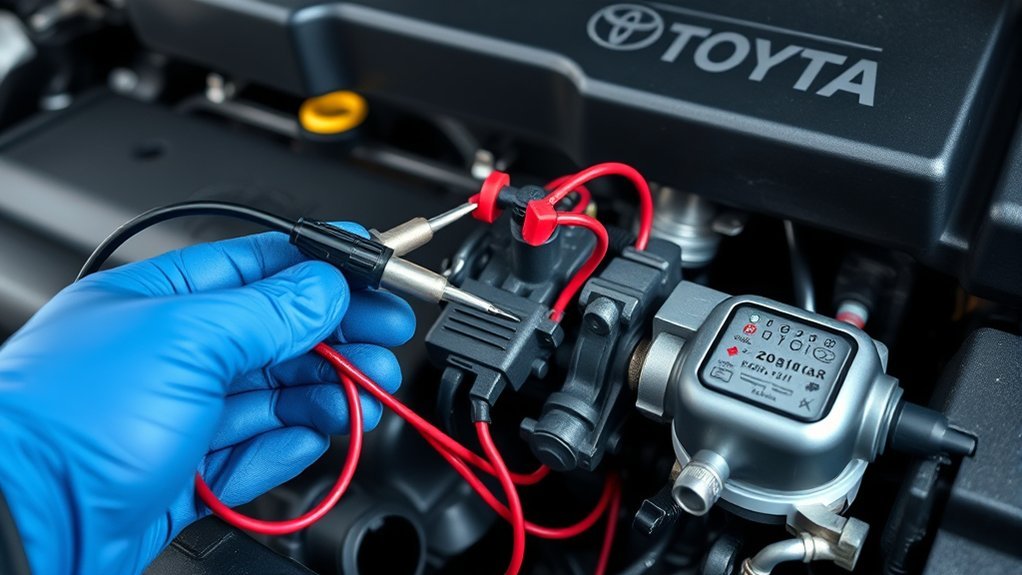
Locate the purge valve in the engine bay near the intake manifold—it’s the small solenoid with two electrical terminals and a vacuum hose going to the EVAP canister—then visually inspect the wiring and connector for damage before testing. Knowing the purge valve location lets you move quickly and assert control over the EVAP system. For the testing procedure, disconnect the electrical connector, backprobe or use jumper leads to apply 12V to the valve terminals briefly, and listen for a distinct click indicating the solenoid opens. While energized, blow gently through the vacuum port; air should pass when open and stop when de-energized. If it fails to click or pass air, the valve is faulty and should be replaced—parts run roughly $20–$57. Also check the harness for corrosion or loose pins that could mimic valve failure. Regularly include this test in your EVAP maintenance routine so you don’t get shackled by persistent P0441 faults.
Check EVAP Hoses and the Most Common Leak Points
Because EVAP hose cracks and loose fittings are the most common causes of a P0441, start by visually tracing every hose from the fuel tank to the purge valve and charcoal canister, looking for cracks, abrasions, kinks, pinches, and deteriorated connections. You’ll focus on hose integrity and basic leak detection: inspect bends, clamps, and junctions where wear concentrates. Verify hoses aren’t rubbing against chassis parts or routed incorrectly. Tighten or replace loose clamps and worn fittings; swapping a brittle section often restores system function and frees you from recurring faults.
- Find visible cracks at bends and junctions — replace affected sections to regain control.
- Check clamps and fittings — loose hardware ruins seal and causes frustration.
- Look for pinches or kinks from improper routing — correct routing liberates vapor flow.
- Inspect hose ends and canister connections — degraded seals demand prompt replacement.
If nothing obvious appears, proceed to more advanced leak detection methods.
Use a Smoke Test to Find Hard-to-See EVAP Leaks
When a visual inspection doesn’t reveal the source of a P0441, perform a smoke test to force vapor out of hidden cracks and bad connections so you can see exactly where the EVAP is leaking. You connect a smoke machine to the EVAP system—commonly at the filler neck or purge valve—introduce neutral, visible smoke, and watch for escaping vapor. Smoke will pinpoint cracks, torn hoses, loose clamps, or faulty fittings that standard inspections miss. The smoke test benefits are clear: rapid, unambiguous leak detection and reduced guesswork, so you can act decisively and restore control. Use steady pressure, inspect all junctions, and mark leak sites for repair or component replacement. Mechanics rely on smoke testing as a thorough diagnostic step when troubleshooting P0441, especially on RAV4s with hidden routing or aged rubber. You’ll save time and parts by targeting the real failure instead of replacing components blind.
If the Purge Valve Passes : Inspect the Charcoal Canister and Vent Solenoid

If the purge valve checks out, shift your focus to the charcoal canister and vent solenoid, since they control vapor storage and air flow in the EVAP loop. Perform a charcoal canister inspection: look for cracks, crushed hoses, or internal blockages that trap vapors. Check fittings and mounting; leaks here break system integrity and your freedom from repeat faults. Next, run vent solenoid testing to confirm it opens and closes under command — use a multimeter for coil resistance and apply 12V briefly to verify actuation. If the solenoid doesn’t operate, it won’t vent the canister and pressure will stay incorrect.
- Find visible damage — act decisively.
- Trace hoses for blockages — remove constraints.
- Measure solenoid resistance — demand precision.
- Apply power to confirm actuation — insist on movement.
Resolve failures promptly, and guarantee replacements match your RAV4 so you regain reliable, liberated operation of the EVAP system.
Parts Cost and Replacement Estimates for Common EVAP Fixes
Although diagnostic work can narrow the fault to a single component, you should budget for a range of EVAP repairs because prices vary widely by part and source. You’ll find a purge valve replacement is the cheapest likely fix — $20–$57 — so prioritize testing it first. An OEM gas cap, $15–$25, is a low-cost preventive buy; avoid cheap aftermarket caps. Inspect hoses for cracks or blockages; expect $10–$40 per hose in replacement parts. If the charcoal canister is faulty, plan for $50–$150 and note it can produce additional codes, which raises labor and parts needs. Vent solenoids run $30–$70, reinforcing the need for thorough checks rather than piecemeal swaps. Use this cost comparison to plan repairs and cash flow. Repair tips: document part numbers, source OEM where practical, and replace corroded clamps and seals while you’re accessing the system to prevent repeat failures.
DIY vs. Professional: When to Repair a P0441 on a RAV4
If the code traces to a worn gas cap or a faulty purge valve and you’re comfortable testing components with basic tools, you can usually fix P0441 yourself for $20–$57 in parts. If multiple parts need inspection, a suspected EVAP leak, or you lack diagnostic tools (multimeter, smoke tester), hire a professional for a faster, more reliable diagnosis. Weigh parts/labor savings against your skill level and the risk of missed leaks.
When To DIY
When you see a P0441 on your RAV4, start with the basics you can handle: check and tighten or replace the gas cap, then test or swap the purge valve—these steps often clear the code and only require basic tools and parts costing roughly $20–$57. If you have basic automotive knowledge and diy tools, you’ll gain repair confidence by handling these items, and a simple smoke test can further reveal obvious EVAP leaks. Do it to reclaim control; be precise, document steps, and verify the code clears.
- Empowerment: save money, learn systems, feel free.
- Simplicity: gas cap and purge valve are quick fixes.
- Evidence: smoke test pinpoints leaks you can patch.
- Limits: stop if wiring or canister work appears.
When To Hire
Wondering whether to DIY or call a pro? If you lack advanced diagnostic tools or aren’t comfortable with smoke tests and fuel-system routing, hire a professional. You can check the gas cap and swap a purge valve yourself if you have basic mechanical skills and a modest repair budget—the valve costs $20–$57 and can save labor fees. But bring in a mechanic when multiple components (charcoal canister, vent solenoid, hoses) need inspection or when leaks aren’t obvious. Professionals have specialized equipment and experience to locate elusive EVAP faults and prevent cascading damage. If the P0441 code persists after your attempts, don’t hesitate to pay for expert diagnosis rather than risk higher future repairs.
Frequently Asked Questions
How Do I Fix a P0441 Code on My Toyota?
Start by checking the gas cap, then test and replace the purge valve if faulty, and hunt for any vacuum leak in hoses or fittings; repair or replace charcoal canister components to clear the P0441 code.
What Are the Symptoms of an Incorrect Purge Flow?
Right off the bat, you’ll see a check engine light, decreased fuel economy, rough idling or stalling, stronger fuel smell, and higher emissions; your purge valve or fuel system’s incorrect purge flow can tank performance and testing.
Conclusion
You’re dealing with an EVAP purge-flow issue that’s usually simple but can hide tricky leaks. Start with the gas cap and purge valve — they’re the low-hanging fruit — then move to the charcoal canister and vent solenoid if needed. Use a smoke test to find stubborn leaks. Replace faulty parts, clear codes, and retest. Think of the system like plumbing: a small clog or loose fitting causes big downstream trouble, so work methodically.