
You can engage RAV4 EV mode with the ignition on and sufficient battery charge by pressing the EV button; the car then shifts propulsion to the electric motor for quiet, zero‑tailpipe drive at low speeds (typically under 20–25 mph) until charge or speed thresholds force a cutout. Range is brief—often under a mile—dependent on state‑of‑charge, temperature, load and driving style; smooth, gentle acceleration and regen braking extend EV time, and the section below explains practical use, limits and fixes.
Step-by-Step: Activate RAV4 EV Mode Safely
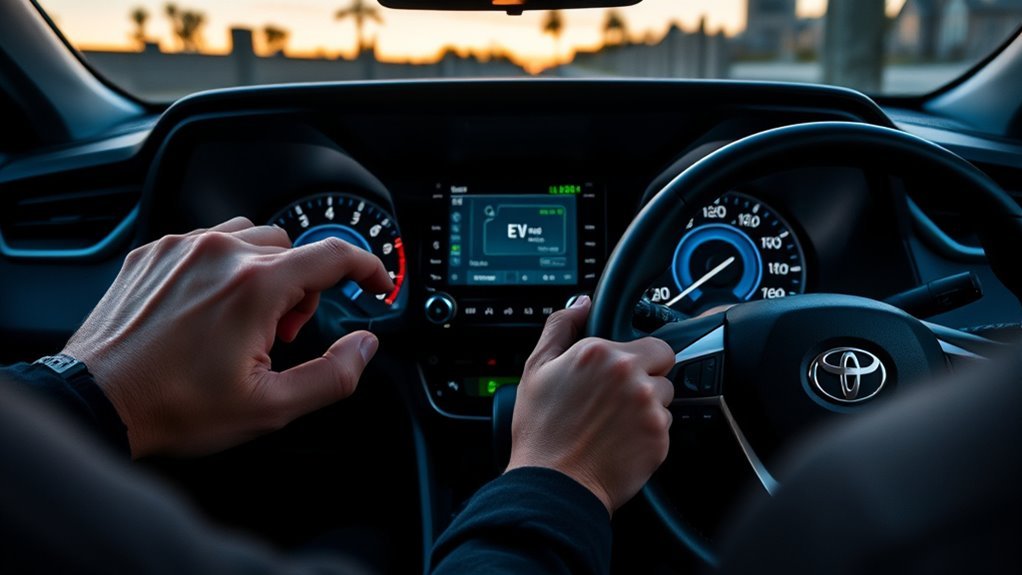
Before activating EV mode, confirm the vehicle is on and the battery has sufficient charge; then press the EV button once—if charge is inadequate the system will show “unavailable.” You’ll verify readiness visually and proceed only when the indicator permits. As you engage EV, monitor speed: the system is optimized for under 20–25 mph and will auto-deactivate above that threshold, emitting a warning beep. Maintain situational awareness; continuous speed checks prevent unexpected changes that compromise efficiency.
Apply safety precautions: select low-speed urban routes, avoid heavy acceleration, and confirm cabin systems (heater/AC) won’t overload electric range. Address common misconceptions directly: EV mode isn’t an all‑day electric drive nor a performance setting—it’s a tactical tool for short trips and stop‑and‑go traffic that reduces gasoline use. Use it deliberately to expand your mobility options, conserve fuel, and reclaim control of local travel with predictable, measurable results.
How RAV4 EV Mode Works (Battery, Motor, Speed Limits)
When you engage EV mode, the RAV4 shifts propulsion from the internal combustion engine to an electric motor powered solely by the high-voltage battery, delivering zero tailpipe emissions while the system remains active; the control logic permits electric-only drive only when the battery state-of-charge meets a minimum threshold and vehicle speed and driver demand stay within defined limits. You’ll press the EV button after powering the vehicle; a visual indicator confirms readiness. The motor draws from the battery under a battery management regime that monitors voltage, current, and temperature to preserve longevity and maintain safe output. The control unit prioritizes electric efficiency by limiting power delivery and favoring low-speed torque for short trips and parking maneuvers. If charge falls below the operating threshold, the interface shows “unavailable” and prevents activation. Exceeding the preset speed band or demanding aggressive acceleration triggers automatic EV mode exit, signaled audibly, handing propulsion back to the combustion system to protect the battery and maintain drivability.
When RAV4 EV Mode Is Available (Speed, Charge, Conditions)
When you press the EV button with the vehicle on, the system will allow EV mode only if the high-voltage battery has sufficient state of charge and the display doesn’t show “unavailable.” EV engagement is constrained to low-speed operation—generally under 20–25 mph—and the mode will automatically cancel with a warning beep if you exceed that threshold. You should monitor the remaining electric range continuously, since EV mode is intended for very short distances (around half a mile) and will be blocked or terminated if operating conditions or charge are inadequate.
Speed Threshold Limits
Although the RAV4 allows short-distance electric driving, EV mode only engages under strict conditions: you must turn the vehicle on, press the EV button, and have sufficient battery state-of-charge, and the system will limit operation to roughly 20–25 mph (exceeding that speed or a low battery will automatically disengage EV mode with an audible alert). You’ll rely on strict speed management: stay below the 20–25 mph threshold to maintain pure electric performance in urban, campus, or parking scenarios. The vehicle continuously monitors speed and available electric range, instantly reverting to hybrid power when you exceed the threshold or the system detects insufficient charge. That audible cue plus display indications keep you informed, enabling confident, liberated short-range electric driving without unexpected propulsion mode changes.
Battery Charge Level
Because EV mode depends on battery state-of-charge, you’ll only be able to engage it when the pack retains sufficient energy; the system will display “unavailable” if charge falls below the required threshold. You must monitor charge indicators and electric range continuously: EV mode is optimized for low-speed operation under about 20–25 mph and only supports roughly half a mile of pure-electric distance. If charge indicators show marginal capacity, the system prevents engagement to protect battery health and guarantee predictable performance. Exceeding the speed threshold immediately cancels EV mode and emits an alert. Adopt disciplined battery maintenance to preserve usable state-of-charge for liberation-oriented short trips—plan routes and charging so EV mode remains available when you need silent, emission-free mobility.
Operating Conditions Required
If you want to use RAV4 EV mode, the vehicle must be powered on, you must press the EV button, and the battery must hold sufficient charge—otherwise the instrument cluster will show “unavailable.” EV mode operates only at low speeds (roughly under 20–25 mph) and will automatically disengage with a warning beep if you exceed that limit. You’ll monitor operating conditions continuously: battery state-of-charge, indicated electric range, and current speed. The control system enforces speed limits and inhibits EV engagement when charge is inadequate. Environmental factors—temperature, terrain, and accessory load—affect available electric range and may prevent EV activation even with nominal SOC. To maximize liberation from fuel use, plan routes and climate settings so the operating conditions favor sustained EV operation.
How Long RAV4 EV Mode Lasts : And Why
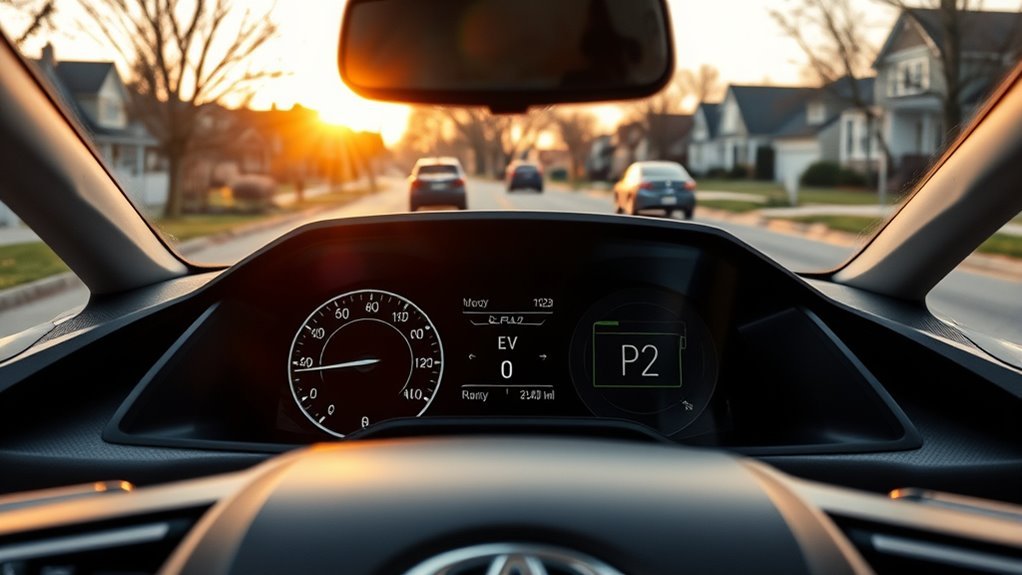
You can expect EV mode to cover roughly half a mile or until you hit about 20–25 mph, whichever occurs first. Its usable range depends on battery state-of-charge and operating conditions, so steep grades, high accessory loads, or cold temperatures will shorten the interval. Monitor the system’s charge and speed limits closely, because exceeding either threshold forces the hybrid system to revert from EV operation.
Typical Electric Range
On a full charge the RAV4’s EV mode typically gives you roughly half a mile of electric-only driving, designed for low-speed, short-distance maneuvers such as parking and slow neighborhood travel. You’ll operate under 20–25 mph to preserve electric efficiency; exceeding that speed or aggressive acceleration deactivates EV mode and shifts control back to the hybrid system. Battery management is explicit: low state-of-charge makes EV mode unavailable, so monitor the indicator to align trips with capability. From a user experience standpoint, this limited range optimizes vehicle performance for short errands, improving overall fuel economy and environmental impact when used strategically. Operational tips include planning low-speed routes and observing maintenance considerations to sustain EV responsiveness.
Factors That Shorten
Although EV mode is designed for short, low-speed use, several measurable factors will cut its available duration well below the nominal half-mile estimate. You’ll find battery performance is the primary limiter: low state-of-charge or temperature extremes reduce usable capacity and can render EV mode unavailable until charging or warming occurs. Operational choices also matter—frequent acceleration impact and heavy electric accessory use accelerate depletion, so aggressive throttle inputs will end EV operation quickly. Speed gating deactivates EV mode above its design threshold, forcing you to slow to re-engage; exceeding that limit wastes remaining electric charge. To maximize liberation on electric power, monitor charge level, avoid rapid throttle bursts, minimize accessory load, and plan low-speed segments when battery conditions are ideal.
Driving Habits That Extend EV-Only Time

When you keep speeds below about 20–25 mph and favor short, frequent trips, the RAV4 will stay in EV mode far longer and cut gasoline use substantially; combining low-speed cruising, careful throttle inputs, and anticipation of stop-and-go traffic minimizes engine engagement and maximizes electric-only operation. You should adopt eco friendly driving habits: plan routes for urban commuting, respect temperature effects on range, and prioritize battery maintenance with regular charging infrastructure use. Use efficient acceleration, smooth throttle modulation, and steady speeds to avoid engine kick-in. Exploit regenerative braking through gradual deceleration and anticipate traffic to reduce braking losses. Short trips under half a mile and controlled parking-lot maneuvers extend EV time without invoking the engine. Monitor driving patterns and adapt route planning to preserve charge and enable energy conservation.
| Habit | Effect |
|---|---|
| Efficient acceleration | Reduces engine start events |
| Regenerative braking | Recovers energy, lengthens EV range |
| Route planning | Minimizes high-speed segments |
| Charging infrastructure | Supports frequent top-ups |
Best Situations To Use EV Mode (Parking, Traffic, Short Trips)
If you’re maneuvering in parking lots, crawling through stop‑and‑go traffic, or making very short trips (roughly under half a mile), engage EV mode to keep the hybrid running on electric power, cut fuel use, and reduce noise and local emissions; just monitor speed and stay below about 20–25 mph to prevent the gasoline engine from taking over. Use EV mode for parking lot efficiency: it provides precise low‑speed torque for tight turns, quieter approach when scouting spaces, and zero local exhaust while you circulate. In urban traffic management scenarios, EV mode smooths acceleration and deceleration, reducing fuel interruptions caused by frequent engine starts. For very short errands, EV mode preserves gasoline and simplifies stop/start behavior, especially in construction zones or pedestrian areas where reduced noise increases safety. Monitor speed and the system status indicators; exceed the 20–25 mph threshold and control reverts to hybrid operation. Apply EV mode strategically to maximize electric operation without compromising situational control or safety.
How RAV4 EV Mode Cuts Fuel Use And Emissions
When you engage EV Mode at low speeds, the RAV4 eliminates engine idling and the associated tailpipe emissions during stops and slow maneuvers. That electric-only operation yields measurable short-trip fuel savings by keeping the gasoline engine offline for parking-lot runs, errands, and stop-and-go traffic. Additionally, the quiet, low-speed electric drive reduces noise pollution while directly lowering the vehicle’s carbon output per mile in urban conditions.
Reduced Idling Emissions
Because EV mode lets the RAV4 run solely on battery at low speeds, you cut gasoline consumption during short trips and idle periods, directly lowering tailpipe emissions. Using EV mode in stop-and-go traffic and parking scenarios reduces idling emissions by preventing combustion cycles that would otherwise occur while stationary or crawling. The vehicle’s energy management monitors battery state and shifts control to electric drive when feasible, so you consistently exploit zero-tailpipe operation without operator guesswork. In dense urban contexts this reduces environmental impact and local pollutant loads, improving air quality and noise conditions. You gain operational freedom: choose EV mode to decouple short-duration driving from fossil fuel use, minimize exposure to exhaust, and assert control over immediate emissions outcomes.
Short-Trip Fuel Savings
Although short trips often seem negligible, using the RAV4’s EV mode for low-speed runs under roughly 20–25 mph lets you cut gasoline use measurably by relying on electric propulsion instead of combustion. You’ll deploy short trip strategies to maximize electric-only distance for errands, parking, and stop-and-go urban travel, reducing fuel consumption and tailpipe emissions for trips around half a mile. This practice aligns with eco friendly practices and grants you practical autonomy from fuel waste.
| Scenario | Benefit | Typical Distance |
|---|---|---|
| Parking/lot maneuvers | Zero gasoline use | <0.25 mi |
| Short errands | Reduced fuel cost | ~0.5 mi |
| Stop-and-go traffic | Lower emissions | Varied |
| Urban hops | Increased fuel economy | <1 mi |
Use EV mode deliberately to liberate yourself from avoidable fuel use.
Quiet Low-Speed Operation
After you’ve used EV mode for short errands, consider how its quiet low-speed operation further trims fuel use and emissions in urban settings. You’ll exploit electric vehicle benefits by operating below the 20–25 mph threshold, where the RAV4 runs on electric torque alone. This minimizes gasoline consumption during stop-and-go traffic and idling, delivering measurable urban driving advantages in densely populated areas and parking lots. Monitor the remaining electric range proactively: exceeding the speed threshold or depleting charge forces engine intervention and ends EV gains. Use EV mode strategically—short maneuvers, low-speed cruising, and lot searches—to maximize emissions-free distance. The result is a tactical reduction in fuel use and localized pollutants, aligning practical mobility with liberation-focused autonomy.
Fixes When RAV4 EV Mode Shows “Unavailable
When your RAV4 shows EV mode as “Unavailable,” first verify the ignition is on and you’ve pressed the EV button, then check the battery charge level — if it’s below the minimum threshold the system won’t engage and needs recharging. Next, perform targeted EV mode troubleshooting: confirm displayed range and inspect dashboard warnings for electric-system faults that block engagement. Maintain speeds under the EV-capable limit (roughly 20–25 mph) and avoid aggressive throttle inputs; exceeding these conditions forces the system to revert to hybrid or gasoline operation. For persistent “Unavailable” status after recharging and confirmed activation, document conditions (state of charge, speed, warnings) and pursue dealer-level diagnostics to isolate battery management, inverter, or sensor faults. Emphasize preventive battery maintenance: keep charge cycles within recommended bands, avoid deep discharge, and monitor charging behavior to preserve control and autonomy. These steps restore EV availability and reinforce your operational freedom.
What RAV4 EV Mode Can’t Do (Limits & Common Myths)
Because EV mode relies solely on the RAV4’s battery and control logic, you can’t treat it like a full electric drive: it only supports low-speed operation (generally under 20–25 mph), deactivates if charge falls below a threshold, and is intended for very short distances (roughly half a mile) rather than extended or highway use. You should expect automatic cutouts when speed or state-of-charge exceed limits; the system will show “unavailable” if charge is insufficient.
This is myth debunking with technical clarity: EV mode doesn’t grant unlimited electric travel, nor does it replace hybrid or plug-in systems. In practical usage scenarios you’ll use EV mode for silent, short maneuvers—parking, slow urban blocks, or slipping through emissions-restricted zones—not for commuting or sustained highway cruising. It aids fuel economy selectively but won’t eliminate gasoline use on longer trips. Monitor range and control inputs; the vehicle enforces safeguards to preserve battery reserve and drivability.
Pre-Drive EV Mode Checklist : Quick Tips Before You Try
Although the EV button is simple to press, you should verify a few technical prerequisites before engaging it: confirm sufficient battery state-of-charge, vehicle-on status, and situational suitability. Use this pre-drive checklist and quick tips to avoid frustrated attempts and guarantee true electric operation.
- Verify battery charge and electric range; the system shows “unavailable” if charge is insufficient, so confirm range covers desired distance.
- Ascertain the vehicle is powered on before pressing EV; the mode won’t engage otherwise and the control logic will ignore input.
- Plan for low-speed operation (generally below 20–25 mph) and short distances (~0.5 mile); monitor speed to prevent automatic EV shutdown and warning beeps.
These technical checks give you control and freedom to choose silent, emission-free movement when conditions permit. Execute the checklist deliberately; it’s a minimal procedure that maximizes successful EV engagement and preserves your autonomy in urban, short-trip scenarios.
Frequently Asked Questions
When to Use EV Mode on a Toyota?
Use EV mode for short, low-speed trips (under 20–25 mph) like parking or stop-and-go traffic; you’ll improve charging efficiency, extend battery management life, reduce emissions, and liberate yourself from frequent gasoline use.
At What Speed Does the RAV4 Hybrid Switch From Electric to Gas?
Around 20–25 mph. Like a clockwork relay sprint, you’ll feel the gas engage; electric driving handles low speeds while the engine joins beyond that threshold to preserve hybrid efficiency and extend your liberated range.
Conclusion
Use EV mode to glide quietly through neighborhoods, save fuel on short trips, and lower emissions during errands; monitor charge, speed limits, and motor load; adapt your braking, acceleration, and route choices to preserve battery; troubleshoot unavailable warnings by checking charge, shift position, and system faults; and respect EV mode’s speed and temperature limits. Drive deliberately to maximize electric range, reduce fuel consumption, and extend component life while enjoying instant, silent torque.