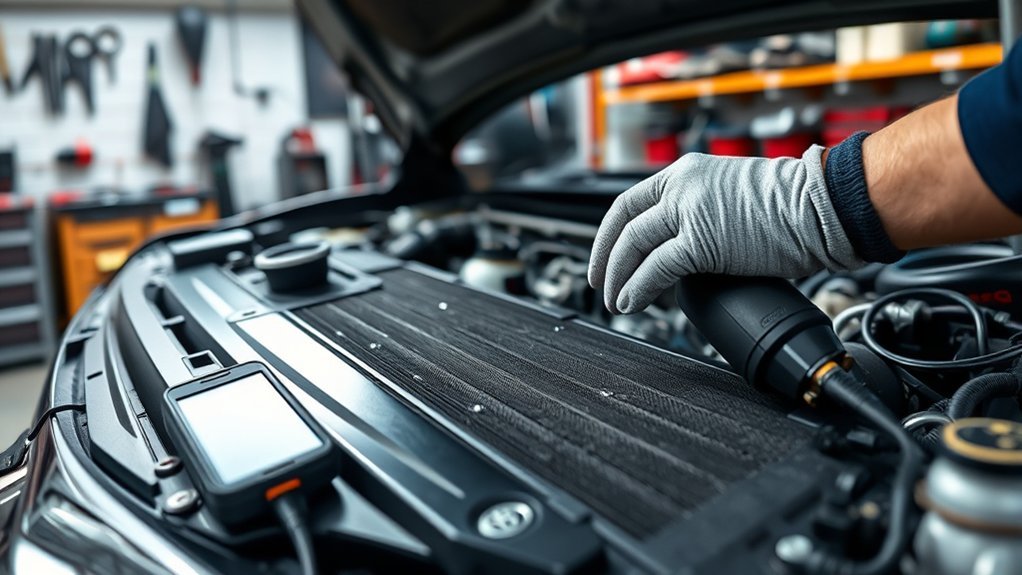
If you suspect a coolant leak in your Toyota RAV4, start by checking for fluid pooling under the vehicle and inspect hoses for wetness. Drop in coolant levels without external leaks may indicate internal issues. Use a pressure tester to identify leaks and guarantee clamps are tight. Replace damaged hoses every five years and monitor coolant levels regularly. By following these steps, you’ll effectively tackle coolant leaks and maintain your vehicle’s performance, leading to further insights on the topic.
Recognizing the Symptoms of Coolant Leaks in Your RAV4
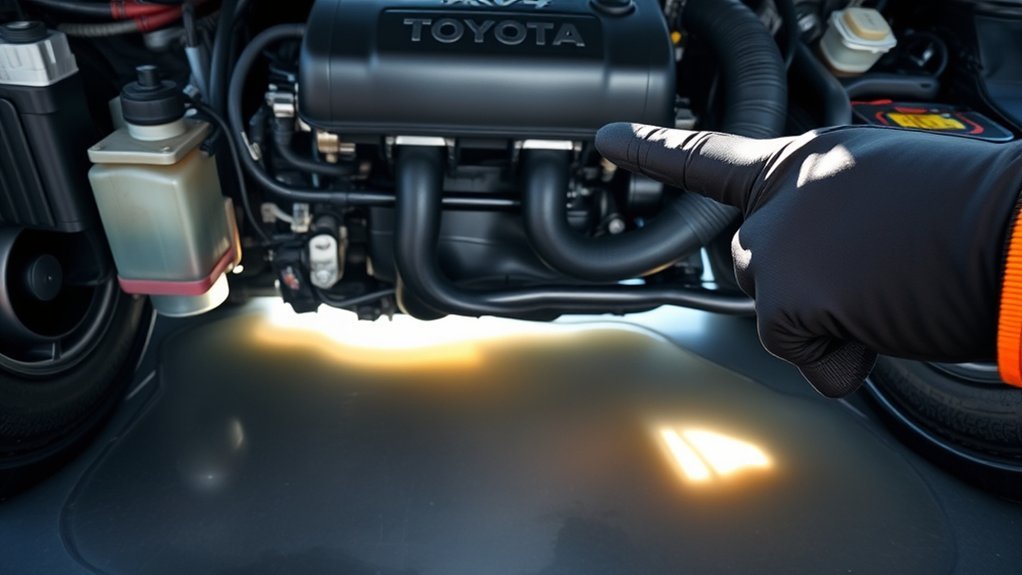
How can you tell if your Toyota RAV4 has a coolant leak? Start by checking for fluid pooling under your vehicle. If you notice noticeable wetness around hoses and connections, that’s a red flag. Pay attention to your coolant color; it should be bright and clear. A drop in coolant levels without visible external leaks often indicates an issue. Conduct a thorough hose inspection; a disconnected or damaged hose can lead to significant coolant loss, risking overheating. Monitor your coolant temperature gauge; fluctuations can signal a leak. If you see smoke from the engine while idling, it could mean a more severe problem near the water pump. Finally, inspect the oil dipstick for contamination—this might indicate a blown head gasket. By recognizing these symptoms early, you can take proactive steps to address potential coolant leaks in your RAV4.
Step-by-Step Guide to Diagnosing Coolant Leaks
Diagnosing coolant leaks in your Toyota RAV4 requires a systematic approach to pinpoint the issue effectively. Follow these steps for accurate diagnosis and leak prevention:
Diagnosing coolant leaks in your Toyota RAV4 involves a systematic approach for effective identification and prevention.
- Inspect the engine coolant pump and hoses for cracks, wear, or loose connections.
- Check the coolant level in the reservoir while the engine is cold, noting any significant drops post-drive.
- Place paper towels or newspaper under cooling system components to identify fluid pooling or stains.
- Conduct a radiator pressure test, focusing on the top seam of the radiator and the water pump area, which are common failure points.
Remember to verify the condition of the radiator cap, as a weak spring can lead to pressure issues and coolant loss. By methodically checking these areas, you’ll better understand the coolant system’s health and address any leaks promptly.
Must-Have Tools for Fixing Coolant Leaks
To effectively fix coolant leaks in your Toyota RAV4, you’ll need a specific set of tools. Start with a coolant pressure tester to identify leaks, and make certain you have a complete socket wrench set for removing components. Don’t forget a flashlight and torque wrench to guarantee proper visibility and secure installation.
Essential Diagnostic Tools
When tackling coolant leaks in a Toyota RAV4, having the right diagnostic tools at your disposal can markedly enhance your efficiency and accuracy. To effectively diagnose these leaks, consider using the following essential tools:
- Cooling system pressure tester: Identifies leaks by applying coolant pressure.
- Flashlight: Illuminates dark areas for thorough inspection of hoses and components.
- Paper towels or newspaper: Helps isolate leaks by placing them under various cooling system components.
- Torque wrench: Guarantees proper tightening of hose clamps, preventing coolant loss.
These tools provide the means for accurate leak detection and facilitate a systematic approach to diagnosing issues, allowing you to confidently address any coolant leak concerns in your RAV4.
Repair Equipment Checklist
After identifying the source of a coolant leak in your Toyota RAV4, having the right repair equipment is essential for an effective fix. Start with a pressure tester to simulate operating conditions and pinpoint weak spots in the cooling system. A set of ratchet and socket wrenches will help you remove and install hoses, clamps, and other components efficiently. Don’t forget hose clamps and pliers; they’re vital for securing hoses and preventing future leaks. A fluid extraction pump simplifies draining old coolant and refilling the system without air pockets. Finally, keep a flashlight handy to illuminate dark areas, allowing for thorough inspections of potential leak sources. With these tools, you’ll tackle coolant types and repair issues confidently.
Replacing Damaged Hoses and Components
Inspecting and replacing damaged coolant hoses is essential for maintaining your Toyota RAV4’s engine health. Damaged hoses can lead to significant coolant leaks, so be proactive in addressing them. Here’s what you need to take into account:
Inspecting and replacing damaged coolant hoses is vital for your Toyota RAV4’s engine health; proactive maintenance prevents significant leaks.
- Inspect all hoses for cracks, brittleness, or wear.
- Use high-quality replacement hoses that meet OEM specifications to guarantee proper fit and durability.
- Replace any associated clamps to prevent future leaks caused by inadequate sealing.
- Think about replacing old hoses every five years to avoid unexpected coolant loss.
After replacing hoses, monitor your coolant levels regularly and check for leaks nearby. This guarantees your installation is effective and your engine remains protected. Choosing the right hose materials and clamp types is critical for long-term reliability. Prioritize these steps to maintain your Toyota RAV4’s performance and longevity.
Proactive Maintenance Tips to Prevent Coolant Leaks
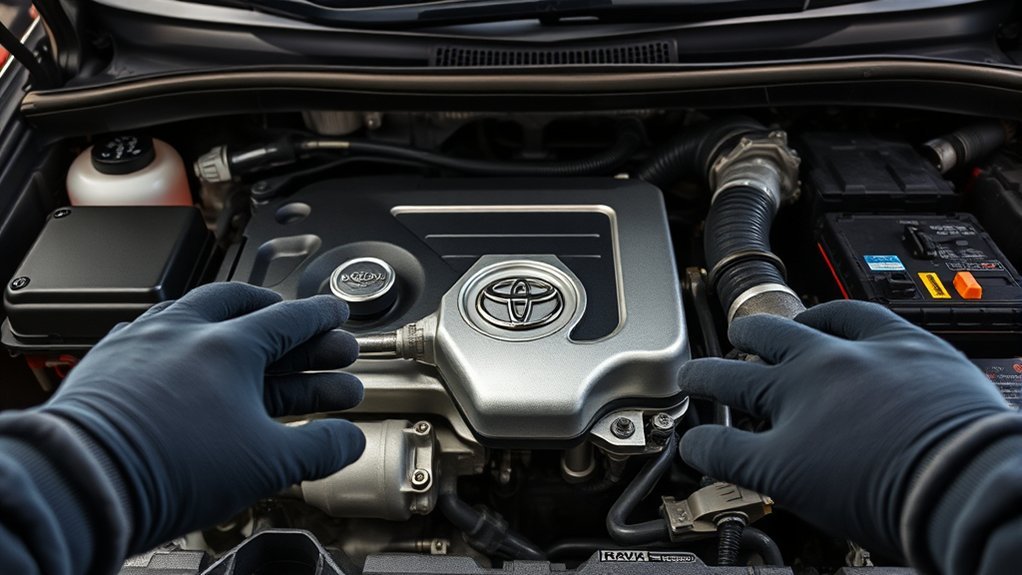
To prevent coolant leaks in your Toyota RAV4, regular maintenance is essential. Start with hose inspection every six months; look for signs of brittleness, cracks, or wear. Verify that clamps on hoses are tight and free from rust, as loose or damaged clamps can lead to leaks. Consistently monitor coolant levels and top off as needed, keeping the reservoir filled to the cold mark to avoid overflow when heated.
Replace old or damaged hoses every five years to avoid unexpected failures. Additionally, conduct routine checks on the water pump and thermostat housing for any signs of seepage or coolant buildup. This proactive approach guarantees ideal cooling system performance and minimizes the risk of leaks. By staying vigilant and committed to these maintenance practices, you empower yourself to maintain your RAV4’s reliability and efficiency.
When to Call a Pro for Coolant Leak Problems?
Regular maintenance can help prevent many coolant issues in your Toyota RAV4, but some problems may still arise that require professional attention. If you encounter any of the following signs, it’s essential to consult a mechanic:
- Significant coolant loss without visible leaks, indicating potential internal engine issues.
- Persistent leaks despite replacing hoses or the water pump, suggesting a failing radiator.
- Frequent rises in the coolant temperature gauge, signaling imminent engine overheating.
- Smoke from the engine or a sweet coolant smell, pointing to severe leaks.
Ignoring these symptoms can lead to serious engine damage. If pressure testing indicates the system can’t hold pressure or if you see signs of exhaust in the coolant, don’t hesitate to seek expert intervention. Addressing these issues promptly can save you from costly repairs down the road.
Frequently Asked Questions
How Much Does a Coolant Leak Diagnostic Cost?
A coolant leak diagnostic typically costs $100 to $150. Using diagnostic tools, you can explore repair options. Some shops may apply this fee to your final repair bill, saving you money if you proceed.
Conclusion
In addressing coolant leaks in your RAV4, timely action is essential to avoid engine damage. Think of your vehicle’s cooling system as its lifeblood; a leak can lead to overheating and costly repairs. By following the diagnosis and repair guide, you can restore your RAV4’s health and longevity. Remember, proactive maintenance is key. If the problem persists, don’t hesitate to seek professional help; sometimes, a skilled hand is the best remedy for complex issues.