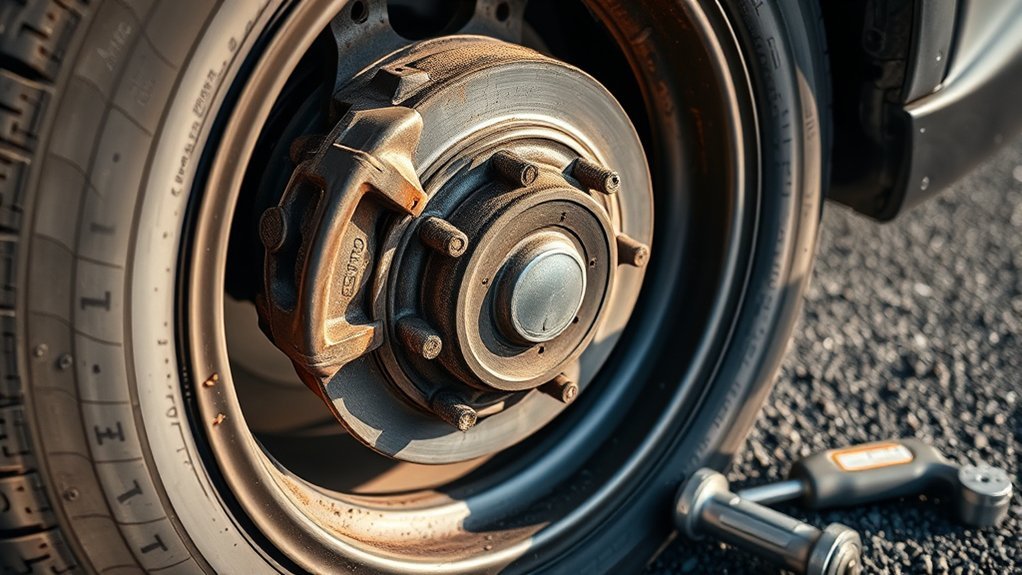
If you notice uneven brake pad wear, rhythmic squealing after releasing the brakes, or your Toyota RAV4 pulling to one side, you likely have sticking brake calipers. This issue can stem from caliper corrosion, kinked brake lines, or worn slide pins. To fix it, clean and lubricate the caliper pins, flush the brake system, and inspect all components. Regular maintenance, like changing brake fluid every four years, is essential. You’ll uncover more important insights on addressing these concerns.
Common Symptoms of Sticking Brake Calipers
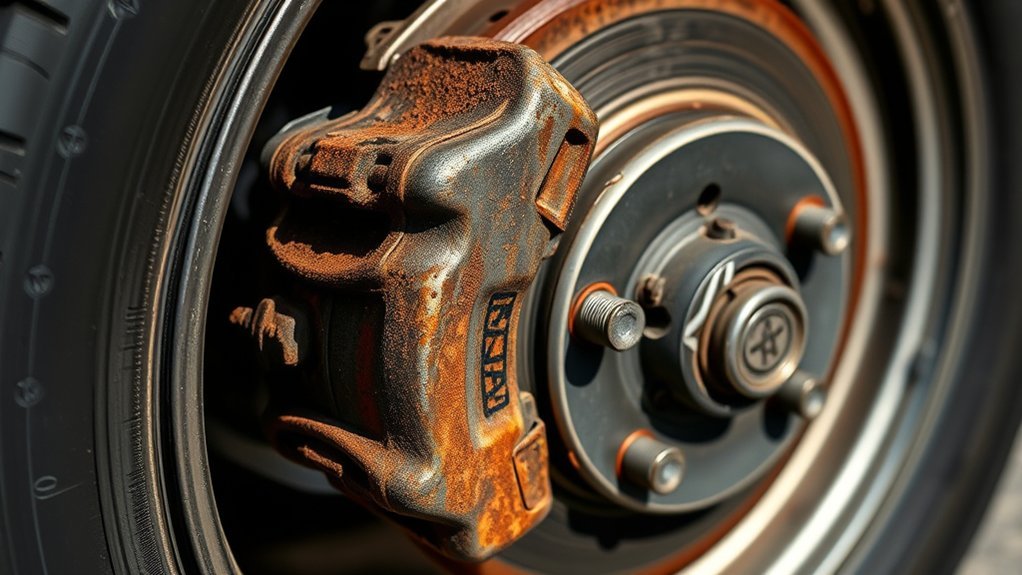
When you notice uneven brake pad wear, it’s often a clear sign of sticking brake calipers. Typically, the inner pad wears down much faster than the outer pad, signaling a malfunction that can severely impact brake performance. If you hear a rhythmic squealing sound after releasing the brakes, it might indicate drag from a sticking caliper, which compromises your vehicle’s braking efficiency. Additionally, overheating brakes may emit a burning smell, a critical warning sign that demands immediate attention to prevent further damage. You should also be aware if your car pulls to one side during braking; this behavior often points to a seized caliper, posing significant safety concerns. Regular inspections are essential, especially since corrosion on the caliper piston or between the piston and caliper bore can lead to sticking, affecting your overall driving experience and safety on the road.
Diagnosing Brake Caliper Issues
Diagnosing brake caliper issues requires a keen eye for specific symptoms that can indicate underlying problems. Start with a thorough caliper inspection; uneven brake pad wear is a telltale sign, particularly if the inner pads wear faster than the outer ones. This can suggest caliper seizing or issues with the slide pins. Pay attention to excessive heat generation on one wheel and a vehicle that pulls to one side during braking, both indicators of compromised brake performance. Additionally, listen for rhythmic squealing sounds after releasing the brakes, which may signal brake drag. Regular maintenance, such as cleaning and lubricating caliper slide pins and replacing brake fluid every four years, is vital to prevent these issues. If symptoms persist, you might need to diagnose the ABS modulator for sticking solenoids or valves that could further impact your braking system. Stay vigilant to guarantee peak performance.
Common Causes of Sticking Brake Calipers
Sticking brake calipers often stem from a variety of underlying issues that compromise their functionality. One major culprit is caliper corrosion, which can occur between the caliper piston and bore, often worsened by old or contaminated brake fluid. This buildup hinders movement. Additionally, kinked or damaged brake lines restrict fluid flow, causing uneven pressure that leads to sticking.
Worn or improperly lubricated caliper pins and slides create friction, preventing the caliper from retracting smoothly after braking. Inadequate brake pad shims can also contribute, causing misalignment and uneven wear that exacerbate caliper issues. Environmental factors, including exposure to moisture and road salt, accelerate rust formation on caliper components, further increasing the likelihood of sticking. Addressing these causes is essential for restoring peak brake performance and ensuring your safety on the road.
Fixing Sticking Brake Calipers
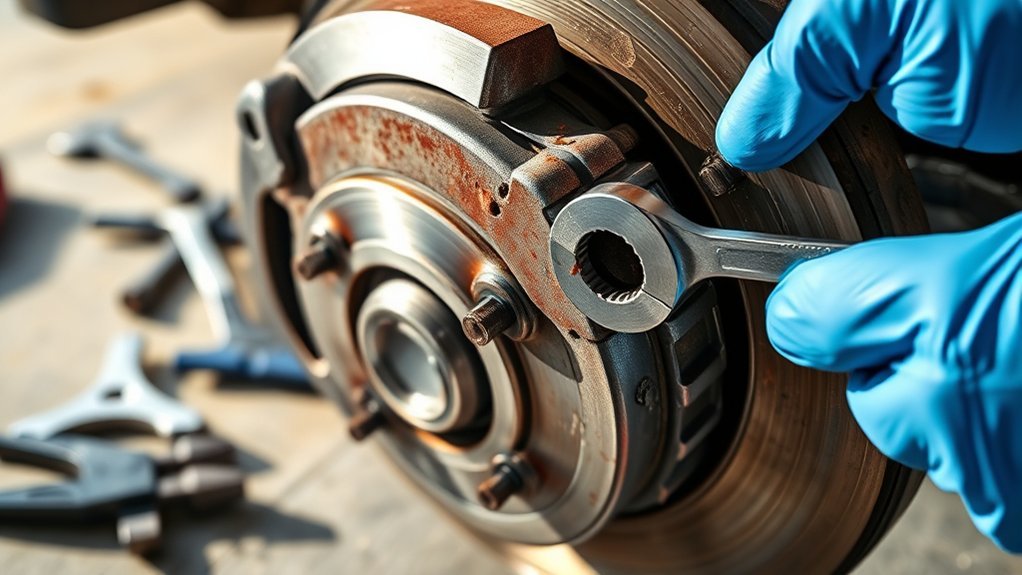
To effectively fix sticking brake calipers, start by thoroughly cleaning and lubricating the caliper slide pins with lithium soap-based grease. This prevents sticking and guarantees smooth movement. Next, perform a brake pad inspection to check for uneven wear patterns, which can signal a sticky caliper needing immediate attention. If issues persist, consider replacing or rebuilding the calipers, as prolonged sticking can warp rotors and reduce braking efficiency.
| Step | Action | Notes |
|---|---|---|
| Clean Slide Pins | Use lithium soap-based grease | Guarantees smooth caliper movement |
| Inspect Brake Pads | Look for uneven wear patterns | Indicates potential caliper issues |
| Flush Brake System | Use a pressure bleeder | Removes air, enhances performance |
Finally, conduct routine brake fluid changes every four years to prevent moisture buildup and corrosion within the caliper system.
Key Maintenance Tips for Brake Calipers
Maintaining your brake calipers is essential for ensuring optimal braking performance and safety. Start with regular caliper maintenance by cleaning and lubricating slide pins using lithium soap-based grease. This prevents sticking and promotes smooth movement during braking. Change your brake fluid every four years to avoid moisture accumulation and corrosion in caliper pistons, which can lead to sticking.
Inspect caliper pistons and boots for any signs of corrosion or rust buildup that could impair function. Apply silicone-based brake lubricant on moving parts that don’t contact brake fluid; this keeps components functioning efficiently and reduces wear. Additionally, thoroughly check and replace rubber components like dust boots and seals to prevent moisture infiltration.
When to Seek Professional Help for Brake Problems
Even with proper maintenance, brake problems can arise that require professional attention. You should never ignore symptoms like uneven brake pad wear or a spongy pedal. These issues can indicate caliper problems or master cylinder failure. If your vehicle pulls to one side when braking or shows signs of excessive heat, it’s vital to get a professional assessment to avoid further damage. Unexplained noises, such as rhythmic squealing or grinding, should also prompt immediate action.
| Symptoms | Action Needed |
|---|---|
| Uneven brake pad wear | Seek professional diagnosis |
| Spongy or mushy brake pedal | Immediate inspection required |
| Vehicle pulls to one side | Professional assessment essential |
| Excessive brake heat | Urgent mechanic visit needed |
| Unexplained brake noise | Identify source with a mechanic |
Regular inspections, especially after any brake work, can help maintain brake fluid levels and guarantee peak pedal resistance for your safety.
Frequently Asked Questions
Can You Fix a Brake Caliper That Is Sticking?
Yes, you can fix a sticking brake caliper through proper brake maintenance. Start with cleaning and lubricating components. If that fails, consider caliper replacement for peak performance and safety on the road.
Conclusion
In summary, addressing sticking brake calipers promptly not only enhances your Toyota RAV4’s performance but also guarantees your safety on the road. Coincidentally, regular maintenance can prevent these issues, making it an essential part of your driving routine. By staying vigilant for symptoms and understanding the causes, you can tackle problems early. Remember, when in doubt, don’t hesitate to seek professional help—your vehicle’s reliability depends on it, and so does your peace of mind.